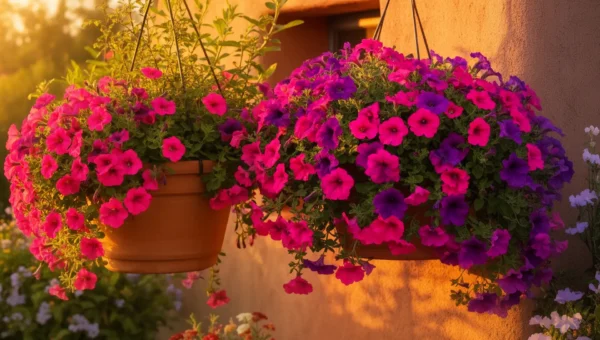
How to Grow Petunias in Zone 6: Start Seeds Indoors in February, Transplant After May 1

Zone 6 petunias bloom from May to October — start seeds in February, transplant after the last frost, and do a hard cutback in July for a second full bloom.
Zone 6 gives petunias a long season — late April through October — but two specific problems trip up gardeners every year: variable spring weather that can catch transplants off guard in April, and July heat that causes even healthy plants to stall and go leggy. Generic “plant after last frost” guides skip both. This article gives you the exact seed-starting windows for zone 6a and 6b, a variety selection framework calibrated to zone 6 conditions, and the biology behind deadheading and mid-season cutback — two techniques every guide recommends but few explain.
For the complete overview of petunia types, propagation, and year-round care, see our Petunia Growing Guide. This spoke covers zone 6 timing and conditions in depth.
Zone 6 Petunia Planting Calendar
Zone 6 divides into two subzones with meaningfully different timing. Zone 6a (minimum winter temps -10°F to -5°F) has a last spring frost around April 15–21 and a first fall frost around October 15. Zone 6b (minimum -5°F to 0°F) has a last spring frost April 10–23 and a first fall frost around October 28. That 2–4 week difference shifts your seed-starting window, and zone 6b’s later first frost extends the bloom season by nearly two weeks.

Three pre-planned garden beds, free
Stop staring at empty beds: printable plans with exact layouts, plant lists and planting calendars — yours free from the Garden Library.

| Month | Zone 6a Tasks | Zone 6b Tasks |
|---|---|---|
| Late January | — | Start seeds indoors (10–12 weeks before April 10 last frost) |
| Early–Mid February | Start seeds indoors (10–12 weeks before April 21 last frost) | Thin to strongest seedlings; run lights 16–18 hrs/day |
| March | Thin to single seedling per cell; feed diluted fertilizer every 2 weeks; pinch grandiflora/multiflora at 6 inches | Begin hardening off late March; transplant outdoors if soil hits 60°F |
| Early–Mid April | Begin hardening off; push transplant out with frost cloth in mild years | Transplant outdoors after April 10–23 last frost; soil must be 60°F+ |
| Late April–May | Transplant outdoors after April 21 last frost; soil 60°F+ | Bloom establishes; begin deadheading traditional types 2–3×/week |
| June–Early July | Deadhead 2–3×/week (traditional types); fertilize beds every 3–4 weeks; containers every 7–10 days | Same |
| Mid-July–Early August | Hard cutback: reduce stems to 4–6 inches; water and fertilize immediately after | Hard cutback |
| August–September | Second bloom flush; full blooms return within 3 weeks of cutback | Second bloom flush; possible frost protection needed in late September |
| October | First frost ends season around October 15; plant dies | First frost ends season around October 28 |
Petunias can tolerate a light frost, so you can push transplanting out 2–3 weeks before your last frost date if you have frost cloth ready. In zone 6a, that means late-March planting is possible in mild years. However, cold soil below 60°F stunts root development even when air temperatures are frost-free, so check soil temperature with a probe before committing — a stunted root system in April means poor bloom performance all summer.
Choosing Your Petunia Type for Zone 6
The biggest variable in petunia performance for zone 6 is heat and rain tolerance. Traditional grandifloras look dramatic but are most vulnerable to zone 6’s humid summer heat. The modern series were developed specifically to address this gap.
| Type | Flower Size | Deadheading | Zone 6 Heat Tolerance | Best Use |
|---|---|---|---|---|
| Grandiflora | 3–4”+ | Required (2–3×/week) | Low — susceptible to rot in rain and heat; Storm series hybrids have better tolerance | Drier microclimates; containers where you deadhead daily |
| Multiflora | 2–3” | Beneficial but optional | Medium — better weather resistance than grandiflora | Zone 6 beds with variable April–May weather; lower maintenance |
| Wave / Easy Wave | Medium–large | Not required (self-cleaning) | Medium — may pause blooming at peak heat; improves after cutback | Ground cover and spreading containers; Wave ‘Carmine Velour’ is an All-America Selections winner |
| Supertunia (Proven Winners) | Medium–large | Not required (self-cleaning) | High — best performer in zone 6 summer heat; outperforms Wave in warm conditions | Full-sun containers and hanging baskets; Supertunia ‘Bordeaux’ performs across Minnesota, Colorado, Georgia, and Massachusetts |
For most zone 6 gardeners, the practical choice comes down to maintenance tolerance and summer conditions. Supertunia and Wave varieties give you non-stop color with minimal effort through the heat of July and August. Reserve grandifloras for containers near a door you pass multiple times daily — they reward attentive deadheading with blooms that nothing else matches for sheer size. Multifloras are the middle path: better weather tolerance than grandiflora, more familiar structure than trailing types.
Starting Petunia Seeds Indoors
Petunia seeds are among the smallest annual seeds you’ll handle — almost dustlike. They need light to germinate, so do not bury them. Press seeds gently onto the surface of moist, pre-moistened seed-starting mix, then cover the tray with a clear humidity dome or plastic wrap to hold moisture.
Keep the germination environment at 70–85°F. According to University of Minnesota Extension, germination takes 7–10 days under these conditions. Once sprouted, lower temperature to 65°F during the day and 55–65°F at night, and position seedlings 4–6 inches below a fluorescent or LED grow light for 16–18 hours daily. A cool windowsill alone rarely provides enough intensity — seedlings grown in insufficient light produce long, weak stems that perform poorly after transplant.
When seedlings have 3 true leaves, transplant into individual 3–4 inch pots. Feed with diluted liquid fertilizer (half-strength balanced formula) every 2 weeks. For grandiflora and multiflora types: pinch the central growing tip when plants reach 6 inches tall. This redirects energy into lateral branching and produces a fuller, more bloom-dense plant. Do not pinch Wave or Supertunia varieties — they branch naturally without this step, and pinching delays the bloom timeline without benefit.
Transplanting Petunias Outdoors in Zone 6
Two conditions must both be met before transplanting: air temperature frost-free and soil temperature at or above 60°F. Petunias planted into cold soil in April often sit without establishing roots for weeks, then get overtaken by transplants put in later under proper conditions.
Hardening off is not optional. Seven to ten days before permanent planting, move seedlings outdoors to a sheltered spot in morning sun — start with one hour and increase by 1–2 hours daily. Penn State Extension emphasizes that bedding plants “should be hardened off before going from gentle indoor to harsh outdoor conditions.” Skipping this step causes sunscald and wind damage that sets plants back by two to three weeks.
Soil prep: work 2–3 inches of compost into the bed and check pH (target 6.0–7.0). Apply a balanced granular fertilizer (10-10-10) at 2 lbs per 100 square feet. Spacing: grandiflora and multiflora types 12 inches apart; millifloras 4–6 inches; spreading and trailing types at least 18 inches. For containers, plant more densely for an immediate full appearance — see our petunia planter ideas guide for pot-size specific spacing recommendations.
Watering and Fertilizing Through Zone 6 Summer
Petunias are heavy feeders. A feeding schedule that shifts with the season keeps continuous bloom from May through frost.
Watering:
- Garden beds (traditional types): water deeply once a week, soaking to 6–8 inches depth. Increase frequency during extended heat above 90°F.
- Spreading types and containers: check daily in zone 6 summers; may need watering every day when temperatures climb above 85°F.
- Avoid evening overhead watering — wet foliage overnight in zone 6’s humid summer invites botrytis and fungal root rot. For common petunia problems including rot and disease, see our petunia problems guide.
Fertilizing schedule:
- At planting: balanced granular 10-10-10 or 12-12-12 worked into the soil.
- June through August (beds): balanced liquid fertilizer every 3–4 weeks.
- June through August (containers): “weakly, weekly” — half-strength water-soluble formula every 7–10 days. Full-strength doses cause salt buildup in containers, which burns roots.
- Mid-July switch: when bloom rate slows, move to a bloom-booster formula with higher phosphorus (15-30-15 or 10-30-20). The extra phosphorus redirects plant energy from vegetative growth toward flower production, which is exactly what a mid-season stalling plant needs.
Deadheading: The Ethylene Mechanism (and Why Removing the Pod Matters)
Most guides say “deadhead to encourage blooms” without explaining the biology. Understanding the mechanism changes how you deadhead — and explains why half-measures don’t work.
When a petunia flower is pollinated, the stigma triggers ethylene production. Ethylene is the primary senescence hormone in petunias: it travels from the stigma through the style to the petals, activating programmed cell death (petal collapse). This cascade is autocatalytic — each ethylene molecule produced stimulates more ethylene production, rapidly accelerating senescence. Once a developing seed pod is detected, the plant redirects energy away from producing new flowers, treating reproduction as complete.
Stop missing your zone's planting windows.
Select your US zone and month — get a complete checklist of what to plant, prune, feed, and protect right now.
→ View My Garden CalendarThe common mistake: removing only the petals while leaving the small green seed pod below the flower. The pod still produces ethylene and still signals seed-set to the plant — bloom suppression continues regardless of whether the petals are gone. You must remove the entire flower head, petals and pod together, to interrupt the ethylene cascade and reset the flowering cycle.
For traditional grandiflora types, deadheading 2–3 times per week maintains continuous bloom through June and early July. Wave and Supertunia varieties are self-cleaning — they abscise spent flowers automatically, and manual removal has no additional benefit.
I’ve found that in zone 6, deadheading grandifloras on Thursday evenings and Sunday mornings covers most of the summer bloom cycle without the plant ever looking spent between visits.
Mid-Season Rejuvenation in Zone 6
By mid-July, most petunias in zone 6 get leggy and sparse. Heat consistently above 85°F causes stems to stretch, bloom density drops, and plants look exhausted by the end of July. This is normal — and it’s the right cue for a hard cutback, not more fertilizer.
The math works in zone 6’s favor: zone 6a’s first fall frost averages October 15, giving 10–12 weeks from a mid-July cutback for a second full bloom cycle. Zone 6b’s later frost (around October 28) allows nearly 14 weeks — enough for a complete, dense second flush of color.
How to cut back:
- Light rejuvenation: remove about one-third of each stem (6–8 inches from an 18-inch stem), cutting just above a leaf node where new growth will emerge. Good for plants that are tired but not fully stalled.
- Hard cutback: cut all stems back to 4–6 inches above soil, just above a node. This looks severe but produces the fastest and most complete recovery — the plant redirects all energy into new shoot development from the base.
Immediately after cutting: water thoroughly and apply liquid fertilizer. New shoots appear within 7 days. Full, dense bloom returns within 3 weeks — in zone 6a that’s early August, leaving 6–8 weeks of peak color before the October frost. Proven Winners recommends a lighter version for Supertunias: trim 20% of stems in July and again in September–October to maintain compact growth throughout the season without a full recovery period.
For ideas on pairing petunias with complementary zone 6 annuals through the summer and fall, see our petunia companion planting guide.
Frequently Asked Questions
Can petunias overwinter in zone 6?
No. Zone 6 minimum temperatures (-10°F to 0°F) are lethal to petunias. Treat them as annuals and replant each spring.
Can I direct-sow petunia seeds outdoors in zone 6?
Not practically. Petunia seeds require 70–85°F soil for germination and 10–12 weeks of controlled indoor growing before they’re ready for outdoor conditions. Start indoors or purchase transplants from a nursery in late April.
Do Wave petunias need deadheading in zone 6?
No. Wave, Easy Wave, and Supertunia series are self-cleaning. Only traditional grandiflora and multiflora types benefit from regular manual deadheading.
My petunias stopped blooming in late July — what happened?
High heat consistently above 85°F suppresses petunia blooming and causes leggy growth. This is the signal for a hard cutback: reduce stems to 4–6 inches, water and fertilize immediately, and expect new blooms within 3 weeks.
When should I fertilize petunias in zone 6?
Apply balanced granular (10-10-10) at planting. From early July, switch to liquid feeding: every 7–10 days for containers, every 3–4 weeks for beds. When bloom rate slows in mid-July, switch to a high-phosphorus bloom booster (15-30-15 or 10-30-20).
Sources
- Growing Petunias — University of Minnesota Extension (cited inline)
- How Hardy Are Your Annuals? — Penn State Extension
- When to Plant Petunias — Planting Calendar by USDA Zone (GardeningByZone)
- Petunia Zone Planting Guide — Bonnie Plants
- Petunias — University of Arkansas Cooperative Extension
- Supertunias vs. Wave Petunias — Epic Gardening
- Caring for Supertunias — Proven Winners
- Zone 6a Petunia Planting Guide — Can I Plant