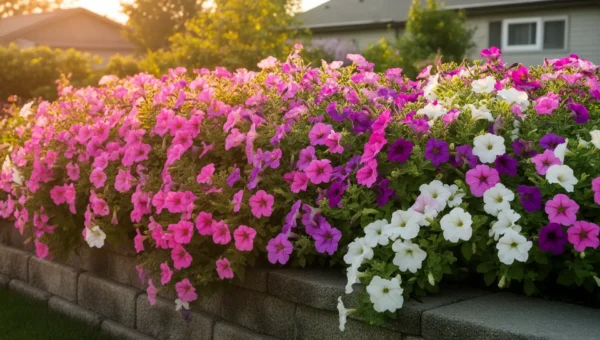
Zone 10 Petunias: Plant in Fall for Non-Stop Winter Blooms (Varieties That Handle the Heat)

Zone 10 petunias bloom October–May — not spring. Get the month-by-month calendar for zones 10a and 10b, top heat-tolerant variety picks, and the care protocol that keeps them blooming all winter.
Most petunia guides tell you to plant in spring. In zone 10, that advice will leave you staring at heat-stressed, leggy plants by June. The zone 10 petunia calendar runs backward compared to the rest of the country — October through April is your growing season, and June through September is when you step aside and let petunias rest.
Zone 10 covers southern Florida, coastal Southern California, and pockets of southern Texas and Arizona. With 322 frost-free days a year and summers that routinely push past 90°F, the challenge isn’t cold — it’s heat. And petunias, despite their reputation as summer flowers in northern gardens, hit a physiological wall when daytime temperatures stay above 80°F.
This guide gives you the exact planting calendar for zone 10a and 10b, a variety comparison table rated for zone 10 heat performance, and the care protocol that keeps plants blooming from October through May.
Why Zone 10 Summers Shut Petunias Down
Petunias evolved in South America’s mild mountain climates, where daytime temperatures hover between 70°F and 80°F and nights cool to 60–65°F. These conditions drive the cellular machinery that produces flowers. When zone 10’s summer heat pushes past 80°F — which happens daily from late May through September — that machinery stalls.

Three pre-planned garden beds, free
Stop staring at empty beds: printable plans with exact layouts, plant lists and planting calendars — yours free from the Garden Library.
Here’s the specific mechanism: elevated temperatures trigger a spike in abscisic acid (ABA), a plant hormone, inside developing flower buds. A study published in PubMed found that the rise in ABA directly suppresses cell division in petunia buds, producing smaller and smaller flowers before bud set stops entirely. Cytokinin levels — the hormone that promotes cell growth — remained unchanged, confirming ABA as the specific driver of heat-induced bloom failure [4].
Night temperatures compound the problem. Petunias use overnight cooling (ideally 60–65°F) to consolidate the sugars produced during the day into the energy reserves that fuel next morning’s bud development [5]. Zone 10 summers routinely stay above 70°F overnight, cutting off that recovery window entirely.
The practical result: petunias planted in zone 10’s spring will give you flowers through May, but by late June, you’ll see mostly green leaves with few or no blooms. That’s not a care failure — it’s the plant’s correct hormonal response to its environment. The solution is to align your planting calendar with the climate, not fight it.
For a deeper look at what causes petunias to underperform, see our guide to common petunia problems.
The Zone 10 Petunia Planting Calendar
Zone 10 divides into two sub-zones with meaningfully different timing windows:
- Zone 10a (last frost around February 1): Southern California coast, inland Central Valley edges, parts of central Florida. Planting window: mid-October through April [3].
- Zone 10b (last frost around January 15): South Miami, Brownsville TX, lower Rio Grande Valley. Optimal planting window: November 15 through mid-January [6]. Later plantings in zone 10b risk high-heat decline before plants have time to establish.
Both zones share one hard rule: avoid planting from June through September. Even heat-tolerant varieties struggle to establish in those conditions [6].

| Month | Zone 10a | Zone 10b |
|---|---|---|
| October | Plant — ideal start [1] | Plant |
| November | Plant — peak window | Plant — peak window [6] |
| December | Plant | Plant |
| January | Plant | Last chance |
| February | Plant | Too late — skip |
| March | Plant [3] | Skip |
| April | Last chance | Skip |
| May | Declining — prepare for rest | Skip |
| June–September | Rest — do not plant [6] | Rest — do not plant |
Most zone 10 gardeners skip seeds entirely and purchase transplants from a local nursery in October or November. If you prefer to start from seed in zone 10a, start indoors 10–12 weeks before your target October transplant date — meaning seeds sown in late July or early August.
Best Petunia Varieties for Zone 10
Variety choice matters more in zone 10 than in any other USDA zone. Standard grandiflora petunias — the classic large-flowered types — are beautiful in mild conditions, but above 85°F their blooms shrink, fade, and stop. In zone 10’s spring shoulder months (late April, May), they decline before spreading types even begin to slow.
Spreading varieties outperform because their smaller individual flowers carry less cellular machinery to disrupt — the same ABA-mediated size suppression hits them less hard than large-flowered types. Multiflora types (smaller 2-inch flowers, abundant production) fall in the middle: tougher than grandifloras, not quite as resilient as the best spreading series [2].
| Variety | Type | Heat Tolerance | Zone 10 Performance | Best Use |
|---|---|---|---|---|
| Easy Wave series | Spreading | Excellent — zones 9a–11b | Top performer; blooms reliably through warm shoulder months | Hanging baskets, ground cover |
| Wave (Midnight, Rose, Cherry) | Spreading | Excellent | 5-star for zone 10b heat and humidity | Large containers, beds |
| Supertunia Vista Bubblegum | Spreading | Excellent | Thrives in zone 10b heat and humidity | Containers, hanging baskets |
| Shock Wave Cherry | Spreading | Very Good | Reliable zone 10 performer | Baskets, pots |
| Celebrity Group | Grandiflora | Good — heat and humidity tolerant [2] | Better than standard grandifloras; best for zone 10a | Beds, borders |
| Hurrah Group | Multiflora | Good — heat and humidity tolerant [2] | Compact habit handles zone 10a well | Edging, small containers |
| SuperCal Group | Multiflora | Good — heat tolerant, long season [2] | Reliable extended-season variety | Beds, extended-season planting |
| Standard Grandiflora types | Grandiflora | Poor above 85°F | Struggles from May onward in zone 10 | Avoid as primary zone 10 planting |
For companion planting ideas to make the most of your petunia beds, see our petunia companion planting guide.
Planting and Soil Setup
Use transplants, not seeds. The zone 10 cool season runs roughly October through April. It’s long enough for seeds in zone 10a, but most gardeners get better results starting with transplants from a local nursery in October or November — you gain two to three months of blooming that seed-started plants would spend establishing.
Drainage first. Petunias will not tolerate waterlogged roots, especially in zone 10’s humid stretches. In-ground beds need well-drained soil — amend heavy clay with compost and coarse sand before planting [1]. A raised bed gives you easy control over drainage in sites with slow-draining native soil.
Spacing: 12–18 inches for spreading types used as groundcover; 10–14 inches for standard bed plantings [1][3].
Container advantage. In zone 10, growing petunias in 12–14-inch containers gives you something in-ground beds can’t offer: portability. When temperatures spike above 92°F, containers can be moved to filtered shade — an east-facing wall that gets morning sun but shade from noon onward works well — to extend plant life by several weeks [6].
Stop missing your zone's planting windows.
Select your US zone and month — get a complete checklist of what to plant, prune, feed, and protect right now.
→ View My Garden CalendarMulch matters. Apply 1.5 inches of pine bark mulch around in-ground plants. Florida growers report this depth keeps soil 8–12°F cooler and reduces evaporation by around 30% [6] — a meaningful buffer during zone 10’s warm spring shoulder months.
Watering and Fertilizing for Zone 10’s Long Season
According to UF/IFAS extension, established petunias need 1–2 inches of water every 7–10 days, applied in a way that fully saturates the root zone rather than frequent shallow sprays [1]. In zone 10’s heat, containers may need water daily or every other day — check the soil 2 inches down; if it’s dry, water.
Drip irrigation is the preferred method for zone 10 Florida gardens. Overhead sprinklers leave foliage wet during humid afternoons, creating the conditions that promote petal blight and fungal issues — already a challenge in south Florida [6]. Water in the early morning, between 5 and 8 am, so foliage dries completely before afternoon humidity peaks [6].
Fertilizing schedule:
- At planting: Apply a balanced 10-10-10 fertilizer or a controlled-release product such as Osmocote or Dynamite at the recommended rate [1]. Controlled-release products are especially useful for zone 10’s longer growing season, providing a steady nutrient base without weekly attention.
- Once established (2–3 weeks after transplanting): Switch to a bloom-booster formula higher in phosphorus — 15-30-15 or 10-30-20. Apply at half-strength every 7–10 days. This steady, low-dose approach (known as “weekly weakly”) keeps nutrients consistently available without burning roots.
- Monthly container flush: Once a month, skip the fertilizer and run a large volume of clean water through the pot to flush accumulated mineral salts, which appear as white crust on the soil surface.
- After heat stress: Hold fertilizer for 14 days after any episode of wilting or heat-induced decline. Feeding a stressed plant pushes energy toward growth when the plant needs it for repair.
For a full breakdown of petunia care through every stage, see our complete petunia care guide.
Managing Heat Through the Season
Zone 10 gardeners face two heat challenges: the deep summer (June–September, when petunias rest), and the shoulder months — late April through May going into summer, and again in September and October coming out of it — when temperatures are climbing or declining but still stressful.
For in-ground beds during shoulder months: Deploy 30% density shade cloth from 11 am to 3 pm when daytime temperatures consistently reach the mid-90s°F [6]. This reduces leaf temperature and slows evaporative stress. Remove it in the morning so plants get full sun during the cooler hours and maintain strong photosynthesis.
For containers: Move them to an east-facing location at temperatures above 92°F, where morning sun drives photosynthesis but afternoon shade prevents heat stress [6]. This is the single biggest advantage of container growing in zone 10.
Mid-season cutback: By April, most zone 10 petunias will look leggy, with long stems and sparse blooms. Cut plants back by one-third to encourage fresh branching and a final flush of flowers before summer heat ends the season. This is your last-chance reset.
Summer rest strategy: In zone 10a (Southern California, central Florida), reduce watering to the minimum needed for survival, stop fertilizing, and let plants go semi-dormant. Some Wave varieties will survive zone 10a summers this way and rebound in October. In zone 10b — South Florida in particular — summer heat combined with humidity typically kills most plants outright. Pull them in June and replant with fresh transplants in November. It’s more economical than nursing damaged plants through an unwinnable fight.
Ready to explore the full range of petunia growing techniques? Our complete petunia growing guide covers all climates and settings in depth.
Frequently Asked Questions
Can petunias survive year-round in zone 10?
Not vigorously. In zone 10a, Wave varieties may survive a mild summer in semi-dormancy and rebound in fall. In zone 10b, summer heat and humidity typically kills most plants. Most zone 10 gardeners treat petunias as cool-season annuals and replant each October.
When should I deadhead zone 10 petunias?
Deadhead large-flowered and double varieties throughout the season to remove spent blooms [1]. Spreading types like Wave and Easy Wave are largely self-cleaning — they drop spent flowers without your help. Focus deadheading effort on Celebrity or standard grandiflora types.
Why aren’t my petunias blooming in summer?
Heat. When daytime temperatures exceed 80°F for extended periods, rising ABA hormone levels in the plant suppress the cell division that produces new flower buds [4]. This is a normal physiological response, not a care failure. Give plants partial shade, reduce water slightly, and wait for October temperatures to cool.
What’s the difference between zone 10a and 10b for petunias?
Zone 10b (South Florida, lower Rio Grande Valley) has a narrower planting window — November 15 to January — and summers that are too hot and humid for even the toughest Wave varieties to survive. Zone 10a (Southern California coast, parts of central Florida) is more forgiving: the October 15–April window is broader, and summers are often dry enough that Wave varieties can survive in semi-dormancy with minimal water.
Sources
[1] “Petunias” — UF/IFAS Gardening Solutions, University of Florida Extension
[2] “Petunia x hybrida (Garden Petunia)” — NC State Extension Gardener Plant Toolbox
[3] “Petunia Zone Planting Guide” — Bonnie Plants
[5] “Petunia Temperature Tolerance: From Optimal to Extreme” — Biology Insights
[6] “Petunias in Florida: When to Plant & How to Keep Them Blooming” — LifeTips