

How to Grow Fig Trees: 3 Varieties, Zone-by-Zone Timing, and the 90-Day Fruit Window

How to grow fig trees in zones 5–10: variety comparison table, zone-by-zone planting calendar, and winter protection for Chicago Hardy figs in –20°F winters.
Most gardeners who give up on fig trees in zone 6 share one misunderstanding: they see the stems die back in late winter and assume the tree is gone. It isn’t. The roots of a Chicago Hardy fig survive temperatures as low as –20°F, even when every branch above ground has been killed by cold. The main fig crop doesn’t need those stems — it forms entirely on new-season growth that emerges from the crown each spring. That single biological fact opens fig growing to zones 5 through 10.
This guide draws on research from university extension programs at Maryland, Clemson, Rutgers, UGA, and UF/IFAS to cover variety selection, zone-by-zone planting timing, pruning, winter protection, and the 90-day harvest window that defines fig season.
What You Need to Grow Figs: Quick Start
In zones 8–10, growing figs in-ground is straightforward — most of what follows is about maximizing yield. In zones 5–7, the same basic care applies, but variety choice and winter protection are the two variables that determine whether you harvest figs or lose your tree each year. If you’re growing in zone 8 specifically, the zone 8 fig growing guide covers the 8a vs 8b variety split and summer heat management in detail.
- Sun: Minimum 8 hours of direct sun daily
- Soil: Well-drained; pH 6.0–6.5 (tolerates up to 7.5)
- Spacing: 10–15 feet for bush form; 15–20 feet for tree form
- Water: 1–1.5 inches per week during the growing season
- Zones 5–7: Winter protection or container growing required
Choosing the Right Fig Variety
There are hundreds of named fig varieties, but five account for the vast majority of US home garden planting. Each handles cold, humidity, and two-crop production differently — and the wrong variety for your climate can mean years of poor performance.

Three pre-planned garden beds, free
Stop staring at empty beds: printable plans with exact layouts, plant lists and planting calendars — yours free from the Garden Library.
| Variety | Best Zones | Stem Hardiness | Ostiole (Eye) | Crops Per Year | Best For |
|---|---|---|---|---|---|
| Chicago Hardy | 5–10 | 10°F; roots to –20°F | Closed | 2 (if stems survive winter) | Cold climates; zones 5–7 |
| Celeste | 6–8 | 0°F | Tight-closed | 1 (main crop only) | Humid Southeast; souring resistance |
| Brown Turkey | 7–9 | 0°F | Open | 2 (breba + main) | Zones 7–9; extended harvest window |
| Black Mission | 7–10 | Similar to Brown Turkey | Open | 2 (breba + main) | West Coast; richest flavor |
| Petite Negri | 6–10 (container) | ~15°F | Closed | 2 (breba + main) | Containers; small spaces |
The ostiole — the small opening at the base of each fig, often called the “eye” — divides varieties into two practical camps. Open-eyed varieties like Brown Turkey and Black Mission are more vulnerable to the dried fruit beetle and to rain-induced fruit souring, where yeasts enter through the eye and ferment the interior before harvest [2]. In humid regions east of the Mississippi, this is a recurring and real crop loss. Celeste, Chicago Hardy, and Petite Negri all feature a tight, closed ostiole that physically blocks insects and excess moisture — one of the reasons Celeste has dominated Southeastern US home gardens for generations [2].
The breba crop — figs that ripen in late spring on last year’s wood — sounds attractive until you understand the catch in cold climates. In zones 5–7, winter protection typically involves cutting or bending stems back. Remove that old wood and you remove the breba. In those zones, plan for the main crop only. In zones 7 and warmer, both crops are possible.

Zone-by-Zone Planting and Harvest Calendar
The 90-day fruit window — from figlet formation to ripe fruit — is fixed [3]. What varies by zone is when that clock starts and whether your season is long enough to run it to completion. The table below shows when to plant, the expected main crop window, and whether winter action is needed.
For gardeners in Zone 4, where minimum temperatures reach -30°F to -20°F, fig growing requires container overwintering or the burial method to bring trees through winter. See the Zone 4 fig growing guide for the three varieties that deliver a reliable harvest and the month-by-month care calendar.
| USDA Zone | Last Frost (approx.) | Plant Outdoors | Main Crop Harvest | Breba Crop | Winter Protection |
|---|---|---|---|---|---|
| Zone 5 | May 15–30 | Late May (soil 60°F+) | Sept–Oct | Not reliable (stem dieback) | Yes — wrap or container |
| Zone 6 | Apr 15–May 1 | Late April–May | Aug–Oct | Not reliable | Yes — wrap or container |
| Zone 7 | Mar 15–Apr 15 | March–April or fall | Aug–Sept | Late June–July | Mulch only (Chicago Hardy: none) |
| Zone 8 | Feb 15–Mar 15 | Feb–March or fall | July–Aug | June | None (light mulch optional) |
| Zone 9 | Jan 15–Feb 15 | Jan–Feb or fall | June–July | May–June | None |
| Zone 10 | Frost-free | Fall preferred | May–June (+ fall flush) | Apr–May | None |
For zones 5–6: the August through October harvest window is well within reach for Chicago Hardy once the tree establishes over two or three seasons. Don’t count on a full crop until year three or four when the root system is strong enough to push vigorous new canes each spring. For broader planting timing across all crops, see our year-round planting guide.
For zone 7 specifically — varieties, exact planting dates, and the seasonal care calendar — see our full guide to growing fig trees in zone 7.
How to Plant a Fig Tree
Figs reward careful site selection more than almost any other fruit tree. The basic requirement — well-drained soil, full sun, and room to grow — is straightforward, but the details beneath each point matter more than they appear.
Site Selection
In zones 5–7, plant on the south or southeast side of a structure. A wall absorbs heat during the day and re-radiates it overnight, effectively adding one to two zones of warmth to the immediate planting area [1]. Masonry fences and stone walls work the same way. In zones 8–10, any full-sun position works; afternoon shade in desert climates above 100°F is beneficial.
Soil drainage is non-negotiable. Root rot in poorly drained soil is one of the primary kill mechanisms for figs, and there is no spray cure for waterlogged roots. If water pools after rain for more than an hour, install a raised planting mound 8–12 inches above grade or amend heavily with coarse grit before planting.
Root-knot nematodes are the other permanent site disqualifier. There is no chemical cure once soil is infested — trees planted in nematode-heavy ground will decline and eventually fail regardless of care [2][4]. In sandy soils in the Southeast, incorporate organic matter generously before planting; nematode populations are meaningfully lower in well-amended soils.
Soil Preparation
Figs tolerate a wide soil range — pH 6.0 to 7.5 — but perform best at 6.0–6.5 [3][4]. Take a soil test before planting; most county extension offices process them inexpensively. In clay-heavy soils, incorporate 3–4 inches of compost into the top 12 inches of the planting area, not just the hole — amending only the hole creates a fertility boundary roots won’t cross once they hit native soil. For guidance on making your own amendment, see our compost guide.
Planting Steps
- Dig the hole twice as wide as the rootball but no deeper — figs planted too deep develop crown rot at the soil line.
- Set the tree so the top of the rootball is level with or slightly above the surrounding soil surface.
- Backfill with the original soil without amendments in the hole itself.
- Cut newly planted trees back by one-third of their height. This counterintuitive step forces lateral branching and prevents the top from outpacing the roots before they re-establish [1].
- Apply 2–4 inches of organic mulch in a wide ring, keeping it 4–6 inches clear of the trunk. This layer moderates soil temperature, retains moisture, and forms the foundation for winter insulation in cold zones. See our mulching guide for material choices and application depth.
Space in-ground trees 10–15 feet apart for bush form, 15–20 feet for tree form in zones 8–10 [4][5]. In zones 5–7, always use bush form — it’s easier to protect in winter and regrows faster after dieback.
Watering and Fertilizing
Established figs tolerate drier conditions than most fruit trees, but drought during fruit development reduces size, sugar content, and yield. Aim for 1 to 1.5 inches of water per week from rain or irrigation during the growing season [2][4]. Drip irrigation at the root zone is preferable to overhead watering — wet foliage promotes fig rust and other fungal diseases.
Container-grown figs need a very different rhythm than in-ground trees, and the wrong schedule for either is a common cause of split fruit or leaf drop. See our complete guide to how often to water fig trees for the container vs. in-ground schedule, season-by-season amounts, and the research-backed fix for splitting.
Stop missing your zone's planting windows.
Select your US zone and month — get a complete checklist of what to plant, prune, feed, and protect right now.
→ View My Garden CalendarGetting Fertilization Right
The most common fertilization mistake with figs is too much nitrogen. Excess nitrogen pushes the tree into vigorous vegetative growth at the direct expense of fruiting — a fig generating 20 feet of new growth per season is converting carbohydrates into leaves and stems instead of setting fruit [5]. If your tree is growing strongly but producing few figs, excess nitrogen is the first suspect.
Use a balanced 10-10-10 fertilizer with micronutrients, applied in divided doses from February through August [5]:
- Years 1–2: ½ pound per application, 3–5 times per season (February–August)
- Mature trees: 2–4 pounds per application, 3–5 times per season (February–August)
- Container figs: balanced liquid fertilizer monthly, May through July only [1]
Stop all fertilization by the end of July in zones 5–7. Late-season fertilization stimulates tender new growth that won’t harden before frost arrives. In zones 8–10, stopping by August is sufficient.
Pruning for Maximum Fruit
Before picking up pruners, understand the mechanism: the main fig crop forms on this season’s new growth. Every inch of healthy new wood the tree produces in spring is a potential fruiting site for fall [5]. Prune too heavily in late winter and you reduce the tree’s capacity to produce fruiting wood. The goal is structure and airflow, not size reduction.
What to Cut and When
Prune in late winter or early spring, just as buds begin to swell but before active growth starts — March in zones 5–7, late January to February in zones 8–10. Remove dead, damaged, and crossing branches; suckers from the base; and any inward-facing growth that reduces air circulation. During the first dormant season, select 3–8 vigorous scaffold leaders and remove competing growth. A well-structured young tree is easier to protect in winter and produces more evenly distributed fruit [4].
One note on the breba crop: in zones 7–9, if you want to capture the early harvest, work around last year’s wood when pruning — the breba forms on those overwintered stems. Identify previous-year wood by its darker, more textured bark and leave it intact.
For container figs, pinch out shoot tips in late spring and early summer to force lateral branching. This doubles the number of fruiting sites without adding height to the plant [7].
Harvesting: The 90-Day Window
Figs produce no ethylene after picking. Unlike apples, pears, or peaches, a fig removed from the tree too early does not ripen off the branch — it stays bitter and latex-filled. Reading ripeness is a genuine skill, and it’s the skill that separates gardeners who enjoy their figs from gardeners who are disappointed by them.
Three indicators, all required before picking:
- The neck softens: The narrow attachment point bends downward under the fruit’s weight. A fig with a rigid, upright neck isn’t ready.
- Color deepens: Brown and purple varieties shift from greenish-tan to a rich bronze or deep purple-black. Green-fruited varieties like Adriatic turn golden-yellow at peak ripeness.
- A droplet at the eye: Fully ripe figs often produce a small bead of sweet liquid at the ostiole. This is the most reliable final confirmation of peak ripeness [7].
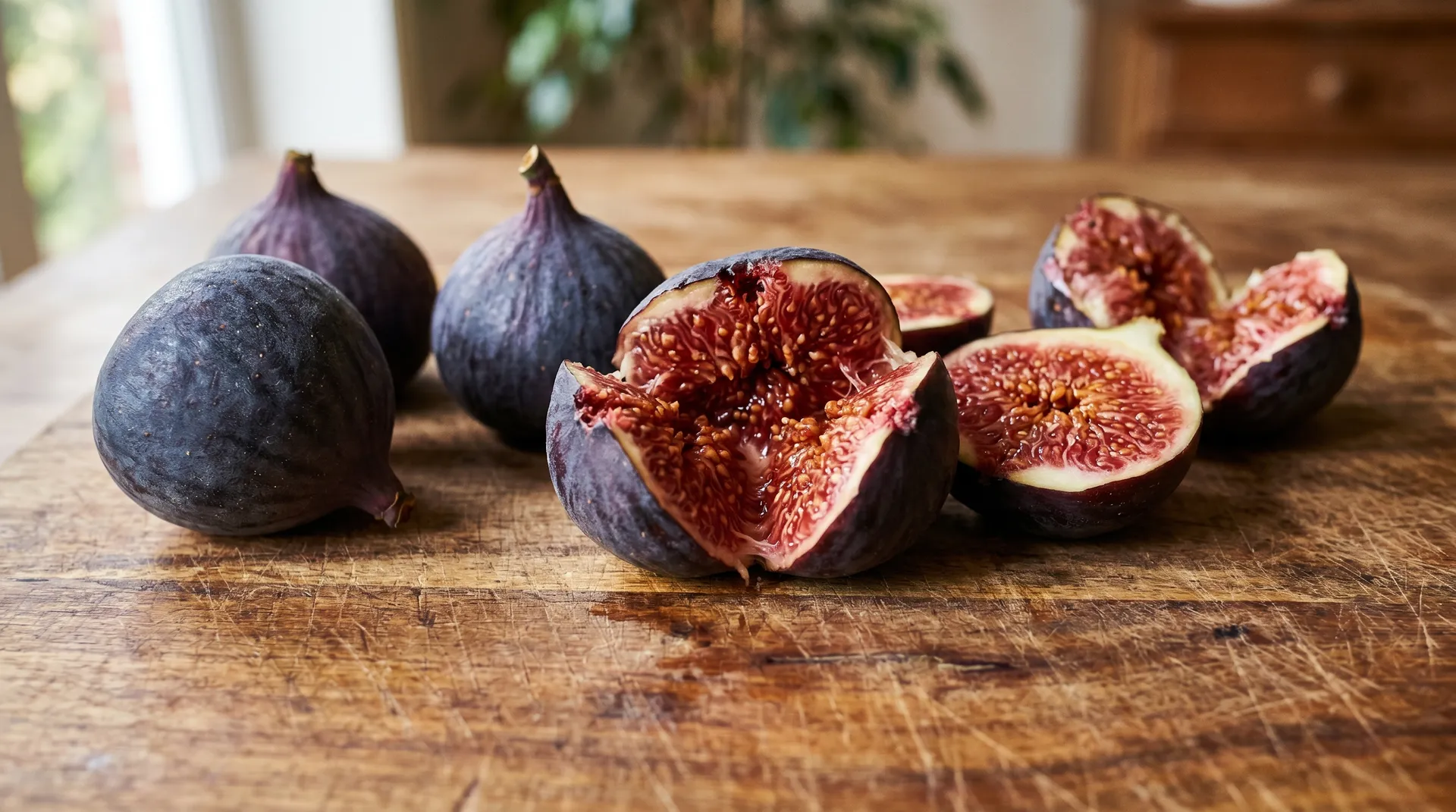
Harvest windows: zones 5–7 from mid-August through first frost [1]; zones 7–8 from July through September; zones 9–10 from June onward. The breba crop, where available, runs four to six weeks earlier. Fresh figs deteriorate within 2–3 days of harvest [6] — pick daily during peak season, refrigerate immediately, and freeze or preserve any surplus. Wear gloves when harvesting; the milky sap causes skin irritation in some people.
Winter Protection by Zone: The Mechanism That Makes Zone 5 Work
Stem hardiness and root hardiness are not the same number, and most fig guides treat them as though they are. The stems of a Chicago Hardy fig die back when temperatures drop below about 10°F. The roots of the same tree survive to –20°F [1]. When the crown regrows in spring from those living roots, it produces an entirely new set of canes — and those canes produce the full fall crop. Stem death is not tree death.
This is why variety choice matters specifically for cold-zone growers. Brown Turkey and Celeste stems survive to 0°F [3], better than Chicago Hardy stems — but their roots don’t share the same –20°F floor. In zone 5a, where winter temperatures routinely reach –15°F to –20°F, Chicago Hardy is the only reliable in-ground option.
Zone-by-Zone Winter Plan
Zones 5–6: Two approaches work reliably. The wrapping method — developed and tested by the University of Maryland Extension — involves cutting stems to 4–5 feet after leaf drop in late October or November, bundling the branches toward the trunk, and covering the entire structure with burlap or a tarp stuffed with bagged leaves or straw for insulation [1]. Remove the covering in March when overnight temperatures consistently stay above 20°F and buds are visibly swelling.
The container method is simpler in execution: grow the tree in a 15-gallon or larger pot, let it go dormant after the first hard frost, then move it to an unheated garage or basement where temperatures stay between 25°F and 40°F. Water every one to two weeks — just enough to prevent root desiccation, never enough to keep soil wet [3]. Bring it outside when overnight lows consistently hold above 30°F and buds begin to swell.
Zone 7: Apply 4–6 inches of mulch around the base after leaf drop. Chicago Hardy typically needs no additional protection in zone 7; Brown Turkey and Celeste benefit from a trunk wrap during cold snaps below 5°F.
Zones 8–10: No winter protection needed. Optional: apply 2–3 inches of mulch in November to moderate soil temperature during cool spells.
A consistent recommendation across multiple extension programs: protect young trees one zone colder than their stated hardiness for the first two to three winters [3]. A newly planted Chicago Hardy with an underdeveloped root system is not as cold-hardy as a five-year-old established tree. Give it a wrap in zone 7 for the first two winters.
Growing Figs in Containers
A fig in a pot often fruits earlier and more heavily than a comparably aged in-ground tree. The mechanism is root restriction: when roots are confined to a fixed volume, the tree shifts from vegetative expansion into reproductive mode, prioritizing fruit set over canopy growth [7]. This is a deliberate strategy used by serious growers, not a limitation to work around.
Container specifications:
- Minimum size: 15 gallons; 20+ gallons for full-sized varieties [1]
- Mix: 50:50 compost and soilless medium; avoid moisture-retention formulas, which increase root rot risk
- Repotting: Every 2–3 years into a slightly larger container — root restriction is productive up to a point, but a fully root-bound tree produces small, poor-quality fruit [7]
- How to Grow Fig Trees in Zone 6 (and Even Colder) Without Losing Them Every Winter
- Fig Tree Problems: 12 Symptoms Diagnosed and Fixed
- Types of Fig Trees: 9 Varieties Ranked by Cold Hardiness, Flavor, and Garden Fit
- Fig Trees in Zone 9: 3 Heat-Tolerant Varieties, Exact Planting Dates, and How to Protect Roots Through Summer
- Zone 10 Fig Tree Guide
- Zone 3 Fig Trees: Hardy Varieties, the Best Planting Window, and How to Winter-Protect Them
- How to Grow Figs in Zone 5
Container figs need daily moisture checks in midsummer — container soil dries far faster than ground soil, and inconsistent watering during fruit development causes splitting and premature drop. Fertilize with a liquid balanced formula monthly, May through July only [1]. Stop earlier than in-ground trees to allow growth to harden before moving indoors.
Best container varieties: Petite Negri (genetic dwarf, 4–6 feet [1]), Brown Turkey in a 20-gallon pot, and Little Miss Figgy (compact to 6 feet).
Common Fig Problems: Diagnosis and Fix
| Symptom | Cause | Fix |
|---|---|---|
| Orange-brown spots on leaves; premature drop | Fig rust (fungal) | Remove infected fallen leaves; switch to drip irrigation [2] |
| Fruit ferments or sours on the tree | Dried fruit beetle entering open ostiole | Switch to closed-eye variety; harvest at first sign of ripeness [2] |
| Fruit drops before ripening | Drought stress or tree under 3–4 years old | Consistent 1–1.5 in/week irrigation; patience — young trees routinely drop fruit [2][4] |
| Lots of leafy growth, little fruit | Excess nitrogen fertilization | Reduce fertilizer rate; skip one application; switch to lower-N formula [5] |
| No leaf-out by late May or early June | Stem kill (not root kill) from winter cold | Scratch a stem with a fingernail — green tissue means alive; wait for crown regrowth from the base [3] |
| Bark cracks on south or west side of trunk | Freeze-thaw sunscald | Whitewash the lower trunk with diluted latex paint or wrap with tree wrap for the first 3 winters in zones 5–7 |
| Root galls; stunted growth; yellowing leaves | Root-knot nematodes | No chemical cure; remove the tree and replant in a fresh, tested site [2][4] |
Propagating Figs: Hardwood Cuttings
Every fig tree in old Italian and Portuguese neighborhoods across the American Northeast descended from a cutting — carried over from the old country, rooted in a coffee can, passed from neighbor to neighbor. The method still works as well as it ever did.
Take cuttings in late February during dormancy [4]. Use 8–10 inch sections of one-year-old wood, pencil-thick to ¾ inch in diameter [3]. Bury each cutting in moist but well-drained rooting medium with one bud exposed above the soil surface. Keep evenly moist. Roots form within six months; transplant to the final position the following fall once the cutting has produced a full season of growth [4].
Sucker division is faster for getting large plants quickly: in early spring, dig and sever suckers from established trees with their roots intact, and transplant directly [2]. Plants established from suckers with a developed root system often fruit in their second season.
Key Takeaways
Three decisions determine fig success for most US home gardeners:
- Variety to zone: Chicago Hardy for zones 5–7; Celeste for the humid Southeast (zones 6–8); Brown Turkey or Black Mission for zones 7–9 where two crops are the goal.
- Site basics: South-facing exposure in cold zones, excellent drainage, pH 6.0–6.5, and 10–15 feet between trees.
- Winter plan for zones 5–7: Wrap and insulate stems after leaf drop, or grow in containers and overwinter in a frost-protected structure. The roots survive harsh winters — your job is to protect the stems or accept their loss and let the crown regrow.
The 90-day fruit window is fixed. The main crop forms on new growth, so even a tree that dies to the ground each winter will fruit if the roots survive and the growing season is long enough. The 3–4 year establishment period requires patience; after that, a productive fig tree delivers reliably for decades.
Frequently Asked Questions
How long until a fig tree produces fruit?
Expect 3–4 years from planting to the first substantial harvest [3][4]. Some young trees produce a handful of figs in year two, but consistent full crops arrive once the root system is mature. Container figs sometimes fruit in year two due to root restriction accelerating the shift from vegetative to reproductive growth.
Can you grow figs in zone 5?
Yes, with Chicago Hardy and either the wrapping method or container overwintering. The stems may die back each winter, but the roots survive to –20°F [1]. The main crop forms on new-season growth, so you’ll harvest figs in September and October even after a severe winter — you simply won’t get the breba crop.
Do fig trees need full sun?
Eight or more hours of direct sun daily is the minimum for consistent fruiting [1][2]. In zones 8–10, partial afternoon shade during the hottest months is tolerable and helps prevent trunk sunscald, but fewer than 6 hours total will significantly reduce yield.
Do I need two fig trees for pollination?
No. All common home garden varieties — Brown Turkey, Celeste, Chicago Hardy, Black Mission, Petite Negri — are parthenocarpic and set fruit without pollination [5]. The wasp-dependent pollination of Smyrna-type figs is a commercial production concern, not a home garden issue.

For a complete step-by-step walkthrough, see fig tree companion plants.
Sources
- University of Maryland Extension. “Growing Figs in Maryland.” extension.umd.edu/resource/growing-figs-maryland
- Clemson University HGIC. “Figs: How to Grow and Care for Figs in South Carolina.” hgic.clemson.edu
- Rutgers NJAES. “FS1198: Figs in the Home Garden.” njaes.rutgers.edu
- UGA CAES Extension. “Home Garden Figs” (C945). fieldreport.caes.uga.edu
- UF/IFAS EDIS. “The Fig” (MG214). ask.ifas.ufl.edu
- Mississippi State University Extension. “Celeste vs. Southern Brown Turkey Figs.” extension.msstate.edu/blog/celeste-vs-southern-brown-turkey-figs
- Royal Horticultural Society. “How to grow figs.” rhs.org.uk


