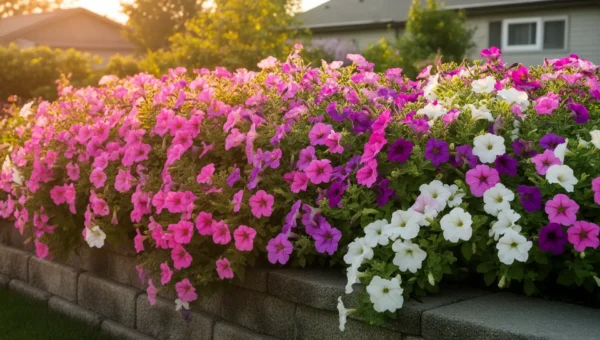
Petunia Growing Guide: Wave vs Grandiflora vs Multiflora — Which Performs Best in Pots vs Borders

Master petunia care with this complete guide covering 5 types, seasonal feeding schedules, deadheading techniques, companion planting, heat stress diagnosis, and pest prevention for non-stop summer blooms.
Understanding Petunia Types
Petunias come in five distinct types, each with different flower size, growth habit, and care needs. Choosing the right type for your space is half the battle toward petunia success.

Grandiflora Petunias: These are the “show-stoppers.” Flowers measure 3 to 5 inches across on upright plants that typically grow 12 to 15 inches tall. Grandifloras produce stunning bouquets of color but are less tolerant of rain and humidity—wet foliage encourages mildew. They also require regular deadheading to look neat and keep blooming throughout summer. If you want maximum visual impact and don’t mind spending 15 minutes a week pinching spent flowers, grandifloras deliver. Single flowers are classic; ruffled double varieties add extra texture.

Multiflora Petunias: These are the workhorses. Flowers are smaller (around 2 inches wide) but incredibly abundant—a healthy multiflora becomes a mound of continuous blooms. Multifloras are much more forgiving of rain and humidity than grandifloras, making them ideal for mixed borders or areas where you can’t deadhead religiously. They naturally branch more, so they fill in thicker on their own. Most home gardeners find multifloras easier to maintain.
Milliflora Petunias: True miniatures, millifloras produce single flowers just 1 to 1.5 inches across. What they lack in size, they make up in quantity—properly cared-for millifloras spend most of the season completely covered in blooms, creating a tight, dense mound. They’re perfect for edging, window boxes, or close-up viewing. Millifloras don’t need pinching and are quite self-cleaning (flowers drop on their own without deadheading needed).
Surfinia (Cascading/Trailing Petunias): These are the hanging basket stars. Surfinia have a vigorous, cascading growth habit and will spread 2 to 3 feet or more over a growing season, trailing down from containers or tumbling over retaining walls. Their flowers are mid-sized and prolific. Surfinias are specifically bred for containers and hanging applications; they love warmth and perform better than standard petunias in heat and humidity. They require consistent water and feeding in containers but reward you with non-stop color from May through first frost.
Calibrachoa (Million Bells): Here’s where many gardeners get confused—calibrachoa aren’t actually petunias, despite being called “mini petunias.” They belong to a different genus, but they grow so similarly that they’re usually grouped with petunias in garden centers. Calibrachoa produce tiny bell-shaped flowers (smaller than even milliflora petunias) in prolific numbers. They’re tough, heat-loving groundcovers or spillers perfect for containers and edging. Calibrachoa need weekly watering in pots and weekly feeding during peak season but repay that effort with dense cascades of color.
| Type | Flower Size | Plant Height | Spread | Best Use | Self-Cleaning | Heat Tolerance |
|---|---|---|---|---|---|---|
| Grandiflora | 3–5″ | 12–15″ | 12–18″ | Focal point, specimens | No | Moderate |
| Multiflora | 2″ | 12–18″ | 12–20″ | Mixed borders, massing | Partial | Good |
| Milliflora | 1–1.5″ | 8–12″ | 8–12″ | Edging, containers | Yes | Good |
| Surfinia | 1.5–2″ | 6–8″ (cascades 2–3′) | 24–36″ | Hanging baskets, spillers | Partial | Excellent |
| Calibrachoa | 0.5–1″ | 6–8″ (cascades 2–3′) | 24–36″ | Ground cover, spillers | Yes | Excellent |
Planting — Direct Sow vs. Transplants
Success with petunias hinges on getting the timing right. Petunias are heat-lovers—they thrive in warm soil and air, and planting too early wastes seed or kills transplants. Here’s how to choose your planting method and nail the timing.
Direct Sowing Petunia Seeds
Direct sowing is simpler but requires patience: don’t plant until soil reaches 60°F and all frost danger has passed. In most climates, that’s late May or early June. Scatter tiny petunia seeds directly on prepared soil (they need light to germinate, so don’t bury them; just press gently into soil). Keep soil moist (not soggy) until seedlings emerge in 7-10 days. Thin seedlings to 9-12 inches apart once they have true leaves. The payoff: no transplant shock, and plants harden off naturally to your garden conditions. The downside: you’ll have gaps in your planting for 6-8 weeks while seeds germinate and grow, and you sacrifice the bloom advantage of an early-planted garden.
If you are growing this for the first time, start with petunia care guide: from hybridization.
Starting from Transplants
This is the faster route and what most gardeners choose. Sow seeds indoors 10-12 weeks before your last spring frost date. (Check your local frost date at your county cooperative extension website.) Seeds germinate best at 70-75°F under grow lights or on a bright windowsill. Once seedlings have 2-3 sets of true leaves, pinch off the growing tip to encourage bushy, branched growth—this step prevents the leggy seedlings gardeners often curse. Transplant seedlings into larger containers (2-3″ pots) when they’re about 3 inches tall. Harden off seedlings 7-10 days before moving them outdoors (gradually expose them to outside conditions: 1 hour in a sheltered spot on day 1, increasing daily until they live outside full-time). Plant outdoors after the last frost date and soil has warmed to 60°F.
The Simple Heat Rule
Here’s a practical shortcut: if you can walk barefoot on the soil without wincing, it’s warm enough to plant petunias. Soil below 60°F = petunias won’t root or grow properly. Wait a week or two after your official last frost date to be safe, especially if you have a late-season cold snap that chills soil.
Year-Round Care Schedule
Once petunias are in the ground, success comes from consistency. Petunias aren’t finicky, but they do have clear preferences. Master these four care elements—sunlight, soil, water, and feeding—and your petunias will reward you.

Sunlight: The Non-Negotiable
Petunias demand light. They need a minimum of 5 to 6 hours of good direct sunlight daily. In full sun (8+ hours), they’ll bloom heavily and stay compact. In partial shade, they’ll stretch, flower less, and become leggy. If your petunias aren’t blooming well despite good care, check sunlight first—it’s the most common limiting factor.
Soil: Prepare Once, Succeed All Season
Petunias don’t demand rich soil, but they do demand drainage. Before planting, mix 2 to 3 inches of compost, aged manure, or peat moss into your bed. This improves drainage in heavy clay soils and adds organic matter that holds moisture in sandy soils—the sweet spot. Container petunias should be potted in high-quality potting soil (not garden soil, which compacts in pots), ideally one with perlite or vermiculite mixed in for aeration.


Watering: Deep and Consistent
In-ground petunias typically need one deep watering per week—approximately 1 inch of water (or 6 to 8 inches of soil moisture penetration). Water early morning to reduce disease pressure. Container petunias dry faster and need water 2 to 3 times per week during hot weather, and daily watering during extreme heat (95°F+). The simple test: stick a finger 2 inches into soil. If it feels dry, water. If it’s moist, wait.
Seasonal Feeding Schedule
This is where most gardeners go wrong or inconsistent. Here’s a proven month-by-month feeding routine:
- At Planting (Late May–June): Work balanced fertilizer (8-8-8, 10-10-10, or 12-12-12) into soil at 2 pounds per 100 square feet. This initial boost fuels root establishment.
- June–Early July: Switch to liquid fertilizer every 2 weeks. Use a balanced formula (equal NPK). Examples: 10-10-10 or fish emulsion at label rate.
- Mid-July Through August: This is the critical shift. Switch to a phosphorus-heavy “bloom booster” fertilizer (look for NPK ratios like 10-30-20 or 5-50-17). Why? Phosphorus (the middle number) drives flower production. If you keep feeding high-nitrogen fertilizer all season, you’ll end up with a massive bush and almost no blooms—nitrogen promotes foliage. Mid-July is when petunias have enough leaves and need the nutrient nudge toward flowers.
- In-ground petunias: Liquid bloom booster every 2 weeks
- Container or spreading petunias: Weekly applications of diluted bloom booster (at half strength to avoid salt buildup)
- September: Reduce feeding to every 3 weeks. Growth is slowing as days shorten.
- October and Beyond: Stop feeding. Plants are naturally shutting down as frost approaches.
The fertilizer shift in mid-July is the secret that separates gardeners who get August blooms from those who get August exhaustion.
Deadheading, Pinching & Shearing
Three cutting techniques transform petunias from “nice” to “spectacular.” Each serves a purpose, and knowing when to use which technique matters.

Deadheading: The Weekly Habit
Deadheading is simply removing spent flowers. Here’s the key detail most gardeners miss: seeds develop below the flower head, so you can’t just pinch off the wilted petals. You must remove the entire flower stalk at its base. Use your thumb and forefinger or small scissors to snap or cut the stalk right where it emerges from the main stem, leaving no stub.
Why does this matter? Petunias have a biological priority: make seeds. Once a flower fades and sets seed, the plant thinks it’s succeeded in reproducing and slows down new flower production. Removing the seed source before it fully develops tricks the plant into making more flowers to try again. Deadhead once weekly for non-stop blooms. Skip deadheading for two weeks, and you’ll notice a bloom decline.
Pinching: Early-Season Branching
For grandiflora and multiflora petunias only (don’t pinch milliflora or spreading types), when plants reach about 6 inches tall, pinch off the top growing tip using your thumb and forefinger. This forces the plant to branch below the pinch, creating a thicker, bushier plant with more flower stems. Pinching should happen in late May or early June—only once. If you pinch too late (July), you sacrifice early blooms without gaining enough time to regrow. If you pinch early (May), you get a full, rounded plant by mid-July.
Shearing: Mid-Summer Renewal
By mid-to-late July, many petunias start to look tired—long, bare stems with flowers only at the tips (leggy growth). This is where shearing comes in. Using garden shears or scissors, trim approximately one-third of the overall plant—both foliage and old flower stems. Don’t be timid; you won’t kill the plant. Within 2-3 weeks, new branching emerges from nodes along the stems, and the plant comes back fuller and more floriferous. Many gardeners shear again in mid-August for a final flush through September.
| Technique | When | Purpose | Plant Types |
|---|---|---|---|
| Pinching | Once, at 6″ tall (May–June) | Force early branching | Grandiflora, Multiflora only |
| Deadheading | Weekly, all season | Extend bloom by preventing seed | All types |
| Shearing | Mid-July, and optionally mid-Aug | Rejuvenate leggy plants | All types (preventive or corrective) |
Companion Planting
Petunias don’t have to stand alone. Pairing them with complementary plants creates more interesting combinations and can offer practical benefits too.
Marigolds: The classic petunia companion. Marigolds repel common petunia pests like budworms and whiteflies, and their warm yellow and orange tones contrast beautifully with petunia purples and deep reds. Plant marigolds on the upwind side of your petunias (in the direction of prevailing wind), and their strong scent will carry to potential pests. Both plants love sun and heat, so they share growing conditions.
Stop missing your zone's planting windows.
Select your US zone and month — get a complete checklist of what to plant, prune, feed, and protect right now.
→ View My Garden CalendarSweet Alyssum: Low, delicate white, pink, or purple groundcover (6-12″ tall) that creates a soft edge or filler around taller petunias. Alyssum attracts beneficial insects like hoverflies and parasitic wasps that feed on aphids and small pests. It self-seeds reliably and blooms continuously if deadheaded. Alyssum and petunias have identical watering and feeding needs, so they’re an easy pairing.
Salvia: Purple, blue, or red spikes (12-24″ depending on variety) add vertical interest next to petunia mounds. Many salvias flower at the same time as petunias and attract the same pollinators (bees, hummingbirds). Salvias prefer slightly drier soil than petunias, so plant them on the higher side of a sloped bed if possible, but they’re tolerant enough to coexist.
Other Filler Flowers: Verbena, other calibrachoa varieties, lobelia, and diascia all work well in combinations with petunias. The rule is simple: choose plants with similar sun and water requirements, and use height and color contrast to make each plant stand out.
Heat Stress & Humidity Wilting
Petunias love heat, but extreme heat combined with high humidity creates stress. Learning to diagnose heat stress versus disease or root problems is crucial.

The Optimal Growing Zone
Petunias thrive between 65°F and 80°F. Above 85°F, they begin to stress. In the 90°F+ range, they struggle. The good news: petunias grown in well-drained soil with consistent moisture handle heat better than those in poor soil or droughty conditions.
For zone-specific planting dates, heat-tolerant variety picks, and the mid-summer cutback strategy that resets plants for fall, see our complete guide to growing petunias in zone 8.
Reading Petunia Wilting: Temporary vs. Crisis
On a hot afternoon (95°F+), petunias may droop noticeably at 3 PM even with moist soil. This is temporary heat stress, and it’s usually harmless—the plant recovers by evening as temperatures cool. However, all-day wilting even in early morning (before the hottest part of the day) signals a deeper problem: possible root rot, disease, or prolonged drought stress.
Diagnosis: Wilting at 3 PM that resolves by 7 PM = normal temporary stress. Wilting at 8 AM or staying wilted all day = investigate. Gently dig around the base of the plant and inspect roots. Healthy roots are white or pale tan and firm. Rotted roots are black, mushy, or have a foul smell. If roots look healthy, the problem is likely inadequate water during previous days’ heat or disease (see Section 7). If roots are rotted, the problem is overwatering or poor drainage; reduce watering immediately and improve soil drainage for future plantings.
Solutions for Heat Stress
- Water frequency: During 90°F+ heat waves, water 2 to 3 times per day if necessary. It sounds excessive, but containers especially dry fast, and petunias need consistent moisture under heat stress.
- Mulch: A 2-inch layer of organic mulch (compost, wood chips) around in-ground petunias reduces soil temperature by 5-10°F and moderates moisture swings. Don’t mulch right up to the stem; leave a 2-inch gap to prevent stem rot.
- Afternoon shade: On extreme heat days (95°F+), 30-minute afternoon shade (2-4 PM) can reduce heat stress without cutting off the full-sun requirement. However, don’t overdo it; excessive shade reduces blooming.
- Heat-tolerant varieties: Supertunias and Easy Wave petunias are specifically bred to tolerate heat and humidity better than standard varieties. If you live in a consistently hot region, start with these.
- How to Propagate Petunias: Cuttings Root in 7–14 Days, Seeds Bloom in 10 Weeks
- Why Your Petunias Are Leggy, Sticky, or Dropping Buds — and How to Fix Each
- Zone 5 Petunias: Exact Planting Dates, Hardy Varieties, and the Care Tricks That Survive the Frost
- Zone 10 Petunias: Plant in Fall for Non-Stop Winter Blooms (Varieties That Handle the Heat)
Common Pests & Diseases
Three pests and one disease account for most petunia problems. Focus on prevention first; treat only if prevention fails.

Tobacco Budworm (Geranium Budworm)
Tobacco budworms are caterpillars (Heliothis virescens) that specifically target petunia buds. They tunnel into developing flower buds, preventing them from opening. Damaged buds never produce flowers—a significant loss if you have many budworms.
Identifying the pest: Look for small holes in buds with dark frass (droppings) around the opening. The caterpillars themselves are harder to spot because they spend most time inside buds, but if you see them, they’re about 1.5 inches long, brown, red, purple, or green depending on diet.
Prevention: Budworms lay eggs on plant foliage, and parasitic wasps (natural enemies) kill the eggs. Planting flowering herbs like alyssum, feverfew, or dill nearby attracts these beneficial wasps. Hand-picking larvae from buds and destroying them works but is tedious for large plantings.
Treatment: If budworm damage becomes severe, Bacillus thuringiensis (Bt) organic spray offers limited help—budworms don’t eat enough of the Bt toxin while burrowed in buds. More effective: spinosad spray (also organic, kills on contact or ingestion) applied every 7 days. Neem oil is less effective.
Spider Mites
Spider mites are tiny arachnids that suck plant juices, causing yellowing, stippling (tiny holes), and fine webbing on leaves and stems.
Identifying the pest: Look for fine webbing on leaf undersides and between stems. Leaves show a speckled, pale appearance. Heavy infestations make the webbing obvious.
Prevention: Spider mites hate humidity. Misting foliage weekly (especially leaf undersides) with water discourages them. Avoid over-fertilizing with nitrogen, which produces soft, attractive foliage for mites. Remove heavily infested leaves.
Treatment: Neem oil or horticultural oil spray every 5-7 days for 3 weeks, targeting leaf undersides. For severe infestations, predatory mites (available from garden suppliers) eat spider mites. Release them into the infested area and maintain moderate humidity so they survive.
Whiteflies
Whiteflies are small, white-winged insects that cluster on leaf undersides and create clouds of insects when you brush the plant. They suck plant juices, weakening foliage and excreting sticky honeydew that promotes black sooty mold.
Identifying the pest: Small clouds of white insects when you disturb the plant; yellowing leaves; sticky residue on lower leaves and anything below the plant.
Prevention: Yellow sticky traps placed near petunias catch many whiteflies before they colonize. Avoid high-nitrogen fertilizers (they promote soft, attractive foliage). Remove heavily infested leaves.
Treatment: Insecticidal soap spray every 7 days kills nymphs on contact. Neem oil is less effective. Repeat for 3 weeks to catch successive generations.
Powdery Mildew
Unlike the insects above, powdery mildew is a fungal disease. Leaves develop a white, powdery coating, typically starting on lower leaves and spreading upward if untreated.
Prevention: Powdery mildew thrives in warm (70-85°F), dry conditions with poor air circulation. Space petunias 12 inches apart (not crowded) to allow air to circulate. Water soil only, never foliage, which leaves moisture that can promote other fungal diseases. In humid regions, prune heavily infected stems and thin out dense foliage in mid-July to improve air movement.
Treatment: Potassium bicarbonate fungicide (available as a dust or spray) alters the pH on leaf surfaces, slowing mildew growth. Sulfur dust is effective but can damage foliage in extreme heat (above 85°F). Remove and discard heavily infected leaves. Repeat treatments every 7-10 days until mildew subsides.

Frequently Asked Questions About Petunias
Why Aren’t My Petunias Blooming?
Top 3 causes: (1) Shade (need 6+ hours sun); (2) Fertilizer mistake (high-nitrogen fertilizer = leaves, no blooms — switch to phosphorus-heavy “bloom booster”); (3) Overwatering (keeps roots soggy, reduces root growth).
Diagnose with this order: Check sunlight > Check soil moisture (stick finger 2 inches in; if wet, reduce watering) > Check fertilizer bag NPK ratio (if first number > third, switch products).
Why Are My Petunias Leggy?
Leggy petunias have long bare stems with flowers only at the tips. Three solutions: (1) Pinch when 6″ tall to force branching (should have done this in May); (2) Prune back branches by 2/3 now, wait 3 weeks for new growth; (3) Deadhead EVERY week going forward (forces branching, not just flowering). Expect 3-4 weeks before dense regrowth.
Can I Save Petunia Seeds?
Yes, but read the seed packet first. If it says “F1 Hybrid,” seeds won’t grow true (offspring will differ). If it says “variety” or “cultivar,” proceed. Steps:
- Let flowers fade completely; pods turn tan/brown after 1-2 weeks
- Cut brown pods into paper bag, dry for 7-10 days in warm room
- Crack open, extract tiny black seeds onto white paper
- Store in paper envelope in cool, dry place (40-50°F ideal)
Seeds stay viable 2-3 years.
Can I Overwinter Petunias and Regrow Them Next Year?
Petunias are tender perennials (frost-tender in all but zones 9-11), so technically yes, but it’s easier to replant. If you want to try:
Dormant method — Cut plants to 2″ in September, pot up, store in cool garage/basement (40-55°F), water only when bone dry every 3-4 weeks, move back outside after last spring frost.
Active method — Grow indoors under grow lights (10+ hours daily), water + fertilize normally; more work, less reliable.
Cutting method — Take softwood cuttings in late Aug, root on windowsill, keep as houseplants all winter.
Most gardeners just buy new plants; it’s cheaper than the hassle.
Wrapping Up: Petunia Success Simplified
Petunia success boils down to a surprisingly simple formula: right type + consistent seasonal care + weekly deadheading + early pest prevention. The time investment is modest—maybe 2 to 3 hours per season for deadheading, pinching, and shearing—but the payoff is disproportionate. A well-maintained petunia bed delivers color and impact that rivals formal plantings costing ten times as much.
Start with sunlight and soil. Get those right, and you’ve eliminated 80% of petunia problems before the first flower even opens. Then commit to deadheading once weekly—set a calendar reminder if you need to. That single habit, consistently applied, is the difference between a tired-looking plant by late July and one still bursting with blooms in October.
Next season, you’ll know your soil, your water needs, and your local pest pressure. Adjust your variety selection and feeding schedule based on what worked and what didn’t. Petunias reward observation and consistency. Grow one season with this guide, and you’ll become the gardener in your neighborhood whose petunias people stop to photograph.

If you garden in USDA zone 3, the short frost-free season requires a specific approach to petunia timing and variety selection. Our guide to growing petunias in zone 3 covers the exact indoor start calendar, the cold-tolerant varieties that initiate blooms at 55°F, and the mid-season cutback technique that extends color all the way to September.
Zone 7 gardens from the NC Piedmont to central Virginia and inland Tennessee get a six-month petunia season, but the July-August heat demands specific variety choices and timing. Our zone 7 petunia guide covers the exact transplant windows for 7a and 7b, eight heat-tolerant varieties that hold up through summer, and the mid-season cutback strategy that keeps color running through to October frost.
Growing Petunias by USDA Zone
Timing, variety selection, and care schedules shift with your hardiness zone. For zone-specific planting calendars and variety guidance:
- Zone 4 Petunias Bloom June Through September — If You Get the Planting Window Right
- Growing Petunias in Zone 6: Start Seeds in February, Transplant After May 1
- Growing Petunias in Zone 9
Sources
University of Minnesota Extension. Growing Petunias
Mississippi State University Extension. How to Deadhead Petunias
Proven Winners. Caring for Supertunias
Epic Gardening. How to Save Petunia Seeds For Next Year
Gardening Know How. Overwintering Petunias: Growing Petunia Indoors Over Winter