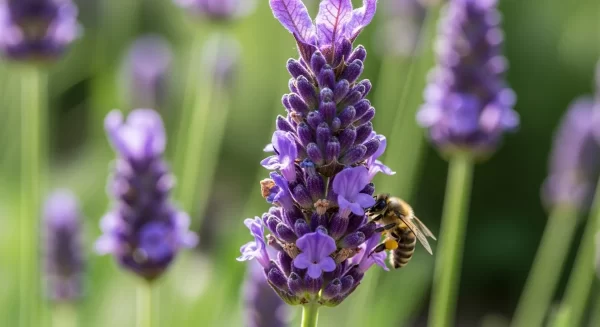
Is Your Lavender Thirsty or Doing Well? 5 Signs That End the Guessing

Your lavender is drooping — but is it thirsty or drowning? 5 signs reveal the truth in under 2 minutes, plus a month-by-month watering calendar.
I’ve seen more lavender killed by attentive gardeners than by neglect. The most common mistake isn’t forgetting to water — it’s watering when the plant is already drowning.
When lavender droops, most gardeners reach for the watering can. That instinct is almost always wrong, and in many cases it’s the thing that finishes the plant off. Lavender from the Mediterranean evolved for thin, rocky soil, baking sun, and summers with little rain. Its roots are designed to find water in dry conditions, not to survive in wet ones.
The real challenge isn’t memorizing a watering schedule. It’s learning to read what your plant is actually telling you — and being able to distinguish between a plant that genuinely needs water and one that’s struggling because it already has too much. Both conditions look similar from a distance: drooping foliage, dull color, sluggish growth. The causes are opposite, and so is the fix.
This guide covers five specific signs you can check in under two minutes to tell whether your lavender is thirsty or doing well, a month-by-month watering calendar, and a step-by-step rescue plan for plants that have been overwatered. Whether you’re growing lavender in the ground or in a container, the starting point is always the same: diagnose first, water second.

Get a free pre-planned flower bed (vase-worthy from June to frost)
Printable planting plans for a cut-flower bed and a cottage pollinator bed — plant list, spacing, and calendar included.
Why Lavender Is Built to Thrive With Less Water Than You Think
Lavender is native to the Mediterranean basin — southern France, Spain, the Italian coast, and North Africa — where summer rainfall is sparse, soils are thin and stony, and temperatures regularly top 90°F. Every part of the plant reflects this heritage.
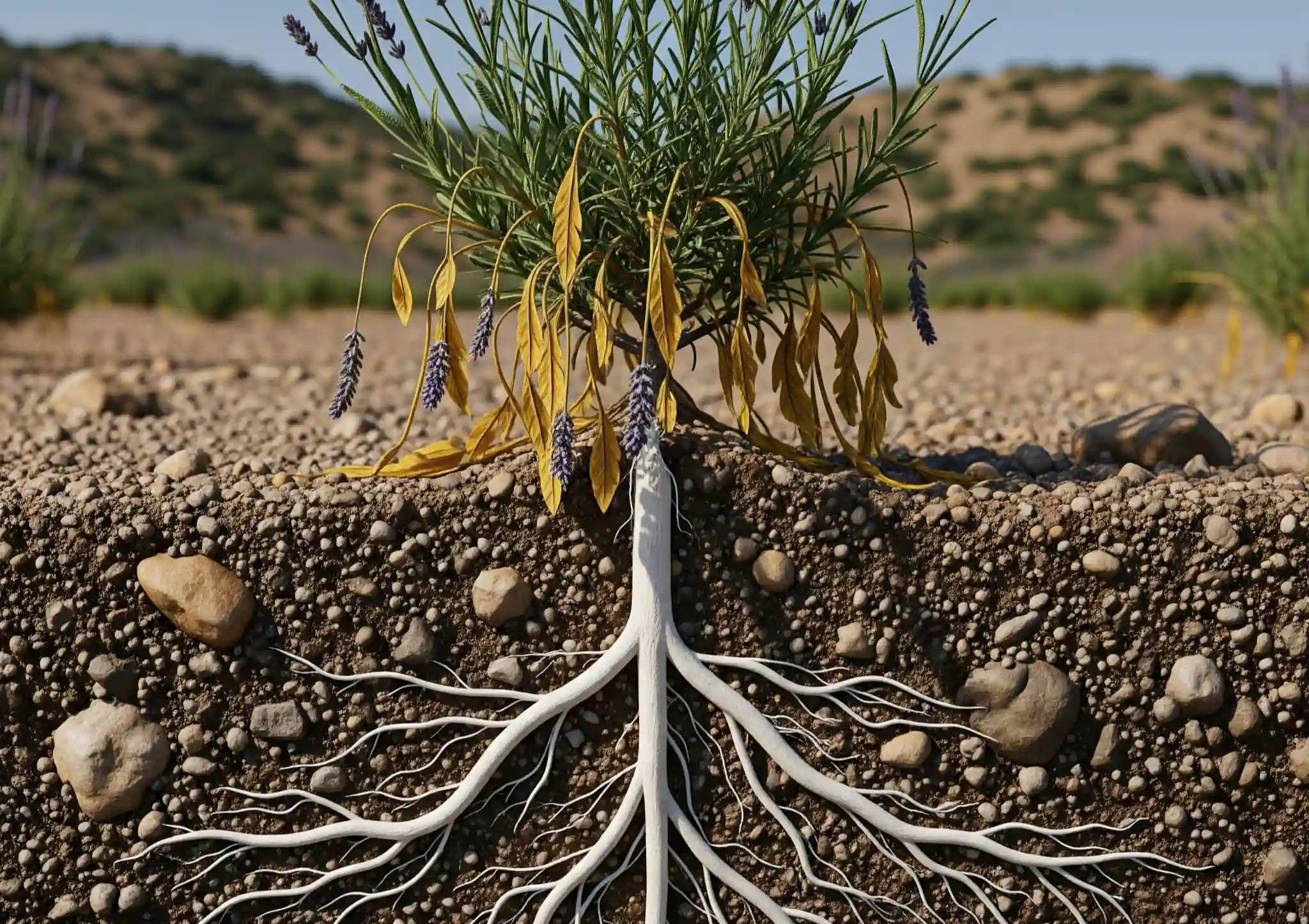
The root system is the most important factor. Established lavender develops a deep tap root that can reach 18 to 24 inches below the soil surface, drawing moisture from layers that stay cooler and slightly damp long after the top six inches have dried out. Frequent shallow watering — the kind that wets only the top inch or two — keeps roots near the surface, where they’re most vulnerable to heat stress. Deep, infrequent watering trains roots to go where the moisture is and stay there.
The silvery-grey foliage isn’t just attractive. Small, narrow leaves with a reflective coating reduce water loss through transpiration. In peak summer heat, lavender partially closes its stomata — the microscopic pores that exchange gases and water vapor — to conserve moisture. A healthy plant can look slightly wilted on a scorching afternoon and recover fully by evening. That’s not dehydration. That’s the plant doing exactly what it evolved to do.
The soil preference completes the picture. Lavender thrives in alkaline, gritty, or sandy soils that drain fast. When roots sit in dense, waterlogged soil, oxygen levels drop. Without oxygen, the fine root cells can’t generate the energy needed to move water and nutrients upward — so the plant becomes physiologically drought-stressed even when surrounded by moisture. That’s the mechanism behind most lavender deaths: the roots lose function from lack of oxygen, and the plant dies of effective thirst despite wet soil.
The 5 Signs: How to Read Your Lavender in Under 2 Minutes
Before reaching for the hose, run through these five checks. Together they take under two minutes and will tell you exactly what your plant needs — or whether it needs anything at all.
1. The Finger Test (Most Reliable)
Push your index finger into the soil to a depth of 4 to 6 inches for in-ground plants, or 2 to 3 inches — roughly two knuckles — for container plants. If the soil feels completely dry at that depth, the plant may need water. If it still feels cool, firm, or retains any moisture, wait another day or two before testing again.
The depth matters more than most guides acknowledge. The surface can look and feel bone-dry while soil at root level is still adequately moist. Watering because the top inch is dry is one of the most common pathways to overwatering lavender.
2. Foliage Color and Texture
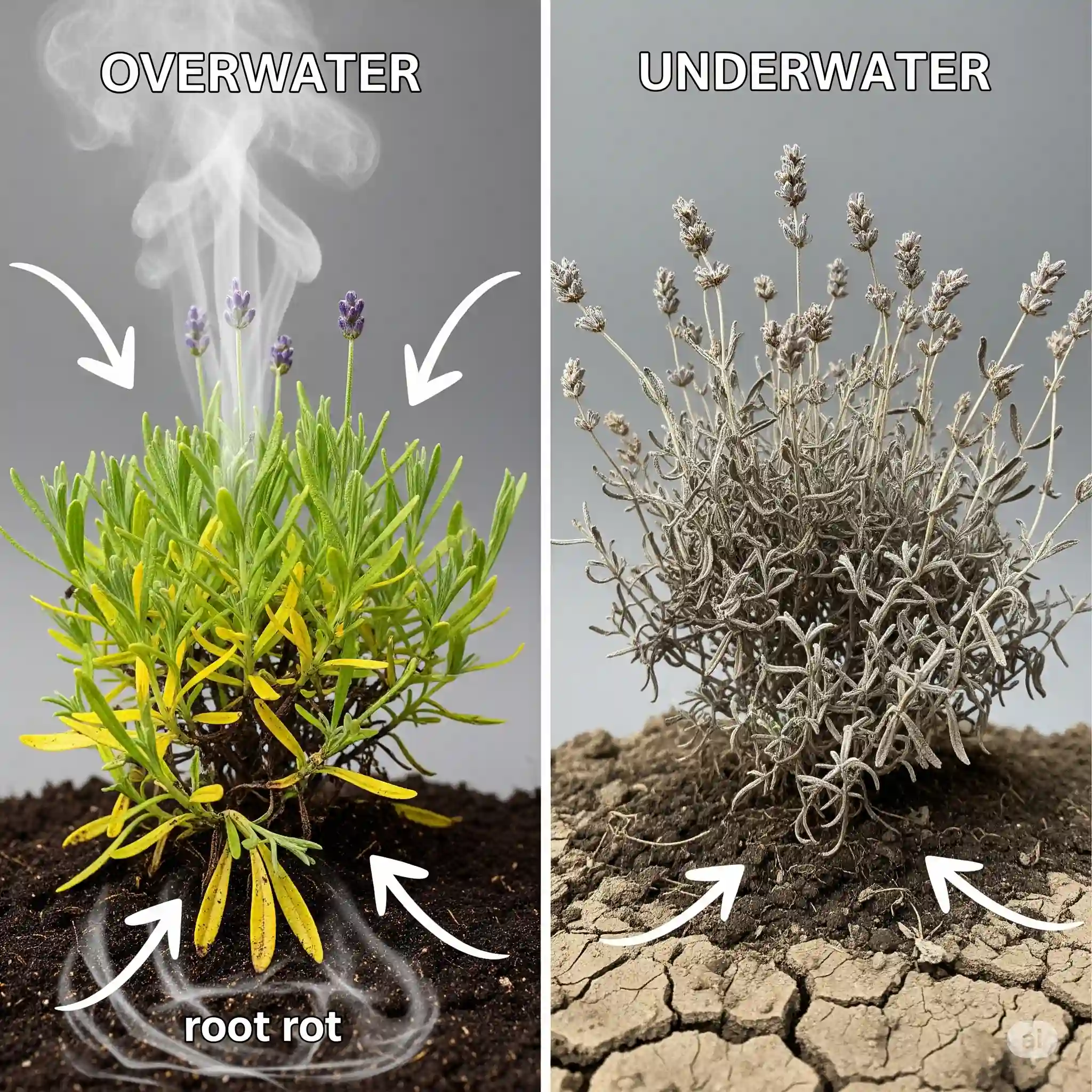
Underwatered lavender turns crispy. The leaf tips go grey-brown, the foliage feels papery or stiff, and the plant may take on a dry, slightly bleached appearance. This is uncomfortable for the plant but almost always recoverable with a thorough watering.
Overwatered lavender turns yellow — starting with the lower leaves, which become soft, slightly translucent, and may drop off. The plant droops even when the soil is damp. A musty or sour smell rising from the soil base confirms that anaerobic conditions are developing at root level and fungal activity has begun.
3. Stem Firmness at the Base
Gently squeeze a lower stem near the soil line. A healthy plant feels firm and slightly woody. An underwatered plant feels dry and rigid. An overwatered plant — particularly one developing root rot — feels soft, spongy, or mushy near the base. Brown or black discoloration alongside soft tissue at soil level indicates that Phytophthora root rot has likely taken hold, a soil-borne pathogen confirmed in six distinct species affecting lavender that spreads specifically through irrigation water and standing moisture.
4. Pot Weight (Containers Only)
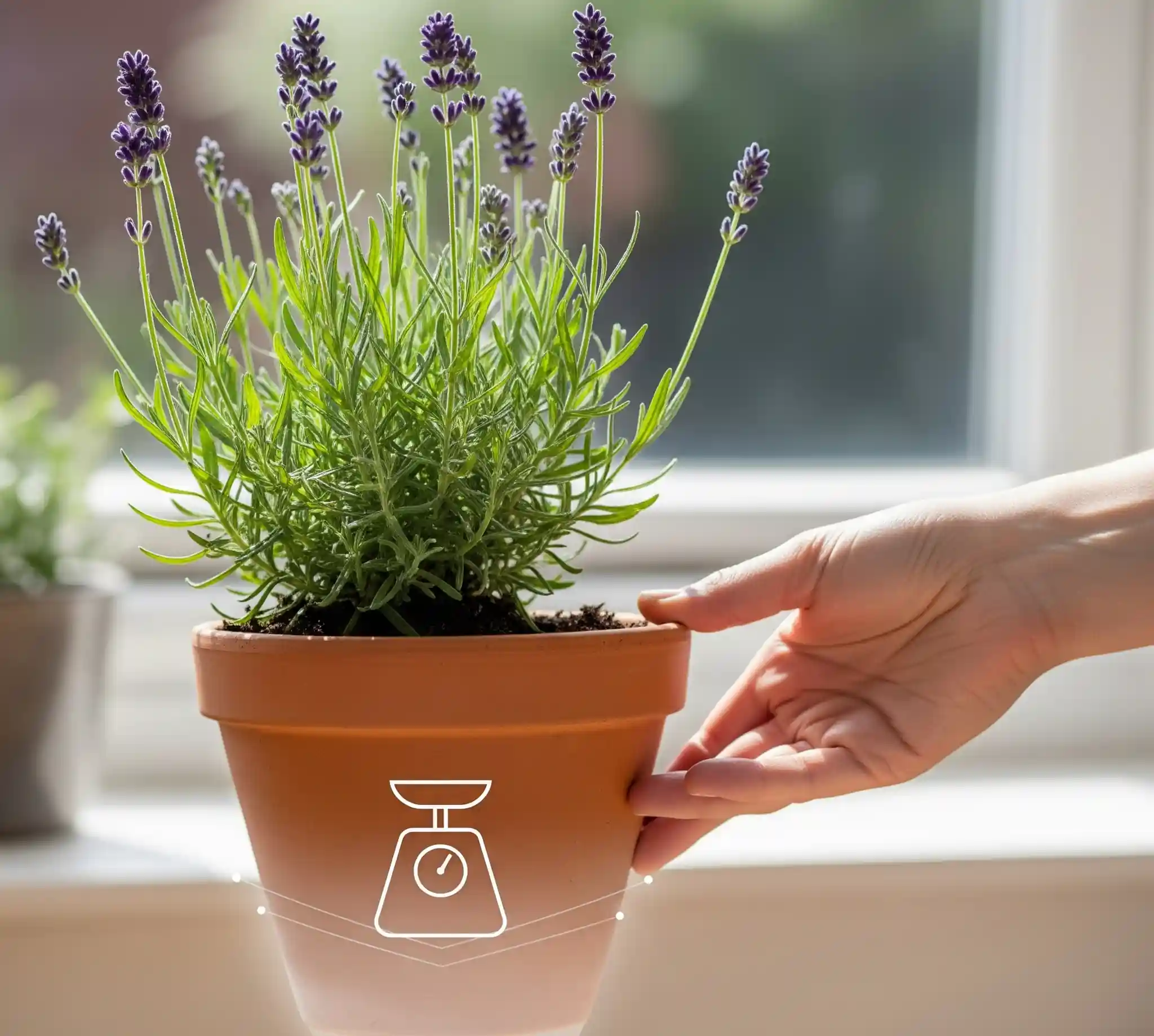
Lift your container immediately after a thorough watering and register how it feels. When the pot feels noticeably lighter — roughly 30% less than its just-watered weight — the soil has dried adequately and it’s time to water again. This method outperforms any fixed calendar schedule because it adjusts automatically for temperature, humidity, and pot material. A terracotta pot loses moisture faster than plastic; a heat wave can dry soil in three days instead of ten. The weight tells you what the calendar can’t.
5. Soil Surface and Drainage Check
Look at the soil surface. White salt crust, green algae, or fuzzy mold signal that the soil is staying too wet for too long — early warning signs to correct before root rot develops. Also check the drainage hole: if water pools on the surface before slowly soaking in, or barely drips from the bottom after watering, the potting mix has compacted and needs replacing.
If all five checks look fine — no yellowing, no crispiness, firm stems, pot retains some weight, clean soil surface — your lavender is doing well. The correct response is to do nothing.
Quick Diagnosis: Symptom, Cause, and Action
| What You See | Most Likely Cause | Action |
|---|---|---|
| Drooping + yellow, soft leaves + damp soil | Overwatering / root hypoxia | Stop watering; improve drainage; check stem base for soft rot |
| Crispy, grey-brown tips + bone-dry soil | Underwatering | Water deeply until drainage appears; repeat in 48 hours if needed |
| Drooping + dry soil at 4–6 inch depth | Genuine thirst | Water thoroughly and deeply |
| Soft, dark stems at soil level + musty smell | Root rot (Phytophthora / Pythium) | Remove from soil; trim damaged roots; repot in dry gritty compost |
| Mold or algae on soil surface | Persistent excess moisture | Let soil dry completely; top-dress with grit; review drainage |
| Firm stems + slightly dry surface + normal color | Plant doing well | Do nothing — this is exactly what you want |
Watering by Life Stage
Lavender’s water needs shift significantly as it matures. Most mistakes happen when gardeners apply established-plant advice to a first-year plant, or continue intensive watering into year two when the plant no longer needs it. Getting the life stage right matters as much as getting the frequency right.
Stop missing your zone's planting windows.
Select your US zone and month — get a complete checklist of what to plant, prune, feed, and protect right now.
→ View My Garden CalendarFirst 12 Weeks After Planting
A newly planted lavender hasn’t yet developed the root system it needs to buffer against drought. For the first three months, water every three to four days when no significant rainfall has occurred. The goal is to prevent the root zone from drying out completely while the roots extend — not to keep the soil persistently moist.
Always water deeply. A surface sprinkle wets only the top inch and encourages roots to stay shallow, where they’re most vulnerable to summer heat. Pour enough water to drain freely from the base of a container, or saturate in-ground soil to at least six inches depth. One gallon per plant per week is a reasonable starting baseline for new in-ground lavender under average conditions.
Months 3–12: First Full Season
As the root system develops, reduce watering gradually. By month three, once per week in the absence of rain is typically sufficient. By autumn of the first year, water only when no significant rain has fallen for 10 days or more.
A first-year plant isn’t fully drought-proof. Its roots have extended but haven’t gone deep enough to buffer against multi-week midsummer dry spells. Watch for the crispy foliage sign during hot stretches, but lean toward less rather than more — root rot is still more dangerous than a day or two of mild drought stress at this stage.
Year 2 and Beyond: Established Plants
Once lavender completes its second growing season, in-ground plants in temperate climates with 18 to 24 inches of annual rainfall typically need no supplemental watering — only during genuine extended droughts of three weeks or more with no meaningful rain.
The signals that a plant has reached this stage: strong new growth in spring, reliable flowering, staying visibly healthy through dry periods without wilting. At that point, the default answer to “should I water my lavender?” is no. In USDA zones 5–8 with average precipitation, most established in-ground lavender needs watering just a handful of times per growing season — and in wet years, possibly not at all.
Container Lavender: Different Rules, Higher Stakes
Container-grown lavender behaves differently because the roots have a limited volume of soil to draw moisture from — and that soil can dry out fast in summer or stay stubbornly wet in winter. The Royal Horticultural Society specifically notes this distinction, recommending once or twice weekly watering in hot summer weather for potted lavender — a schedule that would kill an established in-ground plant if applied there.
Three container mistakes account for most problems:
Overpotting: A small lavender in a large pot leaves excess compost that stays wet long after the roots have used their moisture. Choose a container 1 to 2 inches larger than the root ball — no more. Excess soil volume is a sustained moisture trap that creates precisely the anaerobic conditions lavender roots can’t tolerate.
No drainage holes: Lavender will die in any container without drainage, no exceptions. If you want to use a decorative pot without a hole, use it as a sleeve around a drainage-holed inner container — never plant directly into an undraining vessel.
Saucers left standing: Empty any saucer that collects water after watering. A full saucer continuously wicks moisture back into the root zone, keeping conditions anaerobic for days. For more on long-term container management, see our guide to growing lavender in pots.
For soil mix, use roughly 70% multipurpose potting compost to 30% horticultural grit or perlite. This drains fast enough for lavender’s needs while retaining enough structure for the roots to anchor. Standard potting compost alone retains too much moisture — adding grit is not optional. For guidance on the right soil composition for both containers and garden beds, our lavender soil requirements article covers amendments and drainage testing in detail.
Month-by-Month Watering Calendar (USDA Zones 5–8)
Your watering schedule should shift with the seasons, not just the temperature. Here’s a practical guide for both in-ground and container lavender across temperate US growing zones.
| Month | In-Ground (Established) | Container |
|---|---|---|
| January–February | None | Every 4–6 weeks indoors; none for outdoor containers |
| March–April | None unless spring is unusually dry (2+ weeks, no rain) | Every 10–14 days; resume as new growth appears |
| May–June | Only if 2+ weeks with no significant rain | Every 7–10 days; confirm with finger test |
| July–August | Only during extended drought (3+ weeks, no rain) | Every 5–7 days during heat; check above 85°F |
| September | Reduce; only if dry spell continues | Every 10–14 days; begin tapering off |
| October–November | None | Every 14–21 days; keep on the dry side |
| December | None | Once per month indoors; none for outdoor containers |
For zones 9–10 with warm winters and dry summers: July and August are the critical months for new plants, but even then established in-ground lavender in good drainage rarely needs supplemental water. Winter rain provides your irrigation — focus on drainage rather than irrigation frequency. Containers in warm climates still need year-round monitoring because high temperatures can compress a 10-day watering interval to five days without warning.
The Trap Most Gardeners Fall Into: Overwatered Lavender That Looks Thirsty
Overwatered lavender droops. Its lower leaves go yellow. It looks like a plant that hasn’t seen water in weeks. And when a gardener who hasn’t watered in several days sees a drooping plant, the natural response is to water immediately.
This is the mechanism behind most lavender deaths — not negligence, but attentive care applied in the wrong direction.
When the root zone becomes waterlogged, the soil turns anaerobic. Without oxygen, root cells cannot perform the metabolic functions that move water and nutrients upward through the plant. The lavender is effectively experiencing drought stress even though it’s sitting in wet soil. Every additional watering extends those anaerobic conditions and accelerates root damage. By the time the foliage looks bad enough to catch your attention, the roots may already be beyond recovery.
If your lavender is drooping, follow this sequence before doing anything else:
- Check the soil at 4 to 6 inches depth. If it’s damp, do not water.
- Check the base of the plant. Soft, dark, or spongy tissue at soil level means root rot is developing.
- Smell the soil. A musty, sour, or sulfurous odor confirms anaerobic bacterial activity at root level.
- If overwatering is confirmed: move containers to full sun and let the soil dry completely before watering again — this can take two to three weeks. For in-ground plants, check whether water pools in the area after rain. If it does, the plant needs relocating to better-drained ground. No adjustment to watering frequency will help if drainage is structurally poor.
Underwatering is almost always recoverable. Crispy, dry lavender in parched soil can be rehydrated with a deep soak, and most plants show visible improvement within 24 to 48 hours. Permanent damage from underwatering is rare unless the drought stretched for several weeks without relief.
When in doubt, don’t water. Lavender tolerates drought far better than it tolerates excess moisture. For a deeper look at diagnosing and treating root rot, see our lavender root rot guide.
Frequently Asked Questions
How do I know if my lavender needs water?
Use the finger test: push your finger 4 to 6 inches into the soil for in-ground plants, or 2 to 3 inches for containers. If the soil is completely dry at that depth, water. If it retains any coolness or moisture, wait.
How often should I water established lavender?
For in-ground established lavender in temperate climates, water only during dry spells lasting two to three weeks or more — in most years in zones 5–7, that means a handful of times in midsummer, or none in a wet year. For containers, every 7 to 14 days in warm weather, tapering to once or twice a month in autumn and winter.
Can lavender die from too much water?
Yes — and it’s more common than death from drought. Waterlogged roots develop root rot caused by Phytophthora and Pythium species. A 2024 study in Plant Disease confirmed six Phytophthora species pathogenic in lavender, several spreading directly through irrigation water. Overwatering is harder to reverse than underwatering because the damage is at root level and invisible until severe.
My lavender is yellow and drooping — is it thirsty?
Almost certainly not. Yellow, drooping foliage is the primary presentation of overwatering in lavender, not dehydration. Check soil moisture at depth before adding any water. If it’s damp, the roots are already in distress from excess moisture. For full diagnostics, see our lavender yellow leaves guide.
Does lavender need water in winter?
In-ground lavender in temperate climates needs no supplemental watering in winter — natural precipitation is enough. Outdoor containers need little to no supplemental water. Containers kept indoors should be watered every four to six weeks at most. The primary winter risk isn’t drought: it’s cold combined with persistently wet soil, which creates ideal conditions for Phytophthora root rot even without active watering.
Sources
Royal Horticultural Society. “How to Grow Lavender.” RHS Growing Guides.
Dlugos DM, Bridges WC, Jeffers SN. (2024). “Phytophthora Root and Crown Rot of Lavender: New Host-Pathogen Relationships.” Plant Disease, 108:769–777.
Pacific Northwest Pest Management Handbooks. “Lavender — Root Rot.”
University of Maryland Extension. “Overwatered Indoor Plants.”
Gardener Report. “How Often Should You Water Lavender Plants?”
Epic Gardening. “How Much Water Does Lavender Need?”
Island Lavender. “How Does Rainfall Amount Influence Lavender’s Watering Needs?”