Growing Lavender in Pots: Container Size, Drainage Mix and Overwintering Method for Zones 4-10

Everything you need to grow lavender in pots successfully: best containers, the right compost mix (50% grit), watering, pruning, and climate-specific overwintering from Zone 4 to Zone 10.
Most lavender failures happen in the ground. Planted straight into heavy clay or a spot that holds winter wet, even the toughest English lavender will rot at the crown by spring. Growing lavender in pots sidesteps the biggest killer entirely: you control the drainage completely. A container-grown plant can thrive in a Minnesota Zone 4 garden or on a Phoenix patio; the difference is knowing exactly how to set it up. This guide covers everything — pot choice, compost mix, watering, pruning and climate-specific overwintering — so your container lavender survives and thrives regardless of where you garden.
Why Pots Are Often Better Than Borders for Lavender
Lavender originates from the thin, alkaline soils of the western Mediterranean. In that native habitat, rainfall drains instantly through limestone scree; roots never sit in moisture for more than a few hours. Most garden soils in North America — especially the heavy loams and clays of the Midwest and Pacific Northwest — are the opposite: they retain moisture for days, and they compact over winters in a way that excludes the air lavender roots need.
Containers let you replicate the fast-draining, open conditions lavender evolved with. They also give you flexibility that borders cannot: move pots out of summer monsoon rain in Zone 9, bring them into a garage in Zone 5, or cluster them on a south-facing balcony where no border could exist. If you’re working with a small outdoor space, container lavender is one of the most rewarding choices you can make — see our small garden ideas for other ways to maximise limited space. And as one of the most drought-adapted plants you can grow, lavender fits naturally alongside other low-water selections in our guide to drought-tolerant flowers.
Choosing the Right Pot
Pot choice is not cosmetic. It directly affects how quickly moisture evaporates and how warm the rootzone stays.

Get a free pre-planned flower bed (vase-worthy from June to frost)
Printable planting plans for a cut-flower bed and a cottage pollinator bed — plant list, spacing, and calendar included.
| Material | Pros | Cons | Best for |
|---|---|---|---|
| Terracotta | Breathes; wicks moisture; warms fast in spring | Heavy; can crack in hard freezes if left outside | Zones 7–10 year-round; Zones 5–6 with winter storage |
| Glazed ceramic | Retains moisture longer; frost-resistant glazes available | Less air exchange; can waterlog in wet summers | Arid climates (Zones 9–10) where extra moisture retention helps |
| Lightweight plastic | Inexpensive; frost-proof; easy to move | Retains moisture; gets hot in direct sun; less aesthetic | Cold climates where moving pots frequently is necessary |
| Fabric grow bags | Excellent air-pruning of roots; very lightweight | Dries out quickly; less stable in wind | Humid climates where maximum drainage is paramount |
Size: A minimum 12-inch (30 cm) diameter pot is essential for a full-grown lavender plant. Smaller pots restrict root development and dry out dangerously fast in summer heat. A 14–16 inch pot is ideal for most English lavender varieties, giving roots room to spread while still drying out between waterings as lavender requires.
Drainage holes: Non-negotiable. If a pot does not have drainage holes, drill some — at least three holes of 1–1.5 inches diameter in the base. Do not place a saucer beneath the pot unless you empty it after every rain. Lavender sitting above standing water will decline within weeks.
The Compost Mix: Getting Drainage Right
The single most common reason container lavender dies is a compost mix that retains too much moisture. Standard multipurpose potting mix — even labelled “well-draining” — holds far more water than lavender roots tolerate. You need to amend it heavily.
The target ratio: 50% organic material, 50% inorganic drainage material.
In practice, that means:
- 50% standard potting mix or topsoil — provides the nutrients and structure lavender needs
- 25% horticultural grit or coarse sand — improves drainage instantly, prevents compaction
- 25% perlite — keeps the mix airy and light, prevents soggy rootzones even after heavy rain
Avoid using fine play sand — it compacts and can actually worsen drainage over time. Horticultural grit (also sold as sharp sand) has the angular particles that keep the mix open. Adding a small handful of lime chips or crushed oyster shell to the mix also raises pH toward the 6.5–7.5 range lavender prefers, which most potting mixes are slightly too acidic to achieve naturally.

Best Lavender Varieties for Containers
Not all lavender is equally well-suited to pot life. Compact varieties with a naturally tidy habit are far easier to manage than large spreading types. Our full guide to best lavender varieties covers the whole range in detail; here are the top choices specifically for containers:
| Variety | Type | Height | Hardiness | Notes |
|---|---|---|---|---|
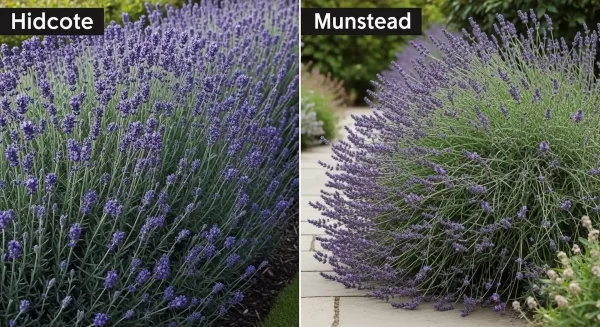
| Hidcote | English (L. angustifolia) | 18 in | Zones 5–8 | Compact, deep purple; the classic choice for pots |
| Munstead | English | 18 in | Zones 5–8 | Slightly paler blue; early bloomer; very hardy |
| Little Lottie | English | 12 in | Zones 5–8 | Dwarf habit; pale pink; ideal for smaller pots |
| Thumbelina Leigh | English | 10 in | Zones 5–8 | Ultra-compact; perfect for windowboxes |
| Anouk | French (L. stoechas) | 20 in | Zones 8–10 | Butterfly-top blooms; spectacular in warm climates |
| Phenomenal | Lavandin hybrid | 24 in | Zones 5–8 | Exceptional heat and humidity tolerance |
For cold climates (Zones 5–6), stick with English lavender varieties. French lavender (L. stoechas) is borderline hardy in Zone 7 and is best treated as an annual or brought indoors in colder regions. Lavandin hybrids like Phenomenal offer the best heat and humidity tolerance if you garden in the humid Southeast.
Watering Container Lavender
Overwatering kills far more lavender than drought. The rule is simple: water deeply, then wait until the top 2 inches of compost are completely dry before watering again. In practice, this typically means:
- Spring (establishing): once per week if no rain
- Summer (peak heat): every 5–7 days in most climates; every 3–4 days in Zone 9–10 desert heat
- Fall: reduce to every 10–14 days as temperatures drop
- Winter (indoors or sheltered): once per month is usually sufficient; check that roots are barely moist
Always water at the base of the plant, not over the foliage. Wet foliage in humid conditions invites the fungal diseases — particularly botrytis — that lavender is susceptible to. Water in the morning so any splash evaporates before nightfall.
Feeding: Lavender is a low-feeder. One application of a slow-release, low-nitrogen fertiliser in early spring is sufficient for the entire season. Avoid high-nitrogen feeds: they promote soft, leafy growth at the expense of flowers and reduce the plant’s hardiness. If your compost mix includes a pre-charged potting soil, you may not need to feed at all in the first year.
Pruning Potted Lavender
Pruning is what keeps container lavender from going woody and bare-stemmed over time. Left unpruned, lavender produces new growth at the tips while the woody base expands — within a few years you have a plant that flowers only at its perimeter and cannot be cut back hard without killing it.
Annual pruning schedule:
- Late summer (after first flush fades): cut back flower stalks and approximately one-third of the current season’s soft growth. Do not cut into old wood. This is the most important prune of the year.
- Early spring (once new growth appears): a light tidy-up to remove any winter damage and shape the plant. Never prune in fall or into cold weather — new growth stimulated by pruning is vulnerable to frost damage.
The “one-third rule” is a hard limit. Lavender cannot regenerate from old brown wood the way rosemary sometimes can. If you cut below the green zone, that stem is gone permanently. On a young plant this can be catastrophic; on an older pot-grown plant it is usually fatal. Keep pruning light and consistent rather than attempting to renovate a neglected plant all at once.
Stop missing your zone's planting windows.
Select your US zone and month — get a complete checklist of what to plant, prune, feed, and protect right now.
→ View My Garden CalendarOverwintering Lavender in Pots by Climate Zone
The lavender growing guide at How to Grow Lavender covers border overwintering in detail. Container plants face different challenges: pots freeze through to the roots much faster than garden soil, and the freeze-thaw cycles of a pot sitting on an exposed patio can crack roots and kill plants that would otherwise be perfectly hardy in the ground.

| USDA Zone | Winter Low | Strategy for Potted Lavender |
|---|---|---|
| Zones 4–5 | Below −20°F / −29°C | Move pots into an unheated garage or cool basement before the first hard frost. Target temperature: 35–45°F (2–7°C). Water once monthly. English varieties only (Hidcote, Munstead, Phenomenal). |
| Zone 6 | −10 to −20°F / −23 to −29°C | As above, or group pots together against a south-facing wall and insulate with bubble wrap or burlap. English varieties reliably; some lavandins with protection. |
| Zone 7 | 0 to −10°F / −18 to −23°C | Most English varieties hardy in pot outdoors with bubble-wrap pot insulation. Move French lavender (L. stoechas) inside. Place pots on pot feet to prevent base freeze. |
| Zones 8–9 | 10–20°F / −12 to −7°C | No special protection needed for English lavender. French lavender thrives year-round. Reduce watering in winter. |
| Zones 10–11 | Above 30°F / −1°C | Lavender has no true cold dormancy here. Reduce watering in summer (semi-dormancy in heat). French lavender excels; English lavender may struggle with year-round heat. |
Garage storage tip: Lavender needs some light even in winter dormancy. If your garage has no windows, move pots to the sunniest spot once or twice a month, or supplement with a grow light for 4–6 hours a week. Complete darkness for months weakens the plant and makes spring recovery slower.
Troubleshooting: Common Container Lavender Problems
| Symptom | Most Likely Cause | Fix |
|---|---|---|
| Yellowing leaves, wilting despite moist soil | Root rot from poor drainage | Unpot, trim rotted roots (black/mushy), repot in fresh gritty mix. Increase drainage holes. |
| Leggy growth, few flowers | Too much nitrogen or too much shade | Move to full sun (minimum 6 hours). Stop feeding until next spring. |
| Grey mould on stems or foliage | Botrytis fungus in humid conditions | Improve air circulation; remove affected material; water at base only. Treat with copper-based fungicide if persistent. |
| Plant recovers slowly after winter | Late pruning or damaged roots from freezing | Be patient — prune only dead material in spring. Lavender is slow to emerge; wait until late spring before declaring a plant dead. |
| Flowers small or none in second year | Pot-bound roots or depleted compost | Repot into a pot 2 inches larger with fresh mix. Top-dress with slow-release fertiliser. |
| White crust on pot or soil surface | Mineral deposit from hard water or excess fertiliser | Flush pot thoroughly or switch to rainwater. Reduce fertiliser to once per year. |
Repotting: When and How
Most container lavender benefits from repotting every two to three years. Signs that repotting is needed: roots emerging from drainage holes, noticeably reduced flowering in a previously healthy plant, or compost that dries out within 24 hours of watering.
Repot in early spring as new growth begins — never in fall or winter. Move up by one pot size only (a 12-inch plant goes into a 14-inch pot, not a 20-inch). Too large a pot holds excess compost moisture that the plant’s roots cannot absorb, replicating the waterlogging problems you are trying to avoid. Use the same 50/50 grit-heavy mix for fresh compost, and water in well immediately after repotting.
Frequently Asked Questions
Can lavender survive winter in a pot outside?
In Zones 7 and warmer, English lavender varieties can survive winter outdoors in pots if the pot is insulated (wrapped in burlap or bubble wrap) and placed against a sheltered south-facing wall on pot feet. In Zones 5–6, container lavender needs to move into an unheated garage or cool space before the first hard frost, as pots freeze through much faster than garden soil and the freeze-thaw cycling on an exposed patio is damaging even to hardy varieties.
What size pot does lavender need?
A minimum of 12 inches (30 cm) in diameter. For most English lavender varieties at full size, a 14–16 inch pot is ideal. Dwarf varieties like Thumbelina Leigh can be grown in a 10-inch pot. Avoid oversizing — a pot much larger than the plant holds excess moisture the roots cannot absorb, which leads to the root rot that kills most container lavender.
How often should I water lavender in a pot?
Water when the top 2 inches of compost are completely dry — typically once every 5–10 days in summer depending on your climate, and as infrequently as once a month in winter dormancy. Always water at the base, never over the foliage, and ensure excess water drains freely from the pot.
Why is my potted lavender dying?
The two most common causes are overwatering and poor drainage. Check that the pot has adequate drainage holes, that the compost mix contains at least 50% inorganic grit or perlite, and that you are not watering before the compost has dried out. If the plant has yellowing leaves and wilting despite moist soil, root rot is likely — unpot the plant, trim away any black mushy roots, and repot in fresh well-draining mix.
Can I grow lavender in a pot indoors?
Only short-term. Lavender needs a minimum of 6 hours of direct sunlight daily and excellent air circulation — conditions most indoor environments cannot provide consistently. A south-facing windowsill in winter may keep a plant alive, but lavender grown indoors year-round will gradually decline. Grow outdoors from spring to fall and bring pots under cover for winter only.
Sources
- RHS — Lavender: cultivation and care, Royal Horticultural Society grow guide
- Cornell Cooperative Extension — Growing Lavender in New York State (overwintering and variety selection guidance)
- USDA Plant Hardiness Zone Map — zone definitions for overwintering table
- University of Vermont Extension — Lavender Production, soil and drainage requirements