Repotting Lavender: 5 Root-Bound Warning Signs (Plus the Pot Size and Soil That Actually Work)

Your lavender stopped flowering? Catch these 5 rootbound warning signs early — plus the exact pot size and 50/50 soil mix that prevent root rot from coming back.
Most repotting guides tell you to watch for roots poking through the drainage holes. By the time that happens, your lavender has been rootbound for months — silently losing flower production and building root stress that chips away at its 10–15 year lifespan. The real warning signs appear much earlier, and they are easy to read once you know what you are looking for.
Lavender evolved on rocky Mediterranean hillsides where soil is gritty, poor in nutrients, and drains fast. Container roots that run out of room face two simultaneous failures: they can no longer absorb water efficiently, and they lose access to the fresh mineral supply that triggers blooming. The result is a plant that looks otherwise healthy but is quietly declining.
This guide covers the five signs that tell you it is time — before the damage compounds — plus the exact pot size, soil mix, and post-repotting steps that give your plant the best chance at a full recovery.
Why Rootbound Lavender Stops Thriving
When roots fill every inch of available space, two systems break down at once. First, a densely packed root ball loses its ability to retain moisture evenly — water either runs straight through in seconds or bypasses pockets of roots without being absorbed. Utah State University Extension notes that mature lavender needs roughly half a gallon of water every two weeks under normal conditions; a rootbound plant can reach that level of daily demand because its uptake is so inefficient.

Get a free pre-planned flower bed (vase-worthy from June to frost)
Printable planting plans for a cut-flower bed and a cottage pollinator bed — plant list, spacing, and calendar included.
Second, flowering collapses. Lavender flowers are energetically expensive — they require a stable supply of phosphorus and potassium to form. A root mass jammed against pot walls cannot explore fresh soil for minerals. Instead, it recycles from an increasingly depleted zone. Reduced flower size and fragrance are early signals that the root-to-shoot balance has shifted. The plant is not diseased; it is starving for space.
The third failure is the most serious. According to Oregon State University’s Pacific Northwest Pest Management Handbooks, Fusarium, Phytophthora, Pythium, and Rhizoctonia — the pathogens responsible for lavender root rot — thrive in cold, compacted, wet soil. A rootbound pot creates exactly those conditions: roots press against the pot wall where moisture accumulates, the soil dries unevenly, and chronic stress lowers the plant’s resistance to infection. Roots develop a discoloured vascular system, turn black, and begin to rot from the outside in — often before any above-ground symptoms appear.
Left unaddressed, rootbound lavender rarely achieves its potential 10–15 year lifespan. Most struggle past year five without intervention.
5 Warning Signs Your Lavender Is Rootbound

These five signals appear roughly in sequence as the problem worsens. The first two show up long before any root is visible at the surface.
1. Soil dries out in under 24 hours. This is the earliest and most reliable sign. When roots have displaced most of the soil volume, there is simply less material to hold moisture. If you are watering a container lavender more than once a week in mild weather, check the root situation. NC State Extension notes that lavender evolved to prefer soil that dries fully between waterings — if yours dries within hours, the plant is telling you something is wrong.
2. Flowering drops off or flowers are noticeably smaller and less fragrant. Lavender that was blooming reliably and then stops — or produces sparse, short flower spikes — is often rootbound rather than diseased. Mineral depletion in the exhausted soil reduces bloom energy before any visible root symptoms appear. This is the most commonly misdiagnosed sign.
3. The plant wilts rapidly between waterings, even after you water. This ‘dual watering paradox’ occurs when roots are so compressed that water runs through channels in the root mass without being absorbed. You water, the soil looks moist on the surface, but the plant wilts within hours. This is a rootbound symptom, not overwatering — the roots lack surface area to absorb what you are giving them.
4. A white or grey mineral crust forms on the soil surface. As water cycles through without full absorption, dissolved minerals concentrate and deposit on the surface. A visible salt or lime crust means the soil is exhausted and the root-to-soil ratio has reached a critical imbalance. This sign rarely appears in isolation — by the time you see it, signs 1 and 2 will also be present.
5. Roots emerge from drainage holes, or the plant tips when jostled. By this stage, the pot is more root than soil. The plant becomes top-heavy and unstable. Roots from drainage holes are confirmation, not an early warning — if you see this, repot without delay.
To confirm, slide the plant from the pot and inspect the root ball. Roots circling tightly around the outside, or a solid mass with almost no loose soil visible, confirms rootbound conditions regardless of which surface signs are present. If you see black or mushy sections alongside the white healthy roots, lavender root rot has begun — that changes the repotting approach (see Step 3 below).
When to Repot: Timing by USDA Zone
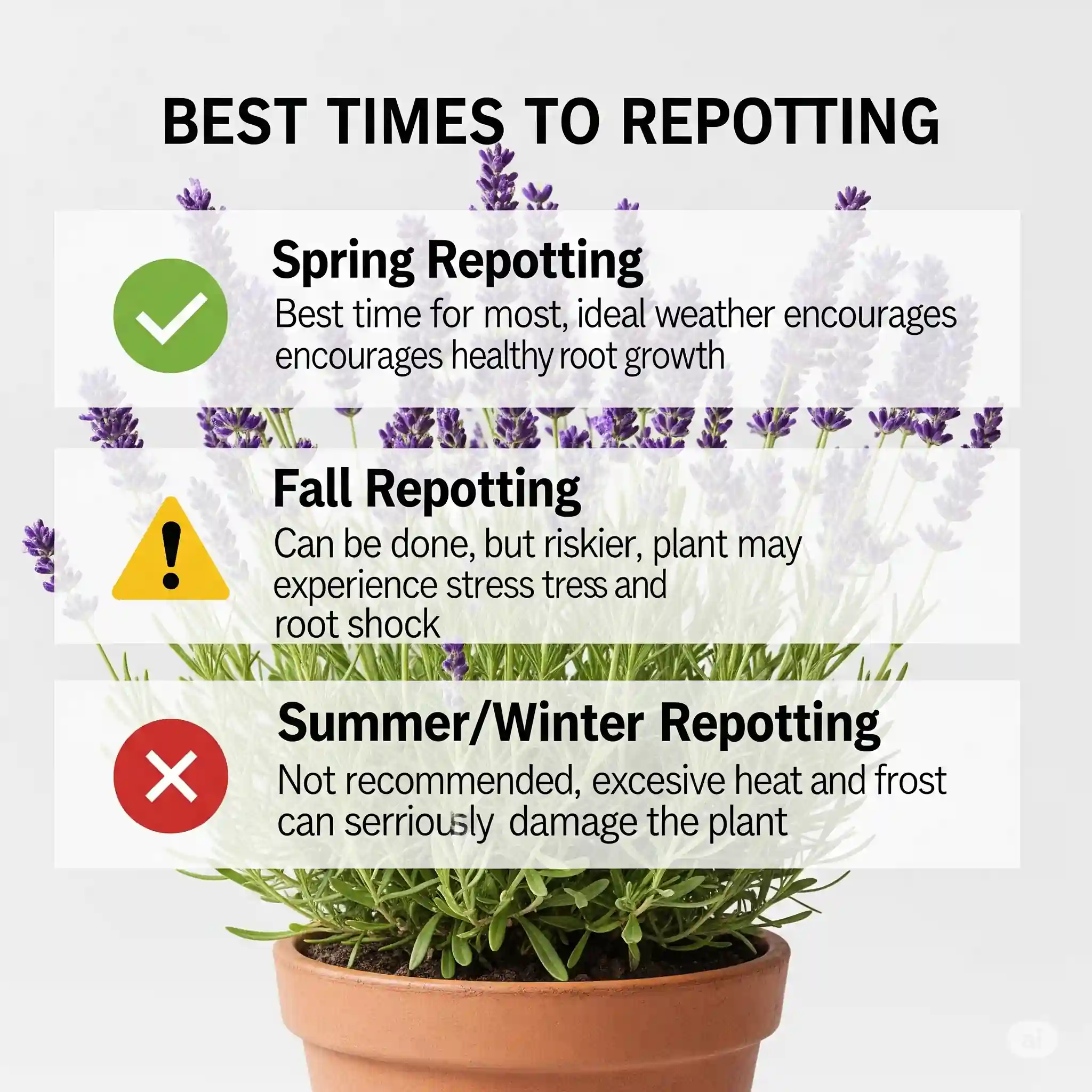
Zones 5–8 (most of the continental US): Early spring. Repot after your last frost date but before heat builds. This gives the root system 8–10 weeks to re-establish in cooler soil temperatures before summer stress arrives. If you miss the spring window, a minimum of 30 days before your first fall frost is a workable alternative — roots need time to settle before cold sets in.
Zones 9–10 (Southern California, Gulf Coast, Hawaii): Early fall. Colorado State University Extension research found that fall planting produces better lavender survival, faster establishment, and stronger flowering than spring planting in warm climates. Mild autumn temperatures let roots recover without the additional stress of peak summer heat. Aim to repot at least six weeks before your first frost date.
Emergency repotting: If your lavender shows signs of collapse — persistent wilting, blackened roots, sudden dieback — repot regardless of season. The stress of repotting is less damaging than continued confinement in a failing root environment. Remove all diseased root material, treat the root ball with a copper-based fungicide if Phytophthora is suspected, and move to fresh mix immediately.
Avoid repotting: during active flowering (disrupts bloom completion and causes early drop), during peak summer heat above 90°F, and during a hard freeze when roots cannot grow to recover from the disturbance.
Stop buying the wrong pot size.
Enter plant type and growth goal — get exact pot diameter, depth, and volume before you spend a cent.
→ Find the Right PotUtah State University Extension recommends repotting container lavender every spring into a larger container with fresh potting soil. For established plants in larger containers, Island Lavender suggests a schedule of every one to three years — younger plants at the more frequent end, mature shrubs in 16-inch-plus pots every two to three years.
Choosing the Right Pot: Size and Material
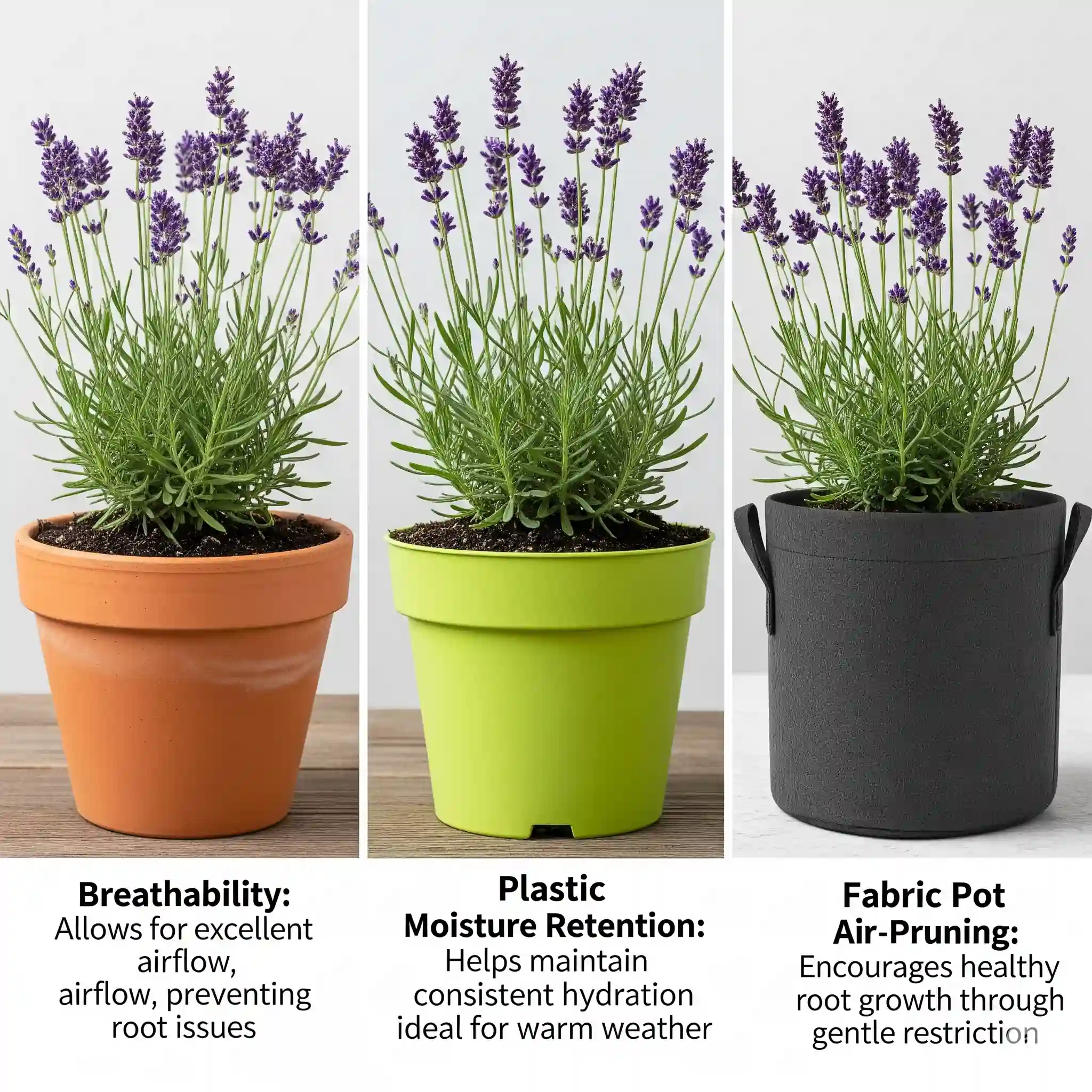
Two decisions matter more than anything else here: how much larger to go, and what the pot is made of.
Pot size — go up exactly one size. Increasing diameter by more than two inches creates a zone of excess soil surrounding the root ball that the plant cannot yet access. That soil holds moisture and stays wet far longer than lavender tolerates — which is precisely how root rot establishes itself. Island Lavender recommends increasing one size at a time, for example from a 12-inch to a 14-inch pot, not jumping to the largest container you own.
| Lavender Type | Examples | Mature Pot Size |
|---|---|---|
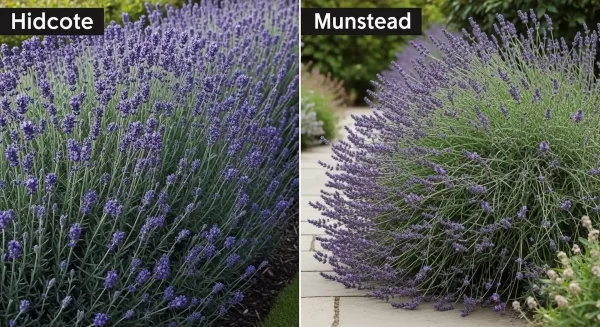
| Compact English | Munstead, Hidcote | 12–16 inches |
| Medium Lavandin hybrids | Grosso, Provence | 16–20 inches |
| Large / vigorous cultivars | Phenomenal, Vera | 20–24 inches |
These are mature sizes. Start cuttings and young plants in 5–6 inch containers and step up gradually as roots fill each stage. Jumping to a large container at the start delays establishment and increases rot risk.
Material: terracotta first, everything else second. Terracotta’s porous walls allow moisture to evaporate through the sides, not just through drainage holes. This keeps the soil on the dry side that lavender’s Mediterranean roots evolved in. Unglazed ceramic and fabric grow bags offer similar breathability. Plastic and glazed ceramic retain moisture — not a dealbreaker if you are a careful waterer, but far less forgiving.
One myth worth addressing directly: putting a gravel layer at the bottom of the pot does not improve drainage. It creates a ‘perched water table’ — capillary tension keeps moisture suspended above the gravel, so the soil zone just above it stays wetter than it would without the gravel. Use a quality draining mix instead and rely on drainage holes for water exit. Island Lavender calls drainage holes ‘non-negotiable’ — do not use a pot without them, and do not place saucers underneath that allow water to pool.
The Right Soil Mix for Repotting Lavender

Lavender’s root system evolved in the poor, gritty, fast-draining soils of the Mediterranean. University of Maine Cooperative Extension describes the ideal conditions as sandy, sandy loam, or gravelly — not the rich, moisture-retentive mixes sold for most flowering plants.
The formula that works: 50% standard potting mix and 50% perlite, coarse sand, or fine gravel. This ratio produces the drainage rate lavender needs without creating a medium so dry that establishment fails after repotting. Island Lavender uses this blend across their commercial container production; Utah State University Extension’s container guidance aligns with the same principle.
pH: target 6.5–7.5. Utah State University Extension specifies this range for English lavender. NC State Extension accepts a broader 6.0–8.0 but notes lavender performs best toward the neutral-to-alkaline end. If your local soil or tap water trends acidic, add a small amount of dolomite lime to the mix before filling — this raises pH toward 7.0 without adding excessive nutrients.
Two things to leave out of the mix:
- Heavy compost or aged manure. Colorado State University Extension recommends minimal organic matter for lavender. Rich soil drives lush, leggy vegetative growth at the expense of flower production — the opposite of what you want. A standard all-purpose potting mix is already nutrient-rich enough without amendments.
- High-nitrogen fertiliser mixed into the potting medium at repotting. Nitrogen promotes soft, sappy new growth that is vulnerable to frost damage and fungal infection. If you fertilise at all after repotting, use quarter-strength six weeks later — once new growth confirms the roots have re-established.
For year-round soil management for lavender in containers and beds, see our full guide to lavender soil requirements.
How to Repot Lavender: Step by Step

The day before: water the plant thoroughly. A damp root ball slides cleanly from the pot; bone-dry soil tears fine feeder roots. Aim for damp — not waterlogged, not dry.
Step 1: Prepare the new pot and potting mix. Mix your medium in a bucket — 50% standard potting mix to 50% perlite or coarse sand. Add a 2–3 inch layer of this mix to the base of the new pot. Do not add gravel to the base.
Step 2: Remove the plant. Tip the old pot sideways. With one hand supporting the base of the stem at soil level, tap around the pot rim and ease the root ball free. If it sticks, run a thin blade around the interior edge. Do not pull the stem or foliage.
Step 3: Inspect and clean the roots. Healthy roots are white to tan and firm. Black, soft, or foul-smelling roots are infected — cut them away with clean, sharp scissors before repotting. According to Oregon State University’s Pacific Northwest Pest Management Handbooks, Fusarium and Phytophthora are the most common culprits, and leaving diseased material in the new pot spreads the infection. Sterilise your scissors with isopropyl alcohol between cuts. If more than one-third of the root system is affected, treat with a phosphite-based fungicide before repotting.
Step 4: Loosen the root ball. Gently loosen the bottom third of the root mass with your fingers. If roots are tightly spiralling, make three or four shallow vertical cuts down the outside of the root ball with a clean knife. This breaks the circular growth pattern and encourages roots to extend outward into the new soil. Do not score near the crown at the top of the root ball.
Step 5: Set the crown height. Place the plant in the centre of the new pot. The crown — the junction where stem meets roots — should sit half an inch to one inch above the final soil surface. It will settle slightly after the first watering. Burying the crown causes rot at the base.
Step 6: Backfill. Add potting mix around the root ball and press gently to eliminate air pockets. Do not compact the soil. The crown should remain slightly proud of the surface after filling.
Step 7: Prune the top growth. Remove roughly one-third of the foliage and stems immediately after repotting. This is the step most guides omit — and the most important one for recovery. A disturbed root system cannot supply water to the same above-ground biomass it managed before. Reducing shoot load lowers water demand while roots re-establish. Cut into green wood with clean shears; do not cut back into woody stem sections. For more on correct pruning technique, see our guide to pruning lavender in spring.
Step 8: First watering. Water once, thoroughly, until water runs from the drainage holes. Then leave it alone for at least ten days. The urge to ‘help’ with extra watering is the most common post-repotting mistake and the fastest route to root rot in recovering lavender.
Aftercare: The First Six Weeks
Weeks 1–2 — light: Keep the plant in bright but indirect light. Direct midday sun on a freshly repotted lavender compounds stress on a root system that cannot yet supply water fast enough to prevent leaf scorch. Morning sun with afternoon shade works well during this window.
Watering rhythm: For the first two weeks, aim for ‘moist but not soggy’ — check the soil at two inches depth before watering. After week two, revert to lavender’s normal preference: let the top two inches dry completely before watering. Utah State University Extension’s schedule for established container plants — half a gallon every two weeks until bud formation — is a reliable reference point once roots have settled.
Fertilising: Wait a minimum of four to six weeks. Newly forming roots are tender, and the high salt content of most fertilisers burns damaged tissue and slows recovery. When you do fertilise, use half-strength at most. Lavender in a freshly prepared 50/50 potting mix rarely needs fertiliser at all in its first season.
What normal looks like: Some wilting and minor leaf drop in the first week is expected transplant shock — the root system is re-establishing its water supply. This typically resolves within one to two weeks as new root tips develop. If wilting persists past week three, check that the soil is not staying consistently wet (reduce watering frequency) and confirm the crown is not buried. For persistent post-repotting droop, see our troubleshooting guide to lavender drooping.
Most lavender recovers fully within six weeks and resumes active growth. Flowering in the season following repotting is typically stronger than the year before, because the plant now has the root volume needed to support bloom production. For a complete reference on lavender care through the year, visit our complete lavender growing guide.
Frequently Asked Questions
How often should I repot lavender?
Every one to three years for most container-grown plants. Younger lavender in small pots fills the root zone faster and may need annual repotting. An established plant in a 16–20 inch container can often go two to three years between repots if you refresh the top inch of soil each spring with fresh gritty mix.
Can I repot lavender while it is flowering?
Avoid it where possible. Repotting disrupts the plant’s ability to supply water to open blooms, often causing flowers to wilt and drop prematurely. If the plant is in obvious distress — collapsing, blackened roots, persistent wilting — the priority is repotting regardless. Losing one bloom season is far better than losing the plant. Schedule routine repots for early spring before buds form.
What if I accidentally use a pot that is too large?
The excess soil surrounding the root ball holds moisture the plant’s current root system cannot use. That wet zone is where Phytophthora and Pythium establish. If you have already repotted into an oversized container, reduce watering frequency significantly and improve drainage by adding extra perlite to the surface. Do not water again until the soil is dry at three inches depth.
Does lavender like being slightly rootbound?
Unlike some succulents or orchids, lavender does not perform better when slightly pot-bound. Even mild root restriction reduces bloom quality and fragrance. Repotting at the first sign of crowding — not after symptoms compound — produces the strongest plants over a multi-year container lifespan.
Should I put gravel in the bottom of the pot?
No. A layer of gravel creates a perched water table — capillary tension keeps moisture suspended above the gravel layer, making the soil immediately above it wetter than it would be without the gravel. Use a well-draining potting mix throughout the full depth of the pot and rely on drainage holes for water exit. This is one of the most persistent container gardening myths, and it is particularly damaging for a plant as drainage-sensitive as lavender.
Sources
- University of Maine Cooperative Extension — What is the Best Soil for Growing Lavender?
- Utah State University Extension — How to Grow English Lavender in Your Garden
- NC State Extension Plant Toolbox — Lavandula angustifolia (English Lavender)
- Colorado State University Extension — Growing Lavender in Colorado
- Pacific Northwest Pest Management Handbooks (Oregon State University) — Lavender Root Rot
- Island Lavender — What Are the Ideal Pot Sizes for Growing Lavender in Containers?
- Island Lavender — How Often Should I Repot Container-Grown Lavender?
- Garden Botany — What Should I Do If My Lavender Plants Are Suffering from Root Bound Conditions?
- Your Indoor Herbs and Garden — Best Pot For Your Lavender: Size and Material
- Epic Gardening — How and When to Transplant Lavender Plants