

Don’t Plant Lavender Until Soil Reaches 60°F — 4 Timing Mistakes That Set New Plants Back

Lavender planted into cold soil below 60°F rarely survives its first year. Check these 4 conditions before you plant, then use our zone-by-zone timing guide.
Plant lavender before the soil reaches 60°F and you’re placing a vulnerable root system into the exact conditions that kill it — not from neglect, but from a soil pathogen called Phytophthora that colonizes wet, poorly-drained soil. Most first-year lavender losses trace to this single error: planting by the calendar rather than the thermometer.
This guide covers the 4 conditions your garden needs to meet before you plant, a zone-by-zone timing guide for both spring and fall planting, and the 4 specific timing mistakes that account for most first-year failures. One of them — planting the crown at soil level — almost never appears in standard lavender guides, despite causing the majority of post-transplant deaths in poorly draining soil.
If you’ve lost lavender before and blamed the soil or the weather, read this before you try again.
Why Timing Matters More Than Any Other Lavender Variable
Lavender comes from rocky Mediterranean hillsides: thin, dry, alkaline soil that drains quickly and stays dry between rains. Its root system evolved for one condition. Put that root system into cold, saturated spring soil and two things happen simultaneously.

Get a free pre-planned flower bed (vase-worthy from June to frost)
Printable planting plans for a cut-flower bed and a cottage pollinator bed — plant list, spacing, and calendar included.
First, roots lose their ability to absorb water efficiently below 60°F. The biochemical processes that drive nutrient and water uptake slow dramatically at low soil temperatures, leaving the plant functionally dehydrated even in wet ground. This is why newly planted lavender sometimes collapses in a wet April — it isn’t too dry, it’s too cold to use the moisture surrounding it.
Second, wet poorly-drained soil is the primary trigger for Phytophthora, a water-mold pathogen that attacks lavender roots. Research published in Phytopathology (2023) identified six Phytophthora species capable of attacking three species of lavender — all requiring sustained soil moisture to proliferate. Early spring provides exactly this: saturated ground, reduced evaporation, and frequent rain that keeps soil wet for weeks. The pathogen causes roots to turn black and rot from the inside, then moves progressively up into the stem. By the time above-ground symptoms appear — wilting, dieback, discoloration — the plant is too compromised to save.
The 60°F threshold isn’t a rough guideline. It marks the point where lavender root function becomes viable and where the risk of wet-soil damage is highest. Plant at soil temperatures below 60°F and you combine impaired root function with peak Phytophthora season. Every timing rule in this guide flows from that number.
The 4 Conditions to Check Before You Plant Lavender
Zone charts give you the average planting window, not a signal that your specific garden is ready on a specific day. These 4 conditions determine whether lavender will establish or struggle regardless of what the calendar says.
1. Soil temperature at 4-inch depth reads 60°F or above
An inexpensive soil thermometer (under $15) pushed 4 inches deep gives you the only reading that matters. Check first thing in the morning, when readings are most conservative. Surface soil warms days before the root zone does, so surface temperature is misleading. You want 60–70°F at depth. Below 60°F, wait. Above 75°F, plant in the early morning and consider shade cloth during the first week to reduce heat stress.
2. No standing water 24 hours after heavy rain
Before planting day, dig a hole 12 inches deep and 12 inches wide. Fill it with water. Return 24 hours later. If water remains, you have a drainage problem that must be fixed before lavender goes in — raised beds, mounded planting, or soil amendment. Colorado State University Extension notes that lavender is highly susceptible to Phytophthora when water accumulates at the base. There is no amount of cultivar selection or aftercare that compensates for chronically wet soil.
3. Your zone confirms the right season
| USDA Zone | Best Season | Timing Window |
|---|---|---|
| Zone 4 | Spring only | Late May to early June, 2–3 weeks after last frost |
| Zone 5 | Spring only | Late April to mid-May, after last frost |
| Zone 6 | Spring preferred | Mid-April to early May; fall only with 10+ weeks before first frost |
| Zone 7 | Spring or fall | Spring: March–April; Fall: September–October |
| Zone 8 | Fall preferred | September through October, 10–14 weeks before first frost |
| Zone 9 | Fall preferred | October through November, 8–10 weeks before first frost |
| Zone 10 | Fall or winter | October through January; avoid June–August entirely |
4. Your plant is the right size for your season
This condition appears in almost no consumer lavender guides, but Colorado State University Extension is explicit: for spring planting, small 4-6 cell plugs work fine because the plant has a full growing season to establish roots. For fall planting in Zones 6–7, you need 4-inch or larger container plants with an established root ball. Small plugs planted in fall don’t have enough root mass to survive winter. If plugs are all that’s available in September, hold them indoors or in a cold frame and transplant in spring.
Spring Planting Guide: Zones 4 Through 7
In cold zones, spring planting isn’t just the easier option — it’s the only approach that gives lavender enough time to build the root system it needs to carry through its first winter. Plan to plant two to three weeks after your average last frost date, not on that date. A week of consistently warm weather before planting reduces transplant shock significantly. Check your county-specific frost dates on the USDA Plant Hardiness Zone Map rather than relying on state averages.
Zone 4 (minimum −30°F): Target late May to early June. Soil temperatures don’t reliably reach 60°F here until then. English lavender is your only reliable option — ‘Hidcote’ (compact, 12–18 inches, hardy to Zone 4) or ‘Munstead’ (18–24 inches, shorter season requirement). Apply winter mulch with straw or evergreen boughs after the ground freezes in fall, not before — mulching too early traps moisture against the crown during autumn wet periods.
Zone 5 (minimum −20°F): Late April to mid-May, after the last frost. Utah State University Extension notes that fall-planted lavender in this zone ‘often struggles because lavender grows slowly during autumn months’ — spring is the reliable choice here. Water 1 gallon per plant per week for the first growing season.
Zone 6 (minimum −10°F): Mid-April to early May. This zone supports both English lavender and some lavandin hybrids — ‘Grosso’ and ‘Phenomenal’ are both rated Zone 5 hardy and perform well. Spring planting is more forgiving for first-time growers than fall. For detailed variety comparisons, our guide to English vs. French lavender breaks down which type suits each zone and climate type.
Zone 7 (minimum 0°F): Late March to mid-April for spring. Zone 7 is where the spring/fall choice becomes genuinely open. Spring works well, but fall planting in September often produces better first-year results — see the fall section for why.
Fall Planting Guide: Zones 7 Through 10
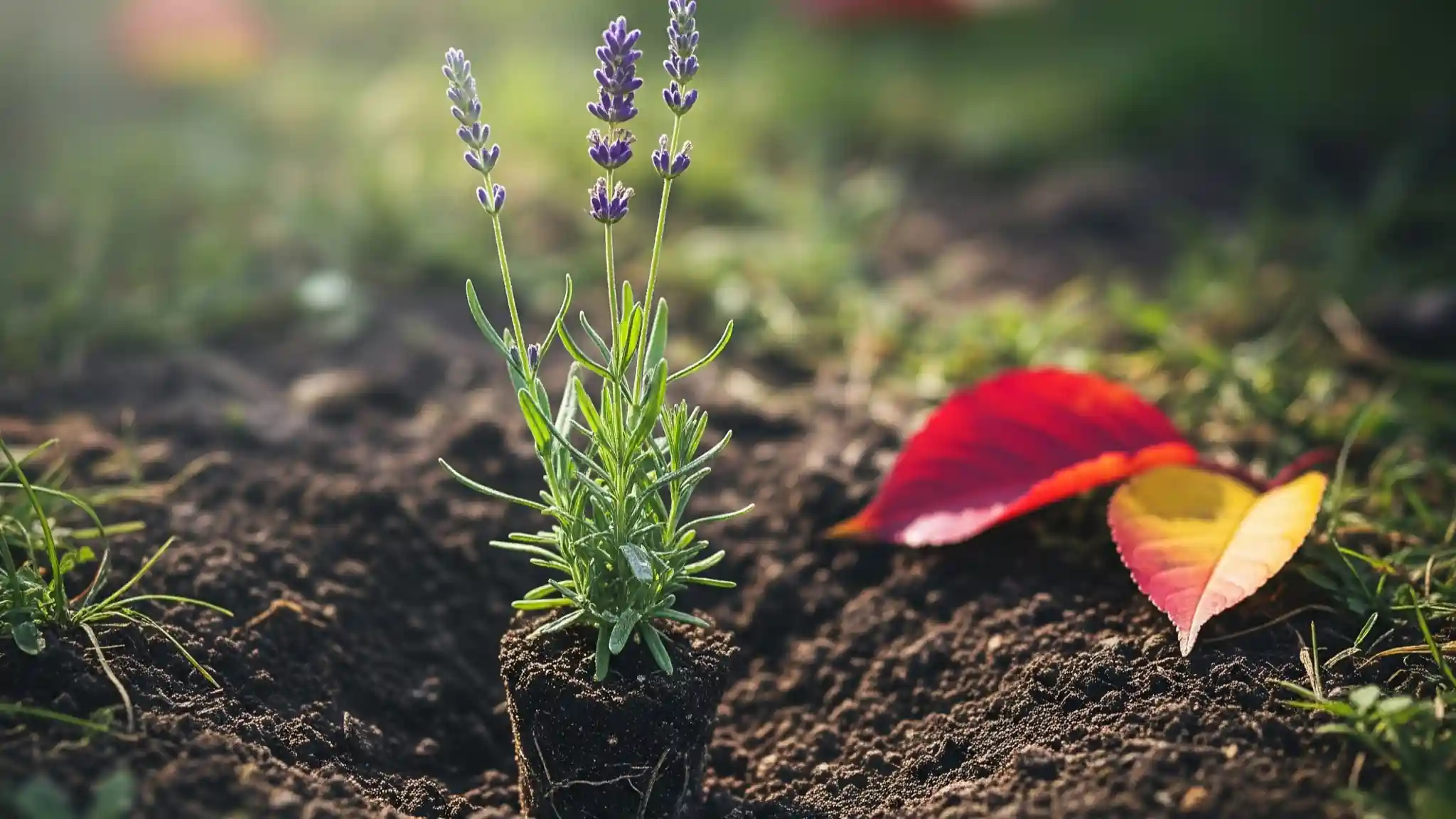
Research from New Mexico State University, cited by Colorado State University Extension, found that fall-planted lavender outperforms spring-planted lavender on three measures: winter survival rate, speed of establishment, and flower production in the following season.
The mechanism is straightforward. In Zones 7–10, fall soil temperatures sit at 65–75°F — within lavender’s ideal root-growth range. The plant doesn’t have to build a root system while simultaneously managing summer heat stress. By spring, a fall-planted lavender has four to six months of root development behind it. A spring-planted lavender is just starting.
Stop missing your zone's planting windows.
Select your US zone and month — get a complete checklist of what to plant, prune, feed, and protect right now.
→ View My Garden CalendarZone 7: September to early October. Aim for at least 10 weeks before your first expected frost. English lavender and lavandin hybrids both perform well. Zone 7 is the flex zone: spring planting works; fall often works better.
Zone 8: September through October, giving 10–14 weeks before first frost in most locations. This is arguably the ideal fall planting zone — winters are mild enough that root development continues through most of the cold season. ‘Phenomenal’, ‘Provence’, and Spanish lavender (L. stoechas) all establish reliably here.
Zone 9: October through November. First frost typically arrives in December or later, providing 8–10 weeks minimum for establishment. Spanish lavender and ‘Otto Quast’ are noted by UC Agriculture and Natural Resources as particularly suited to Zone 9b conditions with hot, dry summers and cool, wet winters.
Zone 10: Two windows — October through January and February through March. Skip June through August entirely; temperatures exceed lavender’s heat tolerance and transplant failure rates are high.
The non-negotiable fall rule: if you cannot plant at least 6 weeks before your expected first frost, wait until spring. An under-established lavender entering winter is more likely to die than one planted the following spring. For most of Zones 7–8, that means no fall planting after mid-October.
4 Timing Mistakes That Set New Lavender Plants Back
Mistake 1: Planting when soil reads below 60°F
Air temperature crosses 60°F days or weeks before soil does. A warm afternoon in April doesn’t mean your root zone is ready. Buy a soil thermometer, check at 4 inches in the morning, and wait until you read 60°F consistently for several days before planting. This single step eliminates most spring planting failures, because it removes both the root-function impairment and the Phytophthora risk simultaneously.
Mistake 2: Using plugs for fall planting in Zones 5–7
Plugs — small starts grown in cell trays — work perfectly for spring planting, when the plant has months to build root mass before winter. For fall planting in Zones 5–7, plugs don’t have enough established roots to survive. Colorado State Extension specifically recommends 4-inch or larger container plants for fall installation. If you only have plugs available in September, hold them indoors or in a cold frame and plant in spring. Forcing plugs into fall planting in cold zones almost always fails.
Mistake 3: Planting the crown at or below soil level
The crown — the point where stems meet roots — must sit slightly above surrounding soil, not flush with it or buried. A crown at soil level collects moisture, stays warm and damp, and becomes a direct entry point for Phytophthora. The fix is simple: mound the soil in the planting hole so the crown ends up 1–2 inches above the surrounding bed level. As soil settles over the first season, it will drop to the appropriate height. When uncertain, plant high. This applies especially in clay-heavy or poorly draining ground.
Mistake 4: Hard pruning at or near planting time
Pruning stimulates new growth. New growth is soft and frost-tender. If you hard-prune a plant just before fall transplanting — tidying it up or trying to reduce transplant stress — you trigger exactly the kind of growth that winter temperatures will damage. Don’t prune at planting time. Remove only dead or clearly damaged material. Wait until the first spring after planting, once you can see which growth survived winter, before doing any shaping work.
How to Plant Lavender Once Conditions Are Met
With all 4 conditions confirmed, the planting process is straightforward. Sequence matters more than technique.
Fix drainage first. For clay-heavy soils that fail the 24-hour drainage test, Colorado State Extension recommends incorporating 1 inch of coarse bark mulch to a depth of 6–8 inches. Avoid adding sand directly to clay — this creates a concrete-like mixture that worsens drainage rather than improving it. Raised beds or mounded planting sites are the better solution for genuinely poor-draining ground. For a full breakdown of soil types and what each needs, our lavender soil requirements guide covers amendments by soil type.
Test and adjust pH. Lavender thrives at pH 6.5–7.5. A basic soil test — available through most county extension offices — tells you whether amendment is needed. Add agricultural lime to raise acidic soil. Don’t apply to frozen or saturated ground.
Dig to root-ball depth only. Don’t go deeper. An oversized hole allows the plant to sink after rain, dropping the crown below grade.
Mound the planting site. Before placing the plant, build up the center of the hole so the crown sits 1–2 inches above the surrounding bed level. It looks a little high when you first do it — but once you’ve watched a flush-planted crown develop rot through its first wet fall, you’ll always mound first.
Backfill with native soil. No fertilizer. Lavender is adapted to mineral-poor Mediterranean soils. Fertilizer produces lush, frost-tender growth that reduces winter hardiness and increases disease susceptibility.
Water in once thoroughly. One deep watering settles soil around the roots. Then follow a 1-gallon-per-plant-per-week schedule for the first growing season (Utah State University Extension).
Mulch with gravel, not bark. If mulching, use pea gravel or grit. Keep a 2-inch gap between the mulch and the base of the stems. Organic mulch holds moisture against the crown — the opposite of what lavender needs.
Watering and Establishment in the First Year
New lavender needs consistent but measured moisture while roots establish. Utah State University Extension recommends 1 gallon per plant per week until you see clear signs of active growth — new shoot tips extending, leaves firm and upright in the morning. This typically takes 4–6 weeks after spring planting, longer for fall-planted specimens in cold zones.
After establishment, the approach needs to shift. Mature lavender performs better with infrequent deep watering than frequent shallow watering. Shallow, frequent watering keeps the top few inches of soil consistently moist — exactly the moisture profile that favors Phytophthora activity. Deep, infrequent watering encourages roots to grow downward and creates the dry-between-cycles pattern lavender evolved for.
A practical rule for established plants: water deeply (several gallons, applied slowly), then wait until the top 3–4 inches of soil are completely dry before watering again. In most US climates this means once every 7–14 days in summer, rarely in fall, and almost never in winter unless you’re in an unusually dry region. For a full seasonal breakdown, our lavender watering guide walks through each season in detail.
Frequently Asked Questions
What if I missed the spring planting window and it’s already mid-June?
You can still plant — the risk shifts from Phytophthora in cold soil to transplant shock from summer heat. Plant in early morning when soil is coolest. Water daily for the first week, then move to the 1-gallon-per-week schedule. A 4-inch or larger container plant establishes faster than a plug this late in the season. In Zones 4–5, avoid planting after July 1st; there isn’t enough establishment time before first frost.
Can I plant lavender in summer?
Yes, if temperatures are consistently between 60–85°F and you can maintain watering. Bootstrap Farmer recommends shade cloth during peak heat for summer transplants. The main risk is drought stress rather than cold, so monitor soil moisture more closely than you would for a spring or fall planting. Morning installation reduces initial heat stress.
When is it too late to plant lavender in fall?
Six weeks before your expected first frost is the hard cutoff. Below that, the plant won’t build enough root mass to survive winter. If you’re close to the cutoff in Zones 6–7, choose a gallon-sized plant rather than a 4-inch pot, and apply a 3–4 inch straw mulch after the ground starts to freeze (not before).
My lavender looks wilted but the soil isn’t dry. What’s happening?
If soil temperature is below 60°F, lavender roots can’t absorb moisture efficiently even when surrounded by water. Check soil temperature before adding more water — watering into cold soil only increases Phytophthora risk. If soil is warm and the plant is still wilting, check crown placement: a buried crown sitting in moist soil is the most common cause of this symptom in newly planted lavender.
Can I use containers if my garden soil doesn’t drain well?
Yes — containers with drainage holes are the recommended workaround for clay-heavy gardens. Use a mix of two parts coarse sand or perlite to one part standard potting mix, or a pre-mixed ‘Mediterranean’ blend. Terracotta pots dry more evenly than plastic. Repot into a slightly larger container every 2–3 years. Apply the same 60°F soil temperature rule before moving outdoor containers back into the garden in spring. Our full lavender growing guide covers container care alongside in-ground methods.
Sources
- Colorado State University Extension — Growing Lavender in Colorado
- Utah State University Extension — English Lavender in the Garden
- Phytopathology (2023) — Phytophthora Root and Crown Rot of Lavender: New Host-Pathogen Relationships Involving Six Species of Phytophthora and Three Species of Lavandula
- Penn State Extension — Agritourism Diversification: Lavender Production
- Colorado Lavender Association — Tips to Successful Lavender Growing
- Mad Lavender Farm — How to Plant Lavender


