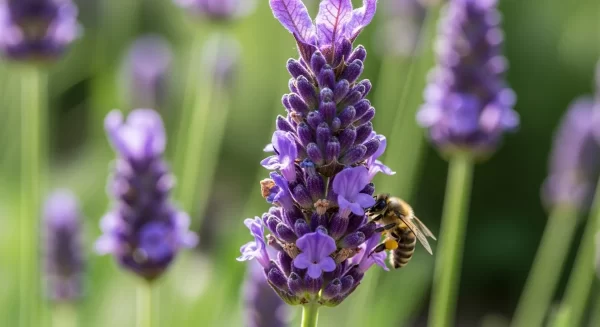
Lavandula Angustifolia vs Officinalis: Same Plant?

Have you ever stood in a garden center starring at two almost similar lavender plants while shears in hand and a small drop of sweat runs down your forehead? One tag lists Lavandula angustifolia; the other Lavandula officinalis. They smell the same and look the same, so you begin to ask, “Am I missing something here? Exists a concealed distinction I’m not noticing?”
If that seems familiar, first let me say: inhale deeply. You are not insane, and you are most definitely not alone in your perplexity. Among the most often asked questions I get from other gardeners is this one.
TL;DR: The Quick Answer
- Yes, they are the same plant. Lavandula angustifolia and Lavandula officinalis are two different names for the exact same species, commonly known as True Lavender or English Lavender.
- Lavandula angustifolia is the current, official botanical name. It means “narrow-leaved lavender,” which accurately describes its foliage.
- Lavandula officinalis is an older, historical synonym. The term “officinalis” was traditionally given to plants with a long history of medicinal or culinary use, as they were stored in the officina, or main storeroom, of monasteries.
- Why it matters: While you can treat the names as interchangeable for gardening purposes, knowing the difference reveals the plant’s rich history. When a recipe or guide calls for “culinary lavender,” it is referring to this specific species (L. angustifolia / officinalis) because of its superior sweet, floral scent, which lacks the harsh camphor notes of other lavender types.
So let us straight away clear the air. Indeed, these are the exactly same plant.
The plant known as Lavandula angustifolia and Lavandula officinalis have exactly no botanical difference. Simply two different names for the same lovely, aromatic, and quite practical herb we usually refer to as True Lavender or English Lavender.

Get a free pre-planned flower bed (vase-worthy from June to frost)
Printable planting plans for a cut-flower bed and a cottage pollinator bed — plant list, spacing, and calendar included.
But that straightforward response simply invites a more intriguing narrative to be told. Why would two names be used? Even so, what does “officinalis” really mean? Above all, what distinguishes this particular lavender species from its other relatives?
Let’s jointly solve this botanical riddle. By the end of this tutorial, you will not only know the complete Lavandula Angustifolia versus Officinalis narrative but also have the confidence and expertise to recognize, propagate, and enjoy this magnificent plant to perfection.
Knowing the Variations Between Lavandula Angustifolia and Officinalis: An Interpretive Guide for Gardeners
Although the world of plant names can occasionally seem like a twisted vine, usually there is a logical explanation for the anarchy. In this instance, the two True Lavender names are like footprints from many historical times.
See it this way: The plant’s present, formally approved scientific name is Lavandula angustifolia. These are the names botanists use nowadays to be as exact as they can be. The name itself hints to its nature: “narrow-leaved” from Latin, angustifolia. Examining closely the foliage of the plant can help you to identify it as its leaves are exquisite and thin.

Where thus did the other name originate? We term Lavandula officinalis a synonym—an older, now-outdated name. Here the important term is officinalis. Plants having a clear medicinal or culinary purpose were traditionally assigned this name. It derives from the word officina, the primary monastery storeroom housing medications and plants. Thus, when you find officinalis in the name of a plant, it is a large, exquisite symbol saying, “I have been useful to people for a very long time!”
Lavandula angustifolia became the accepted benchmark for its special qualities as botanists improved their classification schemes over decades. But a loving tribute to the plant’s long and legendary history as a healing herb, the officinalis name stayed about in nurseries and gardens.
For all your horticultural needs, then, you can treat the names as interchangeable. Now, though, you know the background of them—a small piece of garden history that adds even more significance to our cherished lavender.
What Makes True Lavender ‘True’? Its Unquestionable Characteristics
After we have figured out the riddle of the names, let’s get our hands dirty and discuss what distinguishes Lavandula angustifolia as a classic. Knowing what to search for helps you to find it from a mile away. For a reason, it is the benchmark by which all other lavenders are measured.
Growth Habit
Unlike some of its spread-out cousins, True Lavender usually grows in a wonderfully compact, spherical mound. Usually ranging in height and width from a reasonable 1 to 3 feet, this is a well-mannered plant. Its single, thick flower spike at the very top marks the straight, unbranched stems. This clean habit makes it quite ideal for lining walkways or building tidy borders.
Scent Profile
Perhaps its most crucial quality is its sweet, rather than sharp Scent Profile. Close your eyes and breathe in the scent of a Lavandula angustifolia bloom. With absolutely no trace of the sharp, medical campher notes you might get in other lavenders, the aroma is pure delight—sweet, floral, soft. This subtle, sophisticated scent is the reason it’s the top pick for luxury perfumes, aromatherapy, and—of course—foodies.

Hardiness and Climate
Though it’s really native to the sunny, rocky hills of the Mediterranean, it’s sometimes referred to as English Lavender, a bit of a misnomer. But it got its English moniker since it does really well in England’s milder, temperate climate. Throwing in USDA zones 5 through 9, this one of the most cold-hardy lavenders is a dependable choice for most gardeners around the United States.
Notable Cultivars
The great thing about True Lavender is its variety! Notable cultivars to search for are You probably will find some of my absolute favorites, can’t-go-wrong varieties at your neighborhood nursery:
- ‘Hidcote’: This is a real stunner. Its silvery-gray greeneries and exceptionally deep, violet-purple blossoms are well-known. Small gardens or containers would find it perfect since it stays somewhat compact.
- ‘Munstead’: Oldie but a goodie! Rich scent and beautiful lilac-to-blue blossoms make “Munstead” beloved. It keeps color brilliantly when dried and blooms a little sooner than other types.
Not All Lavenders Are Made Equal: Real Lavender Against The Imposters
Your newly acquired understanding will help you avoid any garden heartbreak in this area. One error I see all the time is choosing the wrong kind of lavender for your purposes. Let us contrast our True Lavender with two most often used cousins.
True Lavender against Lavandin (Lavandula x intermedia)
This is the main one. A hybrid, lavandin is a cross between spike lavender (L. latifolia) and True lavender (L. angustifolia). It was developed with one eye toward production.
Stop building garden beds by guesswork.
Drag and drop plants into your raised bed grid — see companion pairs, spacing, and full layout before you dig.
→ Plan My Garden LayoutOften growing enormous mounds 3-4 feet tall, lavandin is a far more resilient plant. It’s the king of commercial lavender fields since it generates a great volume of essential oil. Still, its scent is quite different from True Lavender. It smells strongly of camphor, which is really high in terms of sharpness and potency nearly medically. For soaps, cleaning agents, or scenting a big room, it’s great; but, generally it’s too strong for cooking or perfume.
Real Lavender: Is the reverse. Though it produces less oil and is smaller and more delicate, the oil it does produce is of the best quality—sweet, complicated, and wonderful. A recipe calling for culinary lavender indicates Lavandula angustifolia. Not with exceptions.
Real Lavender versus Spanish Lavender (Lavandula stoechas)
One could find this one really easily! The flashy cousin from the more cosy side of town is Spanish Lavender.
The distinctive blossom structure of Spanish lavender lets you know right away. Showy bracts reminiscent of tiny rabbit ears or butterfly wings crown the blossoms. Although it is not extremely cold-hardy (usually zones 7–10) and will not survive the winter in many parts of the nation, this is a great plant for hot, arid conditions. Its smell is likewise different; more piney and herbal than sweet.
From planting to pruning: How can you ensure that your true lavender thrives on the block?
The secret is basic: replicate its natural Mediterranean environment. Lavender asks little, but the things it needs—that which it demands without compromise.
Sun and Soil Are All That Matter
Remember this: lavender needs great drainage and full sun if you remember nothing else.
- Sun: Get at least six to eight hours of direct, unvarnished sunshine every day. Lavender heaven is a sun-drenched, south-facing patch. Your plant will grow spindly and generate very few blossoms without enough sun.
- Soil: This is the non-negotiable component here. Lavender will fast die from root rot in deep, dense soil and despises “wet feet”. It requires sandy or gritty, well-draining soil. Not hopeless if you have heavy clay! To increase the drainage of your soil, toss in fine gravel, coarse sand, or compost. Another great answer is growing it on a slope or on a raised bed.
The Craft of Hydration
For watering lavender, my own guiding principle is “When in doubt, don’t.” To help it establish, you will have to routinely water it during the first several weeks after you initially plant it. Once it settles in, though, it is rather drought-tolerant. Giving an established plant a deep, thorough soaking every few of weeks can help it more than a daily mist. Between waterings, always allow the earth totally dry out.
Pruning toward a Long, Beautiful Life
This is the stage that makes a decent lavender plant outstanding. Maintaining the health, vigor, and best appearance of the plant depends on pruning totally. Though I understand it can be frightening to bring shears to your lovely plant, believe me—this is a loving deed.
The aim is to stop the plant from turning woodsy and splitting open at the base—a terrible fate for many unpruned lavenders. Simply cut back the entire plant by roughly one-third of its size right after it ends its main late summer flush.
The golden guideline is to never, never reduce into the ancient, naked wood at the plant’s root. That ancient wood cannot generate fresh growth. Always make sure you are cutting into a stem still sporting some green leaves. This yearly haircut promotes a flush of fresh growth to maintain the density and beauty of your plant for many years to come.
Should I feed or should not?
Of all, this is the simplest section. You should not do this. Lavender does not require fertilizer; it thrives on lean soil. Fertilizing will simply promote a lot of green growth at the price of the fragrant blossoms we all enjoy. One of the rare plants that really enjoys being neglected.
Techniques for Gathering and Appreciating Your Fragrant Flowers
Growing lavender is wonderful when you can bring its aroma and beauty right into your house. Simple and quite fulfilling is harvesting.
Harvest the flower spikes on a dry, sunny morning exactly when the first few individual flower buds on the spike have opened for optimal results. At this point the essential oils are at their most concentrated. Cut the flower stems long enough for bundling using a sharp pair of scissors or shears.
These basic principles should help you get going:
- To make classic dried bundles, gather a small bunch of stems, knot them together with string, and hang them upside down in a dark, dry, well-ventilated area for many weeks. Both on their own and in floral designs, they look great.
- Once the blossoms dry, gently separate the buds from the stems in simple fragrant sachets. For a wonderful, natural aroma, spoon the dried blooms into little cloth bags and place them inside your drawers and closets.
- A Note on Culinary Lavender: Remember that a little goes a long way! If you intend to cook with your lavender Use it lightly. Most critically, too, only use lavender you know has not been subjected to any chemical pesticide or fungus. The greatest approach to guarantee its safety for consumption is to grow your own.
In essence,
The next time you visit the nursery and notice those two perplexing names, Lavandula angustifolia or Lavandula officinalis, you can grin with the assurance of a seasoned gardener. You will be gazing at one and the same plant—the ageless, aromatic, and immensely satisfying True Lavender.
You now know its history, how to recognize it by its lovely aroma and thin leaves, and how to give it the sun and drainage it so sorely needs. You’re ready to prune it with confidence since you know how different it is from its pretender cousins. You are a lavender guru in the making, not only a gardener.
Here at the club welcome. Enjoy your gardening!
Is Lavandula officinalis edible often asked?
Correct. Often labeled as “culinary lavender,” this is the species most used in cooking and baking. From simple shortbread biscuits to savory meat rubs, its sweet, flowery notes are amazing. Using flowers from your own garden is always the best bet since the most crucial thing is to make sure the plant has been cultivated naturally, free of any systematic pesticides.
For essential oils, which lavender is finest?
That mostly relies on the type of oil you are seeking for! L. angustifolia is the unambiguous champion for a high-end, therapeutic-grade oil with a sweet and rich flower scent used in luxury perfumes and aromatherapy. The hybrid Lavandin (L. x intermedia) is the commercial go-to, though, if the aim is to generate a very big volume of oil with a considerably stronger, sharper campher scent—the kind typically used in detergues, soaps, and air fresheners.
Why is the center of my English Lavender dying?
This is practically always an indicator of two things: age and inadequate pruning. Older lavender plants naturally turn their base woody. Should it not be sufficiently cut back each year, this woody center grows ever bigger and cannot generate fresh foliage growth. Eventually, especially following significant rain or snow, the weight of the outside growth might cause the woody center to break open. Prevention is the best repair; a good, confident trimming every single year maintains the plant small and promotes fresh, new development from the base up.