

Why Your Lavender Is Dying: The Zone-by-Zone Fix Most Gardeners Miss

Your lavender isn’t dying for one reason — it’s dying because of your climate zone. This guide diagnoses and fixes by zone, from 4 to 10.
Lavender comes from the Mediterranean basin — thin, alkaline soils, dry summers, mild winters. The United States offers almost none of these conditions by default. Most lavender failures in American gardens trace back to a mismatch between what the plant needs and what the climate zone delivers.
The most useful question to ask when lavender is declining isn’t ‘am I overwatering?’ It’s ‘am I growing the right species for my zone, and am I managing the problems that zone creates?’ A Zone 5 gardener and a Zone 9 gardener can both lose lavender to root rot — but the pathogen, the trigger, and the fix are completely different.

This guide works through lavender failure zone by zone. Find your zone, find your problem, apply the right fix.
Start With the Species Match
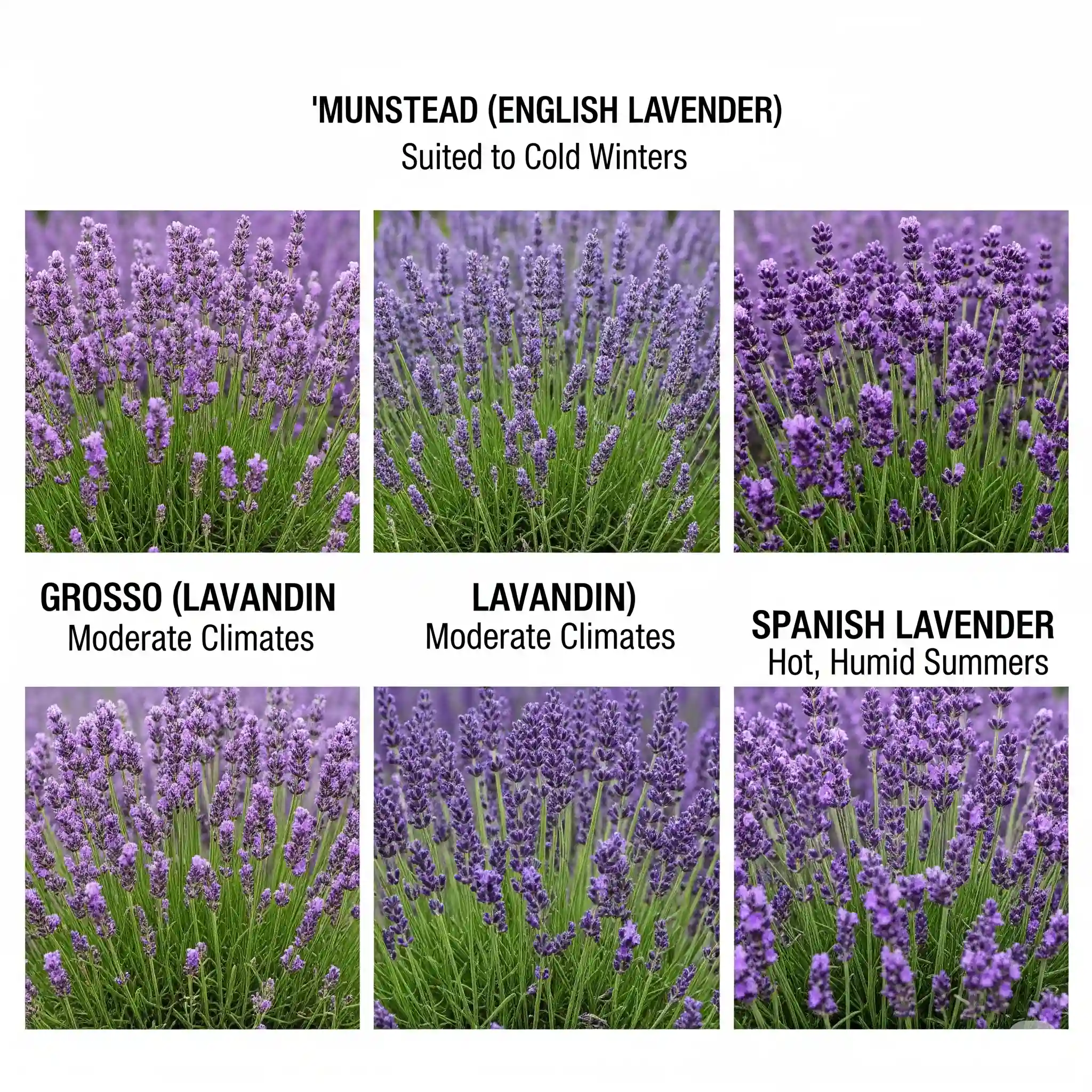
Before diagnosing soil or watering problems, check that you’re growing the right lavender for your zone. There are four species groups with substantially different climate tolerances:
| Species | Hardy Zones | Climate Strength | Climate Weakness |
|---|---|---|---|
| English (L. angustifolia) | 4–8 | Cold-hardy, drought-tolerant, long-lived (10–15 years) | Fails in sustained heat or humidity above Zone 8 |
| Lavandin hybrid (L. × intermedia) | 5–8 | Larger plant; ‘Phenomenal’ tolerates humidity better than pure English types | Blooms once per season; tender below Zone 5 |
| French (L. dentata) | 7–9 | Heat-tolerant, longer blooming season | Winter-tender; dies in a Zone 6 cold spell |
| Spanish (L. stoechas) | 6–9 | Best heat and drought tolerance of the four | Shorter-lived (4–5 years); needs excellent drainage |
Growing French lavender in Zone 6 and then puzzling over winter death is not a drainage problem — it’s a species mismatch. Most garden centres don’t clearly label species, and ‘lavender’ gets applied to all four types interchangeably. If you don’t know what type you have, check the leaf shape: English has narrow, grey-green leaves; French has toothed, wider leaves; Spanish has distinctive ‘rabbit ear’ bracts on the flower head.
Zones 4–6: Wet Soil Kills More Than Cold
Colorado State University Extension states it plainly: ‘dampness more than cold is responsible for killing lavender plants.’ In Zones 4–6, most failures look like winter kill — plants that survived December but didn’t make it to April — but the mechanism is almost always fungal root rot activated by cold, wet soil, not freezing temperatures.
The pathogens involved are Fusarium, Phytophthora, Pythium, and Rhizoctonia, according to the Pacific Northwest Pest Management Handbooks (Oregon State University). These activate specifically in cold, saturated conditions. Phytophthora megasperma is the species most commonly associated with field-grown lavender; Pythium species target nursery stock. Both need near-saturated soil to move through the root zone — exactly what happens in heavy soil during late-winter thaw cycles when ground temperatures sit between 35°F and 45°F for weeks.
The progression is predictable: roots develop discoloured vascular tissue, turn black and soft, and the plant wilts and collapses from the base upward. Phytophthora distinguishes itself from Pythium by moving into stem tissue, not just roots. By the time the crown blackens, the infection is advanced. Healthy lavender roots are white to pale tan and firm; rotted roots are brown or black, soft, and may smell sour.
What to do for cold zones:
- Mound the planting site. Michigan State University Extension recommends mounding cultivated soil 18–24 inches at the planting spot. This raises the root zone above the waterlogged soil layer during spring thaw — the single most cost-effective structural fix for Zone 5–6 lavender failures.
- Use the French drainage method. Before planting, place one to two handfuls of coarse stone or pea gravel at the base of the planting hole. This breaks the capillary draw that pulls water up into the root zone from saturated subsoil beneath.
- Plant facing southwest. A southwest-facing slope catches more late-winter and early spring sun. MSU Extension also recommends a structural windbreak — a stone wall or building side — to protect plants from harsh winter winds without blocking solar gain.
- Avoid wood mulch. Wood chips and bark mulch hold moisture at the crown and create the humid microclimate that root rot pathogens need. Gravel mulch or bare soil drains faster and keeps the crown dry.
- Plant in fall rather than spring. Colorado State University’s research found that fall-planted lavender survives better, establishes more quickly, and produces more flowers in its first full season. Spring-planted lavender sits in cold, wet soil before it can establish a viable root system.
For cold-hardy variety selection, our Zone 5 hardy varieties guide covers Munstead, Hidcote, and Phenomenal in detail. All three are reliably hardy to Zone 4–5 with proper drainage in place; Hidcote and Munstead have been successfully grown in Zone 4 with snow cover and mounded planting sites.

Zones 7–8: Humidity and Clay Are the Real Enemies
Zones 7 and 8 should be lavender territory — mild winters, long growing seasons, warm summers. In practice, this is where English lavender most often dies slowly over two or three seasons, usually from the combination of clay soil and summer humidity.
Botrytis cinerea is the warm-season pathogen to know. University of Illinois Extension records it as active from 32°F through 84°F as long as moisture is present. In humid southeastern gardens — Zone 7–8 in the Carolinas, Virginia, Georgia — summer nights rarely dry enough to break the infection cycle. Spore dispersal is triggered by rapidly shifting humidity, which is common in the late-summer dew-and-warmth pattern. Symptoms: grey fuzzy growth on stems at the crown, followed by collapse of individual stems. Unlike winter root rot, Botrytis is a warm-season aerial disease — it attacks the parts of the plant above ground rather than the root system.
Clay soil is the slower killer. It doesn’t take lavender in a single winter — it waterloggs the root zone progressively, stressing the plant through each wet season until Phytophthora or Pythium can gain a foothold. NC State Extension’s plant database is clear: lavender ‘will die out in heavy clays.’
The fix for clay isn’t adding sand. Mixing fine sand into clay in small quantities creates a compound with worse drainage characteristics than either material alone. The correct approach: break up clay structure to 12–15 inches depth, incorporate coarse grit at 30–40% by volume, and raise the planting level. In severe cases, building a raised bed with imported sandy loam is more reliable than any in-ground amendment.


Spacing matters in humid zones. Two to three feet between plants keeps air moving through the canopy and reduces the overnight moisture that Botrytis needs to germinate. Annual pruning in spring maintains the open canopy shape — dense, unpruned plants trap humidity at the crown all season. See our lavender root rot guide for treatment steps if stems are already showing signs of infection.
Zones 9–10: Heat Stress and the Short-Lived Species Problem
Lavender tolerates heat to around 95°F without significant stress. Above that threshold — particularly with humid nights — most English varieties stop performing reliably. Root zone temperatures above 85°F inhibit dormancy, reduce flower bud formation, and accelerate woody dieback. In practical terms, this makes English lavender a short-lived perennial in Zone 9 and a poor long-term bet in Zone 10.
Spanish lavender (L. stoechas) and French lavender (L. dentata) handle heat and drought better than English types. The lavandin hybrid ‘Phenomenal’ is the standout choice across Zones 7–9 — specifically noted for tolerating both cold and humidity, a rare combination for lavender, and considerably more resilient than pure English types in the transitional zones where neither English nor Spanish is a perfect fit.
In Zone 10, treating lavender as a short-lived perennial or managed annual is the realistic approach. Container growing in a well-draining mix — 30% horticultural grit, 70% potting compost — gives more control over root zone temperature. A pot dries out faster than in-ground soil, keeping root temperatures lower. Move containers out of direct afternoon sun when temperatures exceed 100°F consistently. Expect a lifespan of 3–4 years rather than the 10–15 years English lavender achieves in its optimal Zones 5–8.
The Soil Fix That Applies to Every Zone
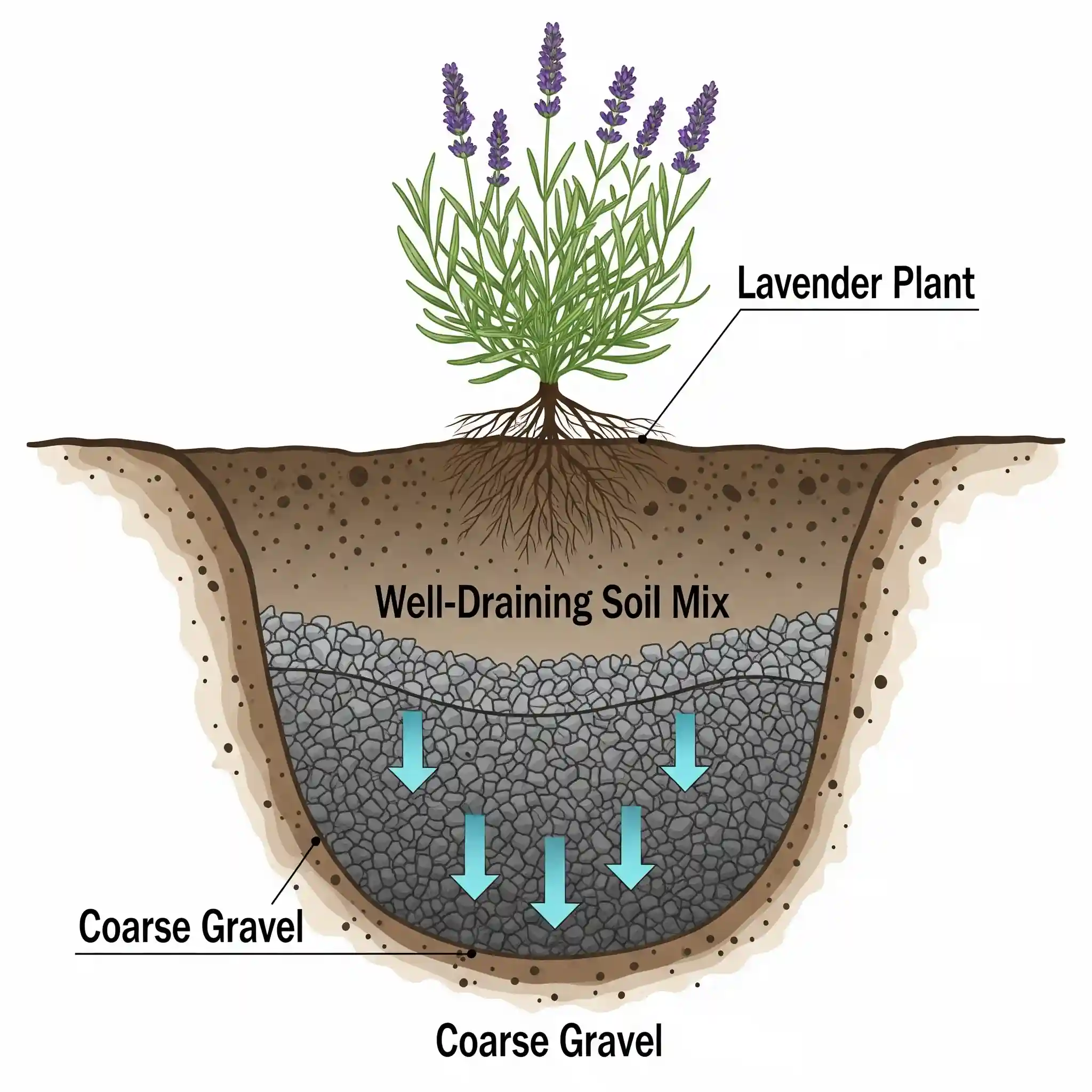
Every zone has zone-specific failure modes, but there’s one soil configuration that causes lavender to die everywhere: slow-draining, moisture-retaining soil.
pH: 6.5–7.5, leaning alkaline. NC State Extension gives an acceptable range of 6.0–8.0, but the reliable range for consistently healthy plants is 6.5–7.5. Below pH 6.0, lavender struggles to absorb key nutrients even when soil is otherwise adequate. For acid soils — common in the Southeast and Pacific Northwest — Michigan State University Extension recommends applying 1/8 cup of ground limestone per square foot before planting, then retesting every two to three years. Utah State University Extension targets the same pH band, with the same emphasis on alkaline lean.
The organic matter trap. Adding generous compost to a lavender bed is good practice for most plants. For lavender, it’s usually counterproductive. Colorado State University Extension specifically advises against ‘high levels of organic matter that retain moisture around plants.’ The plant evolved in soils with negligible organic content — the rocky Mediterranean hillside soils contain almost no humus. Heavy compost additions increase moisture retention and Phytophthora susceptibility at the same time. Utah State Extension’s recommendation: no more than 1 inch of coarse compost, incorporated 4–8 inches deep.
Fertiliser increases disease risk. Excess nitrogen produces dense, lush foliage that looks healthy but is significantly more susceptible to fungal disease. NC State notes that lavender ‘flowers more in lower to medium fertility soils.’ If you’re fertilising regularly and lavender is declining, stop fertilising entirely and reassess drainage before considering any other change.
Drainage fixes that actually work:
- Coarse grit or pea gravel at 30–40% by volume — not fine sand, which compacts with clay rather than improving it
- Gravel sump technique: dig the planting hole 6–8 inches deeper than needed, fill the base with 4–6 inches of coarse gravel, plant in amended topsoil above it
- For severe clay: build a raised bed with imported sandy loam rather than attempting in-ground amendment
- Mulch with gravel, not wood chips — gravel reflects heat, improves surface drainage, and doesn’t create a moisture-retaining layer at the crown
Quick Diagnosis: Symptom, Zone, Cause, Fix
| Symptom | Zone Most Affected | Most Likely Cause | Fix |
|---|---|---|---|
| Blackened stems at base; plant collapses in April or May | 4–6 | Phytophthora or Pythium root rot (cold wet winter soil) | Mound soil 18–24 inches; French drainage method; switch to English variety |
| Grey fuzzy coating on stems; individual stem collapse in summer | 7–9 | Botrytis cinerea (humidity + poor air circulation) | Widen spacing; prune for open canopy; gravel mulch |
| Wilting despite adequate water; rotting smell at crown base | All zones | Root rot from overwatering or clay soil | Check roots; improve drainage; reduce watering frequency |
| Plant survives summer but fails to emerge the following spring | 7–8 | Progressive clay soil waterlogging over winter | Raised bed with sandy loam; avoid wood mulch; improve site drainage |
| Yellow foliage; stunted growth; no flowers | All zones | Waterlogged roots or acid soil (pH below 6.0) | Test soil pH; apply limestone if needed; improve drainage |
| Healthy in year 1 and 2; declining by year 3 | 9–10 | Heat stress combined with wrong species (English lavender in warm zone) | Switch to French or Spanish lavender or lavandin hybrid |
| Woody base; no new growth; plant leafless from mid-stem down | All zones | Lack of annual pruning; plant not cut back to green wood | Prune in spring to just above the lowest green leaves; do not cut below green tissue |
| Plant dies after a mild winter — survived harder frosts in previous years | 5–7 | Freeze-thaw waterlogging; wet soil repeatedly refreezing | Improve drainage before replanting; gravel mulch; avoid autumn watering |
Lavender Varieties by Zone
| Zone | Recommended Varieties | Notes |
|---|---|---|
| 4 | Munstead, Hidcote | Reliable with snow cover and mounded site; ensure fast drainage |
| 5 | Munstead, Hidcote, Phenomenal | Best long-term performance; Phenomenal is more humidity-tolerant |
| 6–7 | Phenomenal, Grosso, Hidcote | Phenomenal outperforms pure English in humid conditions; Grosso for fragrance |
| 7–8 | Phenomenal, Provence, Grosso | Focus on airflow and drainage; avoid pure English types in wet Zone 8 gardens |
| 8–9 | French (L. dentata), Spanish (L. stoechas), Phenomenal | French and Spanish handle heat and humidity better; shorter-lived but more reliable |
| 9–10 | Spanish (L. stoechas), French (L. dentata) | Treat as short-lived perennial or annual; container growing recommended in Zone 10 |
How to Revive a Dying Lavender
If your lavender is declining but hasn’t fully collapsed, these steps give it the best chance:
Stop missing your zone's planting windows.
Select your US zone and month — get a complete checklist of what to plant, prune, feed, and protect right now.
→ View My Garden CalendarCheck the roots first. Lift the plant or probe with a trowel to expose roots near the crown. Healthy lavender roots are white to pale tan, firm, and fibrous. Roots affected by rot are brown or black, soft, and may smell sour. If fewer than 30% of roots show rot, recovery is possible. If the root system is comprehensively rotted and there’s no firm white root tissue visible, the plant is beyond saving.
Cut back to living wood. Remove all dead and blackened stems. Do not cut below the lowest green leaf — lavender does not regenerate from old, leafless woody stems. This is different from most perennials; cutting into bare wood below the green zone will produce nothing. If there’s no green tissue anywhere on the plant, it cannot recover.
Relocate to corrected conditions. Move to a site with at least 6 hours of direct sun and demonstrably fast drainage. A raised position — even 6–8 inches above the surrounding ground — makes a significant difference. For container recovery, use 70% potting compost with 30% coarse horticultural grit, in a pot with multiple drainage holes.
Hold off on watering. Water once at transplanting, then wait until the top 2–3 inches of soil are completely dry before watering again. A plant recovering from root rot needs to dry out between waterings, not stay consistently moist.
No fertiliser. Fertilising a stressed plant increases disease susceptibility. Wait for visible new growth from the crown base — typically 4–6 weeks after transplanting in warm weather — before considering any feeding. New shoots emerging from the base are the clearest sign of recovery. Continued wilting and blackening of new growth suggests active ongoing root rot, which means the conditions haven’t been adequately corrected.
For full long-term care once your plant recovers, see our complete lavender growing guide.

Frequently Asked Questions
Why does lavender keep dying every winter even though I’m in Zone 5?
The most common cause is root rot triggered by wet winter soil, not cold temperatures. Colorado State University Extension confirms: ‘dampness more than cold is responsible for killing lavender plants.’ Mound the planting site 18–24 inches, add coarse gravel to the planting hole, and replace wood mulch with gravel. Varieties Hidcote and Munstead are reliably hardy to Zone 4–5 with these drainage conditions in place.
How do I tell if lavender is dead or just dormant in spring?
Scratch a stem near the base with a fingernail. Green tissue beneath the grey surface means the plant is alive. Brown, dry tissue with no green means that section is dead. Lavender can look completely lifeless in late winter — grey, brittle stems — and still be alive at the base. Check several stems before deciding; if any show green, prune all dead sections back to the green tissue and wait another two to three weeks.
Can lavender actually survive in Zone 9 or 10?
Yes, with the right species. English lavender is unreliable above Zone 8. In Zone 9, use Spanish lavender (L. stoechas), French lavender (L. dentata), or the lavandin hybrid ‘Phenomenal’. In Zone 10, container growing is the practical approach — a well-draining pot gives control over root zone temperature and makes summer management easier. Expect a lifespan of 3–4 years rather than the 10–15 years English lavender achieves in Zones 5–8 under ideal conditions.
Why did my lavender do well for two years and then suddenly die?
This is the classic clay soil pattern. The plant establishes successfully through its first summer and first winter, then progressive waterlogging weakens roots over the second wet season, and it fails to emerge in spring of year 3. Check whether the planting site becomes poorly draining in autumn and winter. The fix — improving drainage — needs to happen before replanting, not after. Simply replacing the plant in the same location will produce the same result.
Sources
- Colorado State University Extension — Growing Lavender in Colorado
- NC State Extension Gardener Plant Toolbox — Lavandula angustifolia
- Pacific Northwest Pest Management Handbooks (Oregon State University) — Lavender Root Rot
- Utah State University Extension — How to Grow English Lavender in Your Garden
- Michigan State University Extension — Growing Lavender in Michigan
- University of Maine Cooperative Extension — Best Soil for Growing Lavender
- University of Illinois Extension — Gray Mold (Botrytis cinerea)


