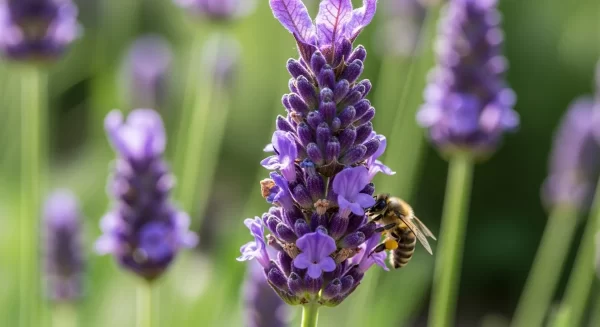
Hidcote vs Munstead Lavender: Which to Choose?

When you walk into a garden store, you’ll see a lot of purple. The smell will make you feel tranquil, and the hue will remind you of hillsides bathed in sunlight. But if you examine more closely, you’ll see that not all English Lavenders are the same. The real enchantment is in the small changes in color, shape, and smell. The key to getting your garden vision right is picking the right one. This could be a perfectly manicured, silver-and-purple tapestry of a low hedge, a fragrant cloud of color that spills onto your walkway, the secret ingredient in your signature shortbread, or the deepest purple hue for a dried bouquet that will remind you of summer all winter long.
The word “cultivar” only implies a cultivated variation, which is a plant that people have carefully chosen and grown for its best traits. English Lavender (Lavandula angustifolia) is highly valued for its ability to withstand cold weather and its sweet, low-camphor aroma, which is what makes the original lavender experience. After centuries of careful selection, we now offer a wonderful range of alternatives. In Elizabethan England, this practice really took off. Lavender became a symbol of cleanliness, purity, and peace at home. Its fragrant stems were tucked into linens and scattered on floors, making it a permanent part of the English garden culture.
This guide will be your final map. We’ll look at the famous titans “Hidcote” and “Munstead” and learn about their interesting pasts to get a sense of who they are. Then, we’ll go beyond these well-known names into the world of connoisseur cultivars, where you might find the perfect lavender that you never realized you needed.
Tip from an expert: I always ask my clients one question first: “What do you want this lavender to do for you?” The answer—whether it’s for a clean border, a fragrant bouquet, or cooking scones—changes my recommendation altogether. Let your aim help you decide.
Get a free pre-planned flower bed (vase-worthy from June to frost)
Printable planting plans for a cut-flower bed and a cottage pollinator bed — plant list, spacing, and calendar included.

The Icons: A Close Look at “Hidcote” and “Munstead”
| Feature | Hidcote | Munstead |
|---|---|---|
| Height | 12–18 in (30–45 cm) | 12–15 in (30–38 cm) |
| Spread | 18–24 in (45–60 cm) | 18–24 in (45–60 cm) |
| Flower colour | Deep violet-purple | Lavender-blue |
| Scent intensity | Very strong | Moderate–strong |
| Bloom time | June–July | June–August (longer) |
| USDA hardiness | Zones 5–8 | Zones 5–8 |
| Best for | Cut flowers, borders, scent | Hedges, low edging, pots |
| Drought tolerance | High | High |
For many years, two famous cultivars have ruled the lavender world. There’s a reason they’re classics: each one has its own personality and purpose. They are two different ways of thinking about how to build a garden, and the first step to becoming a lavender expert is to learn about what makes each one special.
“Hidcote”: The Architect’s Choice
- Flowers: A dark, rich, and full violet-blue. This is definitely the darkest of the common varieties; in some lights, it seems almost royal purple.
- Leaves: Bright, almost metallic, silver-gray. This makes a beautiful, high-impact contrast with the dark blossoms.
- Habit: Known for being small, straight, and even. It grows into a thick, neat mound with strong flower stems that go up and down.
- Size: Usually 18 to 24 inches tall and wide, and it keeps its shape nicely without splaying.

When you desire structure, drama, and bright, bold color, you should use “Hidcote” lavender. It is the clear winner for low hedges or formal borders since it is disciplined and upright. The strong vertical lines of this plant look well next to plants that are softer and more mounding. When planted in large groups, “Hidcote” makes a neat block of deep, velvety purple that is really amazing—a real statement piece in the landscape.
“Munstead”: The Painter’s Pick
- Flowers: A classic, gentle lavender-purple with hints of blue. When people think of “lavender,” this is the hue they usually think of.
- Leaves: More green-gray than silver, which makes the whole plant look softer and more connected.
- Habit: A little shorter, more mounding, and more likely to spread out. It is less stiff and more relaxed.
- Size: Usually between 12 and 18 inches tall and able to expand out to 24 inches broad.

If you want a softer, more romantic, more natural look, use “Munstead” lavender. The classic hue and somewhat less rigid shape make it a great choice for cottage gardens, mixed perennial borders, and container plants where a soft, overflowing impression is wanted. It’s the scented plant that you want to grow through a rock garden or pour over a path, letting off its pleasant, relaxing aroma every time you go by. One big plus is that it blooms earlier, which frequently means that summer is just around the corner.
The Names Have Stories
These plants aren’t just things you can grow; they’re living pieces of garden history that came from two of the most important gardens of the 20th century.
The peaceful American-born horticulture Major Lawrence Johnston found “Hidcote” at his now-famous Hidcote Manor Garden in Gloucestershire. Johnston was an expert at designing gardens. He thought of his garden as a collection of outdoor “rooms,” each with its own style and color scheme. He chose this lavender because of its very deep color and neat, architectural growth, which was great for making the strong lines and formal hedges that made his famous garden rooms so famous.
The name “Munstead” comes from Munstead Wood in Surrey, where the famous and very important landscape designer and writer Gertrude Jekyll lived. Jekyll was an educated artist who looked at gardening like a painter, making beautiful, impressionistic drifts of colors that worked well together. She chose this variety because it blooms early, smells sweet, and has a soft, classic hue. She used it to paint gorgeous, fragrant landscapes all throughout her forest garden.
Why They Do So Well at Different Jobs
There are more differences than just how they seem. Because of their unique chemistry and structure, they are best for certain tasks.
“Hidcote” is the best for drying and crafts. The dark purple flower buds (calyxes) contain full of stable pigments that don’t break down as easily when exposed to UV light. Unlike many other lavenders, which fade to a dull gray when dried, they stay almost flawlessly bright and jewel-toned.
When it comes to cooking, “Munstead” is the clear winner. All lavenders make camphor as a natural way to keep bugs away, although it might taste like medicine or soap. Over the years, people chose “Munstead” since it naturally had less camphor. This lets its sweeter, more floral aromatic constituents, like linalool, show through, making it the best choice for teas, infusions, and baking.
Based on what I’ve seen, both are lovely, but if you want a formal hedge with that deep purple look, choose “Hidcote.” If you want a lavender that smells stronger and is a little more wild, I always use “Munstead.”
Hidcote vs. Munstead: Side-by-Side Specifications
Characteristic “Hidcote” “Munstead” Mature Height 60 cm (24 in) 45 cm (18 in) Mature Spread 60 cm (24 in) 60–75 cm (24–30 in) — wider-spreading habit Flower Colour Rich violet-purple — deep, almost royal Lavender-blue — soft, classic shade Fragrance Intensity Intense and rich; dense flower spikes concentrate aromatic esters Sweet, classic floral; lower camphor content makes it the culinary cultivar RHS Hardiness H6 (fully hardy, to −20°C / −4°F) H6 (fully hardy, to −20°C / −4°F) Bloom Period Mid-summer (June–July) Early to mid-summer (May–June) — blooms first Best Garden Use Formal borders, low hedges, containers, drying and crafts Cottage gardens, ground cover, mixed perennial borders, cooking Clay Soil Tolerance Poor — requires well-drained, gritty soil; clay triggers root rot Poor — also dislikes clay, though marginally more forgiving on loam-clay mixes
The Connoisseur’s Collection: High-Quality Cultivars Other Than the Big Two
There are several other great types of English Lavender besides “Hidcote” and “Munstead.” By looking into these choices, you might find a plant that is even better for your garden and your aims, making your garden go from ordinary to amazing.
“Royal Velvet”: The Florist’s Dream
When you wish to fill vases with beautiful flowers, you should cultivate “Royal Velvet.” It makes a lot of tall, strong, beautiful stems with flower spikes on top that are dark violet-purple and can grow to be 3–4 inches long. It blooms a lot in the late spring, and if you cut it well after the first flush, it will frequently bloom again later in the summer. This makes it a great workhorse in the garden. When dried, it keeps its color better than all but “Hidcote,” making it a great choice for both fresh and dry arrangements.
“Folgate”: The Farmer’s Friend
Folgate is a popular among small-scale lavender producers because it is reliable and blooms early, frequently two weeks before other types, which makes the season of color last longer. It is a vivid, colorful purple blossom that shines out in the landscape and makes a sweet, high-quality essential oil with a lot of linalyl acetate, which is quite popular. Its established resilience is a big plus for gardeners who live in colder areas.
“Vera”: The Lavender for Purists
A lot of botanists and lavender lovers think that “Vera” is the “true” species type. It is the closest cultivar we have to the wild Lavandula angustifolia that grew in the mountains of Europe before it was selected over hundreds of years. It doesn’t look the best, with lighter lavender blooms and a more open, rustic shape. But it is loved for making one of the best, most therapeutically complex, and precisely balanced essential oils. “Vera” is the best for anyone who want to learn more about aromatherapy, distillation, or the plant’s true history.
Stop missing your zone's planting windows.
Select your US zone and month — get a complete checklist of what to plant, prune, feed, and protect right now.
→ View My Garden Calendar“Nana Alba” and “Rosea”: The Unique Beauties
These cultivars are quite important for people who want to make complex color palettes.
- The ‘Nana Alba’ is a small, dwarf white lavender. The beautiful white flower spikes look great against the silver leaves. It looks well in a bright border because it adds a chilly touch, and in a moon garden, where its white blossoms seem to glow in the dark, it looks even better.
- The beautiful, pale pink blossoms of “Rosea” (also called “Jean Davis”) add a special warmth to the yard. It has a very fragrant smell and is a gourmet food choice because of its unusual hue and mild flavor in sweets, jellies, and desserts. It goes great with other soft-colored perennials like lady’s mantle (Alchemilla mollis) or catmint (Nepeta).

For gardeners in somewhat colder areas (Zone 5), “Folgate” has been one of the most consistent and durable English Lavenders I’ve produced. It comes back strong in the spring even after a tough winter.
The Ultimate Guide to Picking the Right Lavender
Here’s a full graphic that compares our top candidates to help you make your final choice.
| Cultivar | Color of the Flower | Leaves | Height | Spread | Time to Bloom | Strength | Personality and What Works Best |
|---|---|---|---|---|---|---|---|
| “Hidcote” | Dark Violet-Blue | Grayish Silver | 18 to 24″ | 24″ | In the middle of summer | Zone 5–9 | Serious and dramatic. Best for drying, hedging, and color contrast. |
| “Munstead” | Lavender-Purple | Greenish Gray | 12-18″ | 18 to 24″ | From early to mid-summer | Zone 5–9 | Gentle and romantic. Best for cooking, borders, and containers. |
| “Royal Velvet” | Dark Purple | Greenish Gray | 24 to 30″ | 30″ | Late spring, blooms again | Zone 5–9 | Stylish and useful. Best for hedging and fresh and dried bouquets. |
| “Folgate” | Bright Purple | Grayish-Silver | 18 to 24″ | 24″ | Early Summer | Zone 5–9 | Strong and dependable. Best for cold weather, oil, and early color. |
| “Vera” | Lavender Light | Gray-Green | 24 to 30″ | 30″ | In the middle of summer | Zone 5-10 | Real and rustic. Best for Naturalizing and Essential Oil. |
| “Nana Alba” | White Pure | Grayish-Silver | 12 to 15″ | 18″ | In the middle of summer | Zone 5–9 | Clear and Bright. Best for planting plants that are different from each other, in containers, or in moon gardens. |
| “Rosea” | Light Pink | Green-Grey | 15-18″ | 24″ | In the middle of summer | Zone 5-9 | One of a kind and sweet. Best for Scent Gardens and Gourmet Cooking. |
Hidcote or Munstead — Which Should You Choose?
Both cultivars are outstanding English lavenders, fully hardy to RHS H6, and both thrive in a sunny, well-drained spot. The decision comes down to your garden style and what you want the plant to do.
Choose “Hidcote” if you want:
- A compact, architectural hedge or formal border — its upright, dense mound (60 cm tall) holds shape without staking and creates crisp, defined lines.
- The richest, darkest purple flower colour — deep violet-purple that photographs well and retains its colour beautifully when dried.
- Container planting with a neat silhouette — its tighter growth habit suits pots, window boxes, and raised beds where a disciplined shape is needed.
- Crafts and dried bouquets — stable calyxes pigments resist fading; dried stems stay jewel-toned for months.
Choose “Munstead” if you want:
- Ground cover or a cottage-garden feel — its mounding habit (45 cm tall) and wider spread (up to 75 cm) knit together beautifully in informal drifts.
- Culinary lavender — lower camphor lets the sweet, floral linalool notes dominate; it is the standard choice for lavender shortbread, infusions, and teas.
- Earlier colour in the season — Munstead typically blooms two to three weeks before Hidcote, extending your garden’s colour window from late May.
- A softer colour palette — the classic lavender-blue tone pairs naturally with roses, catmint, and other cottage-garden staples.
If you have room for both, plant them together. They are fully compatible, flower at slightly different times, and the contrast between Hidcote’s deep violet and Munstead’s softer blue creates a layered, painterly effect in borders. Space each plant 45–60 cm apart to allow for mature spread without crowding.
Your Lavender, Your Garden
In the end, the “best” English Lavender is the one that makes you the happiest and fits your environment, space, and creative concept the best. With this new information, you may now choose a cultivar with confidence, even if you know the two most popular names on the plant tags. Don’t be afraid to try other things or a “connoisseur” type. You may plant a little “lavender library” with three or four different types to see how they grow in your soil and which scent you like most. There is a beautiful lavender plant for your garden out there.

Questions that are often asked (FAQ)
Is it possible to grow these types of lavender from seeds?
You can, but they might not grow “true to type.” Cultivars are genetic clones that are grown from cuttings to make sure that every plant is the same. A plant developed from its seed is a new genetic person and may have different colors, shapes, or fragrances than its parent. You can be sure to get a “Hidcote” if you buy a plant that was grown from a “Hidcote” cutting.
Which English Lavender smells the strongest?
“Strongest” can indicate a lot of various things. If you want a sweet, floral aroma that will help you relax, “Munstead” and “Rosea” are great choices. “Royal Velvet” and “Folgate” are two of the best lavender scents that fill the air with a strong, classic, and rich scent.
If I misplaced the tag, how can I identify if my lavender is “Hidcote” or “Munstead”?
There are two key indications, although it can be hard to find them. First, check out the leaves: “Hidcote” is a lot more silver, while “Munstead” is a lot greener. Second, check the color of the flowers when they are fully open. “Hidcote” is a much darker, more vivid violet-blue. “Munstead” is a softer, medium purple.
Are there any small English Lavender plants that can grow in pots?
Of course. Look for cultivars like “Thumbelina Leigh” or “Wee One” in addition to the little “Nana Alba.” These plants are bred to stay small and compact (usually less than 12 inches), so they are great for containers, fairy gardens, or the front of a border without taking up too much space.
What is the difference between Lavandin and English Lavender?
This is an important difference. English Lavender (L. angustifolia) is a real species. Lavandin (L. x intermedia) is a hybrid that doesn’t produce seeds between English Lavender and Spike Lavender (L. latifolia). Lavandins, such as “Grosso” or “Provence,” are much bigger plants that make more oil. However, their oil has a lot of camphor, which makes it sharp and medicinal. This makes it wonderful for cleaning items but not for cooking or fine perfumes.
Which is more fragrant — Hidcote or Munstead?
Both are fragrant English lavenders with a sweet, low-camphor scent, but they differ in character. “Hidcote” is generally described as slightly more intense and richer, likely because its denser flower spikes concentrate more aromatic esters per stem. “Munstead” has a softer, sweeter, more classically floral fragrance with a notably lower camphor content — which is why it is preferred for cooking and baking. For raw garden fragrance intensity, Hidcote edges ahead. For a scent that translates cleanly into food, Munstead wins.
Which is better for a small garden?
“Munstead” is the better choice for most small gardens. At around 45 cm tall it is noticeably more compact than Hidcote (60 cm), and its lower, mounding habit fits more easily into tight borders, raised beds, and container groupings without overwhelming the space. Both suit containers, but Munstead’s smaller scale gives you more flexibility. If you specifically want a low formal hedge in a small garden, Hidcote’s upright habit is still manageable — just clip it annually to keep it in check.
Can Hidcote and Munstead be planted together?
Yes — and it is a combination worth trying. Both are Lavandula angustifolia cultivars with identical care requirements (full sun, well-drained soil, RHS H6 hardiness), so they grow happily side by side. Planting them together gives you a longer colour season, since Munstead typically blooms two to three weeks before Hidcote. The colour contrast — Munstead’s softer lavender-blue against Hidcote’s deeper violet-purple — creates a layered, painterly effect in borders. Space plants 45–60 cm apart and treat them identically for pruning and feeding.