

From Windowsills to Harvest: The Complete Guide to Growing Vegetables at Home in Pots

(even if you have never gardened before)
Have you ever stood in the produce section staring at a depressed-looking tomato and wondered, “I wish I could just grow my own”? Perhaps you live in a house with a small patio, an apartment with a sunny balcony, or you have attempted conventional gardening only to be disappointed by bad soil and unwelcome animals. Without a large backyard, you could be thinking if it is really feasible to produce enough food to change your kitchen. From years of experience guiding individuals toward just that, let me say: the response is a loud YES. Surprisingly easy and requiring just three basic components—the correct container size, quality potting soil, and enough sunlight—learning how to produce veggies at home in pots is.

Container gardening is a superpower not a compromise. It’s a means of building a vibrant, useful garden right in the middle of things. It’s about the simple joy of gathering a sun-ripened cherry tomato from a container on your deck or cutting fresh basil right from your windowsill for your pasta. This goes beyond simply a few plants as well. We discuss peppers, beans, carrots, cucumbers, and even potatoes! Designed to walk you from a curious novice to a confident container gardener, this book is your whole road map. By the end of this book, you will have all you need—the information, the methods, and the inspiration—to begin your own vibrant container vegetable garden and savor the amazing taste of home-grown food.
Why Container Vegetable Gardening Works (And Why You’ll Love It)
Let’s consider why growing vegetables in pots is such a game-changer before we get our hands dirty. For so many people, it’s not only an alternative to conventional gardening; it’s a better, more controllable, and usually more successful method to produce food.
You might also find what to plant in summer helpful here.
- Perfect for every space: This is the most clear and amazing benefit. Whether your balcony is small, you have a front stoop, a sunny driveway, or only windowsills makes no difference. You may create a garden from an area with some sunlight.
- Ultimate Mobility: Your yard might run alongside the sun! You can relocate your containers to guarantee your plants are always getting the best possible light. Should the forecast call for a huge storm or a freak hailstorm? Move your valuable plants to a covered area.
- Pest and Disease Control: Though not immune, container gardens are significantly less prone to soil-borne illnesses, nematodes, and pests including slugs and rabbits. And should one plant get an aphid infestation, you can readily separate it from the others to stop the dissemination.
- Easier Maintenance (Your Back Will Thank You): To be honest, conventional gardening may be physically demanding. Using containers, there is little tilling, little weeding, and harvesting usually just requires reaching out your kitchen door.
- Year-round possibilities abound: Your growing season need not finish with the first frost. Many container gardens may be relocated indoors or into a greenhouse to keep producing during the winter.
- Amazing Cost-Effectiveness: Growing your own organic vegetables is a fraction of what you would pay at the grocery store following the initial outlay in pots and soil. A single packet of tomato seeds will produce many pounds of mouthwatering, fresh tomatoes.
Basic Container Selection: Size Really Does Matter
Regarding growing veggies in pots, I would want to underline this one most crucial element: success depends mostly on container size. The first error I find newcomers doing is selecting a too small pot. A little pot just cannot retain enough water and nutrients to support a healthy vegetable plant.
Suggested Container Size Policies
Consider the container as the entire universe of your plant. Mostly, bigger is usually always better.
- 1-2 Gallon Pots (6-8 inch diameter): These are ideal for very small, fast-growing crops like radishes or for kitchen herbs such basil, parsley, cilantro, and mint.
- 3-Gallon Pots (10-inch diameter): Starting size for single lettuce plants, spinach, or bush beans.
- 5-Gallon Pots (12-inch diameter): The magic number. For most vegetables—including peppers, bigger herbs like rosemary, carrots, and determinate (bush) tomatoes—a 5-gallon container is the least size I advise.
- 10-15+ Gallon Pots: Larger containers like a 10- or 15-gallon pot or a half whiskey barrel are best for bigger, indeterminate tomato varieties, potatoes, or for putting many smaller plants together.
Pro Tip: To encourage good root development regardless of size, make sure your container is at least 10-12 inches deep.
Material Thoughts
- Plastic/Composite: Lightweight, reasonably priced, and superb in moisture retention. Lighter hues are usually a preferable option since dark-colored plastic pots may grow rather heated.
- Terracotta (Unglazed Clay): Classic and lovely. Clay’s porous nature lets air and water pass through the sides, therefore preventing root rot. However, they also dry up really fast.
- Glazed Ceramic: Stylish and remarkably good at moisture retention. Though they can be quite hefty, this is a benefit for stability.
- Wood: A fantastic natural insulator that shields roots from sharp temperature fluctuations. Make sure it’s cedar, or another rot-resistant wood.
- Fabric Grow Bags: Lightweight, cheap, and its airy fabric stops roots from circling—a phenomena known as “air pruning”—which results in a healthier root system.
Need for Drainage
Negotiable is not what this is. Every pot has to have drainage holes. Without them, your plant’s roots will suffocate and perish. Should a decorative pot lack holes, you either have to drill some yourself or hide a working pot within using it as a cachepot.
One widespread misunderstanding is that a pot’s bottom should be lined with gravel for drainage. This really results in a perched water table that makes the soil above it soggier. Just using premium potting soil all the way down is far better.
You might also find all white garden helpful here.
The Cornerstone of Success: Selecting the Correct Soil
You have to pack the appropriate stuff into the ideal container you now possess. Your plants find their stability, nutrition, and water in the earth.
Why Garden Soil Does Not Work in Containers
People do this error all the time, in my observation. Please avoid simply dragging dirt from your garden into your pots. Garden soil might include weed seeds, bugs, and diseases; it is thick, compacts readily in a small area, and drains poorly.
The Ideal Ground for Pottery
You must use a potting mix—often referred to as potting soil. This is a specifically made, soil-less medium meant to be light, fluffy, and well-draining while nevertheless retaining moisture.


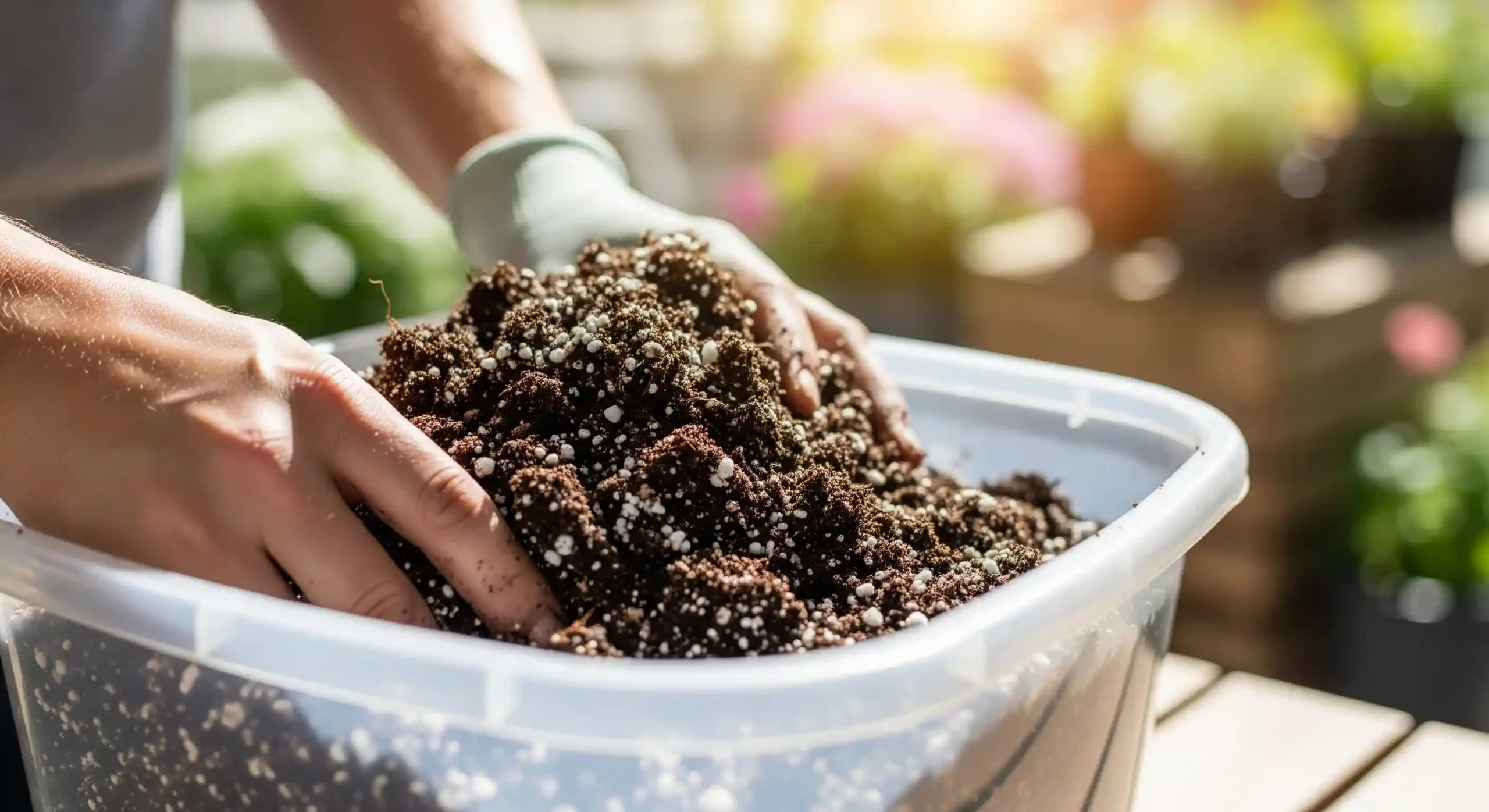
- Pre-made Mix: Beginning users would find it simplest to purchase a premium, all-purpose potting mix. Search for one including compost, peat moss, coir (coconut fiber), and perlite or vermiculite.
- DIY Soil Mix Recipe: You may wish to mix your own as you grow more proficient. One of an excellent all-purpose recipes is:
- One part coconut coir or peat moss
- One portion well-rotted compost or manure
- One component vermiculite or Perlite
- Organic vs. Conventional: Organic potting mixes call for natural materials. Conventional mixtures sometimes call for a little synthetic, slow-release fertilizer. Both perform nicely.
Location, Location, Location: Seeking the Ideal Spot
Spend a day acting as a “sun detective” before you plant; most people exaggerate the amount of sun their area receives.
- Full Sun (8+ hours): Most fruiting vegetables—including tomatoes, peppers, cucumbers, and squash—are sun worshippers. To be really successful, they require a location with least 8 hours of direct, unvarnished sunlight every day.
- Partial Sun (4-6 hours): More forgiving are leafy greens (lettuce, spinach, kale) and some root veggies (radishes, carrots). Many in hot climates actually value some shelter from the strong afternoon sun.
How Should You Evaluate Your Light? Don’t just hypothesize. See where the sun is hitting when you go outside at 9 AM, noon, and 3 PM. This will produce a far more accurate map of your sunniest areas. A windy balcony can rapidly dry out and destroy vegetation. If your area is quite windy, think about putting pots together or building a windbreak.
The Perfect Vegetables for Home Pot Plants
Now comes the really exciting part! Actually, what can you grow? As long as you choose the correct variety, practically anything is the solution. Search the variety name for words like “dwarf,” “bush,” “patio,” or “container.”
Beginner-Friendly Choices: Fast Wins for Boosting Confidence
- Lettuce and Leafy Greens: Perfect for pots are loose-leaf lettuce cultivars. They are “cut-and-come-again.” Container: 2-3 gallons. Varieties: ‘Black Seed Simpson,’ ‘Red Sails,’ Spinach, Arugula.
- Radishes: The best quick fix for satisfaction. Some types are ready in less than one month! Container: 1-2 gallons (at least 6″ deep). Varieties: ‘Cherry Belle,’ ‘French Breakfast.’
- Herbs: Basil, mint, parsley, oregano, and cilantro are quite simple and highly rewarding. Container: 1 gallon.
The Next Step Up: Middle Choices
- Peppers: Both sweet bell peppers and hot peppers thrive very well in pots. Container: 5 gallons. Varieties: ‘California Wonder’ (bell), ‘Jalapeño,’ ‘Cayenne.’
- Bush Beans: Plant a few seeds in a container to get a large harvest all at once. Container: 3-5 gallons. Varieties: ‘Contender’, ‘Bush Blue Lake’.
- Carrots: Shorter, stouter kinds are ideal for pots. Container: 5 gallons minimum depth. Varieties: ‘Danvers Half Long,’ ‘Paris Market’ (round).
Advanced Choices: The Great Harvest

- Tomatoes: Regarding containers, your best bet are determinate, or “bush,” kinds. Container: 5-10 gallons. Varieties: ‘Patio Princess,’ ‘Bush Early Girl,’ ‘Celebrity.’
- Potatoes: You certainly could grow potatoes in a pot! You sow seed potatoes and progressively add additional soil. Container: 10-15 gallons or a grow bag. Varieties: ‘Red Pontiac,’ ‘Yukon Gold.’
- Cucumbers: Look for bush versions of cucumbers. They are modest and nevertheless highly productive. Container: 5-7 gallons. Varieties: ‘Spacemaster,’ ‘Bush Pickle.’
Techniques for Planting That Really Work
Your vegetable planting technique determines their whole life conditions.
Seeds vs. Seedlings
- Seeds: far more varied and far less expensive. calls for more time and patience. Generally speaking, a seed should be planted around twice as deep as it is wide.
- Seedlings: give you a great start on the season. Perfect for tomato and pepper long-season crops as well as for beginners.
Hardening Off
Purchasing seedlings from a sheltered greenhouse means you cannot just leave them in the full light. You should “harden them off” by progressively bringing them outside over a week. Start with one hour of early light, then two, then three, then four, until they are strong enough to manage a whole day.
Staking
Install your support—a stake or a metal cage—at the time of planting for plants such as tomatoes and peppers. If you put it off, the roots may suffer.
The Daily Routine for Care That Takes Just Ten Minutes
A container garden that thrives depends on constant maintenance. It just requires a daily brief check-in.
Mastery with Watering
Your everyday responsibility is most importantly this one.
- The Finger Test: The best indicator of whether a plant requires water. Two inches down into the ground, stick your finger. Should it be dry, water it.
- Frequency: You probably will have to water your pots every single day throughout the summer heat.
- Water Deeply: Water until you see it rushing out of the drainage holes.
- Visual Cues: The most clear indication of thirst are wilting leaves. A sign of over-watering are yellowing leaves.
Feeding Your Vegetables
A pot’s nutrients are limited and wash off with water. You have to be the chef.
- Slow-Release vs. Liquid: I like to ground a granular, slow-release organic fertilizer into the soil at planting. For heavy feeders like tomatoes, I then augment with a liquid fertilizer every two to four weeks.
- Get the directions: more is not better! Overfertilizing may “burn” your plants. Use the package’s directions exactly always.
Continuous Upkeep
- Pinching & Pruning: Pinching the developing tips of herbs like basil helps them to get busher. Eliminating any dead or yellowing leaves maintains the plant’s vigor.
- Pest Patrol: Check the undersides of leaves for typical pests include aphids or spider mites.
- Harvest Often: Harvest your vegetables straight away when they are mature! This motivates the plant to output more.
Investigating Typical Issues
Even the finest of gardeners run upon problems. Here is how to tackle them.
Stop guessing if your garden pays.
Log what you grow and harvest — see total yield weight, estimated retail value, and season-on-season progress in one place.
→ Track My Harvest- Problem: Wilting on even damp soil.
- Solution: The plant might be growing very heated. Try putting the pot on “pot feet” to let airflow under or move it to a spot with afternoon shade.
- Problem: Many lovely leaves but no fruit—on tomatoes or peppers.
- Solution: Usually indicating too much nitrogen fertilizer. Reduce the fertiliser intake. It can also be a lack of pollination; gently shaking the flower stems can help.
- Problem: Bugs!
- Solution: For many common pests including aphids, a powerful spray of water from the hose will suffice. An insecticidal soap spray is a safe, sensible choice for more tenacious problems.
- Problem: My plant seems root-bound.
- Solution: Time to pot up to a larger container if roots are circling the pot or emerging from the drainage holes.
Strategies for Seasonal Container Garden Design
- Spring: Planting cool-season vegetables such lettuce, spinach, radishes, and peas. Start your long-season tomato and pepper seeds indoors.
- Summer: The season of sun worshippers! Tomatoes, peppers, cucumbers, beans, and basil will be in their grandeur.
- Fall: You might enter a second season of cool-weather crops when summer harvests finish. Plant another crop of kale, spinach, and lettuce.
- Winter: You can bring indoors pots of hardy herbs like rosemary from colder climes. You might even try growing lettuce or microgreens under a grow light inside.
Modern Methods for Highest Productive Capacity
- Vertical Growing: Think not only horizontally. Grow vining vegetables like cucumbers or pole beans upward using trellises, therefore conserving a lot of floor area.
- Companion Planting: As you are supplying all the water and nutrients they require, you can put items a little closer together.
- Season Extension: Use a basic cold frame or even just a piece of plastic to shield your plants from early or late frosts.
Low Cost Container Gardening
- DIY Planters: A 5-gallon food-grade bucket from a hardware shop with holes drilled in the bottom makes an ideal, reasonably priced vegetable planter.
- Buy in Bulk: Purchasing a big bale of potting mix or the individual components to create your own is far less expensive than buying several little bags.
- Start from Seed: A packet is significantly less expensive than purchasing several seedling plants.
- Seed Saving: Learn to store seeds from your most successful open-pollinated or heirloom veggies to grow free next year!
Final Thought
With this tutorial, hopefully, the curtain on how to grow vegetables at home in pots will be closed and everyone will be able to see that this is a very fulfilling, reasonably easy aim. Starting with a single pot and a handful of soil, this trip culminates with the great delight of gathering food you grown with your own two hands. The main success elements are basic: give your plants enough area to grow in a big enough container, feed them light, fluffy, nutrient-rich potting mix, and pay attention to their daily demands for water and sunlight.

You should not feel as though you have to grow everything at once. Starting small is usually my advise. Choose two or three vegetables you really must consume. Master those, welcome your success, and let your confidence and garden grow from there. Your first cultivated tomato will taste a revelation, and the pure delight and health advantages will be well worth the little time and effort required. Your crop is just waiting here.


