

Stop Losing Zucchini Seedlings to Pests and Frost — the Row Cover Method That Works

Three threats kill most zucchini seedlings. Learn the right row cover weight, how to seal it correctly, and the crop rotation mistake that defeats it.
Why Your Zucchini Seedlings Keep Dying (Three Specific Threats)
Healthy-looking zucchini transplants can collapse within days or dwindle mysteriously over weeks. The frustrating part is that the damage usually happens invisibly, underground or inside stems, before you see any sign of trouble above ground. Three specific threats account for most seedling losses, and row covers block all three — but only if you choose the right weight and install them correctly.
Cold stress and frost: Zucchini is what University of Maryland Extension calls a ‘very tender warm-season annual.’ Frost injures the top growth immediately, but even temperatures above freezing cause problems. According to University of Minnesota Extension, zucchini seeds won’t germinate in cold soil, and transplants set into soil below 70°F at the 2-inch depth struggle even when the air feels warm. A transplant that goes into 55°F soil on a 70°F afternoon isn’t protected — it’s just suffering more slowly. Row covers warm the soil as well as the air around the plant, which is why they speed establishment so reliably.
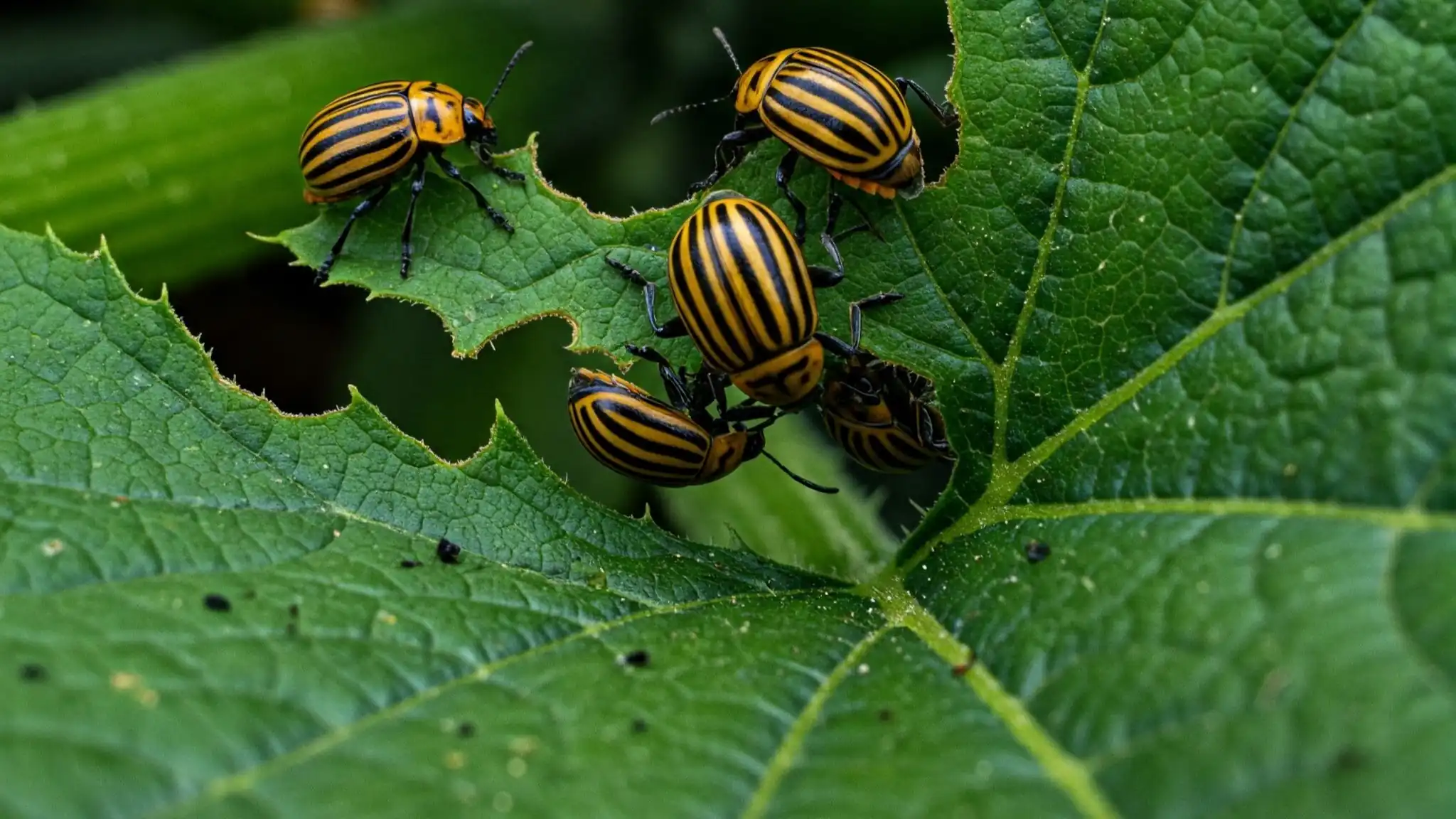
Cucumber beetles carrying bacterial wilt: This is the threat most gardeners don’t connect to the plant they found collapsed two weeks later. Striped and spotted cucumber beetles carry Erwinia tracheiphila, the bacterium that causes bacterial wilt, in their digestive systems. When beetles feed on your seedlings, they deposit feces on the feeding wounds. Rainwater and morning dew wash those bacteria directly into the plant’s vascular system. From that point, the bacterium plugs the plant’s water-conducting tissue, and according to University of Maryland Extension research, the visible collapse typically takes 2 to 6 weeks after initial infection. That’s long enough that most gardeners don’t connect the damaged leaves they saw three weeks ago to the plant that just died today. Adult beetles emerge when temperatures reach 54–62°F, which means they arrive exactly when seedlings are most vulnerable.
Squash vine borer moths: The adult squash vine borer is a day-flying moth that lays flat, reddish-brown eggs on the lower stems of zucchini during June and July. The larvae hatch in about a week and bore immediately into the stem, tunneling through the vascular tissue while pushing sawdust-like frass out of the entry hole. By the time you notice the wilting, the larvae have been feeding for days. University of Minnesota Extension notes that summer squash and zucchini are among the most susceptible cucurbits; butternut and cucumbers are significantly more resistant.

Three pre-planned garden beds, free
Stop staring at empty beds: printable plans with exact layouts, plant lists and planting calendars — yours free from the Garden Library.
Row covers work by creating a physical barrier against all three of these threats simultaneously. The key is knowing which weight to use and how to install it without the gaps that let beetles through.
Choosing the Right Row Cover Weight
Row cover fabric comes in three weight categories, and buying the wrong one is the most common mistake. Each weight makes a specific trade-off between light transmission and temperature/frost protection.
Lightweight (0.45–0.5 oz/sq. yd.): This is marketed as an insect barrier. It transmits 90–95% of available light, which means plants under it grow almost identically to uncovered plants. Frost protection is minimal — around 2°F. If you’re planting into already-warm soil after all frost risk has passed and your only concern is cucumber beetles and squash vine borers, lightweight is the right choice. It can stay on all season until flowering without light deprivation becoming an issue.
Medium weight (0.5–1.0 oz/sq. yd.): This is the most versatile option for spring planting. It transmits 70–85% of light and provides 4–6°F of frost protection. If you’re in a zone where late frosts are still possible at transplant time, or where soil temperatures are borderline, medium-weight cover handles both the frost risk and the beetle pressure simultaneously. According to New Mexico State University Extension, covers in the 0.5–1.25 oz range can enable crops to mature one to three weeks earlier than normal because of the combined soil and air warming effect.
Heavyweight (1.5–2.2 oz/sq. yd.): This provides up to 8–10°F of frost protection but only transmits 30–50% of light. That’s too dark for plants to grow well over more than a few days. Use heavyweight covers for brief emergency frost events only — put them on the night before a forecast frost, remove them the following morning once temperatures recover. Don’t use heavyweight covers as your season-long solution for zucchini.
For most home gardeners growing zucchini in USDA zones 4–8, the practical answer is: buy medium-weight for spring planting when both frost and early beetle pressure overlap, and switch to lightweight if you plant a second succession crop after the last frost date has passed. A word of caution on any weight: University of New Hampshire Extension notes that under-cover temperatures can run up to 15°F above ambient. On hot July days, check under the cover regularly. If it feels like a sauna, vent it.
How to Install Row Covers Without Gaps
The single most important installation rule: put the cover on the day you transplant. Every day you wait is a day cucumber beetles can access your seedlings. Adults mass on small plants specifically to feed, mate, and defecate — according to University of Maryland Extension, they often congregate at the base of the plant where stem meets soil, exactly where insecticidal sprays can’t reach them effectively anyway.
Here’s how to install covers so they actually exclude beetles rather than just slowing them down:
- Set up hoops first. Use 9–10 gauge wire cut to 48–60 inches, bent into a half-circle and pushed 6 inches into the ground on each side of the bed. Space hoops every 4–5 feet. Alternatively, 7-foot lengths of heavy wire or 1/2-inch flexible conduit bent over rebar stakes create tunnels roughly 3 feet wide and 2 feet tall — enough headroom for zucchini’s rapid early growth. Hoops do two things: they keep fabric off the leaves (reducing disease risk from trapped humidity) and they prevent mechanical damage from the fabric whipping in wind.
- Drape the fabric with slack. Don’t pull it tight. Leave at least 6–8 inches of extra fabric on each side to bury. Zucchini leaves can reach 12–18 inches across; a cover installed tight against transplant-day size will tear or restrict growth within two weeks.
- Seal every edge. This is the step most installations skip. Bury the fabric edges under a few inches of soil, or use sod staples, bricks, sandbags, or rocks along the entire perimeter. According to Iowa State Extension research, even a small gap defeats the purpose — cucumber beetles will find it. After heavy wind or rain, walk the perimeter and re-anchor any edges that have lifted.
- Mark the ends. Twist and bundle the fabric at each end of the tunnel, then bury or pin that bundle. This keeps the ends sealed while allowing you to open just the ends quickly when you need to check the plants or begin the Iowa State delayed-removal protocol discussed below.
NMSU Extension recommends covering the edges with soil specifically to ‘ensure exclusion of insects’ — it’s not optional. A cover anchored only with rocks on top of the fabric (not buried) will let beetles crawl underneath where the fabric touches the ground.
For a comparison of row covers versus greenhouse plastic and when each is the better choice, see that guide separately.
When to Remove Row Covers (and One Better Option)
Standard advice says to remove row covers when female flowers appear. That’s correct, but it’s also the moment your plants are most valuable and beetle pressure is often still high. There’s a better approach for most situations.
Recognizing female flowers: Female zucchini flowers have a small, swollen ovary — a miniature zucchini — at the base of the flower. Male flowers sit on a plain straight stem with no swelling. For fruit to set, bees need access to both. Most zucchini varieties produce male flowers first, for a week or two, before the first female flowers open. You don’t need to remove covers at the first male flower — only when female flowers begin appearing does pollination become essential. See the hand-pollinating guide for how to tell them apart quickly.
The Iowa State delayed-removal protocol: Field trials at Iowa State University tested a refinement on standard removal timing. Instead of fully removing covers at first female flower, researchers left covers in place for 10 additional days but opened just the ends of the tunnel to allow bees to enter. This kept beetle exclusion at near-complete levels through the vulnerable early fruit-set period while still allowing pollination. The result was significantly lower bacterial wilt incidence compared to standard-removal plots. For home gardeners, this means: when you see your first female flowers, don’t pull the cover entirely. Instead, open the ends each morning for a few hours, then close them again. After 10 days, remove the cover entirely.
Parthenocarpic varieties — the permanent solution: Some zucchini varieties set fruit without pollination. These parthenocarpic varieties can remain under row covers for their entire growing season, completely eliminating the beetle-access window. University of Maryland Extension specifically notes that parthenocarpic cultivars ‘can be covered with a row cover or insect netting through the plants’ lifecycle to exclude squash bug, cucumber beetle, and squash vine borer.’ If you’re in a region where bacterial wilt is a persistent annual problem, switching to a parthenocarpic variety and keeping the cover on all season is the most effective long-term solution. Look for varieties labeled ‘parthenocarpic’ or check with your seed supplier — availability varies by brand.
Stop missing your zone's planting windows.
Select your US zone and month — get a complete checklist of what to plant, prune, feed, and protect right now.
→ View My Garden CalendarSquash vine borer timing: For SVB protection specifically, University of Minnesota Extension recommends keeping row covers in place for about two weeks after the first adult borer is seen in your garden. SVB adults fly mid-June through July in most of the US, so covers typically need to stay on through late July in zones 5–7. The challenge is that this overlaps with peak flowering. This is exactly where the delayed-removal protocol or parthenocarpic varieties earn their value.
The Crop Rotation Warning Nobody Mentions
Here is the most important installation caution you won’t find in most row cover guides: if zucchini, squash, or any other cucurbit grew in that garden bed last year, do not install row covers there without first rotating your crop.
Squash vine borers overwinter as pupae in cocoons about 2 inches underground, according to University of Maryland Extension. When you install a row cover over a bed that contained cucurbits last season, you seal overwintering borer pupae underneath the cover with your new transplants. As soil temperatures warm in late spring, those pupae complete their development, and the emerging adult moths are already inside the protection you just installed. Instead of keeping borers out, the cover has given them a protected enclosure to mate and lay eggs directly on your plants.
Rotate your zucchini to a bed that held non-cucurbit crops the previous year before relying on row covers for SVB protection. See the vegetable crop rotation guide for a simple 3–4 year rotation plan. This issue does not apply to cucumber beetle protection, since adult beetles overwinter elsewhere and fly in from outside the bed — it’s SVB-specific because of where the pupae overwinter.
After the Covers Come Off
Remove the cover, and the clock starts on unprotected plants. Here’s what to watch for and what to do.
Bacterial wilt early warning signs: The first symptom is a dull, slightly gray-green color on leaves that are actively being fed on by cucumber beetles. As University of Minnesota Extension describes, early-infected plants wilt during the heat of the day but recover overnight — which most gardeners interpret as simple heat stress. That overnight recovery won’t happen indefinitely. Over 2 to 6 weeks, the wilting becomes permanent, margins yellow and brown, and the vine collapses entirely. If you see a plant wilting dramatically in afternoon heat, do the cut-stem test: slice through a wilted stem near the base, press the two cut surfaces together, and pull them slowly apart. A thread of sticky, ropy material stretching between the cut ends confirms bacterial wilt. Remove that plant immediately — beetle populations on infected plants will spread the disease to neighboring cucurbits.
Squash vine borer after cover removal: Look for small, flat, reddish-brown eggs at the base of stems — they look like tiny copper-colored discs. Early detection is your only practical option for non-chemical control. If you spot sawdust-like frass at a stem entry hole, you can carefully cut open the stem lengthwise with a sharp knife, remove the larva, and mound moist soil over the wound to encourage the stem to re-root. It works, but it requires catching the damage early. For the full identification and control guide, see that article.
Cucumber beetles after cover removal: Adult cucumber beetles continue feeding through the season, but plants with established root systems and healthy foliage handle feeding pressure much better than seedlings. The most vulnerable period is the first four to six weeks after transplanting, which is exactly what row covers protect. Once plants are established, focus on monitoring rather than panic — some beetle pressure is normal and manageable. The complete cucumber beetle guide covers identification, thresholds, and control options in detail.
Frequently Asked Questions
Do row covers actually work for zucchini seedlings?
Yes, with consistent field data behind them. Iowa State University trials across multiple years showed that row covers deployed from transplanting until flowering significantly reduced bacterial wilt incidence compared to uncovered controls. The protection is physical — beetles simply cannot access the plants — which means it works regardless of beetle population levels in a given season.
Can I leave row covers on zucchini all season?
Only if you grow a parthenocarpic variety, which sets fruit without pollination. Standard open-pollinated and hybrid zucchini require bee access at female flowers, so covers must come off at flowering. The Iowa State delayed-removal protocol (open ends for 10 days, then fully remove) is the best middle ground for standard varieties.
What weight row cover should I use for zucchini?
Medium weight (0.5–1.0 oz/sq. yd.) for spring planting when frost and beetles are concurrent risks. Lightweight (0.45 oz) for summer succession planting when frost risk is gone and pest exclusion is the only goal. Heavyweight only for brief frost emergencies — remove after 24–48 hours.
What if I don’t have wire hoops?
Lightweight row cover can be laid directly on top of young seedlings — the fabric is light enough that it won’t damage plants and they can push it upward as they grow. As plants get larger, improvise hoops from bent rebar, sections of garden hose over stakes, or bent chicken wire. The key function of hoops is to prevent wind from tearing the fabric loose from its anchoring. Without hoops, check the edges after every wind event.
Do row covers protect against squash bugs too?
Yes — when installed at transplant time, covers prevent adult squash bugs from laying their characteristic egg masses on the undersides of leaves. However, squash bugs are strong crawlers and will exploit any unsealed edge. Edge sealing is more critical for squash bug exclusion than for almost any other pest. See the squash bug guide for how to manage populations after covers come off.
Key Takeaways
- Three specific threats kill most zucchini seedlings: cold/frost stress, cucumber beetles carrying bacterial wilt, and squash vine borer moths. Row covers block all three.
- Choose medium weight (0.5–1.0 oz) for spring planting; lightweight (0.45 oz) for summer succession. Heavy covers are for short frost emergencies only.
- Install on transplant day. Seal every edge with soil, sod staples, or weight. Gaps defeat the entire purpose.
- Remove at first female flowers using the Iowa State delayed-removal protocol: open ends for 10 days, then fully remove. Parthenocarpic varieties can stay covered all season.
- Rotate cucurbits annually before installing row covers. If squash grew in that soil last year, row covers may trap overwintering squash vine borer pupae underneath.
- After cover removal, watch for dull-green leaves that wilt in afternoon heat and confirm bacterial wilt with the cut-stem thread test before removing any plants.
Sources
- Iowa State Extension Yard and Garden — Using Row Covers to Stop Cucurbit Bacterial Wilt
- University of Maryland Extension — Row Covers
- New Mexico State University Extension — Row Cover Vegetable Production Techniques (H251)
- University of New Hampshire Extension — Using Row Covers in the Garden
- University of Minnesota Extension — Squash Vine Borers
- Illinois Extension — Managing Squash Vine Borer in the Garden
- University of Maryland Extension — Squash Vine Borer on Vegetables
- University of Minnesota Extension — Bacterial Wilt of Cucurbits
- University of Maryland Extension — Striped Cucumber Beetles and Bacterial Wilt
- University of Minnesota Extension — Growing Summer Squash and Zucchini
- University of Maryland Extension — Growing Summer Squash (Zucchini) in a Home Garden


