Verbena bonariensis Growing Guide: Deadhead Once and Enjoy Self-Seeding Blooms Until Frost

Complete guide to growing verbena — V. bonariensis tall perennial, V. hastata native Blue Vervain, hybrid trailing verbenas — covering varieties, seed sowing, planting, care, wildlife value, and the see-through design technique used at the High Line NYC.
Verbena is one of the most underrated genera in the North American garden. Mention the name and many gardeners picture only the trailing annuals tumbling from summer baskets — but the verbena family includes a native wildflower that thrives in wet meadows, a structural perennial beloved by designers from Minnesota to Manhattan, and a compact silvery-blue species that shrugs off heat and drought with equal indifference. What unites them is exceptional wildlife value: verbena flowers are among the most important nectar sources available to butterflies in North America, and several species are critical for native bee populations.
This verbena growing guide covers the five key garden species and their hybrids — from the towering Verbena bonariensis with its butterfly-magnet purple pompoms to the native Blue Vervain of rain gardens and wet meadows. Whichever species you grow, verbena rewards your investment with months of colour, genuine ecological benefit, and surprisingly minimal effort.
What Is Verbena?
The genus Verbena belongs to the family Verbenaceae and contains approximately 250 species, most native to the Americas with a small number from Europe and Asia. The diversity within the genus is remarkable: heights range from 6 inches in compact hybrid forms to over 6 feet in Verbena bonariensis, and hardiness spans USDA zones 3 through 11 depending on species.
The key garden species each have distinct characters:

Three pre-planned garden beds, free
Stop staring at empty beds: printable plans with exact layouts, plant lists and planting calendars — yours free from the Garden Library.
Verbena bonariensis (Tall Verbena) is native to South America, particularly Argentina and Brazil. Despite being a tender perennial (hardy in zones 7–11), it self-seeds prolifically in colder climates and reliably reappears each spring from dropped seed even in zones 4–6. At 4–6 feet tall, it produces clusters of tiny purple flowers — the “pompoms” that give it its common name — on slender, branching stems from July through to frost.
Verbena hastata (Blue Vervain) is a native North American wildflower, thriving in zones 3–9 and growing 2–5 feet tall. Unlike most verbenas, it prefers consistently moist or wet soil — making it the only verbena suited to rain gardens and boggy borders. It is a keystone plant for specialist native bees.
Verbena rigida (Slender Verbena) is a drought-tolerant perennial from South America, hardy in zones 8–11, and produces stiff, violet-purple stems reaching around 18 inches. Excellent in hellstrips and dry borders.
Hybrid verbenas (Verbena x hybrida) are the trailing annuals familiar from garden centres — compact, vibrant, and bred for container performance rather than naturalistic effect.
A note on lemon verbena: Lemon verbena (Aloysia citrodora) is frequently grouped with verbenas in herb catalogues but belongs to a different genus entirely. The culinary herb shares the Verbenaceae family but is not a true verbena and has nothing in common with the garden species above.
Best Verbena Varieties
Choosing the right verbena depends on your garden’s character and goals. The five key garden verbenas are summarised below.

| Variety | Type | USDA Zones | Height | Flower Colour | Best Use |
|---|---|---|---|---|---|
| V. bonariensis (Tall Verbena) | Perennial; self-seeding annual in zones 4–6 | 7–11 (returns by seed zones 4–6) | 4–6 ft | Purple pompoms | Cottage borders, wildlife gardens, see-through front-of-border planting |
| V. hastata (Blue Vervain) | Native perennial | 3–9 | 2–5 ft | Blue-violet spikes | Rain gardens, wet meadows, native bee habitat |
| V. x hybrida ‘Imagination’ | Trailing annual | All zones | 12–18 in | Deep violet | Hanging baskets, container edges |
| ‘Lanai Twister Pink’ | Spreading annual | All zones | 12 in | Hot pink | Window boxes, summer bedding |
| V. rigida ‘Polaris’ | Compact perennial | 8–11 | 18 in | Silver-blue | Rock gardens, hellstrips, drought-tolerant borders |

Growing Verbena from Seed
Verbena seeds can be tricky — germination is slow, erratic, and sensitive to conditions. Starting from seed is most worthwhile for V. bonariensis, which often produces colonies with a more natural character than transplanted plants.

Verbena bonariensis from seed
Start indoors 8–10 weeks before your last expected frost date. V. bonariensis is a light-dependent germinator — press seeds gently onto the surface of moist seed compost and do not cover them. Darkness inhibits germination entirely. Maintain temperatures of 65–75°F. Expect erratic germination over 21–30 days: some seeds will sprout within two weeks while others take a month or more. This variability is entirely normal.
Once your garden has an established V. bonariensis colony and you allow it to set seed, self-seeded plants will germinate more reliably than indoor-raised ones and typically surpass transplants in vigour. Many gardeners find it most practical to buy transplants for the first season, then allow natural self-seeding to take over. Within two to three years, a colony self-maintains without any intervention.
Hybrid verbena from seed
Start 10–12 weeks before last frost — the longer head start is necessary to produce flowering-size plants by planting-out time. Surface sow without covering and maintain temperatures of 70–75°F. Germination typically takes 10–20 days and is more consistent than V. bonariensis. Given the 10–12 week lead time and the wide availability of inexpensive plug plants, many gardeners opt to buy transplants instead.
Verbena hastata from seed
V. hastata seeds require a cold, moist stratification period before they will germinate — an approximation of the winter cold they experience in their native habitat. The simplest approach is direct sowing outdoors in autumn and allowing natural winter temperatures to provide stratification. Expect germination the following spring. Division of established clumps is the easier and more reliable propagation method for established gardens.
Planting Verbena
The single most important factor for most garden verbenas is light. V. bonariensis and hybrid forms require full sun — a minimum of 6 hours of direct sunlight daily — and V. bonariensis will tolerate more sun than almost any other ornamental plant you can grow. A south-facing position that bakes against a wall suits it perfectly. The major exception is V. hastata, which accepts part shade and has completely different soil requirements.

Soil requirements by species
- V. bonariensis: Well-drained to dry soil. Tolerates poor and sandy soils and performs well on slopes and in rain-shadow areas. Will rot in waterlogged ground.
- V. hastata: Consistently moist to wet soil. This species grows naturally along stream banks and in meadows with high water tables — it is the verbena to choose for a problematic wet spot that most plants would struggle in.
- Hybrid verbenas: Fertile, well-drained soil or quality potting compost in containers. They are more nutritionally demanding than the perennial species.
Spacing
- V. bonariensis: 18–24 inches apart. Despite their height, the plants are airy and transparent, so closer spacing is acceptable and creates a denser colony without becoming oppressive.
- V. hastata: 18 inches apart, in naturalistic drifts of five or more plants for maximum wildlife impact.
- Hybrid trailing verbenas: 12 inches apart in beds; one plant per 10–12 inch container.
Plant out after all risk of frost has passed — typically late May in zones 5–6, late April in zones 7–8. Verbena transplants are frost-sensitive even when hardened off; a late frost after planting will damage hybrid verbenas and set back even the more resilient V. bonariensis transplants.
Verbena Care
Watering
Verbena bonariensis is drought tolerant once established — one of the most resilient summer-flowering plants available to North American gardeners. Water new transplants regularly for the first 6–8 weeks, then reduce watering. Established plants in borders rarely need supplemental irrigation.
Stop missing your zone's planting windows.
Select your US zone and month — get a complete checklist of what to plant, prune, feed, and protect right now.
→ View My Garden Calendar
V. hastata is the opposite: it needs consistent moisture and will wilt and lose vigour in dry periods. Plant it alongside other moisture-loving natives such as Chelone (turtlehead), Lobelia cardinalis, and native iris for a cohesive rain garden palette.
Hybrid verbenas in containers need regular, consistent watering — daily in hot weather. Allowing containers to dry out repeatedly leads to bud drop, poor flowering, and increased susceptibility to spider mites.
Deadheading and cutting back
Leave V. bonariensis alone — removing spent flowers removes next year’s seedlings. Allow the seed heads to stand through winter; they provide food for goldfinches and siskins and add delicate architectural interest to the bare garden.
Hybrid verbenas benefit significantly from hard cutting back by one-third to one-half in mid-season — typically mid-July in zones 5–7. This removes tired, leggy growth and triggers a fresh flush of flowering that extends the season through to frost.
Fertilising
Container hybrid verbenas benefit from a balanced liquid feed (such as 10-10-10) applied monthly during the growing season. Native species like V. hastata do not need feeding — over-fertilising drives excessive leafy growth at the expense of flowers. V. bonariensis in border conditions also performs better without supplemental feeding; rich soil increases the risk of powdery mildew.
Verbena as a companion plant
V. bonariensis combines exceptionally well with lavender — both demand free-draining soil and maximum sun, and their midsummer flowering periods overlap to create a purple-on-purple palette that attracts the same butterflies and bumblebees. Salvia is another natural partner: similar soil preferences, contrasting flower form (vertical salvia spikes against verbena’s airy pompoms), and complementary blue-purple tones that read as a coherent palette from a distance. For a complete guide to building layered summer borders around these principles, see our companion planting guide.

Wildlife Value of Verbena
Verbena ranks among the most ecologically important genera in the ornamental garden. V. bonariensis in particular is exceptional — it produces nectar in quantities that attract a near-constant parade of butterflies from July through to the first hard frosts, a flowering season of four months or more.

In both the UK and North America, V. bonariensis is a documented feeding plant for some of the most iconic butterfly species:
- Painted Lady (Vanessa cardui) — one of the most migratory butterflies in the world; V. bonariensis provides critical nectaring stations along migration routes from Mexico to Canada and onwards.
- Red Admiral (Vanessa atalanta) — particularly attracted to late-season nectar sources, making V. bonariensis’s extended October flowering especially valuable.
- Peacock (Aglais io) — regularly observed nectaring on V. bonariensis in gardens where it grows in quantity.
- https://www.bloomingexpert.com/garden/lantana-vs-verbena/
- Verbena Types: Bonariensis, Rigida and Trailing Varieties
- 21639
- How to Get Verbena Blooming All Season Long: A Zone-by-Zone Guide to Watering, Feeding, and Deadheading
The mechanism behind verbena’s exceptional butterfly value lies in its flower structure. The narrow, elongated floral tubes are accessible only to long-tongued insects — primarily butterflies and long-tongued bumblebees. This selective architecture means nectar is reserved for effective pollinators rather than being depleted by short-tongued insects that would consume it without cross-pollinating.
Verbena hastata is equally important in North American native garden contexts. It supports specialist bees including Melissodes verbenenae — a native bee that collects only vervain pollen — as well as generalist bumblebees and hummingbirds. Research by the Xerces Society identifies the Blue Vervain as one of the highest-value native plants for specialist bee communities in wetland and prairie ecosystems, with documented visits from over 30 bee species across its native range.
V. bonariensis: The See-Through Plant
One of V. bonariensis’s most remarkable design qualities is its transparency. The tall stems are slender and largely bare; the leaves are small and sparse; and the flowering clusters sit at the tips of widely spaced branches. The result is a plant you can see through and behind — which makes it possible to position it at the very front of a border and still see the plants growing behind.

This “see-through quality” creates layered depth that is impossible to achieve with solid-stemmed plants. A mass of rudbeckia, echinacea, or ornamental grasses positioned behind a veil of V. bonariensis remains fully visible — the purple pompoms floating in front like punctuation marks, adding a layer of colour without obscuring the composition behind them. This allows gardeners to create a sense of three-dimensional depth in a border of any width.
Garden designer Piet Oudolf exploited this quality extensively in his most celebrated public commissions, most notably the High Line in New York City — now one of the world’s most visited designed landscapes. At the High Line, V. bonariensis threads through Pennisetum grasses and perennial sedums in a way that a solid-stemmed plant could never achieve: it adds vertical punctuation without competing with or obscuring the plants around it. The combination became so characteristic of the New Perennialism movement that V. bonariensis with ornamental grasses is now a defining pairing of contemporary naturalistic planting design worldwide.
To recreate this effect at home, pair V. bonariensis with Pennisetum alopecuroides, Stipa tenuissima, or feather reed grass (Calamagrostis) for a prairie-contemporary feel. Weave it through a border of lavender for a more traditional approach that still exploits the same see-through principle.

Common Problems
Powdery mildew
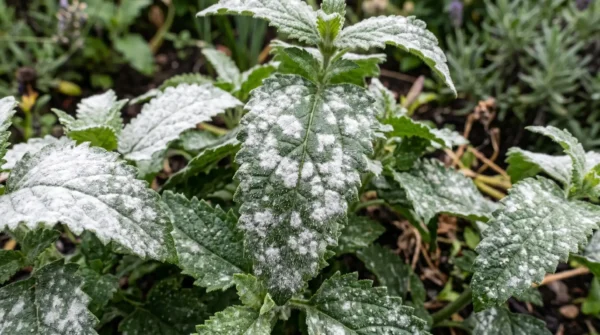
The most common verbena disease, particularly affecting hybrid verbenas in warm, humid conditions. The first sign is a white, powdery coating on upper leaf surfaces. Improve air circulation by thinning crowded growth and avoid overhead watering. Water at the base of plants in the morning so foliage dries quickly. Remove and dispose of affected leaves rather than composting them. Resistant hybrid varieties (such as the ‘Lanai’ series) reduce but do not eliminate the risk in humid climates.

Aphids
Soft-bodied colonies of green or black aphids cluster on soft growing tips, particularly on hybrid verbenas and V. hastata. A strong jet of water is usually sufficient to dislodge light infestations. Insecticidal soap spray addresses persistent colonies. Avoid broad-spectrum pesticides, which will harm the butterflies and bees that verbena specifically attracts.
Spider mites
Common on container verbenas that are allowed to dry out repeatedly. Fine webbing between stems is the first sign. Improve watering consistency; in severe cases, an insecticidal soap spray applied to the undersides of leaves will break the cycle.
Root rot
Any verbena in waterlogged or poorly drained soil will develop root rot. V. bonariensis is particularly sensitive to winter wet. Ensure adequate drainage; on heavy clay soils, plant on a slight mound to improve run-off. In containers, ensure drainage holes are clear and never allow pots to sit in standing water.
Legginess in hybrid verbenas
Without mid-season cutting back, hybrid verbenas become straggly from late July onwards and flower poorly through August and September. Hard cutting back by one-third in mid-July prevents this and extends strong flowering through to frost — one of the most effective and underused techniques in summer container gardening.
For a detailed guide covering the biology behind each problem — including how to distinguish drought wilting from Pythium root rot, which resistant cultivars hold up in humid summers, and the pinching technique that prevents legginess — see Verbena Problems: Powdery Mildew, Leggy Growth and Wilting.
Verbena FAQs
Is Verbena bonariensis a perennial?
Yes — V. bonariensis is a true perennial in USDA zones 7–11, where it overwinters reliably and returns each year from the rootstock. In zones 4–6, the plant itself will not survive winter, but it self-seeds so prolifically that new plants appear each spring from the previous year’s dropped seeds. In practice, most gardeners in colder zones experience it as a self-seeding annual that “comes back” reliably even though the parent plant has died.
Does verbena come back every year?
This depends on the species. V. bonariensis returns every year in zones 7–11 as a perennial, and through self-seeding in zones 4–6. V. hastata is fully cold-hardy in zones 3–9 and returns every year without assistance. Hybrid verbenas are annuals that do not overwinter in any USDA zone and must be replaced each spring — or overwintered as cuttings in a frost-free greenhouse.
What is the difference between Verbena bonariensis and trailing verbena?
V. bonariensis and hybrid trailing verbenas are almost entirely different plants that share only a genus. V. bonariensis is a tall (4–6 ft), upright, self-sufficient perennial with small purple flowers and exceptional wildlife value. Hybrid trailing verbenas sprawl rather than stand, produce large vibrant flower clusters, and are bred for container colour rather than ecological function. The two are genuinely complementary in garden design: the tall perennial provides structure and wildlife value; the trailing hybrids provide close-range colour in pots and baskets.
Can you grow verbena in pots?
Hybrid verbenas are among the best container plants available — they were bred specifically for this role. V. bonariensis can be grown in large containers (minimum 12 inches deep and 12 inches wide) but performs significantly better in the ground, where roots can establish freely and its self-seeding habit can operate naturally. V. hastata is unsuitable for pots given its preference for consistently moist soil, which is difficult to maintain in the restricted volume of a container in summer.
To get the most from your verbena, pairing it with the right plants makes a measurable difference to bloom time, pest pressure, and powdery mildew risk. See our guide to companion plants for verbena for specific pairings, spacing notes, and three combinations to avoid.

Sources
- Royal Horticultural Society. Verbena — cultivation and care guide. RHS.
- Missouri Botanical Garden. Verbena bonariensis — Plant Finder fact sheet. Missouri Botanical Garden.
- Go Botany — New England Wild Flower Society. Verbena hastata (Blue Vervain) — species profile. Native Plant Trust.
- NC State Extension. Verbena bonariensis — landscape plant profile. North Carolina State University.
- Clemson Cooperative Extension. Verbena — production and landscape use. Clemson University Home and Garden Information Center.
- Friends of the High Line. Gardens — planting design and plant selection. The High Line, New York City.