How to Get Verbena Blooming All Season Long: A Zone-by-Zone Guide to Watering, Feeding, and Deadheading

Verbena blooms all season when you nail the watering rhythm, mid-season phosphorus feed, and pinch-back technique — zone-specific calendar included.
Verbena is brutally honest about what it wants: full sun, fast-draining soil, and just enough water to stay productive without getting pampered. The plants that bloom non-stop from June through hard frost are almost never the ones that get watered every day — they’re the ones that get a deep soaking once a week, a phosphorus boost at midsummer, and a stem pinch before they go leggy.
The mechanism behind this is documented. A peer-reviewed drought study found that verbena on a daily irrigation schedule produced an average of 38 flowers per plant. Plants left without water for 10-day intervals dropped to just 11 flowers — a 71% reduction — with root systems shrinking from 12 cm to 2.5 cm and leaf chlorophyll collapsing from 4.49 to 1.22 mg/g [4]. The lesson isn’t “water constantly.” It’s “don’t let drought become prolonged.” There’s a sweet spot between daily irrigation and neglect, and verbena lives there.
This guide covers the full care cycle: watering rhythm with a diagnostic table for reading your plants, a two-phase feeding schedule, the deadheading technique that produces two or three new stems per cut instead of one, a midsummer cutback to trigger a second bloom flush, container-specific care, overwintering by zone, and a zone-by-zone care table from zone 5 through zone 11.
A note on species: This guide covers both hybrid garden verbenas (grown as annuals in zones 4–7, perennial in zones 8–11) and Verbena bonariensis, the tall purple butterfly magnet that’s perennial in zones 7–11 and self-seeds reliably in colder zones. Where care differs meaningfully between the two, this guide says so. For full soil preparation, pest management, and cultivar details, see the complete Verbena bonariensis growing guide.

Three pre-planned garden beds, free
Stop staring at empty beds: printable plans with exact layouts, plant lists and planting calendars — yours free from the Garden Library.
How to Water Verbena: Deep and Infrequent
The target is 1 inch of water per week, applied in a single thorough session rather than daily small amounts [2]. Let the top inch or two of soil dry out between waterings — not cracked and bone-dry, but clearly not moist anymore. This single habit does more for verbena bloom production than any other variable.
The reason is root architecture. Shallow daily watering keeps roots near the surface where heat stress is greatest and moisture volatilizes fastest. One deep weekly soaking drives roots downward into cooler, more stable soil. Established in-ground verbena can draw on that deeper moisture during short dry spells; surface-rooted plants cannot [7]. Verbena’s drought tolerance — real, but often overstated — applies to established deep-rooted plants, not recently planted annuals or container-grown specimens.
The peer-reviewed data is striking. At daily irrigation, verbena plants averaged 38 flowers and root systems reaching 12 cm. At 10-day drought intervals, flower count fell to 11 and root length collapsed to 2.5 cm — with total leaf chlorophyll dropping 73%, from 4.49 to 1.22 mg/g [4]. One missed week is recoverable. A consistent pattern of under-watering is not. The practical rule: establish a weekly deep-watering habit rather than letting the plant tell you it’s desperate.
Signs of Overwatering vs. Underwatering
| Symptom | Overwatering | Underwatering |
|---|---|---|
| Leaf appearance | Yellowing from base upward; may feel mushy | Flagging (limp, wilting), then crispy edges |
| Stem condition | Soft at crown; possible rot smell | Firm but brittle; tip browning |
| Soil feel | Wet more than 24 hours after watering | Dry more than 2 inches below surface |
| Blooms | Rotting or browning before fully opening | Fewer buds forming; smaller, shorter-lived flowers |
| Recovery | Slow; severe cases need crown inspection for rot | Fast — one deep watering usually reverses wilting |
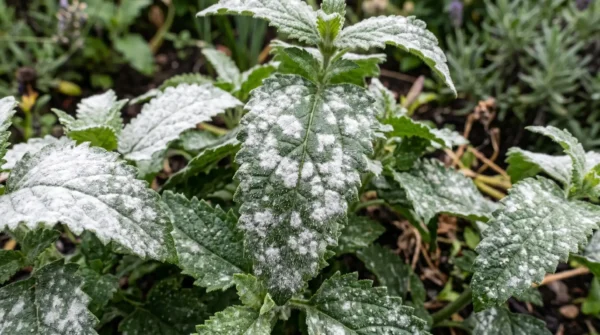
For containers, test by pushing a finger 2 inches into the compost. Dry means water; damp means wait [1]. In summer heat, a pot can exhaust its moisture in 24 to 36 hours, so container verbena often needs water every 2 to 3 days rather than once weekly. Avoid overhead watering where possible — wet foliage in warm conditions invites powdery mildew, which spreads quickly through verbena’s dense growth [2].
Feeding Verbena: A Two-Phase Approach
Verbena growing in borders with reasonably fertile soil often needs no supplemental feeding — in fact, overly rich soil pushes leafy growth at the expense of flowers [1]. Container-grown plants are a different matter entirely: they deplete nutrients faster and have no access to soil reserves beyond the pot walls. Adjust your strategy based on where your plants are growing.
Phase 1: Balanced Start at Planting
At planting time, incorporate a slow-release balanced granular fertilizer — a product in the 14-14-14 or 16-4-8 range — into the top few inches of soil or compost [2]. This provides the nitrogen needed for initial root establishment and stem growth, phosphorus for root development and early bud set, and potassium for overall plant health. In borders, this single application is usually sufficient for the entire season. In very sandy or lean soil, a light supplemental feeding in mid-May can prevent the early pale, slow-growth look that signals nitrogen depletion.
Phase 2: Phosphorus Boost Mid-Season
This is the step most care guides miss. Once the first bloom flush fades and you’ve done your midsummer cutback (covered in the next section), switch from a balanced fertilizer to one higher in phosphorus — a product like 5-10-10, or a liquid tomato fertilizer, which is inherently high in potassium and phosphorus [1]. Apply every two weeks through the second half of the season.
The mechanism: nitrogen drives vegetative growth — leaf and stem production. That’s useful at establishment but counterproductive when you want the plant to focus on flowers. Reducing nitrogen and raising phosphorus at midsummer signals verbena to prioritize bud production over new foliage. For containers, apply liquid feed every two weeks from planting through October; controlled-release granules degrade faster in warm, frequently watered pots and don’t sustain bloom quality through a full season [6]. Other drought-tolerant summer perennials like gaillardia, which shares verbena’s preference for lean well-drained conditions, respond to the same mid-season phosphorus strategy.
Deadheading Verbena: Pinch the Stem, Not Just the Flower
Basic deadheading — removing a spent flower cluster — does keep verbena tidy and reduces seed production. But the technique that actually multiplies bloom production goes further: cut the stem back by about one-third, to just above a leaf node where you can see small side shoots already forming. That single cut removes the spent flower and simultaneously opens two or three new growing points below it. Repeat every 7 to 10 days during peak flowering and your plant gets progressively denser with each cycle [6].
Use clean, sharp scissors or pruning shears. Verbena’s dense foliage is a favorable environment for fungal spores, and dirty tools spread Botrytis quickly. Make each cut at a 45-degree angle just above a node, angled away from the emerging side shoot. The angle sheds water and reduces the surface area exposed to fungal entry. If powdery mildew appears, increase air circulation by clearing congested interior stems during your next deadheading pass.

Verbena Bonariensis: Deadhead or Leave for Birds?
Verbena bonariensis presents a deliberate choice most care articles don’t address. Deadhead it consistently and you get extended blooms and controlled spread — fewer volunteer seedlings the following spring. Leave the seed heads standing from September onward and you provide a winter food source for birds (goldfinches in particular), and the self-seeding that makes bonariensis behave like a perennial even in zones 4–6 where roots don’t survive winter.
The practical approach for most gardens: deadhead lightly through July and August to extend blooming, then stop in early September and let seed heads stand. New seedlings will emerge the following spring. If the colony becomes too dense, pull seedlings when they’re 1 to 2 inches tall — they uproot easily at that size [3].
Pruning for Shape and Second Flush
By late July or early August in most US zones, verbena hits a wall. Bloom production slows, stems look tired, and the plant appears spent. This is normal — it has been flowering continuously for two months and has depleted the resources it needs for new buds. The fix is a deliberate cutback, not gentle coaxing.
Trim the entire plant back by about one-quarter of its current height and spread [2]. Use the same stem-above-node technique as deadheading but apply it systematically across the whole plant. Water deeply immediately afterward, then apply your phosphorus-rich fertilizer. Within 2 to 3 weeks, the plant pushes a fresh wave of lateral growth and buds that carries through to frost.
Stop missing your zone's planting windows.
Select your US zone and month — get a complete checklist of what to plant, prune, feed, and protect right now.
→ View My Garden CalendarTiming the feed matters as much as the cutback. The plant is actively generating new tissue during those 2 to 3 weeks of recovery — this is when it can most efficiently convert phosphorus into bud set. A balanced or high-nitrogen feed applied right after the trim sends energy into leaves instead. Phosphorus-forward feeding applied immediately after the cutback is the combination that produces a genuine second flush rather than just a few straggly new stems.
Container Verbena: Higher Stakes, Higher Rewards
Verbena is one of the strongest container flowers because it trails attractively and can sustain weeks of continuous bloom in a confined space. The trade-off is that container plants need substantially more monitoring than in-ground plants — there’s no buffer soil, no groundwater access, and no room for error on watering.

Watering: In summer heat, check container verbena daily and water whenever the top 2 inches of compost are dry — this typically means every 2 to 3 days, not once a week. Plants that flag badly (fully wilted stems) are under acute root stress, and repeated severe wilting reduces bloom production even after recovery. Catching the plant at the first sign of flagging keeps root stress minimal [7].
Feeding: Don’t rely on controlled-release granules past midsummer in containers. Frequent irrigation in warm soil accelerates granule breakdown, and nutrients leach with each watering cycle. Switch to a liquid potassium-rich fertilizer — tomato feed works well — applied every two weeks from planting through October [1]. The difference in late-season bloom quality between consistently fed and under-fed containers is significant and visible.
Container size and companions: Verbena performs best in containers of 12 inches or larger. Trailing hybrid varieties are particularly effective in hanging baskets, but a single hanging basket in peak summer needs daily monitoring. Avoid pairing verbena with thirstier plants in the same container — verbena’s preference for slight drying between waterings conflicts with species that need consistently moist compost.
Overwintering Verbena
Whether verbena survives winter depends entirely on which type you’re growing and where you live. Most hybrid garden verbenas are grown as annuals in zones 7 and below; in zones 8–11, they may resprout from the crown, but wet winter soil kills them about as reliably as hard frost. Verbena bonariensis is a reliable perennial in zones 7–11, with self-seeding extending its effective presence into zones 4–6.
Tender Hybrid Verbenas: Take Cuttings in Late Summer
The most reliable strategy for preserving hybrid verbenas across zones is to take cuttings in late August before frost threatens. Take 3- to 4-inch stem cuttings from non-flowering side shoots, strip the lower leaves, and root them in a 50/50 perlite and potting mix under a humidity dome. Keep them in a frost-free location — a cool windowsill, an unheated greenhouse, or a garage that stays above freezing — through winter. Pot on in early spring and harden off before your last frost date [1]. These overwintered cuttings produce larger, more vigorous plants earlier in the season than new seedlings.
Verbena Bonariensis: Zone-by-Zone Winter Management
In zones 9–11, no winter protection is needed. Plants die back to the crown after frost and regrow from the base in spring; in the mildest zones they may barely pause at all. In zones 7–8, apply a 2- to 4-inch layer of straw or shredded leaf mulch over the crown after the first hard frost and remove it in early spring as new shoots emerge [6]. Choose a site with good drainage — crown rot from wet winter soil kills more bonariensis than cold temperature alone. In zones 4–6, roots don’t survive winter, but reliable self-seeding means new plants appear each spring if you leave the seed heads standing through autumn. Late-season bloomers like helenium make natural verbena companions — they peak August through October, share the same full-sun well-drained preference, and keep the border looking productive as verbena’s second flush tapers.
Zone-Specific Verbena Care
| Zone | Plant Outdoors | In-Ground Watering | Container Watering | Winter Protection |
|---|---|---|---|---|
| 5 | After last frost (late May) | Every 6–7 days | Every 2–3 days | Annual; take cuttings Aug |
| 6 | After last frost (early May) | Every 5–7 days | Every 2–3 days | Annual; take cuttings Aug–Sept |
| 7 | Late April | Every 5–7 days | Every 2–3 days | Bonariensis: 3–4 in. mulch; hybrids: take cuttings |
| 8 | March–April | Every 4–5 days | Every 1–2 days in peak heat | Bonariensis: 2–3 in. mulch; hybrids may resprout |
| 9 | February–March | Every 3–5 days | Daily or every other day | No protection needed |
| 10–11 | Feb–March or fall planting | Every 2–4 days | Daily in peak summer | No protection; possible near year-round bloom |
Verbena Seasonal Care Calendar
| Month | Priority Task | Notes |
|---|---|---|
| March–April | Start seeds indoors; begin hardening off transplants | Bonariensis seeds need darkness to germinate [3]; sow 8–12 weeks before last frost |
| May | Plant out after last frost; apply slow-release balanced fertilizer | Pinch stem tips at planting for bushy growth [2] |
| June | Begin deadheading and stem-pinching every 7–10 days | First bloom flush; check container moisture daily in warm weather |
| Late July–early Aug | Midsummer cutback (one-quarter of height and spread) | Apply phosphorus-rich liquid feed immediately after cutting back |
| August | Second bloom flush; maintain weekly in-ground watering | Take stem cuttings late August to overwinter tender varieties |
| September | Ease deadheading on bonariensis; allow seed heads to stand | Birds use seed heads through winter; seedlings appear next spring |
| October | Stop feeding; bring tender containers under cover | Bonariensis in zones 7–8: apply mulch after first hard frost |
| Nov–March | Root dormancy; maintain overwintering cuttings frost-free | Cut back perennial bonariensis to base as new shoots emerge in late winter |
Frequently Asked Questions
How often should I water verbena in containers?
Check daily in summer and water whenever the top 2 inches of compost are dry — this typically means every 2 to 3 days in warm weather, not once a week. Containers have no moisture buffer; a single missed day during a heat wave can cause severe wilting and reduce bloom production for the following two weeks.
Why is my verbena not blooming?
Three most common causes: (1) Too much nitrogen — a high-N fertilizer drives leafy growth instead of flowers; switch to a low-nitrogen, phosphorus-rich feed like liquid tomato fertilizer. (2) No deadheading — the plant is directing energy into ripening seeds rather than new buds. (3) Insufficient sun — verbena needs at least 6 hours of direct sun daily; less than 4 hours produces leggy, sparse-flowering plants regardless of how well you feed and water.
Does verbena bonariensis need deadheading?
Not strictly, but it responds well to light deadheading through July and August. The practical approach: deadhead for the first two months to extend the first bloom flush, then stop in September and allow seed heads to stand for birds and natural self-seeding. In zones 4–6, that self-seeding is how the plant effectively acts as a perennial.
Can I grow verbena in part shade?
Verbena is a full-sun plant and won’t flower well with fewer than 6 hours of direct sun. In zones 9–11, light afternoon shade can reduce heat stress and extend blooming — but shade in zones 5–8 produces leggy stems and few flowers regardless of other care.
When should I do the midsummer cutback?
When bloom production has noticeably slowed and stems look tired — typically late July to early August in most US zones. Cut back by one-quarter of height and spread, water deeply, and apply a phosphorus-rich fertilizer immediately. Expect fresh new growth and buds within 2 to 3 weeks [2].
How long does verbena bloom?
Hybrid verbenas can bloom from late spring through hard frost — 5 to 6 months — with consistent deadheading, the midsummer cutback, and the two-phase feeding approach. Without those interventions, expect a June–July peak followed by a tired-looking plant from August onward. Verbena bonariensis blooms from midsummer (July) through frost.
Should I mulch verbena bonariensis for winter in zone 7?
Yes — a 3- to 4-inch mulch layer of straw or shredded leaves over the crown significantly improves winter survival in zone 7, where hard freezes are common but not always prolonged. Apply after the first hard frost and remove in early spring as new basal shoots emerge. Good drainage under the mulch matters as much as the mulch depth — crown rot in wet soil is the more common winter killer in zone 7.
Sources
- How to grow verbena — RHS Growing Guide
- Verbena — Clemson Cooperative Extension HGIC
- Verbena bonariensis — Wisconsin Horticulture Extension
- Response of Morphological and Chemical Attributes of Perennial Verbena against Drought Stress — Scientific Research Publishing
- Growing Verbena — Proven Winners
- How to grow verbena — BBC Gardeners’ World
- How to Grow and Care For Verbena — Gardener’s Path