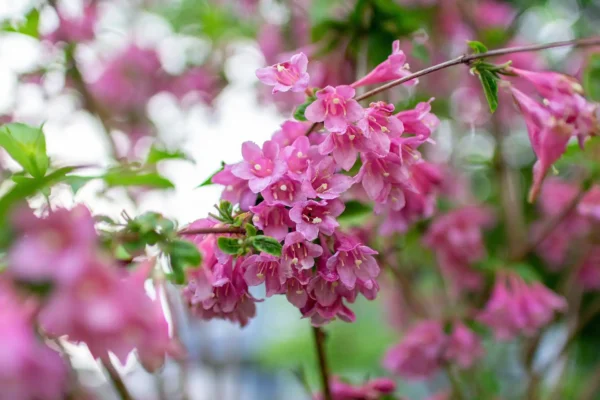
Why Is Your Weigela Struggling? 6 Causes Diagnosed and Fixed

6 causes turn weigela from a reliable performer into a disappointment. Diagnose which one applies to your plant and fix it this season.
You planted weigela because it had a reputation for reliability — a shrub that blooms hard each May and June, tolerates most soils, and bounces back from neglect. So when yours is thin, producing almost no flowers, or showing yellow leaves despite your best efforts, the natural instinct is to water more, add fertilizer, and hope. That usually makes things worse.
Weigela fails for specific, diagnosable reasons. The fix for one cause — say, adding nitrogen — can actively worsen another, like suppressed flowering from over-nutrition. The quick-diagnosis table below cuts through the guesswork. Match your symptoms to the most likely cause, then skip directly to that section.
Quick Symptom Diagnosis
| What you are seeing | Most likely cause |
|---|---|
| Healthy foliage, almost no flowers | Wrong pruning timing (Cause 2) or insufficient sun (Cause 1) |
| Yellow leaves with green veins, worst on new growth | High soil pH and iron chlorosis (Cause 4) |
| Lush dark-green growth, very few flowers | Excess nitrogen in the soil (Cause 5) |
| Slow growth, thin stems, weaker on one side | Root or light competition from neighbors (Cause 3) |
| Branch tips brown, wilted, bent in a ‘shepherd’s crook’ shape | Winter dieback or twig blight (Cause 6) |
| Whole plant wilting, crown feels soft at soil line | Root rot from waterlogged soil (Cause 4) |
| Slow overall growth, pale leaves even in good sun | Root competition or nutrient deficiency (Cause 3 or 5) |
Cause 1: Not Enough Light
Weigela’s flower output tracks almost directly with how many hours of direct sun it receives each day. Both Clemson Cooperative Extension and NC State University Extension are clear: six or more hours of direct sunlight is the threshold for reliable performance. Below four hours, many cultivars stop flowering meaningfully. In partial shade, the plant survives but produces a fraction of its potential blooms.
The light problem is particularly insidious because it builds slowly. A weigela planted in adequate sun eight years ago may now be struggling simply because the trees around it have grown. The spot that worked at planting receives two fewer hours of direct sun today — and the weigela’s bloom count has declined in step, with no obvious explanation.

Three pre-planned garden beds, free
Stop staring at empty beds: printable plans with exact layouts, plant lists and planting calendars — yours free from the Garden Library.
Diagnosing the problem: Stand at your weigela at 10 a.m., noon, and 3 p.m. on a clear day. If you are in shade at any of those three times, the plant is not receiving enough direct sun. A smartphone sun-tracking app calculates total daily hours more reliably than a spot check.
What to do: If shade comes from nearby trees or large shrubs, selective pruning of those plants — not the weigela — can restore enough light to trigger better flowering within one season. If the site is structurally shaded by buildings or a north-facing orientation, transplanting is the only reliable fix. Moving weigela in early fall or early spring, before new growth emerges, causes minimal setback.
One important distinction: ‘partial shade tolerant’ on nursery tags describes survival, not performance. The tag does not mean the plant will bloom well in partial shade — it means it will not die there. For a detailed breakdown of weigela’s light requirements and how to evaluate your site, see our full guide on how much sun weigela needs.
Cause 2: Pruning at the Wrong Time
A single misstimed pruning session — done in late summer or fall — removes every flower bud your weigela will produce the following spring. The plant looks completely normal all winter. It leafs out in spring. And then it produces almost no flowers, leaving gardeners baffled because nothing visible has changed.
Why timing matters: the old wood mechanism
Weigela’s heavy spring flowering comes from old wood — specifically, the stems that grew during the previous season. The flower buds that produce May and June’s display form on those stems in late summer and fall, after the spring bloom finishes. When you prune in August, September, or October, you remove the stems that carry next year’s flower buds. The plant is uninjured, but it arrives at spring with no buds to open.
Iowa State University Extension describes the correct pruning schedule: in late winter or early spring, before growth begins, remove dead wood and cut a few of the oldest, thickest canes down to the base. This renews the plant’s structure without sacrificing the younger stems that carry flower buds. Immediately after the heavy spring bloom ends — typically late May to mid-June, depending on your zone — light shaping is safe. Outside those two windows, the pruners stay away.
The scratch test: live versus dead wood
Before cutting anything in late winter, scratch the bark of any stem you plan to remove with a fingernail. Greenish or white tissue underneath means the stem is alive and dormant — do not cut it. Dry, tan, or papery tissue means it died over winter and can come out. Work from the tip down in 4-inch intervals until you find live tissue. Cut there, not further. This test prevents the common mistake of removing dormant but healthy wood that would have flowered that spring.
The autumn tidy-up trap
The impulse to clean up the garden in September or October is understandable. Weigela has finished its performance, the stems look woody and uninteresting, and cutting them back feels productive. This single habit is responsible for more disappointing weigela springs than any other cause. Resist fall pruning entirely. Let the plant enter dormancy with its bud-bearing wood intact, and wait until right after the spring bloom finishes to do any shaping.
For the full pruning calendar — including how to do a rejuvenation cut on a neglected shrub — see our detailed guide: weigela pruning timing and technique.
Cause 3: Other Plants Are Winning the Resource Race
This is the cause most gardeners investigate last — and it explains a persistent pattern of weak growth and reduced flowering that does not respond to fertilizer or pruning corrections. A weigela hemmed in by established neighbors is continuously competing for the three things it needs most: light, water, and soil nutrients.
NC State University Extension lists the mature spread of full-size weigela at 9 to 12 feet and recommends 12 to 24 feet of spacing between plants. In practice, most garden plantings are significantly tighter. When weigela is surrounded by large perennials, established groundcover, or the root systems of nearby trees and shrubs, it enters a competition it is not equipped to win against longer-established, larger-rooted neighbors.

Light competition from above
Trees and large shrubs that have grown up around a weigela reduce sun hours — the issue covered in Cause 1 — but also change the character of the light itself. Dappled shade filtered through a canopy produces a different photosynthetic response than direct sun. Weigela evolved for open, exposed positions: it was originally collected from forest margins and open hillsides in Japan and Korea, not from forest understory.
Root competition below ground
Root competition is the less visible half of the problem, and peer-reviewed research makes clear it can be severe. A meta-analysis published in Frontiers in Plant Science found that root-only competition reduces plant biomass by approximately 42% under nutrient-stressed conditions — and that root competition becomes roughly six times more intense during drought than during periods of adequate moisture.

In practical terms: a weigela surrounded by an established tree’s root system or large ornamental grasses will show symptoms indistinguishable from nutrient deficiency — because that is what is happening. The nutrients are present in the soil, but larger, more established root systems are absorbing them first. This competition intensifies sharply during dry summers, which explains why a weigela that appeared adequate in a wet spring can decline visibly by August.
Stop missing your zone's planting windows.
Select your US zone and month — get a complete checklist of what to plant, prune, feed, and protect right now.
→ View My Garden CalendarAggressive groundcovers are a specific problem
Groundcovers like vinca, English ivy, pachysandra, and ajuga are planted near shrubs precisely because they establish and spread quickly. That same vigor means their shallow, fibrous roots occupy exactly the same soil horizon as weigela’s feeder roots — the top 4 to 6 inches, where the highest concentration of nutrients and moisture activity occurs.

The damage is concentrated within the weigela’s drip line — the area defined by the outermost reach of its branches — where feeder roots are most active. Aggressive groundcover in direct competition with this zone suppresses weigela growth even when the soil itself is otherwise healthy.
What to do about competition
Remove competing groundcover from within the drip line. Replace it with a 3 to 4 inch layer of bark mulch, which suppresses weeds, retains moisture for the weigela, and does not compete for nutrients. Leave a 3-inch gap around the base of the stem to prevent crown rot.
If a mature tree is the competitor, eliminating root competition means removing the tree — often not a realistic option. The practical alternative is supplemental irrigation directed at the weigela’s root zone during dry periods. This offsets the competition by ensuring the weigela has first access to water, which matters most during drought when root competition intensifies sixfold.
For new plantings, adequate spacing prevents the problem entirely. The image below shows what a properly spaced shrub border looks like — note the clear, mulched ground zone around each plant, allowing unimpeded root exploration.

Cause 4: Soil Problems — Waterlogging and High pH
Two distinct soil conditions can produce a struggling weigela, and they require opposite interventions. Applying the wrong fix — adding lime when the soil is already alkaline, for instance — makes things significantly worse.
Root rot from waterlogged soil
Weigela tolerates clay, loam, and sandy soils equally well, but it cannot survive prolonged waterlogging. When soil stays saturated for extended periods, roots are deprived of oxygen. Root cell respiration fails, the plant can no longer absorb water even when it is surrounded by it, and crown rot follows. The diagnostic signs are a crown that feels soft or spongy at soil level, combined with wilting that does not improve after watering — because the roots that would absorb that water are already dead.
Test drainage by digging a 6-inch hole next to the plant and filling it with water. Check again 24 hours after rainfall. If water remains in the hole, or the soil is saturated, drainage is the problem. Fixes include working organic compost into the surrounding soil to improve structure, creating a slightly raised planting mound, or relocating the plant to a better-drained position.
High pH and iron chlorosis
Weigela tolerates a wide pH range in theory — Cornell University’s Woody Plants Database lists pH 5.0 to 8.0 as its tolerance range — but performance and chemistry diverge at the upper end. When soil pH rises above 7.5, iron and manganese become chemically unavailable. They are physically present in the soil but locked into insoluble compounds that roots cannot absorb.
The result is interveinal chlorosis: leaves turn yellow while the veins remain green. The symptom appears first on the newest growth, because iron is an immobile nutrient in plant tissue — the plant cannot move iron from older leaves to newer ones, so the youngest leaves reveal the deficit first. This detail distinguishes iron chlorosis from nitrogen deficiency (which begins on older, lower leaves) and from magnesium deficiency (yellowing between veins on older growth).
Fix: test soil pH before treating. If it reads above 7.5, apply elemental sulfur at the package-recommended rate to lower pH gradually, or use chelated iron for faster symptom relief. For high-pH soils, EDDHA-type iron chelate is most effective because it remains stable and plant-available even in alkaline conditions. Never apply garden lime to a struggling weigela without confirming your pH is below 6.0 — lime raises alkalinity and will worsen iron chlorosis. For a complete guide, see: weigela soil pH requirements and chlorosis treatment.
Cause 5: Nutrient Imbalance
A weigela producing abundant, dark-green foliage but almost no flowers is almost always getting too much nitrogen. Nitrogen drives vegetative growth — stems and leaves — at the direct expense of the reproductive energy that produces flowers. The plant looks healthy because it is growing vigorously. It is not flowering because nitrogen has shifted its internal priorities away from reproduction.
The lawn fertilizer problem
The most common source of excess nitrogen is not intentional weigela fertilizing — it is lawn fertilizer applied to nearby turf. Standard high-nitrogen lawn products (formulations like 30-0-4 or 28-0-8 are common) release nitrogen into the soil well beyond the grass they are intended for. Weigela’s feeder roots extend 1.5 to 2 times the shrub’s height in radius. A weigela growing near a regularly fertilized lawn absorbs significant nitrogen runoff even if the shrub itself has never been fed.
What to use when fertilizing is needed
Clemson Cooperative Extension recommends a slow-release shrub fertilizer ‘when needed’ — the emphasis on ‘when needed’ is significant. A weigela in average garden soil with organic mulch often requires no supplemental fertilizing at all. If the shrub is growing and producing leaf buds, it has sufficient nutrition.
When fertilizer is genuinely needed — slow growth, pale leaves on soil that has never been amended — apply a balanced slow-release product once in early spring as growth resumes. A 10-10-10 formulation is appropriate, or a lower-nitrogen 5-10-10 for plants that are already growing well but flowering poorly. Phosphorus deficiency (which can reduce bud formation and, in some cultivars, causes purplish leaf tints on older growth) is less common in established beds but can occur in fast-draining sandy soils. For full guidance on timing and formulations, see: how to fertilize weigela.
Cause 6: Winter Damage That Looks Like Disease
Weigela is rated reliably hardy in USDA Zones 4 through 8. That hardiness range is accurate — but ‘reliably hardy’ does not mean ‘damage-free’ in the colder zones. In Zone 4, and in exposed northern positions within Zone 5, significant stem dieback after a hard winter is a normal part of the plant’s annual cycle. Iowa State University Extension notes that the extent of winter damage varies year to year, is largely determined by cultivar and winter severity, and is most pronounced in northern Iowa.
The confusion arises in late winter, when a weigela that suffered serious dieback looks almost dead. Stems are brown, tips are brittle, and there is no visible growth anywhere. Many gardeners pull the plant at this point — when in fact the crown is intact and the plant will push new growth from the base within weeks of soil warming.
The scratch test for winter damage
Draw a fingernail across the bark surface of any stem you suspect is dead. Greenish or white tissue underneath means the stem is alive and dormant — leave it. Dry, tan, or crumbly tissue means the stem died during winter — remove it. Work from the tip downward in 4-inch increments until you find live tissue. Cut just above that point. In zone-appropriate cultivars, you will almost always find live tissue somewhere on the main stems even after severe winters.
Distinguishing winter damage from fungal twig blight
Winter dieback kills stem tips progressively from the outside in, leaving clean dead wood with no visible lesion at the junction. Fungal twig blight — caused by Botrytis cinerea — produces a distinctly different sign: a soft, sunken canker or discoloured lesion at the boundary between dead and living tissue, sometimes with grayish mold present under humid conditions. If you see a lesion rather than clean dead wood at the die-off point, the cause is fungal. The treatment is different: cut well below the lesion into healthy wood, disinfect pruner blades between cuts, improve air circulation around the plant, and avoid overhead watering.
For a step-by-step recovery guide when your weigela looks completely dead in late winter, see: weigela looks dead — diagnosis and recovery steps.
Frequently Asked Questions
Why does my weigela have leaves but no flowers?
The most likely cause is pruning at the wrong time. If any significant cutting was done in late summer or fall, the bud-bearing stems that would have produced flowers this season were removed. Foliage grows normally from current-year growth, so the plant looks healthy while producing no blooms. Prune only immediately after the spring bloom finishes — late May to mid-June in most zones — and avoid any cutting from July through March. If pruning timing was correct, check sun hours: below 6 hours of direct sun noticeably reduces flowering, and below 4 hours, most cultivars stop blooming reliably.
Can a struggling weigela recover?
Yes, in most cases. Weigela is a resilient shrub and responds well once the correct cause is identified and addressed. Recovery from a pruning timing error typically shows within one growing season. Recovery from light deficiency, root competition, or soil pH problems may take one to two seasons after the correction is made, as the plant rebuilds stored energy. A weigela that died back to the crown level from severe winter damage will regrow but will not bloom in its first year of regrowth.
How do I tell if my weigela is dead or just dormant?
Use the scratch test. Scratch the bark with a fingernail and examine the tissue underneath. Greenish or white tissue means the stem is alive. Dry, tan, or brittle tissue means the stem has died. A plant with dead tips but live tissue on the lower stems is damaged but not dead — remove the dead portions and wait for growth to resume in spring. Weigela that is truly dead will show no live tissue on any stem, including at the crown level. Even then, check the crown itself before giving up: new shoots sometimes emerge from the root crown after complete above-ground dieback.
Is weigela a good choice for a shaded garden?
Only for light, dappled shade, and with reduced flowering expectations. Deep shade produces a plant that survives but rarely blooms. If your garden is heavily shaded and you want reliable flowering shrubs, look at alternatives that genuinely thrive without full sun — weigela is not among them.
When the problem has gone from poor performance to dead branches or a collapsing shrub, see why a weigela is dying: seven causes ordered by how easy each is to test.
Sources
- Iowa State University Extension — Growing Weigelas in the Home Landscape
- Iowa State University Extension — When Should I Prune My Weigela
- Clemson Cooperative Extension HGIC — How to Grow and Care for Old Fashioned Weigela
- NC State Extension Gardener Plant Toolbox — Weigela florida
- Cornell University Woody Plants Database — Weigela florida
- Frontiers in Plant Science (PMC) — Root and shoot competition under water stress: a meta-analysis