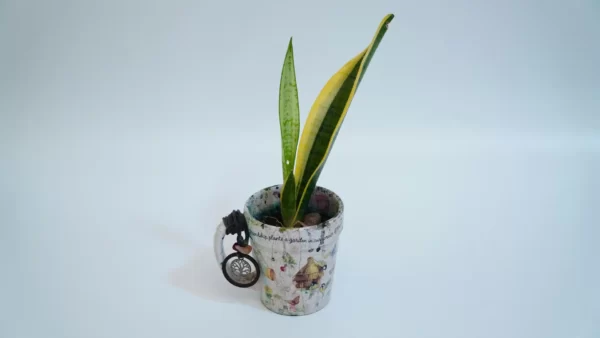
Snake Plant Propagation: Division, Leaf Cuttings & Water Methods

Snake Plant Propagation: Division, Leaf Cuttings & Water Methods
Snake plants are one of the easiest houseplants to multiply. Whether you want to fill out a shady corner, share cuttings with friends, or simply rescue an overgrown pot, propagation is straightforward and remarkably forgiving — even a beginner can produce new plants from a single leaf. Botanically known as Dracaena trifasciata (formerly Sansevieria trifasciata), this tough plant has evolved to regenerate from root fragments and leaf sections, which is exactly what we exploit when propagating it. Check the snake plant care guide if you want a full grounding in what this plant needs before you start multiplying it.
There are three reliable methods: division (splitting the root clump), leaf cuttings in soil, and leaf cuttings in water. Each suits a different situation. Division is fastest and the only method that preserves variegation. Leaf cuttings are ideal when you want many plants from one leaf or when no pups are present. Before you choose, consult our guide to the best snake plants to buy to understand which variety you are working with — it affects which method you should use.
Method Comparison at a Glance
| Method | Difficulty | Time to Roots | Preserves Variegation | Best For |
|---|---|---|---|---|
| Division | Easy | Immediate (roots already present) | Yes | Overgrown plants; keeping gold margins |
| Leaf cutting in soil | Easy | 4–8 weeks | No | Maximum new plants from one leaf |
| Leaf cutting in water | Easy | 3–6 weeks | No | Watching root progress; beginners |

Image prompt: Three-panel infographic comparing snake plant propagation methods: left panel shows hands dividing a root clump, centre shows a leaf cutting planted in soil with polarity arrows, right shows a glass of water with a cutting and visible white roots. Clean botanical illustration style on white background.
Alt text: Three-panel infographic comparing snake plant propagation methods: division by root clump, leaf cutting in soil, and leaf cutting in water with visible roots

Free printable garden plans for when you’re ready to grow outside too
Three pre-planned beds — pollinator, kitchen and cut-flower — from the free Blooming Expert Garden Library.
Caption: Three ways to propagate a snake plant — choose based on speed, difficulty, and whether you need to preserve variegation.
Method 1: Division
Division is the fastest route to a fully established new plant. Rather than waiting weeks for roots to form, you simply separate a pup — a young offset growing at the base of the mother plant — and pot it up with its own root system already intact. This method is also the only one that reliably preserves the gold margins of variegated cultivars like Laurentii.
When to Divide
Divide when pups are at least one-third the height of the mother plant, or when the root mass has become so dense that the pot is being pushed out of shape. Spring and early summer are ideal, as active growth speeds establishment, though snake plants can be divided year-round if kept warm.
What You Need
- Sharp, clean knife or garden shears
- Isopropyl alcohol or diluted bleach to sterilise the blade
- Well-draining potting mix (cactus or succulent mix works well)
- A pot with drainage holes, sized just slightly larger than the root ball
- Optional: rooting hormone powder
Step-by-Step
- Water the plant the day before to hydrate the roots and make removal easier.
- Tip the pot gently and slide the entire root mass out. Work the soil free from the roots with your fingers.
- Identify pups — they will have their own root cluster attached to a rhizome connected to the mother plant.
- Sterilise your blade, then cut through the rhizome connecting pup to mother, leaving roots on both sections.
- Dust cut surfaces with sulphur powder or cinnamon to reduce infection risk, or leave them to callous in open air for 30 minutes.
- Pot the pup into a pot just large enough to hold its root ball. Firm the soil lightly and water sparingly.
- Place in bright indirect light and avoid overwatering for the first two weeks while the plant settles.
Aftercare
Keep the newly divided plant in stable, warm conditions — 18–27°C is ideal. Avoid direct sun for the first few weeks. If you are considering moving your plant outdoors, read our guide to outdoor snake plant care before doing so. New leaf growth within 4–8 weeks confirms the division has established.
Method 2: Leaf Cuttings in Soil
A single snake plant leaf can produce multiple new plants. This method is excellent when you want to maximise numbers, or when your plant has no pups. The critical rule — one that catches out many beginners — is polarity: the cutting must be planted the same way up it grew. If you plant it upside down, it will never root.
How to Take the Cutting
- Select a healthy, mature leaf (not one that is damaged or discoloured).
- Using a clean, sharp knife, cut the leaf at the base as close to the soil as possible.
- Mark the bottom of the cutting with a small notch or a pencil line — this is the end that goes into the soil.
- Optionally, cut the leaf into sections of 5–8 cm. Each section must maintain the same orientation — mark each piece before cutting so you do not lose track of which end is which.
- Allow the cut ends to dry and callous for 1–2 hours. Do not skip this step — a fresh, moist cut surface is more susceptible to rot.
Planting and Timeline
- Fill a small pot with a well-draining mix — cactus compost or perlite-heavy potting mix are ideal.
- Insert the bottom end of each cutting 2–3 cm into the compost. The polarity arrows on your mark should point downward.
- Water lightly — just enough to moisten the top layer of compost — then leave the pot in a warm spot with bright indirect light.
- Water only when the top 2–3 cm of compost is completely dry. Overwatering at this stage is the primary cause of failure.
- Roots typically form in 4–8 weeks. Small pups will appear at the base of each section after 2–4 months.
Note on variegation: Leaf cuttings will produce all-green plants, even if taken from a variegated Laurentii. If variegation matters to you, use division instead. See the variegation warning section below for more detail.
Method 3: Leaf Cuttings in Water
Water propagation works on the same principle as soil cuttings but allows you to watch root development as it happens — making it a satisfying method for beginners and a useful diagnostic tool when troubleshooting. Detailed advice on long-term growing snake plants in water is covered separately if you want to keep them in water indefinitely.
Setup
- Take a cutting as described in Method 2, marking the bottom end clearly.
- Fill a clean glass or jar with room-temperature water — filtered or tap water left to stand overnight to off-gas chlorine both work well.
- Submerge the bottom 2–3 cm of the cutting into the water. Only the cut end should be submerged; keep the rest of the leaf above the waterline to prevent rot.
- Place the jar in bright indirect light. Avoid direct sun, which encourages algae growth.
Water Change Schedule and Timeline
- Change the water every 5–7 days to prevent bacterial and algae build-up.
- White, healthy roots typically appear in 3–6 weeks.
- Once roots reach 2–4 cm long, the cutting is ready to pot up.
Potting Up
Transition to soil gradually — water-grown roots are adapted to a low-oxygen environment and can struggle with the sudden change. Plant into a well-draining mix, water lightly, and place in bright indirect light. Expect some initial leaf droop as the plant adjusts; this normally resolves within 1–2 weeks.
Variegation Warning: Why Leaf Cuttings Lose the Gold Margins
This is the most important thing to understand before propagating a variegated snake plant. Cultivars such as Dracaena trifasciata ‘Laurentii’ — the classic variety with broad gold margins — are chimeral. The gold colouring exists only in the outer layer of cells, not in the genetic programme of every cell. When you take a leaf cutting, the new pups that form draw on the inner cell layers, which carry only the all-green genetics. The result is plants with no gold margins at all.
As Kew Gardens notes, this chimeral variegation is a defining characteristic of many popular Sansevieria cultivars. The Royal Horticultural Society similarly recommends division as the propagation method of choice for preserving cultivar characteristics. For a full breakdown of variegated and non-variegated cultivars, see the snake plant varieties guide.
Rule of thumb: If your plant has gold, silver, or cream margins, use division only. Leaf cuttings are fine for solid-green varieties like Dracaena trifasciata ‘Hahnii’ (Bird’s Nest) or standard green forms.
Troubleshooting
Most snake plant propagation failures come down to moisture, temperature, or polarity errors. For a broader look at what can go wrong with established plants, see our snake plant problems guide.
Roots Won’t Form
- Temperature too low — Snake plants root best above 18°C. If your home drops below this at night, move cuttings to a warmer spot or use a propagation mat.
- Cutting planted upside down — Re-examine your cutting. If the base (original bottom end) is not in the soil or water, the cutting will never root.
- Too much shade — Bright indirect light speeds root formation. A north-facing windowsill in winter may not provide enough light.
Cutting Is Rotting
- Overwatering in soil — Allow compost to dry completely between waterings. Snake plant cuttings are far more tolerant of drought than excess moisture.
- Too much leaf submerged in water — Only 2–3 cm should be below the waterline. More than this invites bacterial rot.
- Cut end not calloused — Always allow cut surfaces to dry for at least 1 hour before planting or placing in water.
Pups Not Appearing After Rooting
- Patience is required — pups from leaf sections can take 3–6 months to appear even after rooting.
- Ensure the pot is not oversized; a snug pot encourages the plant to produce offsets rather than expand roots.
- Increase light levels slightly — low light slows pup production significantly.
Frequently Asked Questions
How long does a snake plant take to root from a leaf cutting?
In water, white roots typically appear within 3–6 weeks. In soil, roots form in 4–8 weeks, though they are hidden from view. Small pups — the actual new plants — take an additional 2–4 months to emerge above the soil surface. Warmth and bright indirect light both speed up the process.
Can you propagate a snake plant from a single leaf?
Yes — a single leaf can produce multiple plants. Cut the leaf into sections of 5–8 cm, keeping strict track of which end is the bottom (mark each piece before cutting), and plant or water-root each section individually. One 60 cm leaf could theoretically yield 8–10 new plants, though some sections may not take.
Stop killing plants with wrong watering.
Select your plant, pot size, and climate zone — get a precise watering schedule with amounts and timing.
→ Build Watering ScheduleDo snake plant pups need to be separated?
Not immediately. Pups can remain attached to the mother plant indefinitely and the clump will continue to grow. Separate them when they are at least one-third the size of the mother plant or when the pot becomes crowded and roots begin pushing through the drainage holes. Leaving them attached slightly longer generally results in a stronger pup that establishes more quickly after separation.
Is snake plant propagation similar to ZZ plant propagation?
Both are resilient, low-maintenance plants that propagate from leaf cuttings and division, but the timelines differ. ZZ plants propagate more slowly from leaf cuttings — often 6–9 months before new growth appears — while snake plants are generally faster. For a full comparison of both plants’ characteristics and care needs, read our guide on snake plant vs ZZ plant.
Conclusion
Snake plant propagation is one of the most rewarding projects for a houseplant grower. Division gives you an established plant almost immediately and is the only way to keep variegation intact. Leaf cuttings — whether in soil or water — take longer but are satisfying to watch and can produce many plants from a single leaf. If you also grow succulents, you may enjoy our step-by-step guide to propagating succulents from leaves, which follows a similar process. The key rules are simple: never plant a cutting upside down, never overwater, and keep cuttings warm. Follow those three rules and you will have new snake plants growing within a season. Once your propagated plants are established, revisit the snake plant care guide to keep them thriving for years to come.
Sources
- Royal Horticultural Society. Sansevieria trifasciata — cultivation and care. RHS.org
- Royal Botanic Gardens, Kew. Dracaena trifasciata plant profile. Kew.org