Best Snake Plants to Buy: Top Varieties for Every Room and Budget

Best Snake Plants to Buy: Top Varieties for Every Room and Budget
Snake plants are the easiest houseplant investment you can make. They tolerate low light, survive irregular watering, and look striking in any room — from a bedroom shelf to a living room floor. The hard part isn’t keeping them alive. It’s picking the right variety from the dozens of cultivars now available, knowing where to source a healthy specimen, and giving your new plant the best possible start in your home.
After 25 years of growing and advising on Dracaena trifasciata and its relatives, I’ve seen the same buying mistakes repeated endlessly: purchasing a rootbound plant from a poorly lit display, choosing a variety that’s wrong for the available light, and bringing home a pest problem hidden in the soil. This guide is designed to prevent all three. It covers the best snake plant varieties to buy for specific situations — beginners, low-light rooms, tight spaces, bold statement pieces, and serious collectors — along with exactly what to inspect before you part with your money. For the long-term care side of things, pair this with our complete snake plant care guide.

What to Look for When Buying a Snake Plant
A two-minute inspection at the shop saves you weeks of nursing a stressed or diseased plant. Most buyers skip this step entirely and end up dealing with root rot, pests, or transplant shock that could have been avoided at the point of purchase. Here’s exactly what separates a healthy specimen from a problem waiting to happen.
Green Flags: Signs of a Healthy Plant
- Leaves are firm, upright, and rigid — not soft, floppy, or bendable when you gently press them
- Consistent colouring with no unexplained yellowing, bleached patches, or sudden colour changes
- Base of the plant (the crown, where leaves meet soil) is firm and dry, not mushy or discoloured
- Soil is slightly moist or dry — not waterlogged or sitting in a puddle inside the cache pot
- No visible pests on the leaf undersides, along the margins, or in soil crevices near the base
- Root system is visible but not excessively coiled — a few roots peeking through drainage holes is fine
Red Flags: Walk Away From These
- Yellow, soft, or mushy leaves — especially at the base, which points to root rot
- A sour or foul smell from the soil — healthy soil has an earthy scent; anything rotten means the roots are compromised
- Roots circling thickly out of drainage holes — the plant has been rootbound for months; repotting it will cause immediate stress on top of any existing problems
- Visible mealybugs (tiny white fluffy patches), scale insects (brown bumps on stems), or spider mites (fine webbing on leaf surfaces or undersides) — if you see active pests on any plant in that section of the shop, be cautious about everything nearby
- Cracked or bulging pot from root pressure — same story as roots out of drainage holes
- Leaning, flopped, or collapsing leaves — this can indicate overwatering, root failure, or a plant that has simply been neglected for too long
If you spot fine webbing on any plant in the shop, proceed carefully — that is an active spider mite infestation and mites spread easily through shared display benches. If you suspect your plants at home are affected, our guide explains how to treat spider mites and stop them spreading to other plants.
Check the Pot and Growing Medium
The container matters more than most buyers realise. A snake plant sold in a nursery pot with clear drainage holes is ideal — you can see the root situation clearly and it’s ready to drop straight into a decorative outer pot. A plant that has been glued, taped, or permanently sealed into a decorative container with no drainage is a red flag: it will have been overwatered in the shop and you’ll need to repot it immediately when you get home, adding transplant stress before the plant has even settled in.
Also check the growing medium. Snake plants do best in fast-draining, gritty soil. If the soil looks very dark, compacted, and stays wet for days, it’s likely peat-heavy standard compost — fine short-term, but a sign the plant has been sitting in less-than-ideal conditions. For help selecting the right container for long-term growing, see our guide on how to choose the right pot.

Quick-Reference Comparison Table
| Variety | Height | Best For | Light Need | Price Range | Availability |
|---|---|---|---|---|---|
| Laurentii | 3–4 ft | Beginners | Bright indirect | $8–$25 | Very common |
| Zeylanica | 2–3 ft | Low light | Low to bright | $8–$20 | Very common |
| Hahnii (Bird’s Nest) | 6–8 in | Small spaces | Low to bright | $6–$15 | Common |
| Moonshine | 2 ft | Statement piece | Bright indirect | $15–$35 | Moderate |
| Black Coral | 2.5–3 ft | Statement piece | Bright indirect | $12–$30 | Moderate |
| Whale Fin | 2–4 ft | Collectors | Bright indirect | $25–$80+ | Uncommon |
| Bantel’s Sensation | 2–3 ft | Collectors | Bright indirect | $20–$60 | Uncommon |
For in-depth profiles of each cultivar including growth habits, variegation stability, and care quirks, see our complete snake plant varieties guide.
Best Snake Plant for Beginners: Laurentii
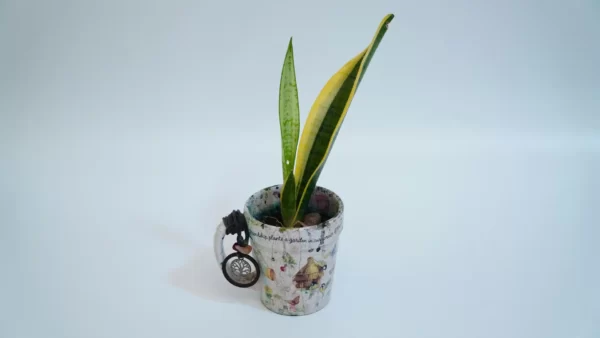
Dracaena trifasciata ‘Laurentii’ is the snake plant most people picture — dark green leaves with silver-grey cross-banding and bold, clean golden-yellow margins running the full length of each leaf. It’s the best starting point for a reason: it’s affordable, widely available at every type of outlet from big-box stores to specialist nurseries, and visually rewarding from day one.
Appearance and Size
Leaves are sword-shaped, stiff, and upright, typically 24–48 inches tall at maturity. The golden-yellow margins that give this cultivar its character are the result of natural chimeral variegation — which means they cannot be reliably reproduced from leaf cuttings. If you propagate Laurentii by leaf section, the pups revert to solid green (Dracaena trifasciata). To preserve the margins, always propagate by division.
Best Use
Ideal as a floor plant in a living room, hallway, or bedroom corner. A mature Laurentii in a 6–8 inch pot makes an impressive standalone statement. It also works well grouped with other plants — the upright form contrasts nicely with rounded foliage plants like pothos or rubber trees.
Light and Care Notes
Thrives in bright indirect light but tolerates medium and low light well. In lower light conditions, growth slows and the golden margins may narrow slightly over time. Water only when the top 2 inches of soil are completely dry — roughly every 2–4 weeks depending on season and light levels. Fertilise once a month in spring and summer with a balanced liquid feed diluted to half strength.
Price range: $8–$25 depending on pot size. A 4-inch nursery pot runs $8–$12; a 6-inch pot with 4–5 established leaves costs $15–$25.
Buying tip: Yellow edges should be bright and consistent. If the golden margins are fading to green or the banding looks washed out, the plant has been kept in insufficient light for too long — that colour loss is very difficult to reverse. Learn more on our Dracaena trifasciata species page.
If you’re completely new to houseplants, Laurentii also features on our list of the best beginner-friendly houseplants.


Best Snake Plant for Low Light: Zeylanica
Dracaena trifasciata ‘Zeylanica’ is the workhorse of low-light rooms. Unlike variegated varieties that lose their colour in shade, Zeylanica’s dark green leaves with subtle silver-grey horizontal banding actually look better in moderate to low light — the banding becomes more pronounced and the contrast sharper as the plant adapts to reduced light intensity.
Appearance and Size
Zeylanica grows to 24–36 inches and is often confused with standard trifasciata, but the markings are distinct on close inspection: the cross-banding is more irregular and wave-like rather than the regular horizontal bars of the species. There are no yellow margins — it’s entirely green and silver, which gives it a subtler, more refined look that suits contemporary and industrial interiors.
Best Use
The go-to choice for north-facing rooms, internal hallways, home offices without a window wall, and any space where light is genuinely limited. It’s also an excellent choice for rental properties where you can’t control window orientation. Works as a floor plant or on a low table or shelf.
You might also find sansevieria not flowering helpful here.
Light and Care Notes
Handles everything from very low light (a few feet from a north window) to bright indirect. In very low light, growth essentially pauses — which is fine, as it stays looking good without any upkeep. Water even more sparingly in low light than you would in bright conditions: the soil takes much longer to dry out, and overwatering is the primary cause of Zeylanica failure.
Price range: $8–$20. One of the most affordable varieties alongside Laurentii.
Buying tip: Leaves should be firmly upright. In chronically low-light display environments at the shop, leaves sometimes lean or bow slightly — pick a specimen with straight, vertical growth. Any specimen with soft, floppy leaves has likely already been overwatered.
Best Snake Plant for Small Spaces: Hahnii (Bird’s Nest)
Dracaena trifasciata ‘Hahnii’ breaks the tall-and-upright mould entirely. It grows in a compact, tightly packed rosette just 6–8 inches tall — perfect for desktops, bookshelves, bathroom windowsills, and bedside tables where a full-sized snake plant would overwhelm the space.
Appearance and Size
The leaves radiate outward in a symmetrical rosette pattern, each leaf shorter and wider than the standard species. The overall effect is more like a succulent arrangement than a traditional snake plant. ‘Golden Hahnii’ adds yellow margins; ‘Jade Hahnii’ is solid dark green without banding. All three hold their compact form indefinitely — they don’t suddenly shoot up taller like some dwarf varieties.
From planting to harvest, sansevieria curling leaves walks you through each step.
Stop buying the wrong pot size.
Enter plant type and growth goal — get exact pot diameter, depth, and volume before you spend a cent.
→ Find the Right PotBest Use
Ideal for desks, nightstands, bathroom countertops, and kitchen windowsills. Also works well as part of a terrarium or planted arrangement where you need a structural element that won’t outgrow its container. Makes a thoughtful gift for anyone who loves plants but doesn’t have much space.
Light and Care Notes
Same tolerances as larger snake plant varieties — tolerates low to bright indirect light. Water sparingly: the small pot size means it can dry out a little faster than a large floor plant in summer, but in winter the compact root mass retains moisture for a long time. Never let water sit in the rosette centre, as this can cause crown rot.
Price range: $6–$15. The compact size means lower prices across the board.
Buying tip: Rosettes should be tight and symmetrical. Avoid specimens with outer leaves splaying completely flat to the surface — this often indicates overwatering and possible root damage at the base. For more compact plant ideas, see our guide to the best houseplants for small spaces.
Best Snake Plants for Statement Pieces: Moonshine and Black Coral
If you want a snake plant that genuinely stops visitors mid-sentence, these two cultivars deliver. Both are increasingly available at independent nurseries and online, and both bring a dramatically different aesthetic to the classic snake plant form.
Moonshine
Dracaena trifasciata ‘Moonshine’ has broad, almost luminous silvery-green leaves — pale enough to glow in a well-lit room. The leaves are wider than standard trifasciata and the overall habit is slightly more compact, typically reaching around 24 inches at maturity. The colouring is genuinely unlike anything else in the genus: a silvery seafoam green that catches light beautifully in morning sun or soft artificial light.
It pairs exceptionally well with white and grey ceramic pots, concrete planters, and minimalist interiors. It also looks stunning against dark painted walls where the pale leaves create a striking contrast. Needs bright indirect light to maintain that luminous colour — in low light it slowly darkens toward standard green and loses much of its visual impact. If you move a Moonshine from bright to low light and notice the leaves darkening over a few months, move it back; the colour won’t return instantly but it will recover over the following growing season.
Price range: $15–$35. More widely available now than it was a few years ago — most good independent nurseries stock it.
Black Coral
Dracaena trifasciata ‘Black Coral’ takes the opposite approach. The leaves are a deep, near-black forest green with intricate, tightly packed silvery-grey horizontal banding across the full width of each leaf. The contrast is dramatic — especially against white walls, in a concrete or terracotta planter, or grouped with plants that have lighter foliage.
It reaches 2.5–3 feet at maturity and holds its dark colouring well in moderate to bright light. Unlike Moonshine, it doesn’t significantly change colour in lower light conditions, though growth will slow. The texture of the banding is particularly pronounced on this cultivar, making it worth looking at up close as well as from across the room.
Price range: $12–$30 — slightly more accessible than Moonshine at the lower end of the price range.
Buying tip for both: Check that the distinctive colouring is vivid and consistent across all leaves, not patchy or fading. A well-lit display at the nursery is a good sign — it means the retailer understands what these varieties need.
Best Rare and Collector Varieties
For plant collectors who already own the classics, two varieties stand out as genuinely worthwhile additions to a serious collection.
Whale Fin (Dracaena masoniana)
The Whale Fin is not technically a trifasciata — it’s Dracaena masoniana, a closely related species from the Democratic Republic of Congo. It produces one to three massive paddle-shaped leaves, each potentially over 3 feet tall and 8 inches wide, with dark green colouring and subtle lighter mottling across the surface. There’s nothing else quite like it in the houseplant world: it’s sculptural, monolithic, and genuinely architectural.
Growth is extremely slow — a mature specimen may add only one or two leaves per year, which partly explains the premium price tag. In the wild it grows on forest floors in deep shade, so it tolerates lower light better than most collector plants. The key care point is water: the massive leaves store significant moisture, so the soil should dry out completely between waterings and even then, water sparingly. Root rot from overwatering is the most common cause of Whale Fin failure.
Because growth is so slow, buy the largest specimen you can afford — small starter pups can take three to five years to develop that distinctive paddle form.
Price range: $25–$80+ depending on leaf size and maturity. A full adult leaf commands the highest prices.
Bantel’s Sensation
Dracaena trifasciata ‘Bantel’s Sensation’ features narrow, upright leaves — noticeably thinner than standard trifasciata — with irregular white and pale cream vertical striping running lengthwise across the leaf surface. The variegation pattern is never the same twice: each leaf has a unique arrangement of green and white, making every plant subtly individual. This irregularity, combined with its slower growth rate and difficulty of propagation, keeps supply limited and prices higher than mainstream varieties.
It grows to around 24–36 inches and looks best in neutral pots where the white striping takes centre stage. Needs bright indirect light to maintain the white sections — in lower light the pale areas can become more of a pale green. Avoid direct sun, which will scorch the white portions of the leaves.
Price range: $20–$60. Both Whale Fin and Bantel’s Sensation are significantly easier to find through specialist online sellers and independent nurseries than at any big-box store.
Where to Buy Snake Plants
Where you buy matters almost as much as what you buy. Each purchasing channel has distinct trade-offs in terms of plant quality, variety selection, and risk.
Independent Garden Centres and Nurseries
The best overall option for most buyers. Staff typically know their stock well, plants are better watered and cared for on display, and — crucially — you can inspect the plant in person before committing. Prices run slightly higher than big-box stores, but plant quality is consistently better and you’re less likely to bring home a hidden pest problem. Best for statement varieties, larger specimens, and any purchase where you want to see exactly what you’re buying.
Want the complete care routine? houseplants pest treatment has everything you need.
Online Plant Shops
Unmatched selection, particularly for rare varieties like Whale Fin, Bantel’s Sensation, and limited cultivars that never reach mainstream retail. Reputable sellers ship in insulated packaging with heat packs in cold weather and usually offer arrival guarantees. The trade-off: you can’t inspect before buying, and shipping stress causes temporary leaf softening or slight leaning that can look alarming when the package arrives.
Before ordering online: check for customer photos in reviews (not just text reviews, which can be gamed), look for a clear damaged-arrival policy, and check whether the seller offers a live arrival guarantee. Avoid sellers who ship in small boxes without wrapping or padding the leaves. Spring and autumn are the safest shipping seasons — midsummer heat and winter cold both add transit stress.
Plant too early and frost kills it, too late and heat stunts it — pruning tools 14 has the window.
Big-Box Stores (Home Depot, Lowe’s, IKEA, B&Q)
Cheapest prices and maximum convenience for the most common varieties. The downside is consistency: plants often sit in poor display conditions for weeks — overwatered under fluorescent lights, wrapped in plastic sleeves that trap moisture, and placed in decorative cache pots with no drainage. Inspect extra carefully here. The smartest strategy is to ask staff when plant shipments arrive and visit on that day, before stock has had time to deteriorate on the floor. Fresh delivery plants at a big-box store can be excellent quality at very low prices.
You might also find houseplants best pot helpful here.
Nursery vs Online: Which Should You Choose?
| Factor | Nursery / Garden Centre | Online Plant Shop |
|---|---|---|
| Inspect before buying | Yes — full inspection possible | No — photos only |
| Variety selection | Good for common varieties | Best for rare cultivars |
| Plant condition on arrival | Usually good | Varies — transit stress common |
| Price | Moderate to high | Moderate — shipping adds cost |
| Advice available | Often yes | Rarely (FAQs only) |
| Best for | Beginners, large specimens | Rare varieties, collectors |
First-Week Care After Bringing Your Snake Plant Home
The week after purchase is when most new plant owners inadvertently cause the most stress. Resist the urge to immediately repot, fertilise, or move the plant into its final spot. Here’s the right approach:
Day 1–2: Quarantine and Assessment
Before placing a new snake plant anywhere near your existing plants, keep it separate for 24–48 hours and do a thorough pest check under good lighting. Check the undersides of every leaf, around the base where leaves meet the soil, and the soil surface. Even a plant that looked clean at the shop may have eggs or early-stage pests that weren’t visible in the store’s lower lighting.
Day 2–7: Acclimatisation
Place the plant in bright indirect light — more than you think it needs, even if it’s going to end up in a lower-light spot permanently. This gives it the energy reserves to recover from transit stress. Don’t water it yet unless the soil is bone dry; most plants arrive in moist soil. Don’t fertilise. Don’t repot. Just let it settle in.
First Watering
Water only when the top 2 inches of soil are completely dry. In the first week this usually means no watering at all. When you do water, water thoroughly — until water flows freely from drainage holes — then don’t water again until the soil is dry. The single most common mistake with new snake plants is watering on a fixed schedule rather than checking the soil first.
Repotting (If Needed)
If the plant is clearly rootbound — roots circling densely at the base or filling the drainage holes — wait at least a week after purchase before repotting. Moving directly from shop to new pot to repot is three stressful events in rapid succession. A week’s acclimatisation makes a measurable difference to how well the plant handles the repot. Choose a pot only one size up — too large a pot holds excess moisture that increases rot risk.
Common Beginner Mistakes When Buying Snake Plants
After two decades of working with beginners in my horticulture practice, these are the mistakes I see most often — and how to avoid them.
Buying on Looks Alone
The most visually striking plant on the display bench is often the most stressed one — it’s been angled toward the light, it may be rootbound, and other customers have been handling it constantly. Take an extra minute to check the plant behind it or lower on the shelf. Less prominent placement sometimes means better-maintained stock.
Choosing the Wrong Variety for the Available Light
Moonshine and Bantel’s Sensation need bright indirect light to look their best. Buying either of these for a dim north-facing room is setting yourself up for disappointment — the distinctive colouring will slowly fade over months and you’ll be left with a green snake plant that cost three times as much as Zeylanica. Match variety to light first, aesthetics second.
Immediately Overwatering a New Plant
New plant anxiety is real — and it manifests as overwatering. The plant is in a new environment, you’re excited about it, and watering feels like nurturing. Resist. Snake plants in transit or acclimatisation have reduced root activity and can’t take up water efficiently. Overwatering during this period is the fastest route to root rot. Check the soil with your finger before every watering decision.
Ignoring the Pot Setup
Buying a beautiful snake plant and placing it in a sealed decorative pot without drainage is one of the most common mistakes I see. Water accumulates at the bottom, roots sit in anaerobic conditions, and root rot follows within weeks. Either drill drainage holes in the decorative pot, or use the nursery pot inside the decorative container as a cache pot — remove the nursery pot to water, let it drain fully, then return it to the outer container.
Indoor and outdoor watering needs differ — sansevieria root rot covers both.
Assuming All Snake Plants Are Identical
They look similar in the shop, but Laurentii, Whale Fin, and Moonshine have genuinely different care requirements, growth rates, and light needs. A Whale Fin treated like a fast-growing Laurentii — frequent watering, frequent repotting — will decline. Take five minutes to look up the specific variety you’re buying and adjust your care approach accordingly.
Your Buying Checklist
Before you commit to any snake plant, run through this quick checklist:
- Squeeze the base gently — it should be firm, not soft or spongy
- Check leaf undersides — look for tiny white dots (mealybugs) or fine webbing (spider mites)
- Smell the soil — healthy soil smells earthy; a sour or rotten odour means root rot; tiny flies hovering around the soil surface may indicate fungus gnats
- Inspect the drainage holes — a few roots poking through is fine; thick root coils mean it’s severely rootbound
- Assess the colour — variegation should be bright and consistent, not fading or patchy
- Check the pot — drainage holes are essential; avoid plants potted in sealed decorative containers
- Look at the whole bench — if neighbouring plants show pest signs, be cautious about everything in the same section
Once your new plant is home, give it a week to acclimatise before repotting or moving it to its permanent spot. Water only when the soil is dry. For ongoing feeding advice, our article on coffee grounds for snake plants covers what works and what doesn’t.
Still deciding between a snake plant and a ZZ plant? Our head-to-head comparison breaks down every difference.

Frequently Asked Questions
Can I buy a snake plant online safely?
Yes — reputable online sellers ship snake plants with protective packaging and most offer guarantees against shipping damage. Choose sellers with verified customer photo reviews and a clear damaged-arrival policy. Expect some transit stress: leaves may soften or lean slightly after delivery. Give the plant a week in bright indirect light to recover before judging its condition.
How much should I pay for a snake plant?
Common varieties like Laurentii and Zeylanica cost $8–$25 depending on pot size. Compact varieties like Hahnii run $6–$15. Rarer types — Whale Fin, Moonshine, Bantel’s Sensation — range from $15–$80+. If a deal looks suspiciously cheap, inspect the plant extra carefully for health issues and check for hidden pests before bringing it home.
Are snake plants safe around pets?
No. Snake plants are toxic to cats and dogs according to the ASPCA. They contain saponins that cause vomiting, drooling, and nausea if chewed or ingested. Place them on high shelves or in rooms your pets don’t access.
Which snake plant stays small permanently?
Hahnii (Bird’s Nest Snake Plant) is the best choice for a genuinely compact plant that won’t outgrow its space. It stays at 6–8 inches tall indefinitely and is available in several colour forms including Golden Hahnii and Jade Hahnii.
Can I put my new snake plant outside?
In warm months, yes — snake plants do well outdoors in a shaded or partially sunny spot. Bring them inside before night temperatures drop below 55°F (13°C). For the full guide, see our article on snake plants outdoors. You can also try growing snake plants in water if you want a soil-free option indoors.
How do I know if a snake plant is rootbound?
Check the drainage holes: roots visibly coiling out of the holes in thick masses indicate a rootbound plant. You can also gently tip the pot — if the root ball slides out as a solid, compacted mass with little visible soil, it needs repotting. A few roots near the holes is normal and not urgent.