The Complete Guide to Lavender Anatomy (How to Understand Flowers, Leaves, and Roots)

Hello, fellow gardener! You know there’s something unique about lavender if you’ve ever been amazed by a field of it or just loved one plant on your patio. From its famous purple colors to its relaxing, memorable smell, this plant appeals to all of the senses. But to really get the most out of it and see its amazing flowers and smell its amazing smell, you need to dig deeper. Knowing how your lavender’s blooms and roots work together is the key to turning your care from guesswork into an easy communication with your plant.
For more on this topic, see our guide: How to Look After a Lavender Tree: The Complete Guide to Turn Your Garden….
The Mediterranean hills have been home to this amazing plant for hundreds of years, and each portion of it has a unique and interesting duty to complete. When you finish this tutorial, you won’t simply see a plant; you’ll know a lot about a complicated, tough, and well-adapted living thing. You’ll know exactly why it needs what it needs, from its rough soil to its yearly haircut. You’ll also be able to tell when it’s sick or healthy and behave like a pro.
Tip from an expert
Before we get started, here’s a tip: Gently massage a lavender leaf between your fingers. We’re about to look at millions of tiny oil glands that give off that strong, instant scent. It’s the plant’s living, fragrant essence, and you can smell it right now!
Seasonal Garden Calendar
Know exactly what to plant, prune and sow — every month of the year.
A Quick Look at the Most Common Types of Lavender
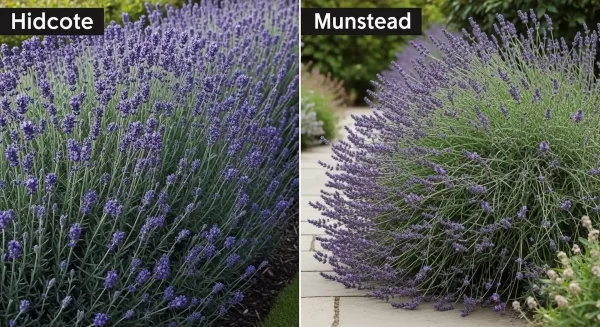
Most lavenders have the same basic body structure, however the primary types you’ll see are very different from each other. The first step to giving them the right care is to know who they are, as their needs for space, pruning, and even their best usage might be very different. For instance, a “Lavandin” is a sterile hybrid of two other lavender species that was engineered to grow quickly and produce a lot of oil.
If you know who the main players are, you’ll be able to better understand the advice that follows.
| Feature | Lavandula angustifolia, or English Lavender | Lavandula stoechas, or French/Spanish lavender | Lavandin (Lavandula x intermedia) |
|---|---|---|---|
| Blooms | A single, unbranched spike with tightly packed florets. Looks smooth and classy. | The top of the plant has colorful sterile bracts that look like rabbit ears and a unique “pineapple” form. | Long, sharp spikes that are often on stems that branch out. A flower head that is bigger and stronger. |
| Leaves | It is narrow, short, and silver-green. | Leaves that are longer and grey-green and often have little teeth or serrations. | Leaves that are greyish-green and usually bigger and wider than English lavender. |
| Smell | Sweet, flowery, and not too much camphor. The lavender smell that is known for “calming.” | More like pine and medicinal because it has more camphor in it. | High in camphor and strong. Very strong. |
| Overall Size | Usually a smaller, more compact shrub that is 2 to 3 feet tall. | It can change, but it usually grows in a messier, more expansive way. | The biggest of the three, it often makes big mounds (3 to 4 feet). |
| Best For | For cooking, sachets, fresh bouquets, and formal hedging. | Ornamental planting gives gardens a unique look and feel. Not for cooking. | Making essential oils, planting a lot of plants, and making scented sachets. |
The Lavender Flower Spike: An Explanation of the Crown Jewels
An inflorescence, or flower spike, is a work of art in plant engineering that people consider of as a single lavender “flower.” This whole structure is made to attract the most pollinators and make seeds quickly.
The spike is made up of tightly packed groups of flowers, termed whorls (or, more properly, verticillasters), that spiral up the stem. This smart arrangement lets the blooms open one after the other, from the bottom to the top, which makes the flowering period last for several weeks. This allows pollinators like honeybees and bumblebees a steady supply of food, which makes it more likely that the plant will be able to pollinate itself.
There are two main elements to a single floret if you look attentively at it:
- The calyx is the tiny, tube-like part that houses the fragile petals. It usually has a deep, rich purple color and feels like paper when you touch it. The calyx is the most vital part of the flower because it shields the bud from pests and bad weather. It also has the most oil glands of any part of the plant.
- The Corolla: These are the flower’s real petals, which come out from the top of the calyx. Their job is to be a bright flag or landing strip that draws bees and other pollinators in and leads them to the nectar inside.
The lavender plant is smart because its strong calyx keeps its essential oils long after the fragile corolla has faded and fallen off. This is why dried lavender buds, which are just the dried calyces, stay aromatic for months or even years. When you choose lavender, you’re mostly picking these strong calyces.
From What I’ve Seen
The calyx of a flower may tell you a lot about how old it is and when it will be ready to pick. The calyx is bright and meaty on a new bloom. As it gets older and dries out for harvest, it gets more papery yet keeps that iconic smell. This is the part you really want for sachets and cooking! To get the strongest oil, choose the spike when the bottom half of the flowers have opened but the top half are still tightly closed.
A Closer Look at Lavender Leaves in the Fragrant Engine
Lavender leaves are more than just leaves; they are the plant’s fragrant, solar-powered motors that are well suited to live in hot, dry, and sunny places.
They are usually long and thin, either lanceolate (like the tip of a spear) or linear (with straight sides). This thin design keeps the plant’s surface area that is exposed to the harsh sun to a minimum, which cuts down on water loss through evaporation by a huge amount. This is an important trait for a plant that can survive in dry conditions.
You probably observed that they are usually green to silver-gray. The lovely silver sheen isn’t just for show. It derives from a thick layer of tiny hairs called trichomes. These hairs have two important jobs:
- They act as sunscreen and insulation by reflecting strong sunlight, which keeps the leaf surface cool and stops sunburn.
- Water Conservation: They keep a thin, undisturbed layer of moisture near to the leaf, making a humid micro-climate that keeps the plant safe from drying winds.
Trichomes: The Secret of Lavender’s Magic
This is where the true magic takes place. The trichomes aren’t just hairs; they’re small, specialized glands that make and keep lavender’s valuable essential oil. When you touch the plant, some of these delicate glands break, letting forth their fragrant contents.
Essential oils are made up of a lot of different natural substances. Linalool, which produces the floral aroma, and linalyl acetate, which adds fruity, sweet notes, are the two most well-known. The varied amounts of these chemicals in different types of lavender give them their own unique scents. English lavender has a lot of both, which makes it smell pleasant and peaceful. Other types have more camphor, which makes them smell sharper and more like medicine.
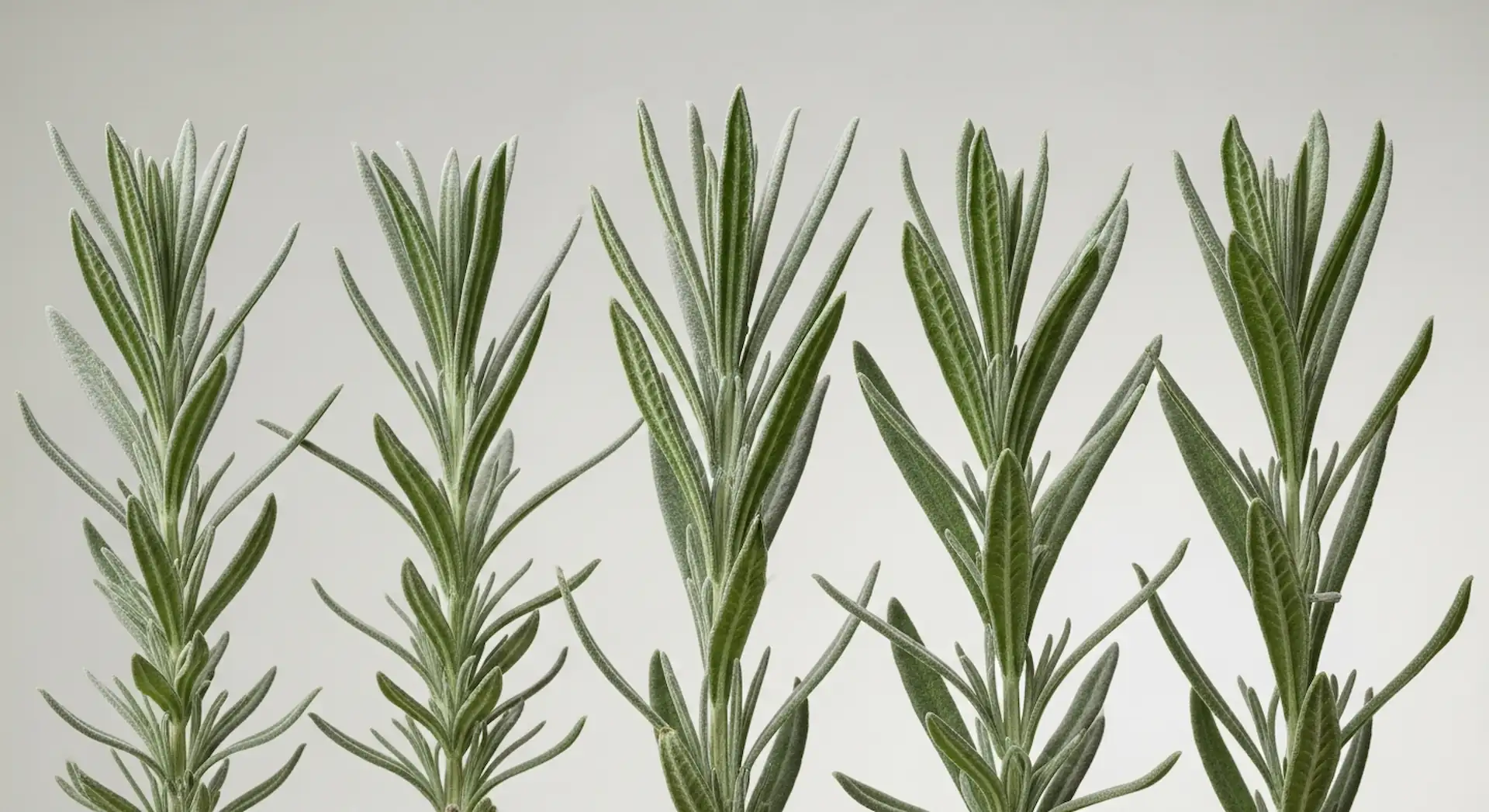
If your lavender leaves are drab and green instead of silver, it could mean that they are getting too much moisture, not enough direct sunlight, or too much fertilizer. The plant makes the most protective trichomes (and more oil and scent!) when it is grown “hard” under bright, dry conditions.
The Unseen Foundation: Making the Lavender Root System Clear
What happens below the ground is equally as significant as what we see above it. Lavender’s roots are perfectly suited to the rocky, well-draining soils of its original Mediterranean habitat. Knowing how they work is the best way to stop root rot, which is the most common lavender killer.
When you first plant lavender seeds, they just have one taproot to hold them down and look for deep wetness. But as the plant grows, its roots spread out and become fibrous. This system is a thick, shallow mass of fine, hair-like roots that is only 12 to 18 inches deep in the ground. Most nursery plants that are developed from cuttings focus only on building this fibrous system from the very beginning.
This structure is great for swiftly soaking up rain that doesn’t happen very often, but it also makes the plant very easy to overwater. Those thin, fragile roots need air to stay alive. The roots essentially drown when the soil is always moist and soggy because the oxygen is driven out. This makes the soil lack oxygen, which is great for fungal infections like Phytophthora. This causes root rot, a disease that lavender rarely recovers from.
A simple drawing would illustrate a healthy root system as a network of thick, creamy-white roots. A system that is sick and decomposing would be brown, mushy, and smell bad a lot of the time.
Don’t be scared by the thick, almost knotted mat of roots you find when you repot lavender. This is a normal and healthy indicator. The most important thing is to pay attention to the color and texture. Roots that are healthy are white and creamy and strong. The first clue that you’ve watered too much is if you see any brown, mushy spots.
The Stem and Plant Structure: The Strong Backbone
The stems of a lavender plant are what hold the leaves and flowers up and move water and nutrients from the roots.
When a stem is new, it’s usually green and flexible. If you look closely, you’ll see that it has four sides that make it feel square. Lavender is a member of the Lamiaceae family, which is often known as the mint family. As the plant becomes older, these stems go through a process called lignification, which makes them woody, brown, and stiff. This gives the shrub its permanent shape.
How the structure of stems affects pruning
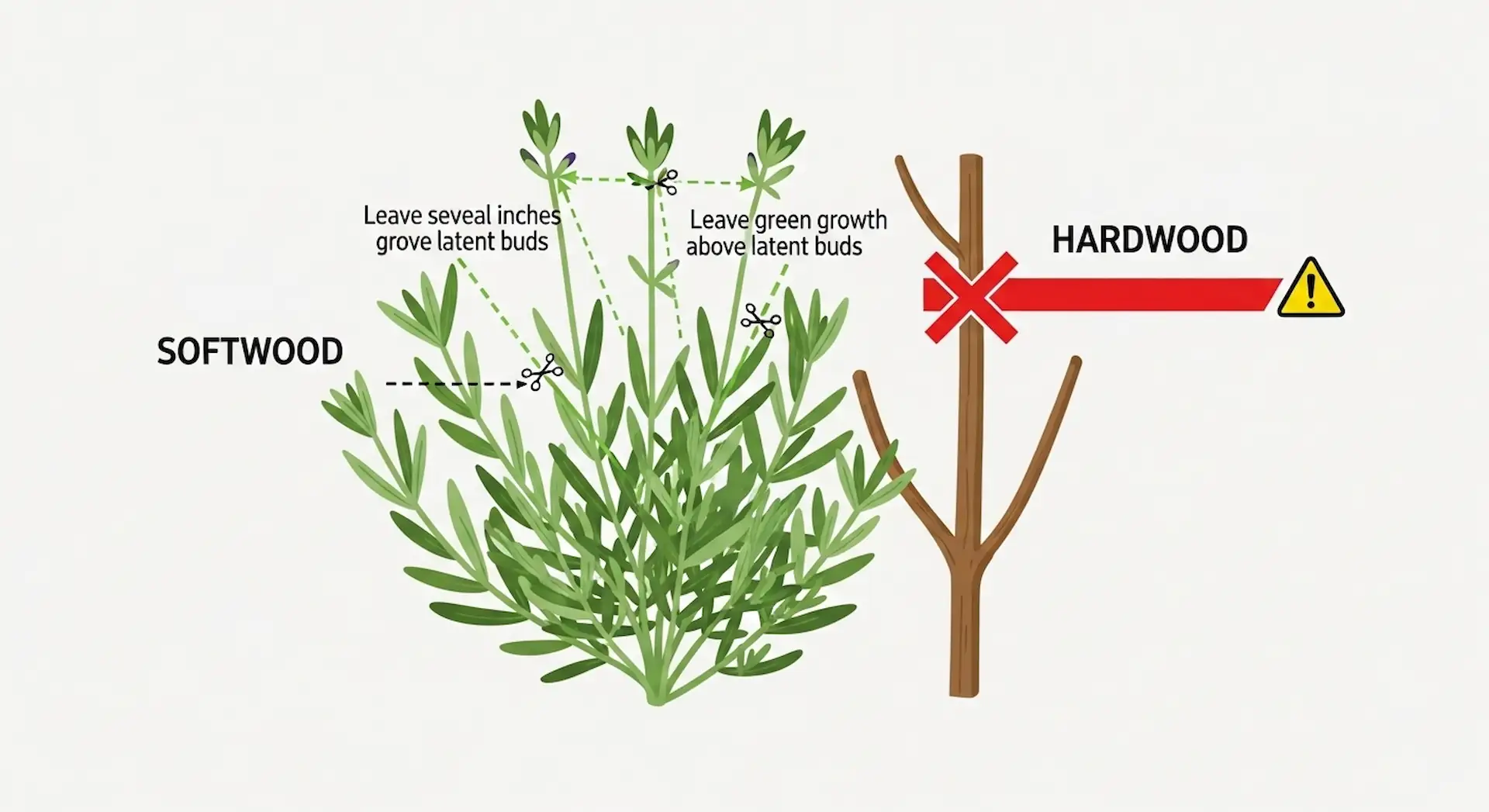
It is very important to understand this change from “softwood” to “hardwood” in order to prune correctly.
- Softwood: This is the fresh growth that comes in the spring. It is full of vitality and flexible, with many latent buds (nodes) throughout its length that are ready to expand into new plants.
- Hardwood: This is the plant’s old, brown, woody base. There are no latent leaf buds on this wood. It is just a way to hold things up and move nutrients around.
When you prune lavender, the most important thing to remember is to never cut into the old wood. It can’t grow new leaves because it doesn’t have any latent buds. If you trimmed the plant back to a bunch of naked, woody stumps, you probably killed it. You should only prune the green softwood, and you should leave at least a few inches of green growth on each stem.
Expert Tip
One thing that kills lavender is pruning it back too much in the spring or fall. Always look for the small groups of leaves or green shoots along the stem and cut well above them to be safe. It’s preferable to leave a stem alone if it is barren and brown all the way down to the primary root.
Anatomy in Action: Fixing Common Lavender Problems
You can now figure out what’s wrong with lavender like a pro.
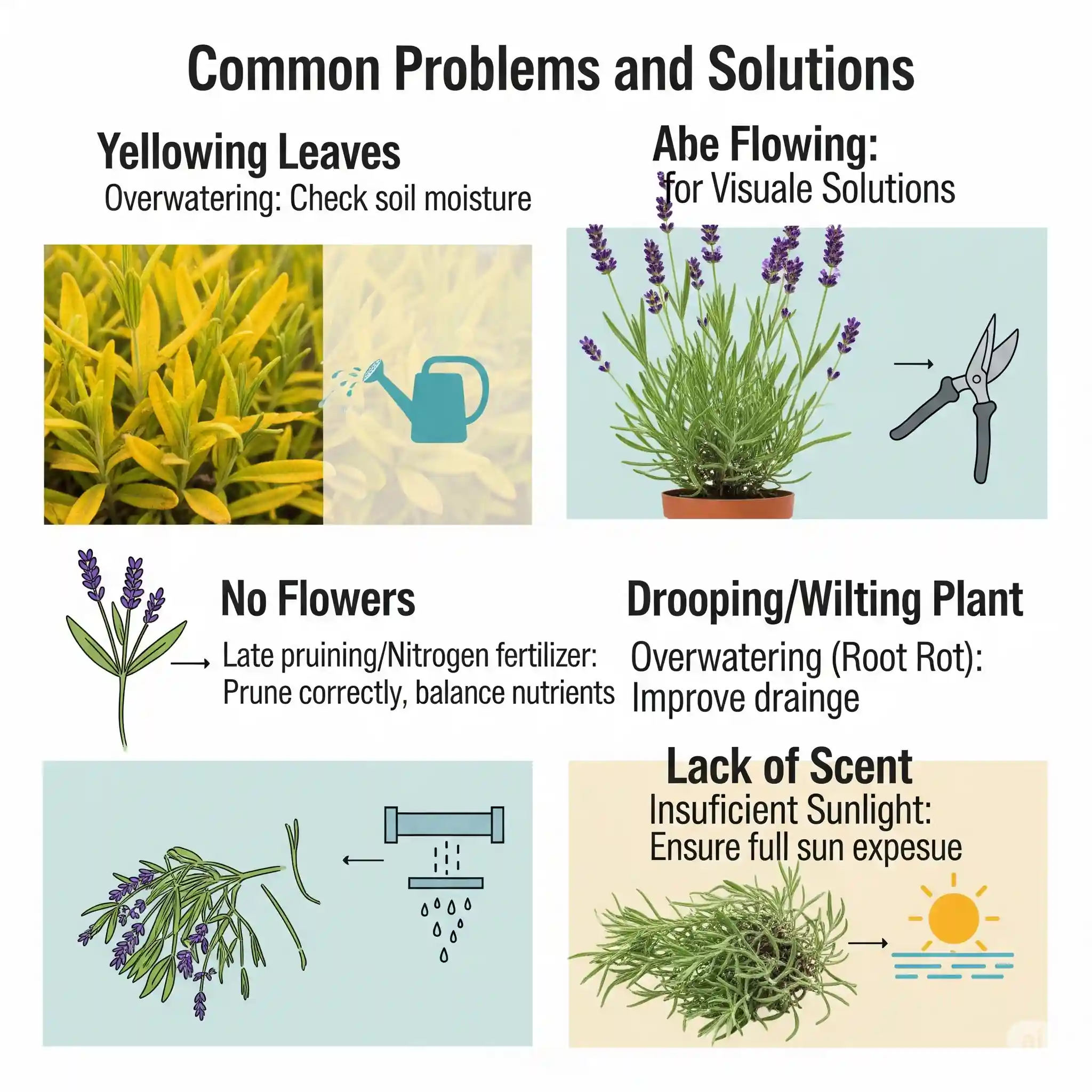
- Are the leaves turning yellow? This nearly always means that you are watering too much. The yellow color means that the roots are dying and can’t transfer nutrients up the stem to the leaves anymore. Right away, check how wet your soil is. It usually starts at the bottom of the plant and moves up.
- No Flowers? There are a few things that could cause this. You might have cut the plant too late in the season and taken off the bloom buds, or you might have cut too deep into the old wood, which would have hurt the plant’s capacity to grow new flowering stems. Too much nitrogen fertilizer is another common cause. It makes leaves grow thick and green, but it doesn’t help blooms.
- Is your plant drooping or wilting? Even though it looks like the plant is thirsty, this is really a classic indicator of overwatering for lavender. The plant’s roots have started to decay, which means they can’t hold it up anymore, and it falls over. Not dry and crispy, the leaves will feel limp and sad.
- Not much scent? The plant isn’t getting enough sunlight directly. Bright, intense light makes the leaf trichomes grow the most, which is what makes the essential oil. More sun means more oil and scent. Picking in the morning after the dew has dried also gets the strongest smell.
A Plant That Knows Is a Plant That Grows
You can see that every part of the lavender plant has a tale to tell. The silver leaves say that the weather is sunny and dry. The complicated flowers are made to attract pollinators and to look good long after they’ve dried. The woody stems show how old and strong the plant is, and the fragile roots show how much they need draining.
You are now a more confident, intuitive, and effective gardener since you know more than just what a “purple plant” is. Now you can hear what your plant is saying and give it what it really needs to grow.
Questions that are often asked (FAQ)
Why do the flowers on my lavender turn brown?
This is a normal aspect of the plant’s life. The corolla, which is the colorful part of the flower, doesn’t last long. They turn brown and drop off once they are pollinated. The good news is that the papery calyx that is still there smells great.
Can I bring back lavender that has been sliced into old wood?
Sadly, it’s quite improbable. There are no latent buds on the old hardwood that can produce new growth. If you don’t see any green after a few weeks of the growing season, the plant probably has to be replaced.
How can I check the health of my lavender’s roots without digging it up?
Check out the leaves. The best sign of a good root system is leaves that are healthy, bright, and silvery-gray, and stems that are strong. The roots are probably in trouble if the plant seems wilted, yellow, or stunted even though it gets enough sun.
Are the leaves of different types of lavender shaped differently?
Yes, a lot. The leaves of English lavender are relatively thin, while the leaves of Spanish and Portuguese lavender can have edges that are slightly dentate. Lavandins usually have leaves that are broader than those of English cultivars.
Is the lavender root system a problem?
Not at all. The root system is a cluster that is shallow, fibrous, and well-behaved. It won’t send out runners or spread to other regions of your garden.
Why does my Spanish Lavender have “ears”?
Those cute “rabbit ears” are merely sterile bracts, not real petals. The only reason they exist is to be enormous, flashing ads for pollinators. They make the flower head much easier to see from a distance.
Can I cook with any kind of lavender?
You should only use English Lavender (Lavandula angustifolia) for cooking. It has a sweet, floral taste because it doesn’t have a lot of camphor in it. Some types, like Lavandins, have a lot of camphor in them, which can make food taste like soap or medicine.
About the Author:
[Author’s Name] is a seasoned gardener and botanist with over 20 years of experience specializing in Mediterranean herbs. Their passion lies in demystifying the science behind horticulture, helping home gardeners understand the “why” behind the “how.” They believe that a deep understanding of a plant’s anatomy is the first step toward intuitive and successful gardening, turning plant care into a rewarding conversation between the gardener and their plants.