

Stop Guessing How to Prune: A Cut-by-Cut Guide for Bushy, Vining, Mounding, and Tree-Form Plants

Stop guessing which cut to make — covers cane shrubs, mounding perennials, vines, and standards with specific timing and technique for each.
The real pruning mistake is not cutting at the wrong time of year — it is applying the same technique to every plant regardless of how it grows. A forsythia needs something completely different from a clematis, and both need something different from a mounding salvia. Once you recognise a plant’s growth form, the right pruning move becomes obvious.
This guide organises pruning by five growth forms you are most likely to encounter: cane shrubs, mounding perennials, vining plants, standards, and evergreen shrubs. For each, you will learn exactly which cuts to make, when to make them, and why each technique produces the result it does. You can stop guessing — and start cutting with purpose.
The Three Cuts Every Gardener Needs to Know
All pruning comes down to three basic cuts, each of which triggers a different response in the plant.
Heading cuts remove the end portion of a shoot — down to a bud, a leaf node, or a lateral branch. This stimulates the plant to produce multiple new shoots below the cut, creating denser, bushier growth. NC State Extension identifies heading as the standard technique for hedges and shaping work.

Three pre-planned garden beds, free
Stop staring at empty beds: printable plans with exact layouts, plant lists and planting calendars — yours free from the Garden Library.
Thinning cuts remove an entire branch at its point of origin — back to the trunk, the main stem, or ground level. Thinning opens up the interior of the plant without triggering the dense regrowth that heading causes. University of Minnesota Extension recommends thinning as the preferred cut for most trees and shrubs because it maintains the plant’s natural form.
Pinching is a heading cut made with your fingertips rather than a tool. It removes the soft growing tip of a new shoot and is the go-to technique for houseplants, perennials, and herbs. For pinching alongside general indoor plant care, see our guide on cleaning and pruning houseplants.
Why Cutting Works: The Apical Dominance Mechanism
When the growing tip of a plant is intact, it releases auxin — a hormone that suppresses the lateral buds lower on the stem. Those buds sit dormant, blocked from growing outward. The moment you remove the tip, auxin production at that point drops.
Research published in the Journal of Experimental Botany (2023) found that sugar floods to newly released lateral buds at approximately 100 cm per hour after tip removal — far faster than the slower decline of auxin, which moves at about 1 cm per hour. This sugar surge is what activates dormant buds almost immediately, producing the branching response you see within days of pinching or heading a stem.
This mechanism explains why a single pinch turns a single-stemmed seedling into a multi-branched plant — and why heading a mature tree carelessly creates a flush of weakly attached water sprouts. The same biology, applied correctly or incorrectly, produces very different results. Match the cut to the growth form in front of you.
Cane Shrubs: The One-Third Renewal Method
Cane shrubs push new stems up from the base each season. Forsythia, weigela, lilac, spirea, mockorange, and viburnum all grow this way. Over time, the oldest canes become thick, woody, and less productive — flowering mostly at the tips while the lower portions stay bare. This is the plant aging itself out of usefulness from the base up, one season at a time.
The solution is renewal pruning: remove up to one-third of the oldest, thickest canes each year by cutting them to 2-3 inches above ground. SDSU Extension recommends continuing this annual cycle so that over three to five years the entire shrub is replaced with vigorous young wood — without ever sacrificing a full season of flowers or the established shape of the plant.
Timing by blooming season: Spring-flowering cane shrubs — forsythia, weigela, lilac, mockorange, and spring spireas — set their flower buds on last year’s wood over summer. Prune these right after they finish blooming. If you wait until fall or prune them in late winter alongside everything else, you will remove the buds before they open. Our article on weigela pruning timing shows exactly how a single late cut costs an entire season’s flowers.
Summer-flowering cane shrubs — smooth hydrangea, smokebush, and summer-blooming spireas — bloom on growth produced in the current season. Prune these in late winter or early spring before new growth begins. For a full breakdown of both groups, our complete shrub pruning guide covers timing in detail.
When rejuvenation makes more sense: If a cane shrub has gone unpruned for many years and the base is a tangle of old crossing wood, phased one-third removal over three years may not be enough. For low-growing summer-bloomers like smooth hydrangea, a complete cutback to 2-3 inches above ground in early spring restarts the plant entirely. Spring-flowering shrubs are less tolerant of this approach — expect to lose a season of blooms, and some may take two growing seasons to fully recover flowering vigor.
Mounding Perennials: Deadheading and the Chelsea Chop
Mounding perennials — salvia, nepeta, echinacea, Phlox paniculata, Helenium, and black-eyed Susan — push fresh growth from a central crown each season and typically produce multiple flushes of bloom if managed correctly. Two techniques drive that repeat performance: deadheading and the Chelsea Chop.

Deadheading removes the spent flower and its stem down to the first lateral bud or leaf pair below the faded bloom. Do not just snap the flower head — the stem below it continues drawing resources until the seed matures. Cutting to a lateral bud redirects that energy into a new flowering shoot. For step-by-step technique on timing and where to make the cut, see our guide on deadheading spent flowers.
The Chelsea Chop is a more dramatic technique that most basic pruning guides skip entirely. Named for the timing of the RHS Chelsea Flower Show, it involves cutting back the entire plant by about half in late May to early June. According to the Royal Horticultural Society, the results are shorter and sturdier growth that rarely needs staking, a larger number of (slightly smaller) flowers, and a bloom period that arrives four to six weeks later than on unpruned plants.
The most practical application is not cutting the whole planting at once — it is cutting only some of the clumps in a drift. Cut half your echinacea or phlox in late May and leave the rest alone. The unpruned clumps bloom on their normal schedule while the chopped ones bloom later, extending the flowering display across the group by a month or more. The Royal Horticultural Society describes this staggered approach as the most useful version of the technique for home gardeners.
Stop missing your zone's planting windows.
Select your US zone and month — get a complete checklist of what to plant, prune, feed, and protect right now.
→ View My Garden CalendarPlants well-suited to the Chelsea Chop include Achillea, Aster, Echinacea, Helenium, Nepeta, Phlox paniculata, Rudbeckia, upright Sedum (Hylotelephium), and Solidago. Do not apply it to plants that bloom only once in early summer — they will not have time to reset, and you will lose that year’s flowers.
Vining Plants: Three Groups, Three Timing Rules
Vining plants trip up more gardeners than any other growth form because the timing rules split into groups based on whether they bloom on old wood or new wood — and cutting at the wrong time can eliminate the bloom for that entire season.
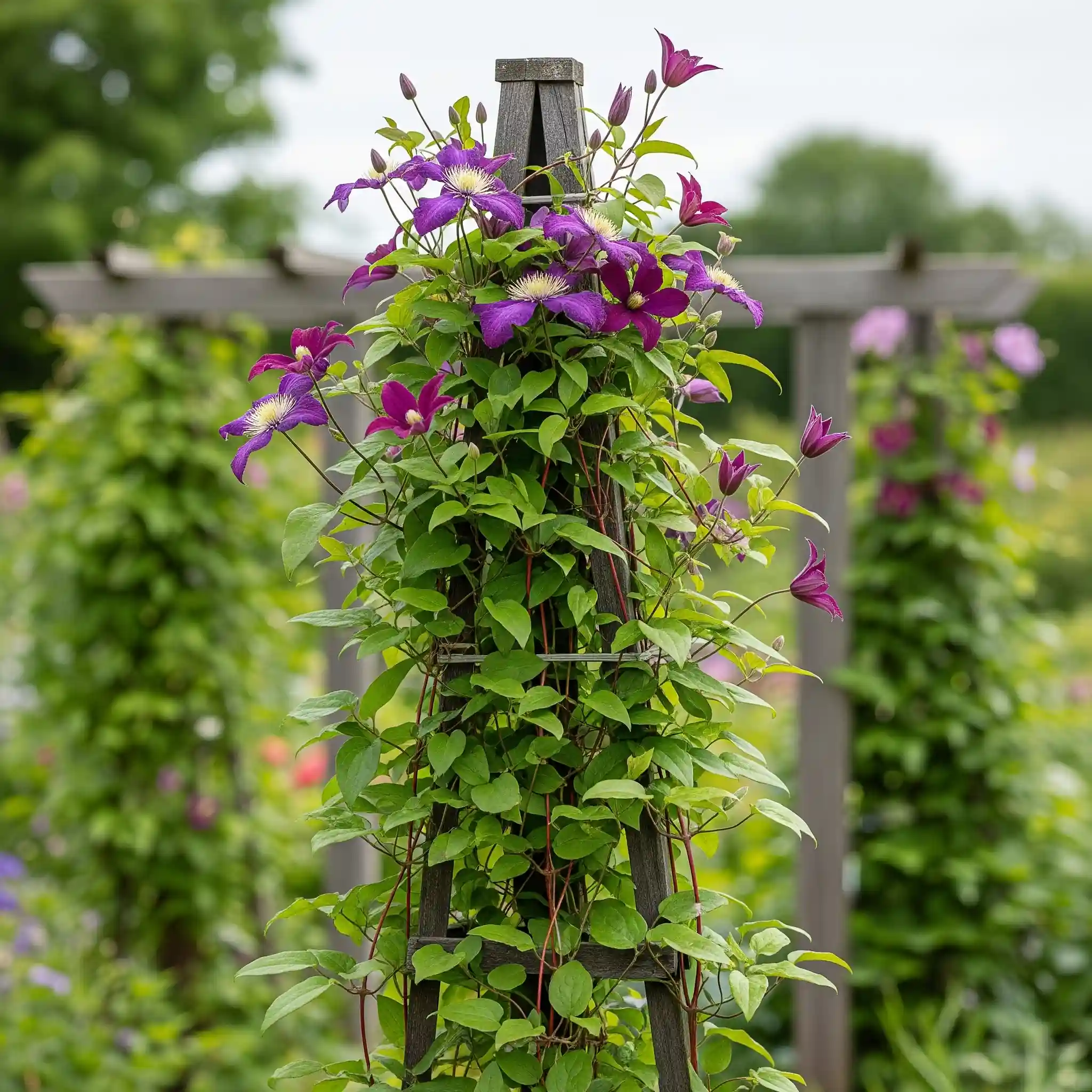
Brooklyn Botanic Garden organises vines into three timing windows based on their wood. Understanding which group your plant falls into makes everything else straightforward.
You might also find light container gardens helpful here.
Group 1 — Early bloomers on old wood (early-flowering clematis, jasmine, wisteria, rambling roses): These vines set their flower buds on wood produced the previous year. Prune immediately after flowering finishes — typically late spring to early summer — so the plant has the rest of the growing season to produce new flowering wood for next year. Pruning in late winter removes those buds before they open and eliminates the bloom.
Groups 2 and 3 — Summer and fall bloomers on new growth (clematis viticella and texensis types, trumpet honeysuckle, trumpet vine): These set buds on the current season’s growth, so late-winter pruning is safe and often ideal. Cut stems back hard — down to 8-12 inches above the ground in early spring — and they will regrow vigorously with new flowering shoots within weeks. For species-specific detail, our honeysuckle pruning guide explains the timing for each common type.
The horizontal stem technique: When training new growth, lay stems sideways along a fence, trellis, or wire rather than directing them straight up. Horizontal stems flower far more generously than vertical ones. The reason is the apical dominance mechanism described earlier — a vertical stem has one dominant tip suppressing all lateral buds along its length. A horizontal stem distributes that suppression evenly, allowing buds all along the stem to activate rather than just the tip alone. Brooklyn Botanic Garden specifically notes the difference in flowering productivity between horizontal and vertical training.
For tangled vines: Resist the urge to yank stems free — you will break the ones you want to keep. Work from the outside in. First remove any clearly dead or diseased stems. Then make a few cuts through the densest tangles to create manageable sections. Untangle one section at a time, removing unwanted stems at their point of origin with thinning cuts.
Standard and Tree-Form Plants: Maintaining the Crown
Standards are plants trained to a single clear stem with a rounded head of growth at the top — the lollipop form common in formal gardens and large containers. Standard roses are the most familiar example, but bay laurel, wisteria, fuchsia, and even rosemary can be trained this way. Pruning a standard has a different objective from any other growth form: you are maintaining a geometric shape and a clean trunk, not managing growth habit.
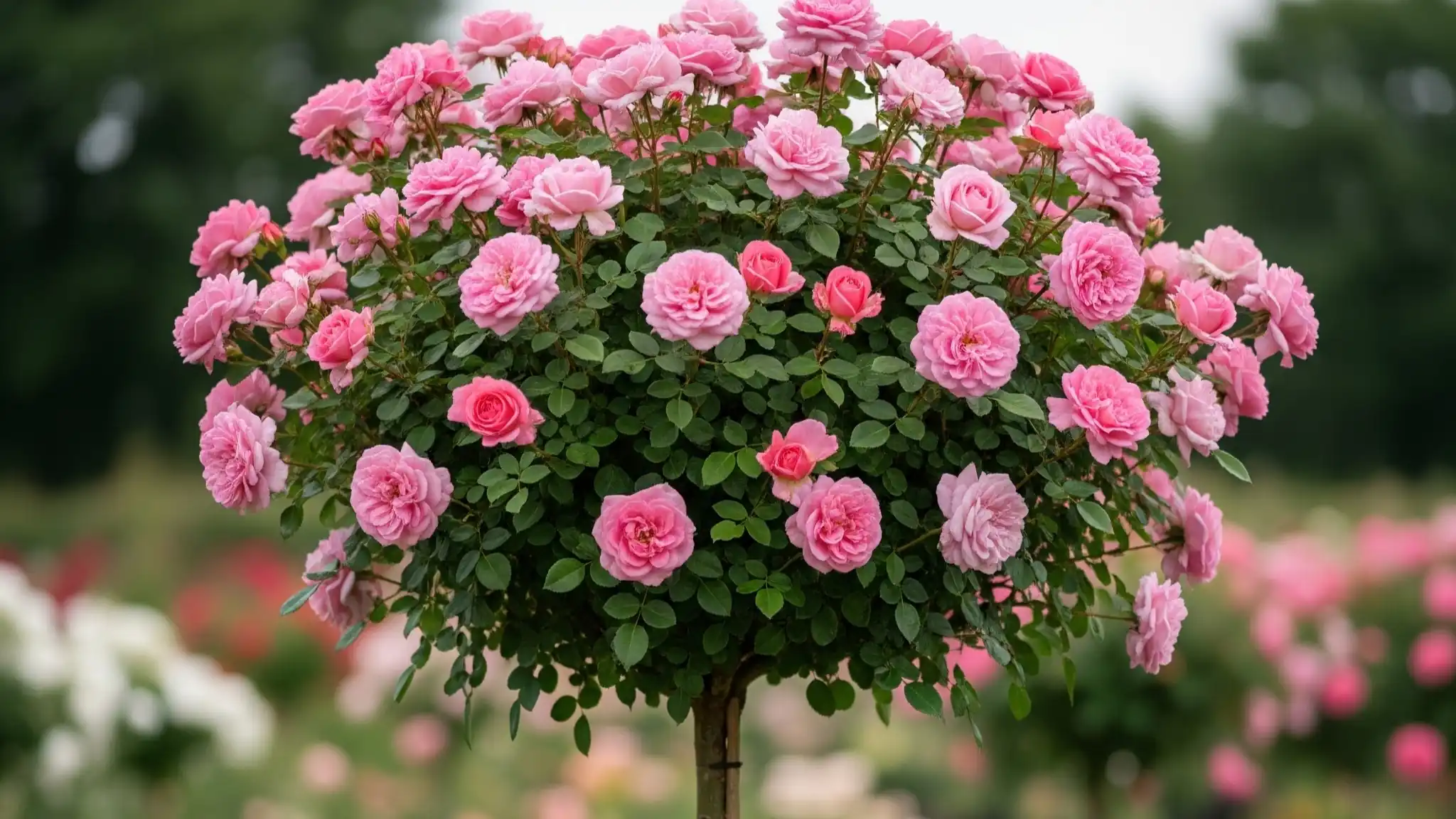
Pruning the crown: Treat the head of the standard as you would prune a bush of the same species. For standard roses, the Royal Horticultural Society recommends late winter pruning (February to March), cutting each stem to an outward-facing bud to direct new growth away from the center. Remove crossing, rubbing, and dead stems to maintain airflow through the crown and reduce disease entry points.
Managing the trunk: Any shoots emerging from the main stem below the crown must be removed immediately — rub them off as soon as you spot them. For grafted standards (most standard roses), any growth appearing below the graft point — the visible join between the bare stem and the grafted crown — is rootstock growth. These suckers grow far more vigorously than the grafted variety. Left unchecked, they overtake and eventually replace the named cultivar entirely. Remove suckers at their point of origin, not at stem or soil level. Cutting too high leaves a stub that responds by producing multiple new suckers.
For timing and cuts across all rose forms — climbers, hybrid teas, shrub roses, and standards — our complete seasonal rose pruning guide covers each type in detail.
Evergreen Shrubs: Shear or Select?
Evergreen shrubs split into two groups with fundamentally different pruning needs. Using the wrong approach damages the plant.
Formal evergreens — boxwood, yew, holly, privet — tolerate hard shearing because they regenerate freely from old wood. University of Minnesota Extension recommends shearing when new growth has extended 6-8 inches. Shearing earlier does not shape the plant effectively; waiting much longer leaves the trimmed surface looking rough and brown-tipped for weeks. Hold shears at a slight inward angle so the base of any hedge or topiary form remains wider than the top — this keeps lower branches from being shaded out and dying back over time.
Lavender and other semi-woody herbs cannot be sheared back into old wood without serious consequences. Unlike boxwood or yew, lavender does not produce new shoots from leafless old stems — cut into the gray, bare section and that stem is likely lost. The rule: trim back to green growth only, immediately after flowering, removing no more than one-third of each stem. In early spring you can lightly tidy without cutting below the green zone. Our guide to pruning lavender in spring covers exact technique and timing by variety.
Conifers are the least forgiving of all. With the exception of yew, most conifers do not regenerate from cuts made into old brown wood. Unless you are candle-pinching pines in late spring to slow extension growth, limit conifer pruning to dead or damaged branches only.
Quick Reference: Pruning by Growth Form
| Growth Form | Examples | Main Technique | Best Timing |
|---|---|---|---|
| Cane shrubs (spring blooming) | Forsythia, weigela, lilac, mockorange | Remove 1/3 oldest canes to ground annually | Right after flowering |
| Cane shrubs (summer blooming) | Smooth hydrangea, smokebush, summer spirea | Remove 1/3 oldest canes to ground annually | Late winter / early spring |
| Mounding perennials | Salvia, nepeta, echinacea, phlox, aster | Deadhead after each flush; Chelsea Chop (cut by half) | After each flush; late May to early June |
| Vines — old wood bloomers | Early clematis, jasmine, wisteria | Light thinning after flowering; train horizontally | Immediately after bloom |
| Vines — new wood bloomers | Clematis viticella, trumpet vine, honeysuckle | Hard cutback to 8-12 inches; train horizontally | Late winter / early spring |
| Standards | Standard roses, bay, wisteria standard | Crown shaping to outward buds; sucker removal | Late winter (roses: Feb-Mar) |
| Formal evergreens | Boxwood, yew, holly | Shear | When new growth reaches 6-8 inches |
| Semi-woody herbs | Lavender, sage, rosemary | Trim to green growth only — never into old wood | After flowering / early spring |
Frequently Asked Questions
Can I prune plants in fall?
For most plants, fall is the worst option. Cutting stimulates new growth, and any tender new shoots emerging in late summer or early fall are killed by the first hard frost — leaving the plant worse off than if you had done nothing. Texas A&M AgriLife Extension specifically warns against heavy pruning in late summer, which pushes soft growth vulnerable to winter damage. The safe exception: you can remove dead or damaged branches at any time of year without triggering problematic regrowth.
How do I know if a plant blooms on old wood or new wood?
The fastest test is observation: plants that flower before mid-June typically bloom on old wood from the previous season. Plants flowering after mid-June generally bloom on new wood produced in the current year. If you prune a shrub and it produces no flowers the following year, the classic explanation is that you removed the buds — it blooms on old wood. Our hydrangea pruning guide explains this distinction using the clearest practical example in home gardening.
What is the difference between deadheading and pinching?
Deadheading removes a spent flower and its stem down to a lateral bud, redirecting energy from seed production into new blooms. Pinching removes the soft growing tip of a vegetative stem to trigger branching from the buds below. Both exploit the apical dominance mechanism, but deadheading is a maintenance task for extending the bloom period, while pinching is a shaping technique used to build a bushier plant before it flowers.
My shrub has not been pruned in years. Can I cut it all at once?
It depends on the species. Low-growing summer-flowering shrubs like smooth hydrangea and potentilla tolerate being cut back completely to 2-3 inches above ground in early spring. Larger spring-flowering shrubs like lilac and forsythia should not be cut all the way back at once — the phased one-third approach from SDSU Extension avoids shock and keeps the plant flowering through the renovation. Remove one-third of the oldest canes this year, one-third the following year, and the last third the year after that.
Every Cut Has a Purpose
Once you match the pruning technique to the growth form, most of the uncertainty disappears. Cane shrubs need renewal. Mounding perennials need deadheading and an occasional Chelsea Chop. Vines need timing matched to their wood type, and horizontal training for maximum flower cover. Standards need consistent crown maintenance and vigilant sucker removal. Evergreens need shearing at the right moment — or, in the case of lavender, never back into old wood.
The biology underlying all of it is consistent: every cut changes the plant’s hormonal balance, and that change triggers a predictable growth response. Work with those mechanisms rather than against them, and pruning stops feeling like guesswork. For a month-by-month view of what to tackle through the season, our spring pruning guide walks through what needs attention from February through May.
For a complete step-by-step walkthrough, see pruning potted plants.
Sources
- NC State Extension — General Pruning Techniques
- Texas A&M AgriLife Extension — Proper Pruning Techniques
- Brooklyn Botanic Garden — Pruning Vines and Climbing Plants
- University of Minnesota Extension — Pruning Trees and Shrubs
- Journal of Experimental Botany / PMC — Lessons from a Century of Apical Dominance Research
- Royal Horticultural Society — The Chelsea Chop
- SDSU Extension — Pruning Flowering Shrubs
- Royal Horticultural Society — Rose Pruning Guide


