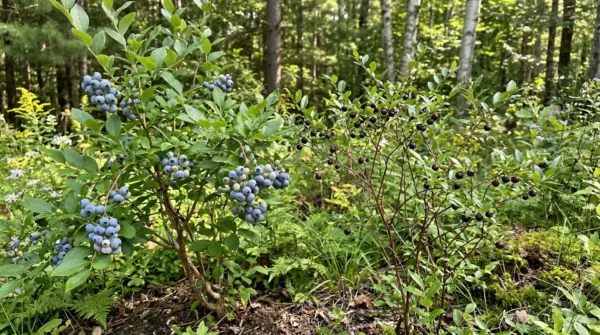
Zone 7 Blueberries: 4 Best Varieties, When to Plant, and Why pH Is Everything

Grow blueberries in zone 7 the right way: 4 varieties with chill hours, the February–March planting window, and why pH below 5.2 makes all the difference.
Zone 7 is one of the best places in the country to grow blueberries at home. A typical winter delivers 1,000 to 1,200 chilling hours—enough for both rabbiteye and southern highbush varieties—and the long, warm growing season pushes sugars into the berries better than cooler zones can manage. But zone 7 throws a curveball that most planting guides skip: the false spring.
Warm stretches in January and February regularly coax early-blooming varieties into breaking dormancy weeks before the last frost. One cold night after the buds have opened can eliminate most of that year’s crop. The solution isn’t to avoid blueberries in zone 7—it’s to choose varieties that bloom late enough to dodge that window, and to sort out the soil pH before anything else. For a full overview of blueberry growing, start with our complete blueberry growing guide.
Zone 7’s Blueberry Advantage (and the One Hidden Risk)
Zone 7 runs from coastal Virginia through the North Carolina Piedmont, central Tennessee, Arkansas, and the Georgia mountains. Average winter minimums stay between 0°F and 10°F—mild enough for most blueberry types to survive without protection, and cold enough to deliver the chilling hours that trigger reliable bud set and flowering the following spring.

Zone 7 typically provides 1,000 to 1,200 chilling hours per winter [2]. Rabbiteye varieties like Powderblue and Brightwell need 400–600 hours below 45°F to break dormancy properly. Southern highbush types need around 400 hours. Zone 7 hits both requirements comfortably, which means plants finish dormancy on schedule and flower at predictable times—unless a warm January tricks an early-blooming variety into starting before frost season ends.

Three pre-planned garden beds, free
Stop staring at empty beds: printable plans with exact layouts, plant lists and planting calendars — yours free from the Garden Library.
According to NC State Extension, open blueberry blossoms sustain damage at just 27°F [4]. For rabbiteye varieties at the half-length corolla stage—when buds have swollen but flowers haven’t fully opened—damage can occur at 30°F [4]. Both temperatures are entirely normal for zone 7 in February and March. Variety selection is your first and most powerful defense.
4 Best Blueberry Varieties for Zone 7
Zone 7 gardeners have two reliable routes: rabbiteye blueberries (Vaccinium virgatum), which handle heat and drier soils better than any other blueberry type, and southern highbush (V. corymbosum hybrids), which ripen earlier and suit gardeners who want fruit by early June. Northern highbush varieties don’t thrive in zone 7’s heat and are best left to zones 5–6. For full detail on the difference between types, see our highbush vs. lowbush blueberry guide.

| Variety | Type | Chill Hours | Ripening | Best For |
|---|---|---|---|---|
| Powderblue | Rabbiteye | 550–600 hrs | Late July | Heat tolerance, drought resistance, reliable heavy yields |
| Brightwell | Rabbiteye | 400 hrs | Mid-July | Easy to grow, large clusters, excellent Powderblue cross-pollinator |
| O’Neal | Southern Highbush | 400 hrs | Early June | Earliest harvest, exceptional flavor, well-suited to zone 7b |
| Climax | Rabbiteye | 450 hrs | Early July | Early-season fruiting, but avoid above 2,000 ft elevation (frost risk) |
The Powderblue + Brightwell pairing is the most reliable combination for most zone 7 gardens. Brightwell’s lower chill requirement and Powderblue’s later bloom time work together to extend the harvest window while reducing frost overlap. NC State Extension and UGA Cooperative Extension both list Powderblue as a consistent performer in Piedmont and Coastal Plain conditions [1][3].
One important exception: in mountainous zone 7—elevations above 2,000 ft in western North Carolina, eastern Tennessee, or the north Georgia mountains—early-flowering varieties Climax, Vernon, and Premier tend to flower so early they’re frequently frost-damaged. UGA Extension specifically warns they “may flower too early for growing in mountain regions, resulting in frequent spring frost/freeze damage” [3]. At elevation, plant Brightwell and Powderblue instead, or choose northern highbush varieties like Duke.
Cross-pollination is not optional for rabbiteye varieties. A single rabbiteye plant produces almost no fruit without a different variety planted within 50 feet [1]. Always plant at least two varieties together.
Why Soil pH Is Everything for Zone 7 Blueberries
Most zone 7 soils sit at pH 6.0–7.5. Blueberries require pH 4.5–5.2 [1][3]. That gap isn’t cosmetic—it controls whether plants can actually absorb the nutrients already in your soil.

Above pH 5.5, iron in the soil exists primarily as ferric iron (Fe³⁺)—insoluble and inaccessible to plant roots. Below pH 5.5, that same iron converts to ferrous iron (Fe²⁺), the soluble form blueberry roots can take up. A plant growing at pH 6.5 shows chlorosis—leaves yellow between the veins while veins stay green—despite having plenty of iron in the soil. Adding fertilizer doesn’t fix chlorosis; only lowering the pH does. Zone 7’s typically clay-heavy soils make this harder than in sandy coastal areas: clay holds pH buffers more tightly and requires more sulfur and more time to shift.
Pre-planting pH protocol:
- Soil test first. Your county cooperative extension office offers low-cost testing and tells you exactly how far your soil needs to drop. Don’t estimate.
- Apply wettable sulfur (90% elemental) at least 3–4 months before planting. Both NC State Extension and Clemson Extension specify this minimum lead time [1][2]. Sulfur works through bacterial oxidation—a slow biological process that requires warm soil to proceed.
- Incorporate 4–6 inches of organic matter—pine bark mulch or peat moss—in a band 18–24 inches wide over the planting row [2]. This lowers pH, feeds soil biology, and improves the drainage that zone 7 clay soils often lack.
- Retest before planting. One sulfur application rarely drops pH to target when starting above 6.5. Apply again and wait if the goal hasn’t been reached.
For detailed testing and amendment guidance, see our guide to lowering soil pH for blueberries.

When to Plant Blueberries in Zone 7
Bare-root blueberry plants should go in the ground between February 1 and March 15—the window both NC State Extension and Clemson University recommend [1][2]. Soil is thawed and workable, but plants are still fully dormant. Dormant roots establish quickly in cool soil, well ahead of the heat stress that arrives in May and June.

Container-grown plants have a second planting window: mid-October through November [2]. Fall planting uses cooler soil temperatures to drive root growth before winter dormancy arrives—a genuine head start on spring establishment.
Avoid:
- Planting after April 15. First-year plants pushed into summer heat without an established root system suffer badly in zone 7’s dry spells.
- Planting without pH adjustment. Perfect timing in the wrong soil produces weak plants and almost no fruit.
Zone 7a last frost dates typically fall around April 1–15; zone 7b is closer to March 15–30. Bare-root plants going in late February will still be dormant when the last frost arrives, so frost damage at planting time isn’t a concern. If late freezes are forecast after new growth has emerged in spring, cover the beds with floating row cover.
Planting and Spacing
Give blueberries more room than feels necessary. Their root systems are shallow and wide, and good air circulation between plants reduces fungal disease pressure significantly.
Stop missing your zone's planting windows.
Select your US zone and month — get a complete checklist of what to plant, prune, feed, and protect right now.
→ View My Garden Calendar- Southern highbush: 4–5 feet apart in the row, 8–10 feet between rows [1]
- Rabbiteye: 6 feet apart in the row, 10–12 feet between rows [2]
If your zone 7 soil drains slowly—common in Piedmont clays—plant on raised mounds 6–8 inches above grade [1]. Blueberry roots cannot tolerate standing water for more than a few days; fine feeder roots die quickly under waterlogged conditions.
Planting depth: root ball just ¼ to ½ inch below soil surface. Deeper planting smothers the crown. After planting, apply 3–4 inches of pine bark or pine-needle mulch in a 2-foot circle around each plant. Acidic mulch lowers surface pH as it decomposes, moderates soil temperature, and cuts moisture loss through zone 7’s dry summer spells.
Zone 7 Blueberry Care Calendar
| Season | Task |
|---|---|
| February–March | Plant bare-root stock; apply sulfur and organic matter to unprepared beds; remove dead or crossing wood from established plants |
| April (after leaves emerge) | Begin fertilizing: 1 tbsp azalea fertilizer in a 1-foot radius, every 6 weeks. Do not fertilize before leaves emerge—cold roots can’t absorb it and salts may burn |
| May–June | Southern highbush ripens; provide 1 in/week water; inspect for mummified berries (sign of botrytis) |
| July | Rabbiteye harvest begins; stop all nitrogen fertilization by July 1—late nitrogen pushes growth that won’t harden before winter |
| August–September | Harvest continues into mid-August; add 2–3 in fresh mulch around crown; watch for spotted wing drosophila on ripe fruit |
| October–November | Plant container-grown stock; apply acidifying mulch; no fertilizer |
| December–January | Full dormancy; plan variety pairings; order bare-root plants early—popular varieties sell out by January |
Protecting Zone 7 Blueberries from Late Frosts
The late-frost trap is zone 7’s most frustrating blueberry problem. A warm stretch in January or February pushes early-blooming varieties like Climax and Vernon into bud break, then temperatures return to normal March levels and drop below the damage threshold. Once blossoms have opened, 27°F damages them within minutes [4]. For rabbiteye varieties at the half-length corolla stage, the damage threshold is 30°F [4].

I’ve seen zone 7 gardeners lose most of a Climax harvest to a single March freeze that left the Powderblue on the same property untouched. Variety bloom timing is that consequential.
Practical protection options:
- Floating row cover: Drape over bushes when buds swell during warm spells. Traps ground heat and is effective to approximately 28°F for a few hours.
- Continuous sprinkler irrigation: Run from when temperatures hit 34°F until ice fully melts the following morning. Latent heat from water freezing holds blossom temperature above freezing. Effective to approximately 23°F with adequate flow, but the system must never stop while temperatures are below freezing [4].
- Site selection (the best long-term protection): A gentle south-facing slope with good cold-air drainage avoids frost-pocket conditions. Low spots and areas near structures that block airflow collect cold air and dramatically increase late-frost frequency.
For more on growing blueberries through different zone conditions, see our complete blueberry growing guide and our overview of growing blueberries in zone 9.
Frequently Asked Questions
Can I grow blueberries in containers in zone 7?
Yes, and containers have a real advantage: you control pH precisely from the start. Use a 15-gallon pot or half-whiskey barrel filled with a 50/50 mix of peat moss and pine bark. Container plants dry out faster than in-ground blueberries in zone 7 summers—check the top inch of soil every 2–3 days and water when it feels dry. You can also move pots to a sheltered spot during a late frost warning.
How long before zone 7 blueberry plants produce fruit?
Start with 2–3-year-old nursery stock rather than 1-year liners. Expect modest production in years 2–3 after planting, with full yields by years 4–5. Buying more established plants costs more upfront but shortens the wait significantly.
Do blueberries need extra watering through zone 7 summers?
Yes. Blueberries are shallow-rooted—most feeder roots sit in the top 12 inches of soil, which zone 7 summers dry out fast. Provide 1–2 inches of water per week during fruit development and harvest (June–August). Deep pine bark mulch cuts surface moisture loss significantly; 4 inches of mulch can reduce watering frequency by half compared to bare soil.

Sources
- [1] NC State Extension. Growing Blueberries in the Home Garden.
- [2] Clemson University HGIC. Blueberry.
- [3] UGA Cooperative Extension. Home Garden Blueberries (C946).
- [4] NC State Extension. Blueberry Freeze Damage and Protection Measures.