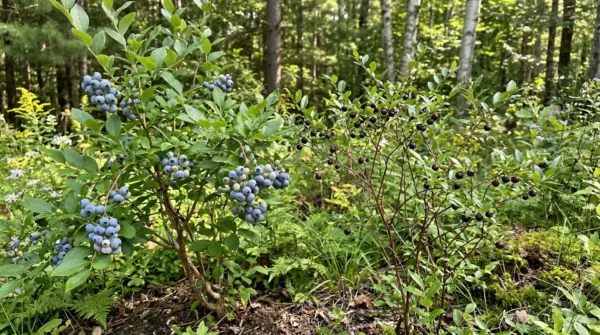
Highbush or Lowbush Blueberries? What Your Soil pH, USDA Zone, and Garden Size Tell You

Highbush or lowbush blueberries — the right choice depends on your USDA zone, soil pH, and garden size. This guide covers all five types with a clear decision framework.
Ask most gardeners which blueberry to plant — highbush or lowbush — and they will say highbush without much thought. The bigger bush, the bigger harvest, right? That logic holds in some gardens and fails completely in others. Your USDA zone, your soil’s natural pH, and how much space you have will determine the right choice far more reliably than a generic comparison article.
I’ve grown both northern highbush and half-high hybrids in a zone 5 garden. The decision came down to one practical factor: the highbush fit the back of the property where they could spread; the compact half-highs went along the front walk where a 9-foot shrub would have blocked everything. Both produced well. Both required different management approaches.
This guide covers all five main blueberry types — northern highbush, southern highbush, rabbiteye, lowbush, and the half-high hybrids that most comparison articles ignore entirely. By the end, you will know which type matches your zone, your soil pH, and your expectations for yield and flavor. If you are ready to commit, our complete guide to growing blueberries covers planting and care in full detail.
The Five Types: Which One Can You Actually Grow?
Most “highbush vs. lowbush” articles leave you choosing between two options. In practice, blueberries sold for home gardens fall into five distinct categories. Your USDA zone eliminates most of them immediately.

Three pre-planned garden beds, free
Stop staring at empty beds: printable plans with exact layouts, plant lists and planting calendars — yours free from the Garden Library.
| Type | Height | USDA Zones | Soil pH | Yield (mature) | Best Climate |
|---|---|---|---|---|---|
| Northern Highbush | 5–9 ft | 4–7 (some to 3) | 4.5–5.5 | 6–12 lbs/bush | Cold winters, temperate summers |
| Southern Highbush | 5–7 ft | 7–9 | 4.0–5.5 | 8+ lbs/bush | Mild winters, hot summers |
| Rabbiteye | 6–12 ft | 7–9 | 4.5–5.3 | 12–25 lbs/bush | Hot, dry Southeast |
| Lowbush (Wild) | 6–18 in | 3–7 | 4.0–5.0 | ~0.5 lb/sq ft | Cold climates, poor acidic soil |
| Half-High Hybrid | 2–4 ft | 3–5 | 4.0–5.5 | 1–9 lbs/bush | Extreme cold, small gardens |
Northern Highbush: Most Home Gardeners’ First Choice
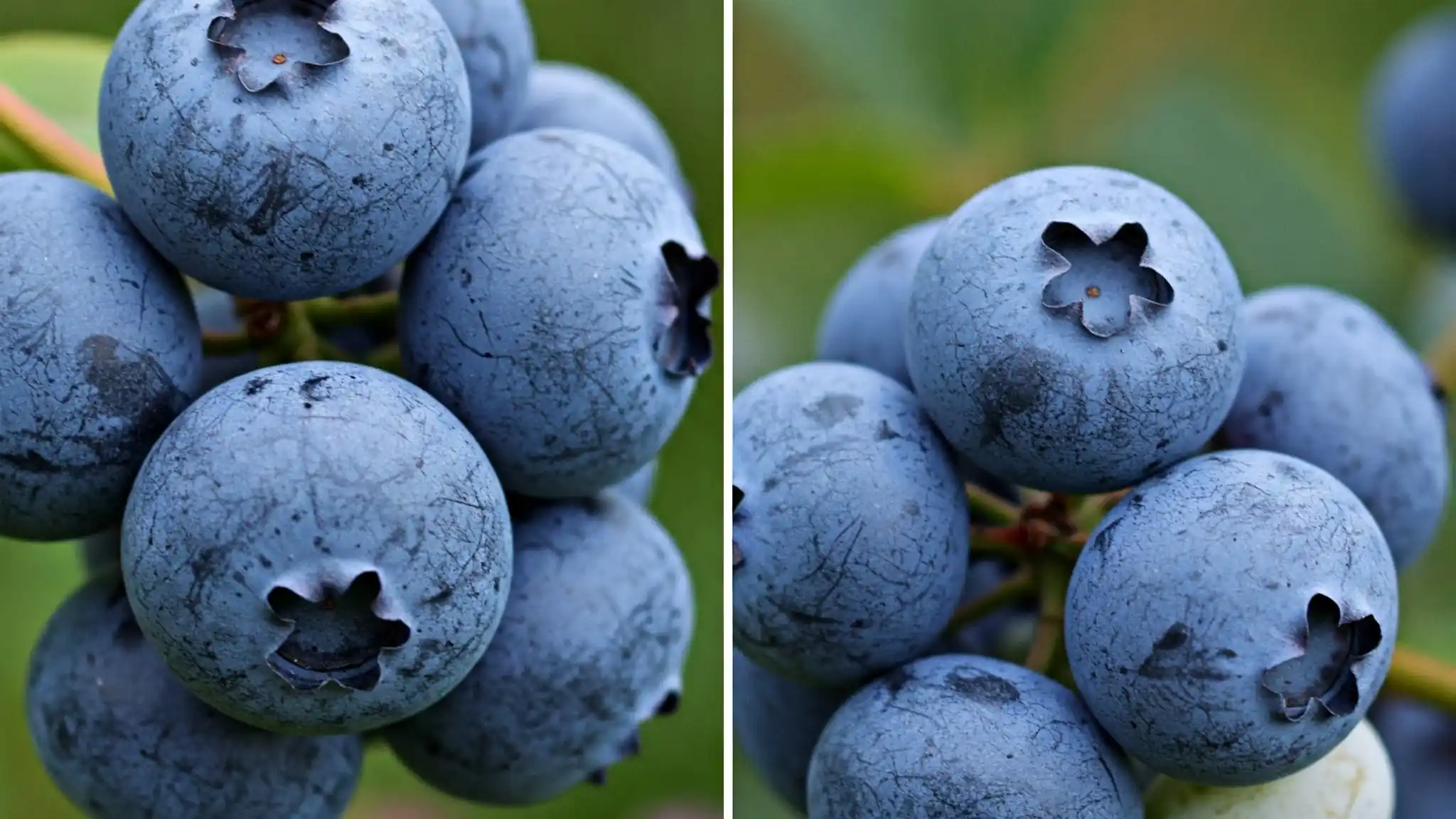
Northern highbush (Vaccinium corymbosum) is the blueberry you buy at the grocery store. These upright shrubs grow 5 to 9 feet tall and produce clusters of plump, mild-flavored berries that are easy to pick and store well. If you are in zones 4 through 7 and have room for a full-size shrub, highbush is usually the right starting point.
Hardiness and chill hours: Northern highbush is hardy in zones 4 through 7 by default. Cold-tolerant cultivars like Patriot and Northland survive to zone 3 temperatures (-40°F) when sited with wind protection, according to UConn Extension. All highbush varieties require 400 to 800 hours of temperatures below 45°F each winter to break dormancy and set fruit — a chill-hour requirement that rules them out for zone 8 and warmer climates.
Soil requirements: Highbush demands a pH between 4.5 and 5.5 in well-drained sandy loam rich in organic matter. University of Maine Cooperative Extension notes that clay soil without amendment suffocates the shallow root system. If your soil is naturally between 5.5 and 6.0, you can amend it down — see the soil pH section below for specifics.
Yield and timeline: A mature highbush bush produces 6 to 12 pounds of fruit per year (7 to 10 pints), per University of Maryland Extension and NC State Extension. “Mature” is the key word here. Remove all flower clusters during the first two years — it feels like punishment, but it redirects energy to root establishment and dramatically increases long-term productivity. Expect your first meaningful harvest in year three, with peak production beginning around year six.
Pollination: Northern highbush is technically self-fertile, but Rutgers NJAES found that cross-pollination between at least two different varieties produces larger berries, earlier ripening, and higher yields. Plant varieties with overlapping bloom times 4 to 6 feet apart within rows, with 8 to 10 feet between rows.
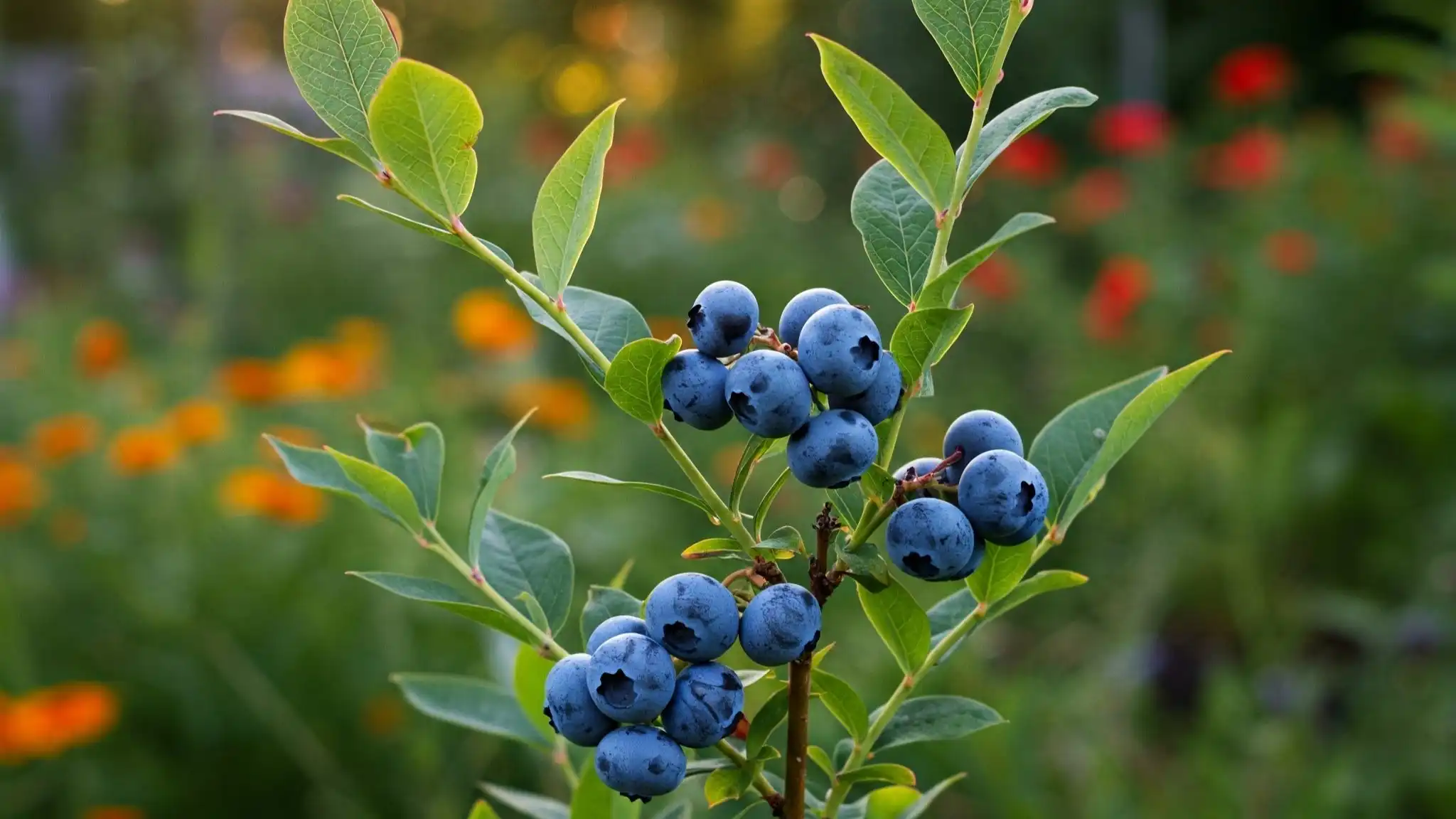
Recommended varieties: Bluecrop (reliable, disease-resistant, mid-season), Patriot (zone 3 hardy, excellent flavor, early), Blueray (large berries, productive), Jersey (late-season, prolific). For zone 3 and 4, Patriot and Northland handle cold best.
Best for: Zones 4–7 gardeners who want maximum fresh-eating yield per bush, prefer mild-flavored berries, and have room for full-size shrubs.
Southern Highbush and Rabbiteye: For Zones 7–10
Northern highbush needs more cold than most zone 7+ winters deliver. Southern gardeners need different types entirely.
Southern highbush varieties are hybrids developed specifically for low-chill climates, requiring only 150 to 500 hours below 45°F, per Clemson HGIC. They grow 5 to 7 feet tall, break dormancy earlier than northern highbush, and tolerate summer heat and drought better. O’Neal, Sunshine Blue, and Georgia Dawn thrive in zones 7 to 9. Southern highbush fruit quality is excellent — large, sweet, and with a long harvest window.
Rabbiteye blueberries (Vaccinium virgatum) are the workhorses of the South. Growing 6 to 12 feet tall, they produce 12 to 25 pounds per mature bush — the highest yield of any type. They tolerate poor, dry soil better than highbush and accept slightly higher pH (up to 5.3). Rabbiteye requires 400 to 600 chill hours but is far more heat and drought tolerant than highbush once established. The critical caveat: rabbiteye is not self-fertile. Plant at least two different cultivars — Climax and Premier are commonly paired — or your flowers will set almost no fruit.
Best for: Zone 7–9 gardeners. Southern highbush for quality fruit with flexible timing; rabbiteye for maximum yield in the lower Piedmont, coastal plain, and similar hot climates.
Lowbush Blueberries: The Wild Flavor Champion
Lowbush blueberries (Vaccinium angustifolium) are what most people call “wild” blueberries — the small, intensely flavored berries used in muffins, jams, and commercial frozen packs. They do not behave like a conventional garden shrub, and that is both their limitation and their strength.
Growth habit: Lowbush plants grow 6 to 18 inches tall and spread horizontally via underground rhizomes, forming irregular mats that can stretch many feet wide over decades. About 70 percent of the plant’s total biomass exists below ground, according to UNH Cooperative Extension. That underground reserve explains two things that surprise many gardeners: lowbush tolerates drought far better than its small size would suggest, and pruning it to ground level does not kill it. The rhizomes store enough energy to push vigorous new growth back up within weeks of a hard mowing.
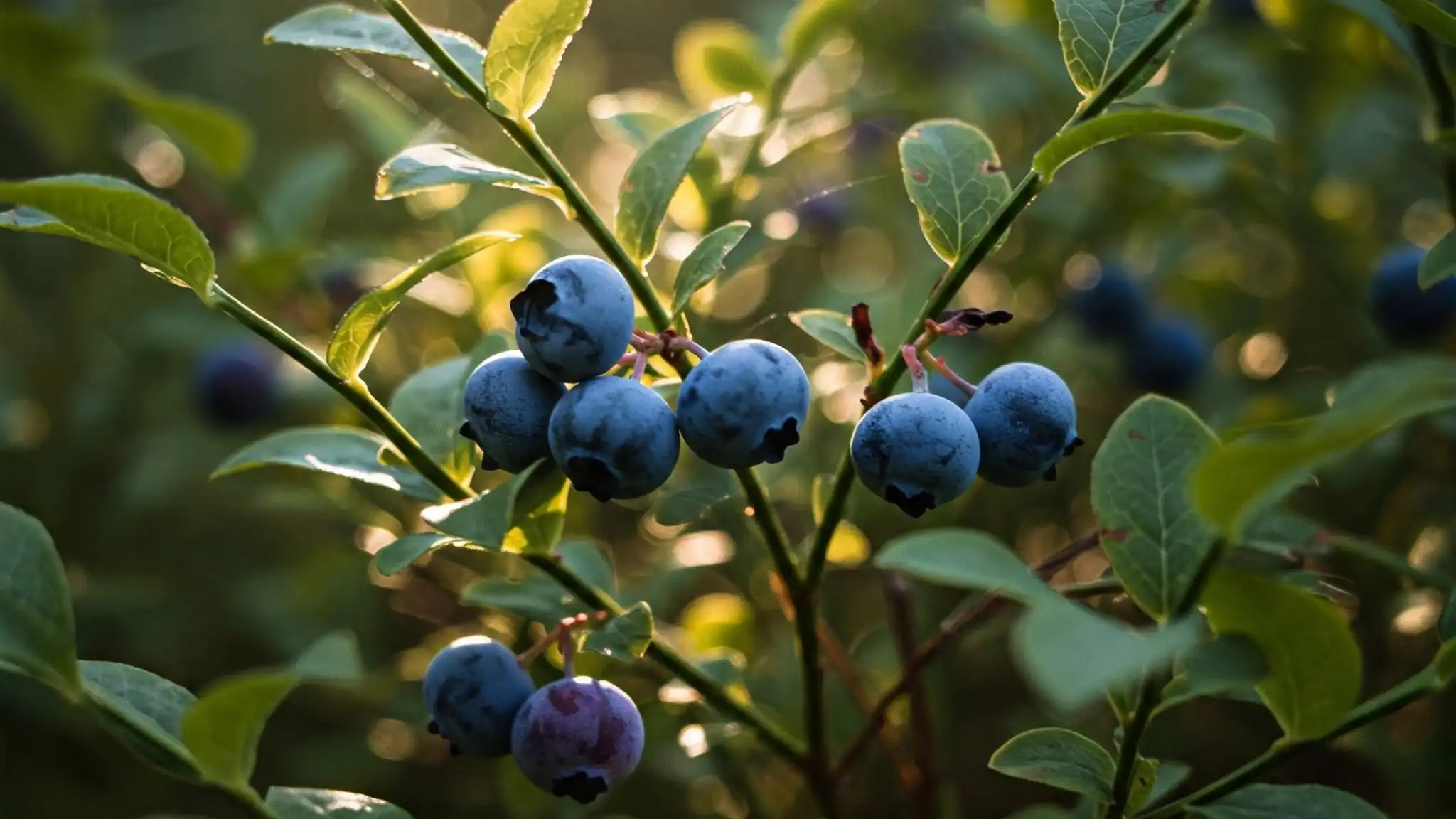
Soil requirements: Lowbush is stricter than highbush about soil pH. The productive range is 4.0 to 5.0, with University of Maine recommending 4.0 to 4.5 for peak results. Above pH 5.0, lowbush growth stalls as iron and manganese become chemically unavailable. This is a meaningfully different requirement than the highbush range of 4.5 to 5.5 — a soil that works fine for highbush (pH 5.3, for example) will underperform for lowbush. Test your soil before making a commitment. Our article on testing and adjusting soil pH for blueberries covers the process in full.
Stop guessing if your garden pays.
Log what you grow and harvest — see total yield weight, estimated retail value, and season-on-season progress in one place.
→ Track My HarvestYield: After four years of proper management, an established lowbush patch produces approximately 0.5 pounds per square foot annually, according to University of Maine Cooperative Extension. On a per-plant basis, that sounds poor compared to highbush. On a per-area basis, a 20-square-foot lowbush patch in year four yields roughly 10 pounds — comparable to two mature highbush plants while taking far less vertical space.
The alternating-patch management system: Lowbush plants must be pruned to ground level every two years to stay productive. Mow the whole patch at once and you sacrifice an entire harvest year. The practical solution — and one that no competitor article explains in detail — is to split your planting in half and alternate: mow one half in fall, let the other produce berries through the following summer, then switch sides. University of Maine Cooperative Extension confirms this system delivers steady annual production while keeping plants vigorous. Even for a small home patch, dividing it from day one saves significant frustration later.
Zones and hardiness: Lowbush is the most cold-hardy mainstream blueberry type, growing in zones 3 through 7. It is native to the rocky, acidic barrens of Maine and eastern Canada — the kind of thin, gravelly, naturally acidic soil that most garden plants refuse.
Best for: Zones 3–6 gardeners with naturally acidic, well-drained soil; anyone who wants maximum flavor intensity or is establishing a naturalized wild area; edible-groundcover applications where height is not appropriate.
Half-High Hybrids: The Overlooked Answer for Zones 3–5
Half-high blueberries are crosses between northern highbush and lowbush varieties, developed specifically for gardeners in zones 3 to 5 who want productive blueberries from a plant that genuinely survives extreme winters.
These plants grow 2 to 4 feet tall — compact enough for foundation plantings or small garden beds — and are hardy to -35°F to -45°F. In a Minnesota zone 4 winter, most of the fruiting wood survives protected below the snow line. UMN Extension recommends half-high varieties as the primary blueberry choice for zones 3 and 4, noting they can provide productive harvests for 30 or more years with proper care.
| Variety | Size (H × W) | Yield | Flavor/Notes |
|---|---|---|---|
| Northblue | 3 × 4 ft | 3–9 lbs | Dark, firm, good flavor |
| Chippewa | 4.5 × 5 ft | 3–8 lbs | Sweet, mild, mid-season |
| Northcountry | 2.5 × 4 ft | 3–5 lbs | Early, reliable, consistent |
| Northsky | 2 × 3 ft | 1–5 lbs | Most compact; container-friendly |
| St. Cloud | 5 × 4 ft | 2–7 lbs | Earliest in the north, crisp texture |
Half-highs need at least two cultivars for cross-pollination and the same care approach as northern highbush — which is notably simpler than the alternating-patch management lowbush requires. Soil pH tolerance is 4.0 to 5.5, matching highbush.
For a zone 4 gardener with a small yard, the practical answer is almost always Northblue or Northsky: compact, cold-hardy, manageable, and productive. Lowbush in the same zone delivers less yield per plant and requires a specialized management system. Highbush in zone 4 needs a sheltered spot and may suffer tip dieback in severe winters without protection.
Best for: Zones 3–5 gardeners who want productive blueberries without the footprint of a full highbush shrub or the management complexity of a lowbush planting.
Soil pH: Where Most Gardeners Go Wrong
Both highbush and lowbush require acidic soil, but the requirements are not identical — and the consequences of a pH mismatch compound over years, not weeks. Blueberries cannot absorb iron, manganese, or zinc above pH 5.5. Above 6.0, they will survive but produce poorly. Above 6.5, they slowly decline regardless of fertilization.
The practical thresholds by type:
- Northern highbush and half-high: 4.5–5.5 (target 5.0)
- Lowbush: 4.0–5.0 (University of Maine recommends 4.0–4.5 for peak production)
- Rabbiteye: Most tolerant — can perform at pH up to 5.3
If your natural soil pH is 5.5 to 6.0, highbush is workable with amendment. If your soil is 6.5 or above, build a raised bed with an acidified growing medium — elemental sulfur applied to alkaline garden soil takes years to pull pH down reliably enough for any Vaccinium. Lowbush will not tolerate pH above 5.0 regardless of how much you amend.
To lower pH by approximately one unit, apply 1 pound of elemental sulfur per 100 square feet and allow six to twelve months before planting, per University of Maine Cooperative Extension. Sulfur acidifies slowly through microbial conversion — it does not work overnight. Aluminum sulfate acts faster but risks aluminum toxicity at high application rates and is not recommended as a primary amendment.
Yield, Flavor, and Nutrition: The Honest Numbers
The yield conversation is more nuanced than “highbush produces more.” Per-bush and per-area tell different stories.
Per-bush yield (mature plants):
- Rabbiteye: 12–25 lbs per bush
- Northern highbush: 6–12 lbs per bush
- Southern highbush: 8+ lbs per bush
- Half-high: 1–9 lbs depending on variety and maturity
- Lowbush: ~0.5 lb per square foot (a 20 sq ft established patch = ~10 lbs)
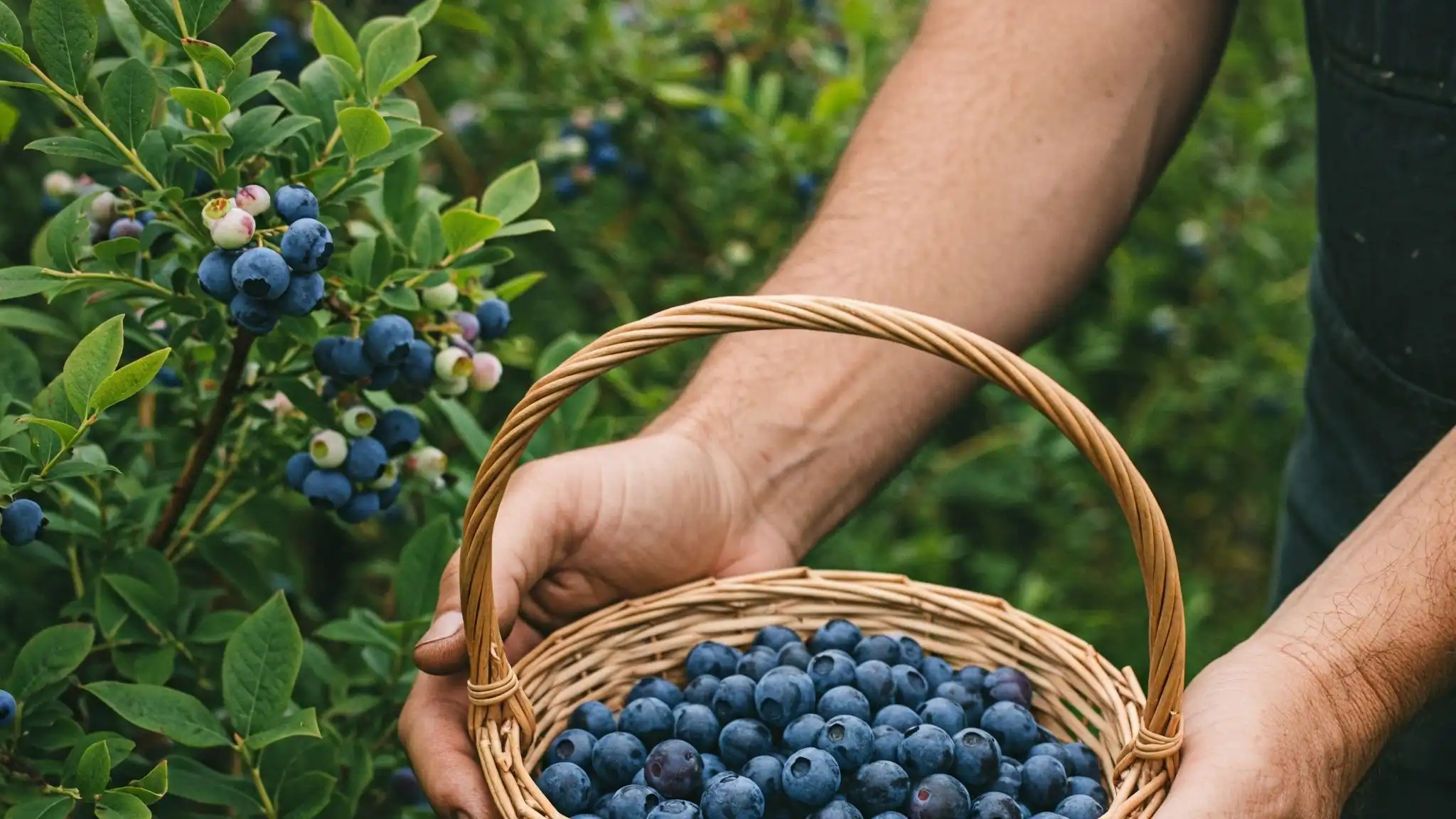
Flavor: Highbush berries are larger and milder — optimized over decades of breeding for fresh eating, shipping, and long shelf life. Lowbush berries are smaller and more intensely flavored. The difference is structural: smaller berries have more skin relative to flesh, and the plant’s anthocyanins — the blue-purple pigments behind both color and flavor — concentrate in the skin.
Nutrition — the one comparison most articles get wrong: Lowbush blueberries contain 487 mg of anthocyanins per 100g of fresh berries versus 387 mg/100g for highbush — approximately 26 percent more — based on analysis published in the journal Nutrients. University of Maine Cooperative Extension cites research (Kalt et al., 1999) confirming that lowbush has greater anthocyanin content than highbush, raspberry, and strawberry. One half-cup serving of lowbush blueberries delivers 200 to 400 mg of polyphenols — roughly 150 individual berries in that small serving.
The honest caveat: both types are among the richest fruit sources of anthocyanins available. Blackberries contain 245 mg/100g and raspberries just 92 mg/100g — both highbush and lowbush outperform them substantially. Choosing highbush for flavor or convenience does not mean sacrificing a healthy berry. Lowbush has the higher antioxidant density; highbush has the higher vitamin C content. For fresh eating in volume, highbush is more practical. For cooking, jams, or freezing, lowbush flavor and nutrition are worth the smaller berry size.
Pollination and Planting Basics
| Type | Self-Fertile? | Min. Varieties | Spacing (in-row) | Row Spacing |
|---|---|---|---|---|
| Northern Highbush | Yes (cross-pollinates better) | 2 | 4–6 ft | 8–10 ft |
| Southern Highbush | Varies by cultivar | 2 | 4–5 ft | 8–10 ft |
| Rabbiteye | No | 2+ | 5–6 ft | 10–12 ft |
| Half-High | No | 2+ | 3 ft | 6–8 ft |
| Lowbush | No | 2+ | 1–2 ft | n/a (mat-forming) |
Plant 2- to 3-year-old nursery stock in early spring. Remove all flower clusters during years one and two regardless of type — the short-term patience pays off in significantly stronger root systems and higher long-term yield. Expect a first meaningful harvest in year three, with peak production from year six onward for highbush types, and from year four for lowbush measured by the square-foot metric.
For container growing, compact half-high varieties (Northsky at 2×3 ft) and dwarf southern highbush cultivars work well in containers of 15 gallons or more with acidified potting mix. See our full guide on growing blueberries in containers for mix ratios and watering specifics.
Which Blueberry Is Right for Your Garden?
Zone, soil, and space are the three filters. Run through them in order:
Zone 3–4: Half-high hybrids are the primary recommendation — Northblue, Northsky, and Chippewa handle extreme cold reliably while delivering respectable yield. Lowbush is also cold-hardy but requires more management commitment for a home garden.
Zone 5–6: Northern highbush is the reliable workhorse. If you have limited space or a small yard, half-highs work equally well with less footprint. Lowbush is viable in zone 5 if your soil is naturally very acidic (pH 4.5 or below).
Zone 7–9: Northern highbush will not receive enough chill hours in most sites. Southern highbush for quality and flexibility; rabbiteye for maximum yield, especially across the Piedmont and coastal Southeast.
Small space or containers: Compact half-high (Northsky) or dwarf southern highbush cultivars. These are explored in detail in our compact vs. standard blueberry guide.
Maximum flavor and antioxidants: Lowbush, provided your soil can reach pH 4.0–5.0 reliably.
Maximum yield per bush: Rabbiteye in the South, northern highbush in temperate zones.
Edible groundcover or naturalizing: Lowbush — nothing else spreads, self-maintains, and produces edible fruit as a mat-forming groundcover.
Test your soil pH before buying any plant. That single number — and whether your site can reach the level your chosen type actually needs — matters more than any variety recommendation.
Frequently Asked Questions
Can I plant highbush and lowbush blueberries together?
Yes, and it is beneficial. Lowbush can be pollinated by highbush (and vice versa), so planting both within close range improves fruit set for both. They do not cross-breed in the garden sense — you will not get hybrid offspring. They simply share bee traffic, which increases pollination rates.
Do lowbush blueberries produce less fruit than highbush?
Per individual plant, yes — significantly less. Per square foot of established planting after four years, the gap narrows considerably. A 20-square-foot lowbush patch yields approximately 10 pounds annually, which is comparable to one or two mature highbush plants in the same footprint.
Which type has the sweetest berries?
Lowbush blueberries are consistently described as more intensely flavored and sweeter than highbush. Highbush berries are milder and larger — bred for fresh-eating appeal and shelf life. For jams, baked goods, and freezing, most experienced growers prefer lowbush flavor.
When do blueberries start producing?
Expect a small crop in year three after planting 2- to 3-year-old nursery stock. Significant harvest begins year four. UConn Extension notes that 10-year-old highbush plants produce 7 to 10 pints per bush, with full productivity beginning around year six.
Can I grow blueberries if my soil pH is 6.5?
Technically possible with a dedicated raised bed filled with acidified growing medium, but in-ground planting at pH 6.5 will not work reliably for any blueberry type over time. At that pH, iron and manganese become unavailable to Vaccinium roots regardless of fertilization. Plan for a raised bed or acidify a dedicated section with elemental sulfur applied 12 months before planting.
Sources
- Rutgers NJAES — Selecting Blueberry Varieties for the Home Garden (FS419)
- University of Maryland Extension — Growing Blueberries in a Home Garden
- UNH Cooperative Extension — Growing Fruits: Wild Lowbush Blueberries
- University of Maine Cooperative Extension — Bulletin 2253e: Growing Highbush Blueberries
- Clemson HGIC — Blueberry
- NC State Extension — Growing Blueberries in the Home Garden
- UMN Extension — Growing Blueberries in the Home Garden
- UConn Extension — Blueberries
- UNH Cooperative Extension — Growing Fruit: Highbush Blueberries
- University of Maine Cooperative Extension — Home Garden Lowbush Blueberry Planting Guide
- University of Maine Cooperative Extension — Bulletin 2073e: Growing Wild Blueberries at Home
- PMC7442370 — Recent Research on the Health Benefits of Blueberries and Their Anthocyanins (Nutrients, 2020)
- University of Maine Cooperative Extension — Wild Blueberry Concentrations: Antioxidants, Vitamins and Minerals