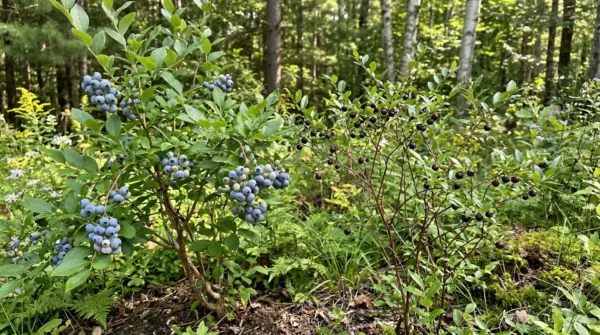
How to Grow Blueberries That Actually Produce (Fix pH, Pollination & Pruning)

Discover why most blueberry plants underperform — and the three research-backed fixes (soil pH, cross-pollination, and pruning) that can increase your harvest by up to 42%.
Most blueberry plants produce disappointingly little fruit. The bushes grow, they flower, and then — not much. The berries are small, sparse, or missing entirely. After a couple of frustrating seasons, many gardeners conclude that blueberries are simply too difficult. They are not. But there are three specific failure points that derail most attempts, and each one is fixable once you understand what is actually happening.
The first problem is soil chemistry. Blueberries are biochemically dependent on acidic soil in ways most growing guides do not explain. The second is pollination: most guides say “plant two varieties” without quantifying the payoff, which University of Florida research found averages a 42% increase in fruit mass. The third is pruning. The standard advice to “remove old wood” skips the specific cane age at which blueberries are most productive — and most people prune wrong, or not at all.
Fix these three things in the right order, and your blueberries will consistently outperform anything you have grown before.

Step 1: Choose the Right Type for Your Climate
The most preventable failure in blueberry growing is planting the wrong type for your climate. A northern highbush variety in Georgia will produce barely any fruit in mild winters. A rabbiteye variety in Minnesota can winter-kill to the ground. The deciding factor is chill hours — the accumulated hours below 45°F (7°C) during winter that a plant needs before it will break dormancy and flower reliably.

Three pre-planned garden beds, free
Stop staring at empty beds: printable plans with exact layouts, plant lists and planting calendars — yours free from the Garden Library.
| Type | USDA Zones | Chill Hours | Plant Height | Good Varieties |
|---|---|---|---|---|
| Northern Highbush | 4–7 | 800–1,000 hrs | 4–8 ft | Duke, Bluecrop, Patriot, Bluejay |
| Southern Highbush | 7–10 | 200–600 hrs | 3–6 ft | O’Neal, Emerald, Star, Legacy |
| Half-High | 3–5 | 800–1,000 hrs | 2–4 ft | Northblue, Northsky, Polaris |
| Rabbiteye | 7–9 | 300–600 hrs | 6–12 ft | Climax, Brightwell, Tifblue, Powderblue |
Northern highbush varieties (zones 4–7) are the most widely planted type and include the cultivars you find at most garden centers. University of Minnesota Extension recommends Chippewa, Northblue, and St. Cloud for zones 3–4; Duke and Bluecrop are workhorses for zones 5–7. Southern highbush hybrids were bred specifically for warm climates that lack the cold winters highbush needs — look for O’Neal, Emerald, and Legacy if you garden in zones 7–10. Rabbiteye varieties are the giants of the blueberry world, tolerating heat and drought better than any other type, but they require cross-pollination more strictly than highbush types.
Within your chosen type, plant at least two varieties with overlapping bloom windows. This sets up the cross-pollination advantage explained in Step 4. For a full zone-by-zone variety breakdown, see our guide to selecting the right blueberry bush. For comparisons between bush sizes and habits, our highbush vs. lowbush breakdown covers the key differences.
Step 2: Prepare the Soil — Start One Year Early
Blueberries do not just prefer acidic soil — they depend on it at a biochemical level. At pH values above 5.5, the iron in your soil exists primarily in its oxidized (ferric) form, which plant roots cannot absorb. Drop the pH below 5.5, and that iron converts to its reduced (ferrous) form, which roots take up readily. The same mechanism governs manganese availability, which International Blueberry Organization researchers link to larger flower buds and more uniform bloom across the bush.
Not sure what to feed? pruning blueberries tools breaks down the options.
There is a second mechanism most guides miss entirely: blueberries absorb nitrogen as ammonium (NH₄⁺), not as nitrate (NO₃⁻). At high pH, soil microbes convert ammonium to nitrate faster than blueberry roots can absorb it, leaving plants nitrogen-deficient even after fertilizing. Standard garden fertilizers assume nitrate uptake. Blueberries do not use that pathway efficiently. This is why azalea-type fertilizers and ammonium sulfate are specified for blueberries specifically, not just because they are acidifying.
Target soil pH: 4.8–5.2 for northern highbush, per Illinois Extension. Southern highbush and rabbiteye perform best at 5.0–5.5, per Clemson HGIC. Use a calibrated soil test — not a cheap probe — before doing anything else.

Lowering pH: What Works and What Does Not
Elemental sulfur is the most reliable long-term amendment. Soil bacteria convert it to sulfuric acid over 6–12 months — which is why Illinois Extension advises applying it at least one year before planting. In heavy clay soils, allow two growing seasons. If you are working on a faster timeline, wettable sulfur (90% formulation) can be applied as close as 3 months before planting in lighter soils, per Clemson HGIC. Incorporate sulfur to at least 12 inches depth, per WVU Extension.
Sphagnum peat moss lowers pH modestly and adds the organic matter blueberries need — southern highbush in particular need soil organic matter above 3%, per UF/IFAS. Mix 4–6 inches of peat into the top 6–8 inches of soil across an 18–24 inch band around the planting area. Pine bark is a useful and more sustainable alternative that breaks down to add organic matter over time. For step-by-step testing procedures and soil amendment rates by starting pH, see our full guide on testing and adjusting soil pH for blueberries.
Step 3: Planting Day Decisions That Last 30 Years
Blueberries need full sun — a minimum of 6–8 hours of direct sunlight daily. Shade reduces flower bud formation directly, per UMN Extension. Site selection is the highest-stakes decision at planting time, because moving a 5-year-old bush is a project most gardeners attempt only once.
Set container-grown plants at the same depth they were growing in the nursery. Bare-root plants should have their uppermost roots covered by 3–4 inches of soil. Space northern highbush varieties 4–5 feet apart in rows 8–10 feet apart; rabbiteye varieties need 6 feet between plants. Plant two different varieties within 6–10 feet of each other for cross-pollination — not in separate corners of the yard.
Remove all flower buds in years 1 and 2. This step is non-negotiable. A blueberry plant that flowers and fruits in its first two years puts almost no energy into root development. The root system it builds in those first two years determines its yield capacity for the next 30 years. Pinch off every blossom the moment you see it — Illinois Extension, UMN Extension, and Clemson HGIC all confirm this practice. The short-term sacrifice is real. The long-term payoff is a bush that produces 10–25 lbs of fruit per year for decades.
If your available space is a patio or balcony rather than a garden bed, compact varieties are bred for containers. See our blueberry container growing guide for pot size, mix specifications, and overwintering requirements by zone.
Step 4: Pollination — The 42% Rule
You can grow one blueberry bush and it will produce some fruit. Most highbush varieties are technically self-fertile. But University of Florida IFAS research changed how seriously experienced growers think about this. Researchers hand-pollinated individual flowers with either self-pollen or cross-pollen from a compatible variety across ten cultivars, then measured fruit mass, ripening time, firmness, and sugar content.
The results: cross-pollinated berries were 42% heavier on average, with individual cultivars gaining 6–58% in fruit mass. Avanti gained 58% in mass; Optimus gained 54%; Farthing gained 44%. Cross-pollinated flowers also ripened an average of 8 days earlier — with Avanti ripening 27 days ahead of self-pollinated flowers on the same plant.
Stop missing your zone's planting windows.
Select your US zone and month — get a complete checklist of what to plant, prune, feed, and protect right now.
→ View My Garden CalendarEarlier ripening matters more than it might seem. In most regions, blueberries ripen just as summer heat peaks. An 8-day shift earlier means less heat stress on developing fruit, a longer harvest window before midsummer, and berries that hang on the bush in cooler conditions — improving flavor and reducing Botrytis pressure.

For northern highbush, Duke and Bluecrop share bloom times reliably. For rabbiteye, Climax and Brightwell are a proven pairing. If you have room for only one plant, Duke, Draper, and Rubel show low cross-pollination dependence, per MSU Extension — but you will still leave significant yield on the table compared to a two-variety planting.
Wild pollinators do the heavy lifting in most home gardens. A single bumble bee visit deposits enough pollen for full fruit set; honey bees need three visits per flower to achieve the same, per MSU Extension. Avoid all insecticide applications during bloom — even organic formulations labeled as “bee-safe” — because bees cannot distinguish between sprays while flowers are open.
Step 5: Feeding, Watering, and Mulching
Blueberries are light feeders compared to most fruiting plants. Over-fertilizing, especially with high-nitrogen formulas, is among the most common ways home gardeners damage established plants — UF/IFAS warns explicitly that blueberries “can be killed or damaged by over-fertilization.” Use ammonium sulfate or an acid-forming fertilizer labeled for azaleas and rhododendrons, and follow a graduated schedule:
- Year 1: 1 oz ammonium sulfate per plant, applied 4–6 weeks after planting once leaves are fully open. Do not fertilize at planting.
- Year 2: 2 oz ammonium sulfate in early spring (late March–April).
- Years 3 onward: Increase by 1 oz per year until reaching 8 oz per mature plant, per Illinois Extension.
- Hard stop at July 1: Late nitrogen pushes new growth that will not harden before frost. This is one of the more consistent mistakes in regions with warm falls.
Blueberries need consistent moisture but cannot tolerate wet feet. Target 1 inch of water per week during the growing season, increasing during fruit development in June–July — water stress during this window directly reduces berry size. Their shallow root system (most feeder roots sit in the top 12 inches) dries out quickly in sandy soils. Drip irrigation or soaker hoses work better than overhead watering, which encourages fungal disease.
Mulch is not optional. Apply 3–4 inches of pine bark, pine needles, or wood chips around each bush, keeping 2–3 inches away from the crown. Mulch holds moisture, moderates soil temperature, and as it decomposes, acidifies the soil incrementally. Replenish annually to maintain the 3–4 inch layer — this is how you sustain the pH gains you achieved with sulfur.
Step 6: Pruning — The Cane Age System
When I assess a neglected blueberry bush, the first thing I look at is the ratio of grey, rough-barked canes to reddish-brown new growth. A bush where more than half the canes are grey has been underpruned for at least 5 years, and the berries will show it — small, clustered in dense twiggy masses, with very little new shoot growth emerging from the base. Getting it back to productive shape takes 3 years of patient renovation, not one dramatic cutback.
The pruning advice most beginners receive is “remove dead and old wood.” This is correct but incomplete. The reason it matters is specific: blueberry canes follow a clear productivity curve by age. Canes in their 2nd through 4th year produce the largest, highest-quality berries, per Ohio State Extension (Ohioline). By year 5, productivity begins declining. By year 7, the cane is over-branched, twiggy, and producing dozens of small fruit clusters rather than concentrating energy into large berries.
Penn State Extension gives the target numbers: a healthy mature bush carries 10–15 canes total, with 2–3 canes in each age category — new growth, 1-year, 2-year, 3-year, and 4-year. Every year during dormancy, you remove 2–3 of the oldest canes and retain 2–3 of the best new shoots. This keeps the bush in a perpetual state of productive middle age.

Timing: Prune toward the end of the dormant season, ideally late February through March in most zones, before bud break. Fall pruning stimulates new growth that hardens poorly before winter. In winter, one-year-old canes are identifiable by their reddish-brown color; older canes are grey and increasingly rough-barked. Start with the obviously dead and damaged wood, then remove the oldest grey canes at ground level, then thin the interior for light penetration — Ohio State’s Ohioline describes the finished shape as “narrow at base, open in the center, and free of vegetative clutter.”
Heading back excessively long canes is an underused technique. If a new shoot carries many flower buds along its entire length, cut the tip back by 4–6 inches. This reduces the total fruit load on that cane and concentrates sugars into the remaining berries — Penn State describes this as a direct route to larger berry size in years when the bush is overbearing.
If you have inherited a neglected bush with no clear cane age structure, do not cut everything down at once. Penn State recommends phased renovation: remove 2–3 of the oldest-looking canes per year over 3–4 years. Radical removal in one season stresses the plant severely and sets back production for 2–3 years. Patient renovation costs one or two fruiting seasons but builds a healthier long-term structure.
Step 7: When and How to Harvest
One of the clearest signs of an experienced blueberry grower: patience at harvest. A berry that turns fully blue may still need another 3–4 days on the bush before it reaches peak sugar. The right moment is when the berry detaches with no pull at all — just a gentle palm roll over the cluster. UMN Extension describes ripe berries as “springy when gently squeezed.” If you have to tug, wait another day.

Each bush ripens over roughly 2 weeks. Pick every 2–3 days during that window rather than all at once — berries in the same cluster ripen in sequence. Harvest in the morning when temperatures are cool; berries picked in afternoon heat deteriorate faster in storage. Refrigerate unwashed; use within a week. Blueberries freeze exceptionally well: wash, air-dry thoroughly, spread on a baking sheet to freeze individually, then transfer to bags.
Expect a slow start: most plants produce a token harvest in year 3, 1–2 lbs in year 4, and begin showing their real potential from year 5 onward. A mature southern highbush yields 8+ lbs per plant annually; a mature rabbiteye can produce 12–25 lbs, per Clemson HGIC. Full production develops over 8–10 years from planting. The investment is front-loaded — in soil prep, in patience during the year 1–2 flower removal — but a well-sited blueberry planting is genuinely a 30–50 year asset.
Diagnosing Common Blueberry Problems
| Symptom | Most Likely Cause | Fix |
|---|---|---|
| Yellow leaves with green veins (interveinal chlorosis) | Iron deficiency from soil pH above 5.5 | Test soil pH; apply elemental sulfur to lower pH long-term; apply foliar iron chelate for quick correction |
| No fruit or very sparse fruit after year 3 | Only one variety planted; no cross-pollination | Add a second compatible variety within 6–10 ft; ensure overlapping bloom windows |
| Small berries, declining new growth | Pruning neglect; too many old canes crowding the bush | Remove 2–3 oldest canes to ground; thin interior; head back excessively long canes |
| Wilting despite regular watering; root decay | Phytophthora root rot from waterlogged or clay soil | Improve drainage; plant on a raised mound 6–10 inches high; never plant in standing water |
| Shriveled mummified berries remain on canes into spring | Mummy berry disease (Monilinia vaccinii-corymbosi) | Rake away and discard old mulch in early spring to remove overwintered fungal cups; apply fresh mulch; plant resistant varieties |
| Ripe fruit drops early; maggots inside | Spotted wing drosophila (SWD) | Cover bushes with fine insect netting at first color change; set vinegar-bait traps to monitor; harvest ripe fruit promptly |
| Sparse flowering after mild winter | Insufficient chill hours for that variety | Confirm your variety’s chill requirement matches your local winters; switch to southern highbush or rabbiteye if winters are too mild |
For a deeper walkthrough of yellowing leaves, poor fruiting, and pest identification with photos, see our blueberry problems and troubleshooting guide. For harvest timing by region and how to tell when your variety is at peak ripeness, see when blueberry picking season is in your zone.
Month-by-Month Care Calendar
| Month | Key Tasks |
|---|---|
| January–February | Assess cane structure while bush is dormant; identify oldest canes for removal; order bare-root plants for spring planting |
| March | Prune before bud break: remove oldest canes, thin interior, head back excessively long shoots; add fresh mulch |
| April | Apply first fertilizer as growth begins; check soil pH if not tested last fall; water if spring is dry |
| May | Bloom and pollination window — avoid all pesticide sprays; monitor for late frost on open flowers; pinch blossoms from year-1 plants |
| June | Begin harvest monitoring; water consistently during fruit development (critical for berry size); mulch if dry |
| July–August | Harvest every 2–3 days; stop nitrogen fertilizer by July 1; deploy bird netting before berries fully color; water deeply during heat |
| September | Final deep irrigation before dormancy; apply fresh 3–4 inch mulch layer for winter insulation |
| October–November | Submit soil sample for pH test; plan new variety additions; note any pest or disease patterns from this season |
| December | Full dormancy — no active management; protect young plants in zones 3–4 with burlap or straw if hard freeze forecast |
Frequently Asked Questions
How long before blueberry plants produce a full harvest?
Expect the first light harvest in year 3 (0.5–1 lb per plant), a moderate harvest from years 4–5, and full production from years 6–8 onward. A well-maintained mature bush yields 8–25 lbs per season depending on type and will continue producing for 30–50 years with good management.
Can I grow blueberries in containers?
Yes. Compact and dwarf varieties bred specifically for containers — Sunshine Blue, Peach Sorbet, Pink Icing, and BerryBux are reliable choices — perform well in large pots (20+ gallons for a full-sized harvest). Use an ericaceous (acidic) potting mix rather than standard potting soil, and expect to water more frequently than in-ground plants. See our container blueberry guide for pot size, overwintering, and fertilizing adjustments.
Do I need to spray anything on blueberries?
Healthy, well-pruned bushes in well-drained acidic soil rarely need regular spraying. The most common pest requiring intervention is spotted wing drosophila — physical exclusion netting at first color change is more effective than sprays and avoids harming beneficial insects. For mummy berry disease, cultural controls (mulch replacement in early spring) outperform fungicide in most home gardens. Avoid all pesticide applications during bloom regardless of formulation.
Why are my blueberry leaves turning yellow?
Yellow leaves with green veins (interveinal chlorosis) almost always indicate iron deficiency caused by soil pH above 5.5. Blueberries cannot absorb iron in its oxidized form at higher pH values. Test your soil pH before assuming a different cause. For a short-term fix, apply foliar iron chelate; for the long-term solution, lower soil pH with elemental sulfur. See our soil pH guide for amendment rates by starting pH level.
What fertilizer should I avoid using on blueberries?
Avoid any fertilizer that delivers nitrogen primarily as nitrate (NO₃⁻) — this includes most standard all-purpose garden fertilizers and many vegetable fertilizers. Blueberries absorb ammonium-form nitrogen (NH₄⁺) preferentially; high-nitrate soil can create nitrogen deficiency symptoms even after regular feeding. Also avoid fresh manure (too high in phosphorus and salts), bone meal, and wood ash, which raises rather than lowers soil pH.
Sources
- University of Minnesota Extension — Growing Blueberries in the Home Garden
- Clemson HGIC — Blueberry
- West Virginia University Extension — Growing Blueberries for Beginners
- University of Florida IFAS — Blueberry Gardener’s Guide (CIR1192)
- International Blueberry Organization — Looking Beyond Soil pH in Berries
- University of Florida IFAS — Benefits of Mixed Cultivar Plantings for Cross-Pollination in Blueberry
- Michigan State University Extension — Invest in Pollination for Success with Highbush Blueberries
- Penn State Extension — Pruning Blueberries in Home Fruit Plantings
- Ohio State Extension (Ohioline) — Pruning Blueberry Bushes in the Home Garden
- Illinois Extension — Growing and Caring for Blueberries