

How to Care for Succulents: Seasonal Watering, the Soak-and-Dry Method, and Reading Leaves Before Problems Start

Most succulents die from overwatering. Use the soak-and-dry method, a 7-sign leaf check, and seasonal care calendar to keep them thriving year-round.
Most succulents don’t die from neglect. They die from care — too much water, soil that stays damp for days, a windowsill that looks bright but delivers far less light than these plants actually need. Every standard houseplant habit is wrong for succulents.
What makes the difference is understanding how succulents work. These plants evolved a nocturnal photosynthesis system that makes them extraordinarily water-efficient — and uniquely sensitive to conditions that would be harmless for a monstera or a fern.
This guide covers everything: the biology behind the soak-and-dry method, how to choose the right soil (including why gravel at the bottom makes drainage worse, not better), a seven-sign leaf-reading table to catch problems before they reach the roots, and a complete seasonal care calendar. By the end, you’ll understand not just what to do, but why — which means you can adapt the rules to your climate, your home, and your specific plants.
Why Succulents Play by Different Rules
Most plants open their stomata — tiny pores on leaf surfaces — during the day to absorb carbon dioxide for photosynthesis. Water vapor escapes through the same pores, which is why standard houseplants need regular watering. Succulents evolved a completely different system called Crassulacean Acid Metabolism (CAM), where stomata open at night instead.

Three pre-planned garden beds, free
Stop staring at empty beds: printable plans with exact layouts, plant lists and planting calendars — yours free from the Garden Library.
When the sun goes down, succulent stomata open and capture CO2, which an enzyme called PPCK converts into malic acid — the same compound that makes apples taste sharp. The malic acid is stored in the plant’s cells overnight. During daylight hours, stomata close completely, and the stored acid breaks back down to release CO2 for photosynthesis. The plant runs its entire photosynthesis cycle without losing water through open pores.
Research from the University of Liverpool tested this system in Kalanchoë fedtschenkoi by disabling the PPCK enzyme. Without it, plants captured only a third as much carbon dioxide as normal — a 67% reduction in photosynthetic efficiency. The same research found that metabolites from the CAM cycle communicate timing signals to the plant’s circadian clock, tying carbon fixation to an internal biological rhythm.
The practical implication: a succulent sitting in wet soil can’t fix carbon efficiently. Its roots become oxygen-deprived, metabolism slows, and root rot can set in within days. The soak-and-dry watering method isn’t an arbitrary rule — it’s synchronized to this nocturnal breathing cycle.
Light: What Succulents Actually Need
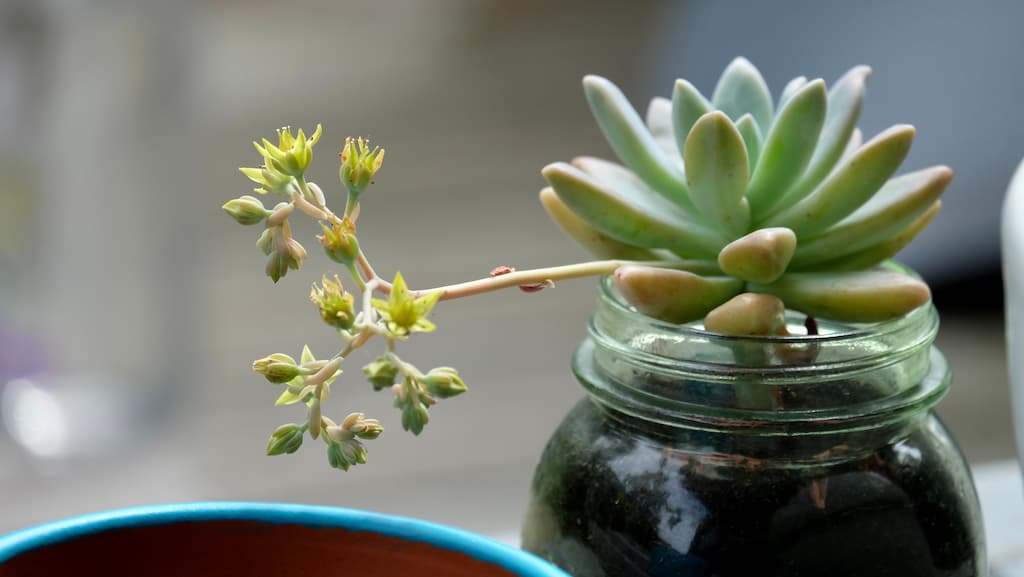
Succulents need more light than most indoor spaces provide. The gap between a windowsill that looks bright and one that’s genuinely bright enough for a succulent is wider than most people expect — and the consequences of getting it wrong are permanent.
Iowa State University Extension sets the minimum at six to eight hours of bright, indirect light per day, with ideal plants receiving ten or more hours. South-facing windows deliver the most consistent indoor light. East-facing windows work for less demanding species. North-facing windows are rarely sufficient for any succulent.
If you’re supplementing with grow lights, University of Minnesota Extension recommends positioning fluorescent or LED fixtures within 12 inches of the plant canopy and running them for 14 to 16 hours a day. A simple outlet timer removes the guesswork.
What Insufficient Light Does — and Why It Can’t Be Reversed
When a succulent doesn’t receive enough light, it produces excess auxin hormones from its stem tips. These auxins concentrate on the darker side of the stem and trigger those cells to elongate faster than cells on the lighter side. The result is a tall, spindly, pale plant — a condition called etiolation — with wide gaps between leaves and a stem that has permanently changed its structure.
Moving an etiolated succulent into better light stops the stretching and produces normal compact leaves from that point forward. But the elongated stem doesn’t compress back. Iowa State Extension is clear: the fix for a stretched succulent is to take a healthy stem cutting once the new growth normalizes, and propagate from that cutting. The stretched stem won’t recover — prevention is the only solution.
For outdoor transitions, acclimatize gradually. University of Minnesota Extension recommends avoiding intense midday sun between 11 a.m. and 3 p.m. for at least the first two weeks outside. Brown or tan patches that appear after moving a plant into brighter conditions are sunburn, not disease, and don’t heal.
Soil and Pots: The Drainage Science
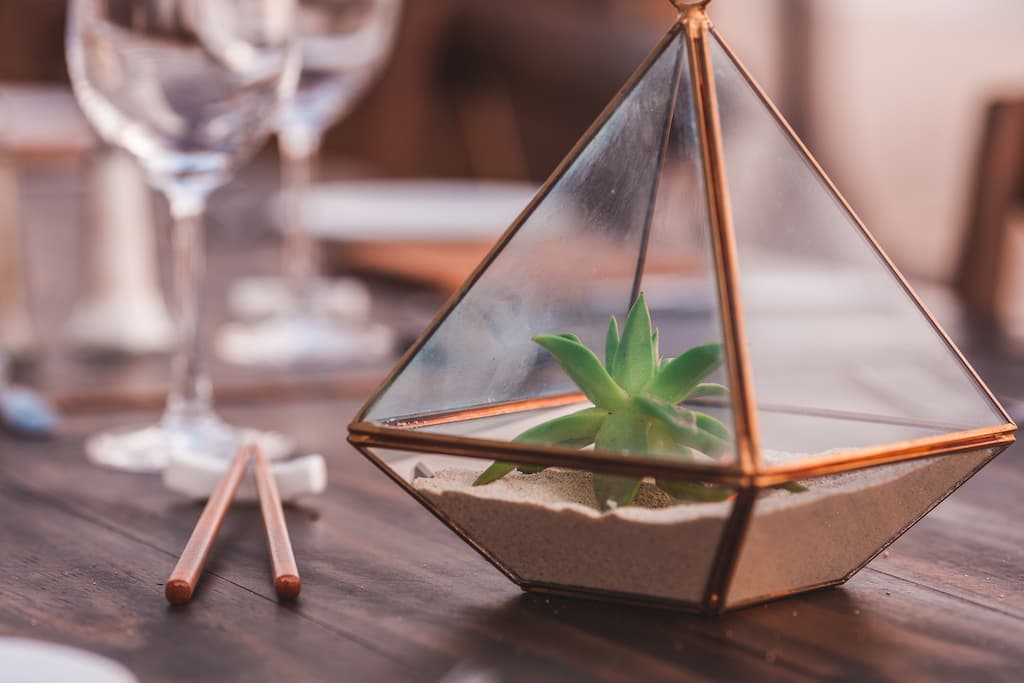
The right succulent soil isn’t about nutrients — it’s about how quickly water moves through it. CAM physiology requires roots to cycle between completely wet and completely dry. Soil that holds moisture a day too long pushes roots into the oxygen-deprived zone where damage begins.
Soil Mix
Iowa State University Extension recommends one-third organic material — potting soil, coir, or bark — combined with two-thirds mineral material such as perlite, coarse sand, or pumice. To test whether a mix drains fast enough: moisten it thoroughly and squeeze a handful. When you release it, it should fall apart completely. If it holds a shape, add more perlite or coarse sand until it doesn’t.
Commercial cactus and succulent mixes are convenient but often drain slower than expected. Adding 30 to 50% perlite to a commercial mix usually brings it to the right texture.
Pot Size and Material
The RHS advises against oversized pots. Extra soil around the root zone retains moisture long after the roots have dried, keeping the root environment damp even when you water correctly. Choose a pot with about an inch of space beyond the root system — snug, not cramped.
Terracotta dries faster than glazed ceramic or plastic, which is a useful advantage if you tend to water too frequently. Whatever material you use, drainage holes are non-negotiable. No watering technique compensates for a sealed base.
Stop missing your zone's planting windows.
Select your US zone and month — get a complete checklist of what to plant, prune, feed, and protect right now.
→ View My Garden CalendarThe Gravel-at-the-Bottom Myth
Many guides recommend placing gravel or rocks at the bottom of the pot to improve drainage. This creates the opposite effect. Dr. Linda Chalker-Scott’s research at Washington State University, documented by the Garden Professors, demonstrates that when water moving through fine soil encounters a coarser layer, it stops. Soil above the interface saturates before gravity forces water through — creating a perched water table that keeps the root zone wet far longer than a uniform soil profile would.
Use the same well-draining mix throughout the entire pot. If you’re concerned about soil escaping through the drainage hole, cover it with a small piece of mesh or a pottery shard — this allows water to flow freely while keeping soil in.
Watering: The Soak-and-Dry Method
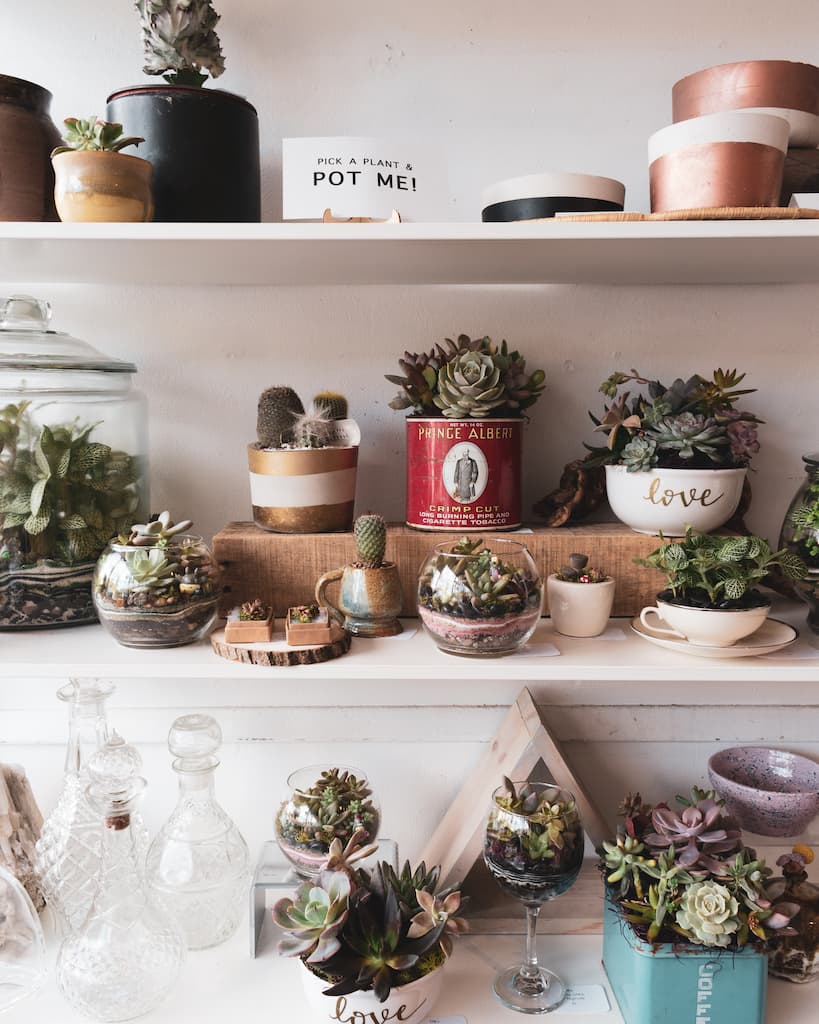
The soak-and-dry method is exactly what CAM biology requires: a complete wet phase followed by a complete dry phase, with no watering in between. Each stage is as important as the other.
How to Do It
Water thoroughly — pour slowly until water runs freely from every drainage hole. Then stop completely. Don’t water again until the soil has dried out through the entire pot, not just at the surface. Use a chopstick or wooden skewer as a moisture probe: insert it two inches into the soil, hold it there a moment, then remove it. If it comes out clean and dry, it’s time to water. If any moisture clings to it, wait another day or two.
I’ve found this test far more reliable than any fixed schedule — two succulents of the same size in the same room can dry at completely different rates depending on pot material, soil mix, and where they sit relative to a heat source.
University of Minnesota Extension is explicit about what not to do: shallow, repeated watering keeps the top layer of soil damp while leaving roots below dry. You get the appearance of watering with none of the benefit.
After each watering session, wait ten minutes, then drain the saucer completely. Roots sitting in standing water — even briefly — can begin the root rot process.
Seasonal Adjustments
Watering frequency shifts significantly through the year, and ignoring these shifts is one of the most common care mistakes:
- Spring and summer (active growth): Once a week when soil has fully dried. Outdoor plants in summer heat may dry faster and need more frequent attention.
- Fall: Begin reducing to every two weeks as growth slows and light levels drop.
- Winter: WVU Extension recommends every two to three weeks, just enough to prevent leaves from shriveling. The RHS goes further: for most cacti and succulents, minimal to no watering from November through early March is appropriate — the plants don’t need it.
- best trellis for succulents
- 6490
A simple check: if you water and the soil hasn’t dried since the previous session, you’re watering too often regardless of the calendar. Growers in high-humidity regions — the Pacific Northwest, Gulf Coast, or anywhere with prolonged overcast — should lean toward the drier end of these ranges and prioritize air circulation. In arid climates like the Southwest or intermountain West, outdoor succulents in summer heat can dry fast enough to need checking every four to five days. For more on seasonal frequency by species, see our guide on how often to water succulents.
Reading Your Succulent’s Leaves
A succulent signals problems through its leaves well before root damage becomes serious. Learn these seven signs and you’ll catch almost every issue while it’s still reversible.
The most important look-alike to separate: overwatering and underwatering both cause yellowing leaves. The difference is texture. Overwatered leaves are soft, translucent, and fall off with almost no resistance. Underwatered leaves wrinkle and shrivel from the tips while remaining somewhat firm. Press a yellowing leaf before adjusting anything — that single test tells you which direction to move.
| What you see | Confirming sign | Cause | Fix |
|---|---|---|---|
| Soft, yellow, mushy leaves | Wet soil; fungus gnats present | Overwatering | Stop watering; let soil dry completely; unpot and check roots for black slime |
| Wrinkled, papery, shriveling lower leaves | Dry soil; pot feels unusually light | Underwatering | Deep soak until water flows freely from drainage holes; verify nothing is blocking drainage |
| Tall, spindly new growth; pale or washed-out color | Stem leaning toward light; wide gaps between leaves | Etiolation (insufficient light) | Move to brighter spot; take a stem cutting once new growth normalizes — stretched stem won’t compact back |
| Brown or tan dry patches on leaf surface | Patches only on sun-facing side; appeared after recent move to brighter spot | Sunburn | Move to bright indirect light; acclimatize to outdoor sun over 2 weeks minimum |
| Mushy, blackened base of stem | Black, slimy roots; soil that never dries | Root rot | Remove from pot; cut all black roots; air-dry 2–3 days; repot in fresh dry mix |
| White cottony masses at leaf joints or stem nodes | Masses visible along leaf veins | Mealybugs | Isolate; dab with isopropyl alcohol; repeat weekly for one month. See treating mealybugs |
| Stunted growth; pale leaves; fine webbing between leaves | Tiny dots visible on leaf surface; gritty texture under fingertip | Spider mites | Rinse plant under water; apply insecticidal soap per label; repeat in one week |
Seasonal Care Calendar
Most care guides describe succulent needs in isolation — water when dry, feed in summer — without showing how those needs connect through the year as a complete system. The calendar below gives you the full picture.
One important distinction before using it: summer-growing succulents — echeveria, sedum, crassula, and most common household species — are most active in spring and summer and go semi-dormant in winter. Winter-growing succulents — aloe, haworthia, gasteria — stay active through the cooler months and slow in midsummer heat. The calendar applies to summer-growing types, which represent the majority of plants sold.
| Season | Watering | Light | Feeding | Other |
|---|---|---|---|---|
| Spring | Resume weekly as new growth appears; soil must dry fully between sessions | Begin gradual outdoor transition; south window indoors | Start monthly feed from April onward | Best time to repot; separate and pot new offsets |
| Summer | Weekly when soil is completely dry; outdoor plants in heat may need more | Full morning sun; shade 11 a.m.–3 p.m. outdoors; 10+ hours indoors with supplemental if needed | Monthly, balanced or high-potassium | Watch indoor plants for etiolation; ensure good air circulation |
| Fall | Reduce to every 2 weeks as growth and light slow | Move indoors before first frost; maximize window light | Stop feeding by September | Reduce fertilizer before reducing water; ease into dormancy gradually |
| Winter | Every 2–3 weeks or less; just enough to prevent leaf shriveling; Nov–early March minimal | 10+ hours supplemental if window is insufficient; south-facing window preferred | None | Target 46–50°F nights for healthy dormancy (RHS); avoid radiators and cold drafts |
Fertilizing and Repotting
Fertilizing
The most common fertilizing mistake is applying it during winter, when succulents aren’t actively growing and can’t use the nutrients. Unused fertilizer salts accumulate in the soil and damage roots over time without any growth benefit to show for it.
During active growth — spring through late summer — apply a fertilizer higher in phosphorus than nitrogen, diluted to one-quarter to one-half of the label rate, every three to four waterings. The RHS recommends a high-potassium liquid feed, such as a standard tomato fertilizer, applied monthly from April to September. Stop completely after September and don’t resume until growth restarts the following spring.
Never feed a plant showing signs of stress, root damage, or active disease — it won’t help and may make things worse. For a broader look at houseplant nutrition, see our guide on how to fertilize houseplants.
Repotting
Succulents don’t mind being slightly root-bound and don’t need repotting on a fixed schedule. Repot only when roots are actively growing through drainage holes or circling visibly inside the pot. Spring, just as new growth resumes, is the ideal window.
When repotting, go only one pot size larger. Moving a small succulent into a large pot leaves a wide band of excess moist soil around the root zone — recreating overwatering conditions even if you water perfectly. After repotting, wait one full week before watering to let any disturbed or cut roots callus and seal. See our complete repotting guide for step-by-step instructions.
Propagation: The Three Methods
Most succulents propagate readily from leaves, stem cuttings, or offsets. The step that determines whether a cutting lives or rots is one that most guides underemphasize: callusing.
Before a cutting or detached leaf touches soil, the cut surface needs to dry and form a sealed barrier. This prevents moisture and pathogens from entering at the wound site. WVU Extension recommends four to seven days of air drying on a dry surface out of direct sun before planting. The RHS suggests one day to one week depending on species and the size of the cut.
Leaf cuttings (echeveria, sedum): Twist a healthy leaf cleanly from the stem — it must detach with no torn remnant left on the mother plant. Lay it flat on dry succulent mix without burying it. Water only when the leaf begins to wrinkle. Expect at least a month before a baby rosette and roots appear. For a full walkthrough, see our guide on propagating succulents from leaves.
Stem cuttings: Remove a healthy stem section with clean shears, strip the lower leaves, and let the cut end callus. Insert it into barely moist gritty mix and water sparingly until roots establish, typically two to four weeks.
Offsets (pups): Detach once they’ve formed their own root system and are large enough to handle. Most species produce them at the base — aloe vera is the familiar example.
Frequently Asked Questions
How often should I water succulents?
Once a week during spring and summer when soil has fully dried; every two to three weeks in fall and winter. Use the chopstick test rather than a calendar: insert a wooden skewer two inches into the soil and water only when it comes out completely dry.
Can succulents grow indoors without direct sunlight?
Yes, with supplemental grow lights. Position fluorescent or LED fixtures within 12 inches of the plant canopy and run them 14 to 16 hours a day. Without supplemental light in genuinely dim conditions, succulents will etiolate — stretching permanently toward the brightest available point.
Should I mist my succulents?
No. Succulents absorb water through their roots, not their leaves. Misting keeps leaf surfaces damp without reaching the roots and creates conditions for fungal rot and mealybugs. Our article on whether to mist succulents covers the full evidence.
What is the best soil mix for succulents?
One-third organic material — potting soil or coir — combined with two-thirds mineral material such as perlite, coarse sand, or pumice. Adding 30 to 50% extra perlite to a commercial cactus mix usually achieves the right drainage speed. The squeeze test confirms it: moistened mix should fall apart when released.
Why are my succulent’s leaves falling off?
Check the texture of the falling leaf. Soft, translucent leaves that come off with almost no resistance point to overwatering — see our article on mushy succulent leaves for rescue steps. Dry, firm, shriveled leaves that detach or drop indicate underwatering. Both cause leaf drop, but the fix points in opposite directions.
Putting It Together
The most useful shift in thinking for succulent care is this: these plants evolved in some of the driest, harshest environments on Earth. Neglect rarely kills them. Overcare does. When in doubt about whether to water, wait one more day.
Use the leaf-reading table until diagnosing your plant becomes instinctive, and pair it with the seasonal calendar to adjust your care through the year. When you’re ready to go deeper, browse species guides for aloe, echeveria, or donkey tail (Sedum morganianum), or explore the full succulent care library for more.
If you grow succulents in containers — indoors on a windowsill or outside on a patio — the rules for drainage, soil mix, and seasonal watering shift in important ways. Our dedicated guide to growing succulents in pots covers the complete container setup, from pot material and soil ratios to overwintering by USDA zone.
Sources
- Growing Succulents Indoors — Iowa State University Extension
- Succulents 101 — WVU Extension, West Virginia University
- Cacti and Succulents — University of Minnesota Extension
- How to Grow Cacti and Succulents (Houseplants) — RHS
- Common Problems and Issues of Succulents — Iowa State University Extension
- Secrets of Succulents’ Water-Wise Ways Revealed — University of Liverpool
- Container Planting: Intuition vs. Reality — The Garden Professors (Dr. Linda Chalker-Scott, WSU)


