

How to Water Succulents Without Killing Them: The ‘Bone Dry’ Soil Method Most Guides Skip

Most succulents die from overwatering, not drought. Learn the bone-dry soil method, seasonal frequency table, and how to diagnose root rot.
Most people kill succulents with kindness. They water on a schedule, keep the soil slightly damp “just in case,” and watch their plants slowly collapse from the inside out. Overwatering kills more succulents than drought ever will — and the fix is counterintuitive: your plant needs to go completely bone dry between every single watering.
That rule isn’t arbitrary. It comes from how succulents survive in the wild, and understanding the biology behind it changes everything about how you care for them. In my experience helping readers troubleshoot their succulent problems, nine times out of ten the plant is sitting in soil that never fully dried out. This guide explains the mechanism, walks through the correct technique, and gives you a diagnostic table to separate overwatering from underwatering — and from the sneaky third problem, root rot, which looks exactly like drought until you check the roots.
Why Succulents Must Dry Out Completely Between Waterings
Succulents run a fundamentally different photosynthesis system from most houseplants. Where standard plants — C3 types like peace lilies, pothos, or most tropical foliage — open their stomata during the day to absorb carbon dioxide, succulents use Crassulacean Acid Metabolism (CAM), a cycle that runs largely in reverse. Their stomata open at night, when temperatures are cooler and humidity is higher, absorbing CO₂ and storing it as malic acid inside enormous vacuoles in leaf cells. During the day, those stomata close, and the stored acid releases CO₂ internally for photosynthesis.
The result is a water-use efficiency up to 10 times higher than a standard C3 plant, according to research published in the Annals of Botany (PMC4242292). Succulents don’t need frequent water — they’ve evolved to run on reserves. Those thick leaf cells aren’t decorative; the central vacuole can occupy up to 98% of total cell volume, functioning as an internal reservoir that sustains the plant through extended dry periods.

Three pre-planned garden beds, free
Stop staring at empty beds: printable plans with exact layouts, plant lists and planting calendars — yours free from the Garden Library.
What kills succulents isn’t dry periods. It’s saturated soil that stays wet. Roots sitting in water can’t access oxygen, aerobic metabolism slows dramatically, and decay-causing organisms — Pythium, Fusarium, Phytophthora — thrive in conditions that kill them in dry soil. The wet-dry cycle isn’t a watering preference; it’s the oxygen-replenishment cycle that keeps roots alive.
One practical takeaway: don’t water a succulent that isn’t actively growing. In low light or cold conditions, CAM activity slows and water demand drops close to zero. Keeping soil moist during these periods is the single most common cause of root rot in indoor succulents.
The Soak-and-Dry Method: How to Water Correctly

Every major university extension program covering succulents agrees on one technique: soak thoroughly, then wait for bone-dry soil before watering again.
Step 1: Check the soil first. Insert your finger 2 inches into the soil. If it feels even slightly damp, wait. For dense or deep pots, push a dry chopstick or wooden skewer 3–4 inches down, leave it 30 seconds, then pull it out. If any damp soil clings to it, the plant isn’t ready. Iowa State University Extension recommends checking dryness several inches down — not just at the surface, which can feel dry while the root zone is still wet.
Step 2: Water thoroughly until it drains from the bottom. When the soil is bone dry, water slowly and evenly around the base of the plant — not over the crown or leaves — continuing until water runs freely from the drainage hole. University of Minnesota Extension specifically warns against shallow, repeated sprinklings: this causes “distorted and poor growth” because roots develop shallowly chasing surface moisture instead of growing down.
Step 3: Discard standing water immediately. Empty saucers and trays within an hour of watering. Iowa State University Extension is direct: never allow water to sit for more than a few hours in saucers, sleeves, or decorative outer pots. Roots sitting in standing water even briefly can begin to decay.
Step 4: Wait. Actually wait. For most indoor succulents in standard conditions, the next check is 10–14 days away. Resist checking sooner out of worry.
Bottom watering option: Place the pot in a shallow tray of water for 15–20 minutes, allowing the soil to absorb moisture from below. University of Maryland Extension describes this as useful for encouraging even absorption — particularly good for small pots where top watering tends to run through without wetting the full root zone. Remove the pot and let it drain fully afterward.
Water temperature and quality: The RHS recommends tepid water. Cold water can shock roots and leaves white mineral deposits on leaves and pot rims. If your tap water is hard, using collected rainwater or water left overnight reduces mineral buildup. University of Maryland Extension also notes that water left overnight helps reduce fluoride and chlorine levels, both of which accumulate in leaf tips over time.
What about misting? For established succulents, skip it. Misting wets foliage without reaching the root zone, and it creates conditions for fungal issues on leaves. The only exception is propagating succulents from leaves — unrooted material can’t absorb deep water yet, so light misting is appropriate. For more detail on this topic, see our guide on whether you should mist succulents.
How Often to Water Succulents — The 6 Variables That Control Drying Speed
“Water every two weeks” is the most repeated advice online. It’s also wrong as a universal rule. How quickly your succulent’s soil dries depends on six specific factors, and getting these right means you rarely need to check a calendar.
1. Pot material. Unglazed terracotta is porous — water evaporates through the walls as well as the soil surface, reducing humidity around roots by roughly 40% compared to plastic in side-by-side container comparisons. In a terracotta pot, soil that takes two weeks to dry in plastic may be ready again in 10–11 days. If you tend to overwater, terracotta is more forgiving. Iowa State University Extension recommends clay or terracotta pots specifically for succulents for this reason.
2. Pot size. Smaller pots hold less soil and dry faster. A 2-inch pot may need watering every 7–10 days in summer; a 6-inch pot with the same plant may take 14–18 days. Oversized pots hold excess moisture the roots can’t absorb, which significantly increases rot risk.
3. Soil composition. Standard potting soil holds far too much moisture for succulents. A gritty mix — either commercial cactus mix or a 50/50 blend of standard potting soil and perlite or coarse sand — drains and dries much faster. WVU Extension recommends one part potting soil to one part coarse sand as a minimum starting point.
Stop killing plants with wrong watering.
Select your plant, pot size, and climate zone — get a precise watering schedule with amounts and timing.
→ Build Watering Schedule4. Indoor humidity. In a dry heated home in winter (20–30% RH), soil dries faster than in a humid bathroom or kitchen. High-humidity rooms can extend drying time by 30–50%, and reduce watering frequency accordingly.
5. Light level. More light means more photosynthesis and more water demand. A succulent in a south-facing window will use water faster than the same plant on a north-facing shelf. In very low light, succulents may barely need water at all regardless of season.
6. Season. See the seasonal guide below.
| Season | Typical Interval (Indoor) | Notes |
|---|---|---|
| Spring (Mar–May) | Every 7–10 days | Active growth begins; increase frequency gradually |
| Summer (Jun–Aug) | Every 7–14 days | Highest demand; check soil regularly |
| Fall (Sep–Nov) | Every 10–14 days | Growth slows; start reducing frequency |
| Winter (Dec–Feb) | Every 14–21 days | Minimal water; always let soil dry completely |
These are starting points. Always defer to the soil test, not the calendar.
Seasonal Watering — Adjusting Through the Year

In spring, as light levels increase and day length extends, succulents wake from their low-activity winter period. New growth appears, water demand increases, and you should start increasing frequency gradually — not all at once.
In summer, most succulents reach peak activity. Watering every 7–14 days is reasonable for a plant in bright light, though you should still check the soil before every watering rather than committing to a fixed date.
Fall is when to start pulling back. As light decreases and temperatures drop, succulent metabolism slows. University of Minnesota Extension advises increasing water only “alongside available light” — if light drops, frequency drops with it.
Winter is the critical period where most indoor overwatering happens. WVU Extension puts it directly: water “just to prevent leaves from wilting, typically once every two to three weeks.” The RHS recommends near-zero watering between November and March for succulents kept in cool rooms (46–50°F / 8–10°C at night). For US indoor growers without cold rooms, the principle is the same: cut frequency dramatically and watch the leaves, not the calendar.
One important exception: Christmas cactus (Schlumbergera) and orchid cacti (Epiphyllum) are forest cacti, not desert succulents. They need regular winter watering and a summer rest period — the opposite of most succulents. The RHS specifically flags these as exceptions to the winter-dry rule. If you’re not sure whether your plant is a desert or forest type, check the care tag or search the genus name.
Pot Type, Soil, and the Gravel Myth
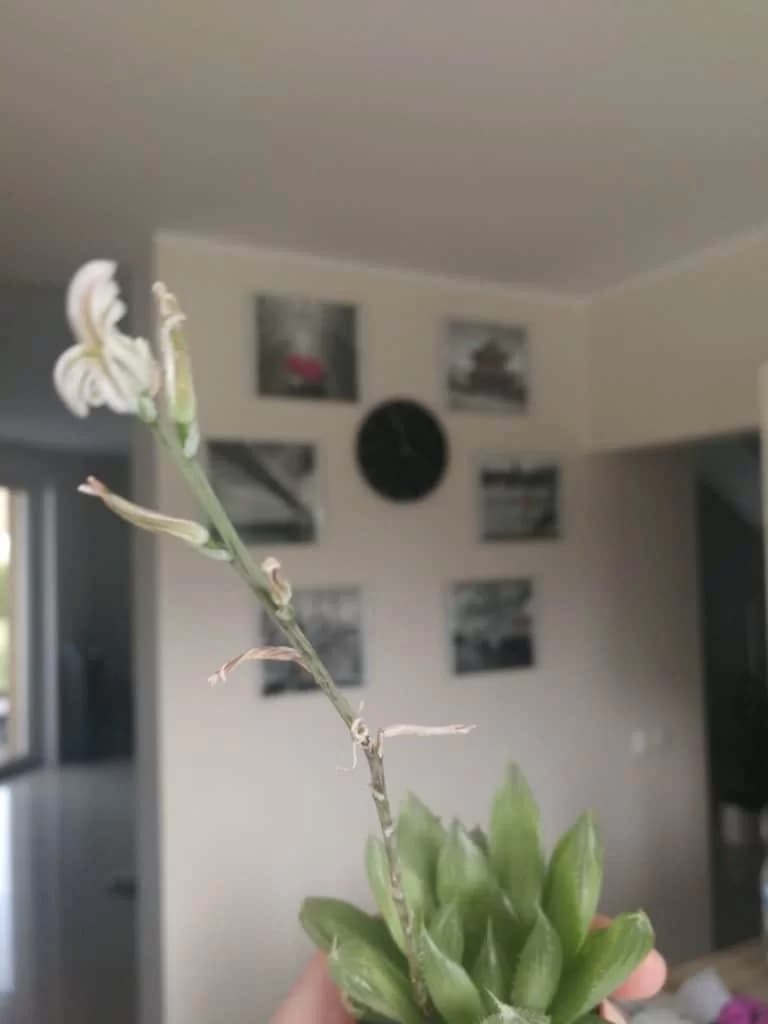
Your container setup determines how forgiving your watering approach can be. A well-chosen pot can make the difference between a plant that tolerates the occasional extra day of dampness and one that rots after one overwatered week.
Drainage holes are non-negotiable. University of Minnesota Extension states that without a drainage hole, “rotting and decay” sets in “in a very short time.” Illinois Extension agrees, noting that “plants rarely recover from root rot.” If your favorite decorative pot doesn’t have a hole, use the double-pot method: grow the succulent in a plain nursery pot with holes, then set it inside the decorative container. Remove the inner pot before watering, let it drain completely, and return it afterward.
For pots without drainage holes: The general rule is to apply roughly half the volume of the soil in water — if the pot contains one cup of soil, use a maximum of half a cup. Extend the dry interval significantly compared to drainage pots. This approach is genuinely difficult to get right; even experienced growers lose plants this way, so a drilled hole or double-pot method is always preferable.
Soil composition. Commercial cactus and succulent mixes work well as a base. For extra drainage, add 25–50% perlite, coarse sand, or horticultural grit throughout the entire pot. The RHS recommends 2 parts peat-free compost to 1 part horticultural grit. WVU Extension suggests one part potting soil to one part coarse sand. Either way, the soil should fall apart in your hand when slightly moist — if it compacts into a ball, it holds too much water for succulents.
The gravel layer myth. Putting gravel or pebbles at the bottom of a pot to “improve drainage” is one of the most widely repeated gardening myths, and it does the opposite of what’s intended. Research by Washington State University horticulturalists, confirmed by Illinois Extension, shows that water perches in the fine soil directly above the gravel layer rather than flowing through it. This happens because water molecules adhere to soil particles and won’t release into larger air spaces until the soil above is completely saturated — creating a zone of permanently wet soil at root level. To actually improve drainage, amend the soil itself with grit or perlite throughout the entire pot. That’s what the research supports.
Overwatering, Underwatering, or Root Rot? A Diagnostic Table

Both overwatering and underwatering can cause wilting, yellowing, and leaf drop. The table below separates them — and adds the most dangerous look-alike: root rot that masquerades as drought and gets worse with every extra watering.
| Symptom | What It Signals | Confirm By | Fix |
|---|---|---|---|
| Mushy, translucent leaves that fall off at a touch | Overwatering — cells over-saturated | Damp soil; soft stems at base | Stop watering; move to dry area; unpot if rot has reached stems |
| Wrinkled, papery leaves; plant feels thin and deflated | Underwatering — cells depleted their water reserves | Bone-dry soil; leaves feel soft but not mushy | Soak thoroughly; leaves should plump within 24–48 hours |
| Wilting or drooping despite damp soil | Root rot — the most dangerous look-alike | Unpot and inspect roots: brown, slimy, or falling apart on contact = rot | Remove all rotted roots; let dry 2–3 days before repotting in fresh dry soil |
| Yellowing, soft leaves at base; fungus gnats in soil | Overwatering or early-stage root rot | Damp soil surface; root inspection | Reduce watering immediately; improve drainage; consider repotting |
| Dry, shriveled leaves at base only; top growth looks fine | Normal leaf senescence — plant consuming lower leaves | Top growth firm and healthy | Nothing — remove dried leaves gently; no watering change needed |
| Stems elongating rapidly, leaves spacing wide apart | Etiolation from insufficient light — not a watering problem | Plant leaning toward light source | Move to brighter location; do not increase watering |
| Brown, crispy leaf tips on otherwise plump leaves | Mineral buildup from hard tap water or fertilizer | White crust on soil surface or pot edges | Flush soil thoroughly; switch to rainwater or filtered water |
The root rot misdiagnosis is the most dangerous entry in that table. Iowa State University Extension describes it directly: root rot “causes water-stressed symptoms like leaf drop or shriveling” — identical to underwatering. Growers see a wilting succulent, assume drought, add more water, and accelerate the decay. If your plant is wilting despite moist or wet soil, unpot it and inspect the roots before watering again. Healthy roots are white and firm; rotted roots are brown, slimy, and fall apart when you touch them.
Your Starting Watering Schedule
Here’s a concrete starting point for a typical indoor succulent in a terracotta or plastic pot with drainage holes, in average household conditions:
- Spring and summer: Check every 10 days. Water if soil is dry 2 inches down.
- Fall: Check every 12–14 days. Water only if completely dry.
- Winter: Check every 2–3 weeks. Water only if leaves begin to look slightly deflated.
After the first month, review: if leaves are consistently plump and soil dries within the expected window, your setup is working. If soil takes longer than three weeks to dry in summer, your soil mix or pot size needs adjustment — not the watering interval.
Write down the date each time you water. You don’t need an app — a sticky note on the pot is enough. Within four to six watering cycles, you’ll have a reliable read on how your specific plant, pot, and environment behave, and you can stop thinking about it.
For a deeper look at succulent care beyond watering — light requirements, common pests, repotting timing, and seasonal feeding — see our complete succulent care guide. And if you’re still working out a reliable schedule for your specific setup, our guide on how often to water succulents indoors covers seasonal schedules and the skewer test in more detail. You can also avoid the most common mistakes with our round-up of succulent care mistakes.
Key Takeaways
The rule isn’t “water every two weeks.” It’s: soak completely, then wait for bone-dry soil. Adjust frequency based on your pot, soil, season, and light — not a calendar. When something looks wrong, check soil moisture and roots before assuming drought. Root rot wilts like underwatering, but more water makes it worse.
Succulents are built for dry spells. The plants that “thrive on neglect” aren’t thriving on neglect — they’re thriving because their owners stopped overriding the plant’s own biology.
Sources
- Iowa State University Extension — Growing Succulents Indoors
- WVU Extension — Succulents 101
- University of Maryland Extension — Watering Indoor Plants
- University of Minnesota Extension — Cacti and Succulents
- RHS — How to Grow Cacti and Succulents (Houseplants)
- Borland et al. — Ecophysiology of Crassulacean Acid Metabolism (CAM), Annals of Botany, PMC4242292
- The Garden Professors (Dr. Linda Chalker-Scott, WSU) — Container Planting: Intuition vs. Reality
- Illinois Extension (UIUC) — Container Drainage Options
- Iowa State University Extension — Common Problems and Issues of Succulents