

Are Pests and Diseases Getting You Down? How to Mix, Spray, and Time Neem Oil So It Actually Works

Neem oil works best as an insect growth regulator — but only if you buy the right product, mix it correctly, and spray at the right temperature. Here’s exactly how.
Neem oil is the most popular organic pesticide in home gardens — and the most misused. Millions of gardeners buy it, mix it up, and spray it on struggling plants, then wonder why the pests are still there a week later. The problem is rarely the neem oil itself. It’s almost always one of three things: the wrong product, the wrong concentration, or the wrong timing.
Neem oil isn’t a contact killer that works the moment it hits an insect. It’s an insect growth regulator — a compound that disrupts an insect’s ability to mature and reproduce. That single fact changes everything about how you should buy it, mix it, and apply it. Get those pieces right and neem oil becomes one of the most versatile tools in your garden. Get them wrong and you’ll spend money on a spray that accomplishes nothing.
This guide walks you through the biology behind neem oil, the product label trap that fools most buyers, exact dilution ratios, when to spray (and when not to), and how to choose between a foliar spray and a soil drench. Everything is grounded in peer-reviewed research and university extension guidance.
What Neem Oil Actually Does to Insects
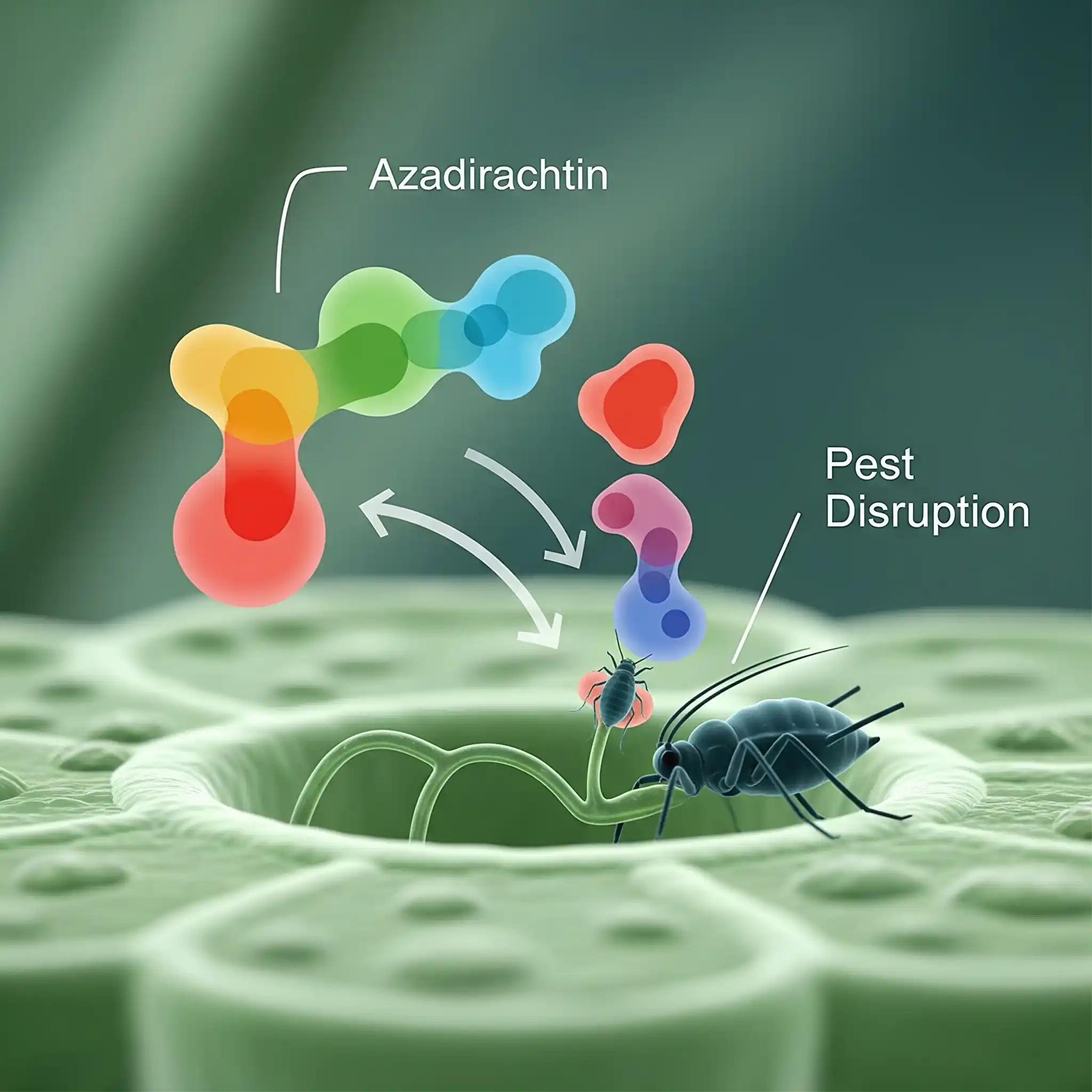
The active compound in neem oil is azadirachtin, a limonoid that makes up 0.1 to 0.3 percent of neem seeds and accounts for roughly 90 percent of the oil’s biological activity, according to research published in PMC. Understanding what it does — and what it doesn’t do — is the foundation for using it correctly.

Three pre-planned garden beds, free
Stop staring at empty beds: printable plans with exact layouts, plant lists and planting calendars — yours free from the Garden Library.
Azadirachtin is a structural mimic of ecdysone, the hormone that triggers molting in insects. When an insect larva ingests or contacts azadirachtin, the compound inhibits the enzyme that converts ecdysone into its active form, 20-hydroxyecdysone. The result: the insect can’t complete its molt from larva to pupa to adult. It stalls, stops feeding, and dies before it can reproduce. This is why neem oil is classified as an insect growth regulator (IGR), not a contact insecticide.
The practical implication is significant. Neem oil is most effective against immature insects — larvae, nymphs, and early-instar stages. According to UNH Extension, mature adult pests typically survive neem oil applications because they have already completed metamorphosis. If you’re looking up at a rose covered in adult Japanese beetles, neem oil isn’t your fastest option. An insecticidal soap will knock down adult soft-bodied pests more reliably. Save neem oil for the preventive and early-stage role it was designed for.
Beyond the IGR action, neem oil also works through two secondary mechanisms. It acts as an antifeedant — insects that encounter treated foliage are repelled and stop feeding even if they don’t die immediately. And the fatty acid components of the oil can smother soft-bodied insects like aphids and mite nymphs by blocking their spiracles, the small breathing pores along their bodies. In a University of Wisconsin-Madison study, both azadirachtin and neem seed oil increased aphid nymphal mortality to 80 percent and 77 percent respectively.
The same PMC research highlights a key limitation worth knowing: azadirachtin degrades rapidly. Its half-life in water ranges from 48 minutes to 4 days, and UV light accelerates that breakdown significantly. This is why timing and preparation matter as much as the product itself.
Why the Product You Buy Makes All the Difference
Here’s the part most gardening guides skip entirely: not all products labeled ‘neem oil’ contain the compound that controls insects.
There are two fundamentally different products on the market. Cold-pressed neem oil is produced by mechanically crushing neem seed kernels without heat or solvents. The result retains the full limonoid profile, including azadirachtin. It’s dark yellowish-brown, has a strong smell, and is effective for both insect control and fungal disease prevention.
Clarified hydrophobic extract of neem oil is made by treating natural neem oil with alcohol, which separates and removes azadirachtin. What’s left is a paler, less odorous oil that works as a surfactant and fungicide — but not as an insect growth regulator. The remaining components are FDA-classified as generally recognized as safe (GRAS), according to the National Pesticide Information Center, but they won’t stop an aphid infestation.
The catch is that both products are sold in similar packaging with labels that say ‘neem oil.’ Clarified hydrophobic extract is cheaper to produce and has a longer shelf life, which is why it dominates retail shelves. Gardener Robert Pavlis of Garden Myths puts it plainly: most neem oil products on the market won’t effectively control pests.
How to find the right product:
- Look for ‘cold-pressed’ on the label
- Check that azadirachtin is listed as an active ingredient (a quality concentrate will show 0.9% or higher)
- Products sold specifically for insect control in organic gardening sections are more likely to be cold-pressed
For fungal disease prevention only, clarified hydrophobic extract works fine and is often cheaper. For insect control, you need cold-pressed neem oil with azadirachtin.
How to Mix Neem Oil Correctly
Neem oil and water don’t mix. The oil needs an emulsifier to suspend evenly in water — without one, it floats on the surface in globs that deliver an uneven dose and can concentrate enough to burn foliage. The standard emulsifier is a small amount of mild, fragrance-free liquid dish soap.
Mix in this order to get a stable emulsion:
- Fill your sprayer or container with warm water (about 70-80 degrees F) — warm water emulsifies the oil more effectively than cold
- Add the dish soap and stir briefly
- Add the neem oil and shake vigorously for 30 seconds
- Use the spray immediately — do not store mixed solution
The reason for immediate use matters: azadirachtin begins degrading the moment it’s mixed into water. Epic Gardening advises that mixed neem oil spray should be used within 8 hours, but the research shows breakdown can begin even faster under warm conditions or direct light. Mix only what you’ll use in a single session.
Dilution Ratios by Use Case
| Use Case | Concentration | Neem Oil per Gallon | Dish Soap per Gallon |
|---|---|---|---|
| First use / sensitive plants / seedlings | 0.5% | 2 tsp (10 mL) | 1/4 tsp |
| Standard foliar spray / prevention | 1% | 1 tbsp (15 mL) | 1/2 tsp |
| Active infestation / established plants | 2% | 2 tbsp (30 mL) | 1 tsp |
| Soil drench | 1-2% | 1-2 tbsp (15-30 mL) | 1/2-1 tsp |
| Powdery mildew prevention | 2% | 2 tbsp (30 mL) | 1 tsp |
Always do a spot test on a small section of foliage and wait 24 hours before treating the whole plant, especially with new plant species. Leaf burn appears as brown, scorched-looking patches within 24-48 hours of application.
Stop guessing if your garden pays.
Log what you grow and harvest — see total yield weight, estimated retail value, and season-on-season progress in one place.
→ Track My HarvestWhen to Apply — The Timing Rules That Determine Results
You can buy the right product and mix it perfectly, then still get poor results — or plant damage — if you spray at the wrong time. Two factors matter most: temperature and time of day.
Time of Day
Apply at dusk or just before sunrise. There are two distinct reasons for this, and both matter.
First, pollinators. Bees, butterflies, and other beneficial insects are most active during midday. Direct contact with neem oil — even cold-pressed — can harm or kill them. According to the National Pesticide Information Center, while neem oil is practically non-toxic to bees when they ingest treated plant tissue, direct spray is a different matter. Applying in low-pollinator hours dramatically reduces the risk. Note that the same PubMed study showing 80 percent aphid mortality also found reduced survival in first-instar lady beetle larvae exposed to neem formulations — so directing spray away from beneficials isn’t just about bees.
Second, leaf burn. Neem oil applied to leaves in direct sunlight heats up against the leaf surface, accelerating oxidative stress before the plant can process or shed the oil. At temperatures above 85 degrees F (30 degrees C), this becomes a significant burn risk. Above 90 degrees F, damage is likely.
Temperature Window
The safe application window is 50 to 85 degrees F (10 to 30 degrees C). At the lower end, neem oil starts to congeal, which prevents it from emulsifying properly and means you’re spraying an uneven mixture. At the upper end, leaf burn risk increases sharply. If you’re gardening in USDA zones 9 or higher during summer, this often means limiting outdoor applications to the early morning hours only.
High humidity also matters. When relative humidity is above 90 percent, water evaporates slowly from leaf surfaces. This extends the time the oil stays concentrated against leaf tissue, increasing the risk of penetration damage even at moderate temperatures.
How Often to Reapply
- Active infestation (foliar): every 4 to 7 days until pests are gone
- Preventive (foliar): every 7 to 14 days through the growing season
- Soil drench: every 2 to 3 weeks
- After rain: reapply once the plant has dried — rain washes the oil from leaf surfaces
For disease prevention, start spraying before symptoms appear. Neem oil prevents fungal spores from germinating on leaf surfaces, but it cannot reverse an infection already in progress — more on this below.
Foliar Spray or Soil Drench? How to Choose
Most gardeners default to foliar spray because it’s what the packaging shows, but soil drenches are often more effective — and are always safer for beneficial insects. The decision comes down to where the pest lives.
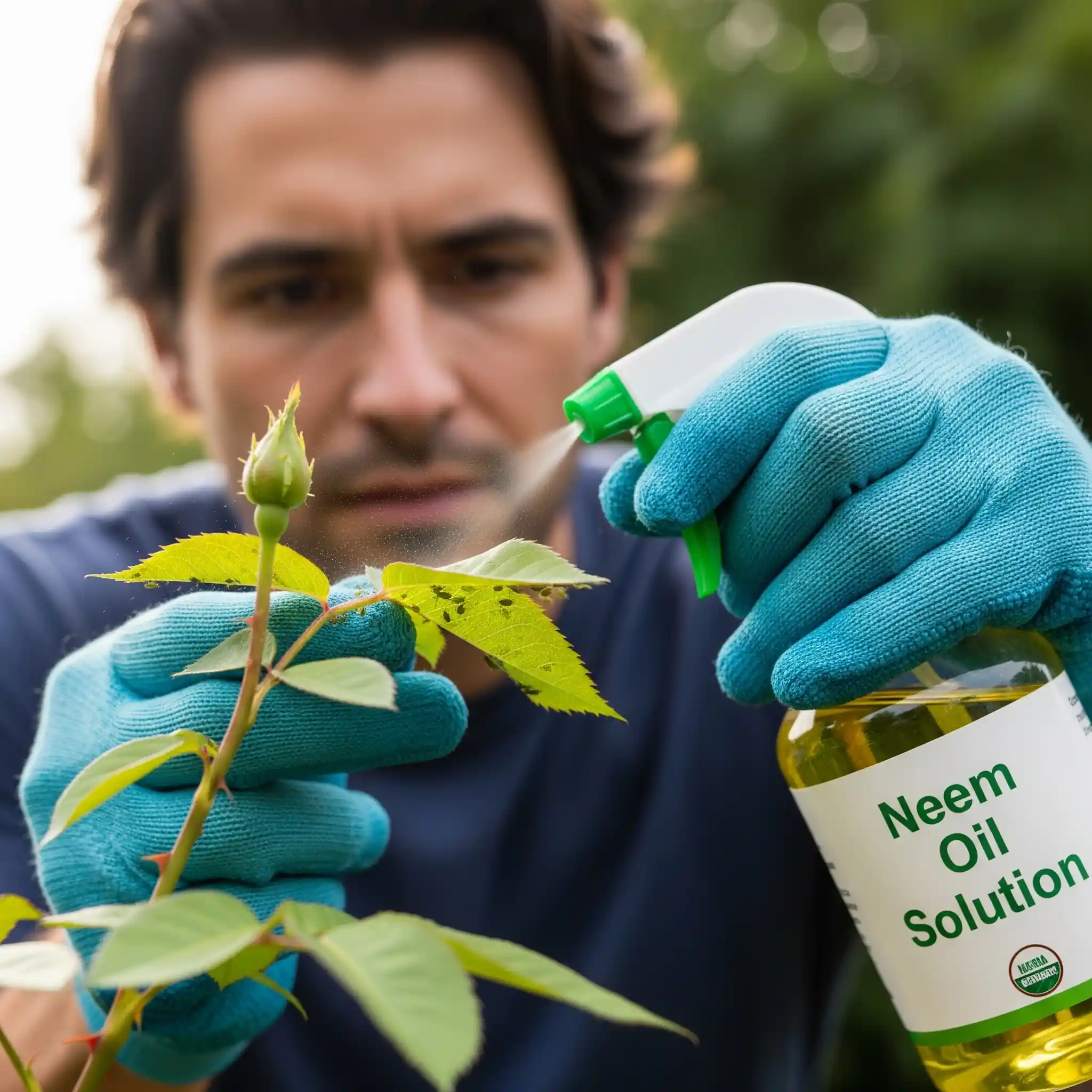
Use a foliar spray for: leaf-feeding insects (aphids, spider mites, whiteflies, mealybugs, thrips, leafhoppers), powdery mildew and other fungal disease prevention on leaf surfaces. Spray from the bottom up, coating leaf undersides where most pests feed and shelter. For aphids and spider mites, which often colonize the undersides of leaves first, thorough coverage is essential.
Use a soil drench for: fungus gnats (larvae live in the top inch of soil), root aphids, soil-borne fungal diseases, and any situation involving large shrubs or trees where foliage coverage is impractical. When azadirachtin is applied to the soil, the plant’s roots absorb it and distribute it systemically through the vascular tissue. Any insect that feeds on plant sap ingests the compound directly. This also eliminates any risk of direct contact with pollinators or beneficials on the plant’s surface.
For a soil drench, pour 2 to 3 cups of the 1 to 2 percent solution slowly around the base of each plant, saturating the root zone. Expect at least two weeks before you see results, as the compound needs time to move through the roots and into the plant. For fungus gnats in houseplant soil, this is the most reliable method — it targets the larvae before they mature into the flying adults that spread the infestation.
When pest pressure is severe, combine both methods: drench the soil to establish a systemic barrier, then follow up with a foliar spray to address above-ground adults and egg masses.
When NOT to Use Neem Oil
UNH Extension recommends neem oil as a last resort, after correcting growing conditions and physically removing pests where possible. Beyond that principle, there are specific situations where neem oil will cause more harm than good.
- Recently transplanted or stressed plants: transplant shock, drought stress, or overwatering already compromises plant tissue. Adding an oil coating compounds the stress and risks significant damage.
- Thin-leaved greens: spinach, lettuce, arugula, and similar crops have delicate foliage prone to oil burn. Consider insecticidal soap or diatomaceous earth instead.
- Open flowers: even evening application carries some risk when flowers are open and accessible to pollinators the following morning. Pause foliar sprays during peak bloom on edibles and flowering ornamentals, or use soil drenches only during this period.
- Fruit trees in flower: spray up until bud break, then pause entirely until flowers have dropped.
- Near water features or ponds: the National Pesticide Information Center classifies neem oil as slightly toxic to fish and aquatic organisms. Keep applications well away from water edges.
- Established adult insect populations: neem oil’s IGR action doesn’t affect adults in their final life stage. For a heavy adult aphid infestation, start with insecticidal soap to knock down the current population, then follow with neem oil to prevent the next generation from establishing.
A note on beneficial insects: both azadirachtin and clarified hydrophobic extract can harm beneficial insects on contact, particularly insect larvae. This isn’t a reason to avoid neem oil, but it’s a reason to spray precisely — targeting affected plants only, at the right time of day, and at the lowest effective concentration.
Neem Oil Pest and Disease Quick Reference
| Problem | Stage Targeted | Best Method | Concentration | Frequency |
|---|---|---|---|---|
| Aphids | Nymphs (highly effective); adults (moderate) | Foliar spray, undersides of leaves | 1-2% | Every 4-7 days |
| Spider mites | All stages | Foliar spray; drench for houseplants | 1-2% | Every 4-7 days |
| Whiteflies | Nymphs and eggs; adults repelled | Foliar spray, leaf undersides | 1-2% | Every 4-7 days |
| Mealybugs | Crawlers (nymphs); adults less affected | Foliar spray; soil drench if root mealy | 2% | Every 5-7 days |
| Thrips | Larvae and nymphs | Foliar spray; drench for soil-pupating thrips | 1-2% | Every 5-7 days |
| Fungus gnats | Larvae in soil | Soil drench only | 1-2% | Every 2-3 weeks |
| Scale (early instar) | Crawlers (most vulnerable stage) | Foliar spray | 2% | Every 5-7 days during crawler period |
| Powdery mildew | Preventive — blocks spore germination | Foliar spray, all surfaces | 2% | Every 7-14 days before symptoms; will not cure active infection |
| Black spot / rust | Preventive only | Foliar spray | 1-2% | Every 7-14 days |
| Root-borne fungal disease | Preventive | Soil drench | 1-2% | Every 2-3 weeks |
| Adult hard-bodied beetles (e.g., Japanese beetles) | Not a good target — adults survive IGR | Use neem oil for grub prevention (soil drench); use hand-picking or pyrethrin for adults | — | — |
Frequently Asked Questions
Does neem oil harm bees?
Direct spray on bees or open flowers can harm them. When used correctly — applied at dusk or dawn, avoiding open blooms — neem oil poses minimal risk to bees. Insects must feed on treated plant tissue for the IGR action to work; pollinators that don’t eat foliage are unlikely to be affected by foliar applications. Soil drenches eliminate the risk entirely since there’s no surface spray involved.
Can I use neem oil on vegetables before harvest?
Yes, neem oil is approved for organic gardening and is safe on edible crops. Follow label guidance on pre-harvest intervals, which are typically 0 to 4 days for most vegetables. Wash produce thoroughly before eating. Avoid spraying leafy greens like lettuce and spinach at higher concentrations due to leaf burn risk.
How long does it take to see results?
Neem oil doesn’t provide fast knockdown. Because it works by disrupting insect development rather than killing on contact, expect 3 to 7 days before you see a meaningful reduction in pest population. You’ll often notice insects feeding less before you notice them dying. If you’re not seeing results after three applications spaced 5 to 7 days apart, check that you’re using cold-pressed neem oil with azadirachtin, and that you’re coating leaf undersides where most pests hide.
Will neem oil hurt my earthworms?
Field studies and the National Pesticide Information Center indicate neem oil is practically non-toxic to earthworms at standard application rates. The azadirachtin degrades quickly in soil (half-life 3 to 44 days depending on conditions), and earthworms don’t ingest treated plant tissue. Soil drenches at recommended concentrations are generally safe to use in gardens where earthworm activity is important.
Why does neem oil smell so strong?
The distinctive garlicky, sulfurous smell comes from the naturally occurring sulfur compounds in neem seed oil. This smell fades within a few hours of application as the oil dries and oxidizes. It’s stronger in cold-pressed products because they retain more of the original seed chemistry — including the azadirachtin that makes them effective. Clarified hydrophobic extract is odorless precisely because the active compounds have been stripped out.
The Bottom Line
Neem oil works best as part of an ongoing prevention system, not a one-time rescue spray. Because azadirachtin targets immature insects rather than adults, and because it degrades within days in the environment, consistent application is what builds results. A single spray rarely solves a pest problem; a schedule maintained through the growing season makes a genuine difference.
The three things that determine whether neem oil works in your garden: the product (cold-pressed, azadirachtin listed as active ingredient), the timing (50-85 degrees F, dusk or dawn, applied before large adult populations establish), and the method (foliar for leaf pests, soil drench for soil-borne pests and large plants). Get all three right and you have one of the most versatile, low-toxicity pest and disease management tools available to the home gardener.
For a broader framework on combining neem oil with cultural controls and other organic approaches, the guide to integrated pest management covers how to prioritize interventions and avoid creating resistance. And if you’re deciding between neem oil and insecticidal soap for a specific infestation, the comparison of neem oil vs insecticidal soap covers when each one is the better choice.
Sources
- National Pesticide Information Center (NPIC), Oregon State University — Neem Oil General Fact Sheet
- PMC — Neem Oil and Crop Protection: From Now to the Future (Saberi Riseh et al.)
- PMC — Progress on Azadirachta indica Based Biopesticides in Replacing Synthetic Toxic Pesticides
- PubMed — Insect growth regulator effects of azadirachtin and neem oil on Aphis glycines and Harmonia axyridis (Kraiss and Cullen, 2008)
- UNH Extension — What should neem be used for on plants?
- Garden Myths (Robert Pavlis) — Neem Oil Insecticide and Fungicide For Plants
- Epic Gardening — When and How to Use Neem Oil to Control Pests


