

How to Identify Whiteflies and Stop Them Before One Female Lays 400 Eggs

One whitefly female lays up to 400 eggs in her lifetime. Learn to identify all life stages, treat at the right time, and prevent reinfestation for good.
One Female, 400 Eggs, Three Weeks to Infestation
Spot a small cloud of white insects rising from your tomato or hibiscus when you brush it, and your first instinct is probably to reach for a spray bottle. That instinct is right — but the timing matters more than the product. A single female greenhouse whitefly produces up to 400 eggs over her two-month lifespan, and the full egg-to-adult cycle takes as little as three weeks in warm weather. By the time you notice the cloud, multiple generations may already be feeding on the undersides of your leaves.
The good news: whiteflies are predictable. They follow a defined life cycle with two stages that laugh at most sprays (eggs and pupae) and two stages that are genuinely vulnerable (newly hatched crawlers and feeding nymphs). Once you understand that rhythm, you stop playing catch-up and start treating at the moment it actually counts.
This guide covers how to identify whiteflies (and tell them from look-alikes), what their damage signals tell you about infestation severity, the organic treatments that work and why, and the prevention steps — including one physical barrier that cuts whitefly landings by up to 90% — that keep them from coming back.
How to Identify Whiteflies (and Rule Out Look-Alikes)
The defining identification test is simple: tap or gently shake an infested plant. Whiteflies erupt in a cloud of tiny white insects and resettle within seconds. No other common garden pest does this. If nothing flies, you are likely dealing with aphids, spider mites, or mealybugs instead — each requires a different response. (See our guide to identifying and treating aphids if the cloud test comes up negative.)

Three pre-planned garden beds, free
Stop staring at empty beds: printable plans with exact layouts, plant lists and planting calendars — yours free from the Garden Library.
Once you have confirmed the flying adults, look more closely at leaf undersides to identify what life stage you are dealing with:
- Adults: Roughly 1/16 inch long, with four broad white wings held flat (roof-like) over a pale yellow body. They are coated in white powdery wax. The wings distinguish them immediately from thrips, which are slender and wingless at rest.
- Eggs: Spindle-shaped, pale yellow-green, and arranged in neat semicircular or spiral patterns on leaf undersides. Freshly laid eggs are lighter; they darken within 24 hours. You will need a hand lens to see them clearly.
- Nymphs (instars 2–4): Flat, oval, and scale-like, nearly transparent to pale yellow, pressed tight against the leaf. Mature nymphs of the greenhouse whitefly have distinctive long white waxy filaments radiating from their edges — a useful ID feature when you are trying to identify the species.

The Three Species You Are Most Likely to Encounter
More than 1,500 whitefly species exist globally, but three dominate US gardens and homes:
- Greenhouse whitefly (Trialeurodes vaporariorum): The most common on houseplants and cool-season crops. Nymphs have prominent waxy filaments; their oval shape is raised at the edges, like a pillbox. Host list exceeds 250 species including tomatoes, cucumbers, begonias, and hibiscus.
- Silverleaf whitefly (Bemisia tabaci, also called sweetpotato whitefly): Slightly smaller and more yellow than the greenhouse species. Nymphs lie flat against the leaf with few waxy filaments — they are easier to miss. This species transmits plant viruses including tomato yellow leaf curl virus (TYLCV) and is the more serious concern in warm climates (Zones 8–11).
- Giant whitefly (Aleurodicus dugesii): Visible without a lens at 3–5 mm. Adults have banded wings. Nymphs produce long, spiraling white wax filaments that hang below the leaf like cotton threads. Primarily a problem in California and southern states on plants like hibiscus and banana.
Distinguishing species matters because the silverleaf whitefly’s virus-transmission risk means infected plants should be removed entirely, not just treated.
The Life Cycle — and Why Your First Spray Often Does Not Work
Whiteflies pass through six developmental stages: egg, four nymphal instars, and adult. The full cycle runs 21–36 days under optimal conditions (68–86°F), shrinking to as little as three weeks in a warm greenhouse or during a hot summer. In cooler conditions (below 60°F), it can stretch to eight weeks.
Here is what each stage means for treatment:
- Egg (days 0–10): Protected by a waxy cuticle on the egg surface. Contact insecticides, including insecticidal soap and neem oil, cannot penetrate this coating reliably. Spraying during this stage treats the adults already present but does not eliminate the next generation.
- 1st instar (crawler, days 10–13): The only mobile nymphal stage. Crawlers hatch and walk a short distance to a feeding site, then settle. This 2–3 day window is your best treatment opportunity — crawlers are soft-bodied, actively moving, and completely exposed.
- 2nd–3rd instars (days 13–20): Immobile feeders, attached to the leaf. Soft-bodied and still vulnerable to soap and neem oil applied to the leaf underside. This is your second-best treatment window.
- 4th instar / pupa (days 20–27): Non-feeding stage enclosed in a thickened, toughened case. Like the egg, this stage resists contact insecticides. Spraying now does not kill the pupae; it kills any remaining adults and free nymphs.
- Adult (days 27–60+): Mobile and capable of evading sprays by flying. Adults are killed by direct contact with insecticidal soap or neem but can re-infest from adjacent plants within days.
This egg-and-pupa resistance explains the standard recommendation of four to five treatment applications at five-to-seven-day intervals. Each application targets the crawler and nymph window of the current generation while new eggs are hatching. Skip an application and the cycle resets. This is not a flaw in the product — it is the biology of the pest.
Whitefly Damage: Symptom Diagnostic Table
Whiteflies feed by inserting needle-like mouthparts into plant phloem and extracting sap. The damage compounds: direct feeding weakens the plant, honeydew excretion promotes sooty mold that blocks photosynthesis, and certain species inject toxins while feeding. Use this table to read your plant’s symptoms and select the right response.
| Symptom | Cause | Response |
|---|---|---|
| White cloud erupts when plant is disturbed | Active adult infestation | Deploy yellow sticky traps immediately; begin treatment within 48 hours |
| Pale yellow stippling on upper leaf surface | Nymph feeding damage (chloroplasts damaged by sap removal) | Inspect undersides with hand lens; begin soap or neem treatment |
| Sticky residue on leaves, stems, or surrounding soil | Honeydew excretion from nymphs | Wipe leaves; treat infestation; honeydew disappears once feeding stops |
| Black powdery coating on leaves and stems | Sooty mold (Ascomycete fungus) colonizing honeydew; blocks photosynthesis | Eliminate whiteflies first; wipe mold with dilute soapy water; improve air circulation |
| Yellowing leaves that look dry, drop early | Heavy infestation depleting phloem sap; plant cannot replace what it is losing | Remove the worst-affected leaves; begin aggressive treatment sequence immediately |
| Silvery or blotchy white patches on squash or tomato leaves | Silverleaf whitefly feeding toxin damages chloroplast structure | Species-specific; prioritize removal of affected leaves; treat to prevent spread |
| Mosaic leaf pattern, distorted growth, yellowing on tomatoes | Tomato yellow leaf curl virus (TYLCV) transmitted by silverleaf whitefly | No cure; remove and bag infected plant immediately to prevent further spread |
First Response: What to Do in the First 48 Hours
Before reaching for a spray, two mechanical steps reduce the population immediately and cost nothing:
Remove and bag infested leaves. Whitefly eggs and nymphs concentrate on the oldest, lowest leaves first. Removing these leaves takes out thousands of individuals in a single step. Seal the leaves in a bag before disposing — do not compost them.
Blast with water. A strong jet of water directed at leaf undersides dislodges adults and a proportion of nymphs and disrupts feeding. This is most effective early morning when adults are cool and sluggish. It does not eliminate the infestation, but it reduces numbers before your first spray application and removes some honeydew.
Deploy yellow sticky traps. Yellow is the wavelength whiteflies navigate toward. Place one trap for every two large plants (or one per 1,000 square feet in a garden bed), positioned just above the plant canopy. Replace traps weekly. They serve two purposes: adult monitoring tells you whether population is rising or falling, and they catch adults before they lay more eggs.

When not to escalate to chemical treatment: Look closely at the nymphs on the leaf underside. Parasitized nymphs turn from pale yellow to black (greenhouse whitefly) or tan to dark brown (silverleaf whitefly) as the parasitic wasp larva inside develops. If 20% or more of the nymphs appear darkened, a population of Encarsia formosa or a related parasitoid is already working. Spraying at this point kills your biological allies. Hold off, continue monitoring with sticky traps, and give the parasitoids two to three weeks to work.
Organic Treatment Methods That Actually Work
The three organic options below are backed by university extension research and, used correctly with proper timing, control whitefly populations without harming pollinators or soil biology. The key word is correctly — application method matters as much as product choice.
Insecticidal Soap
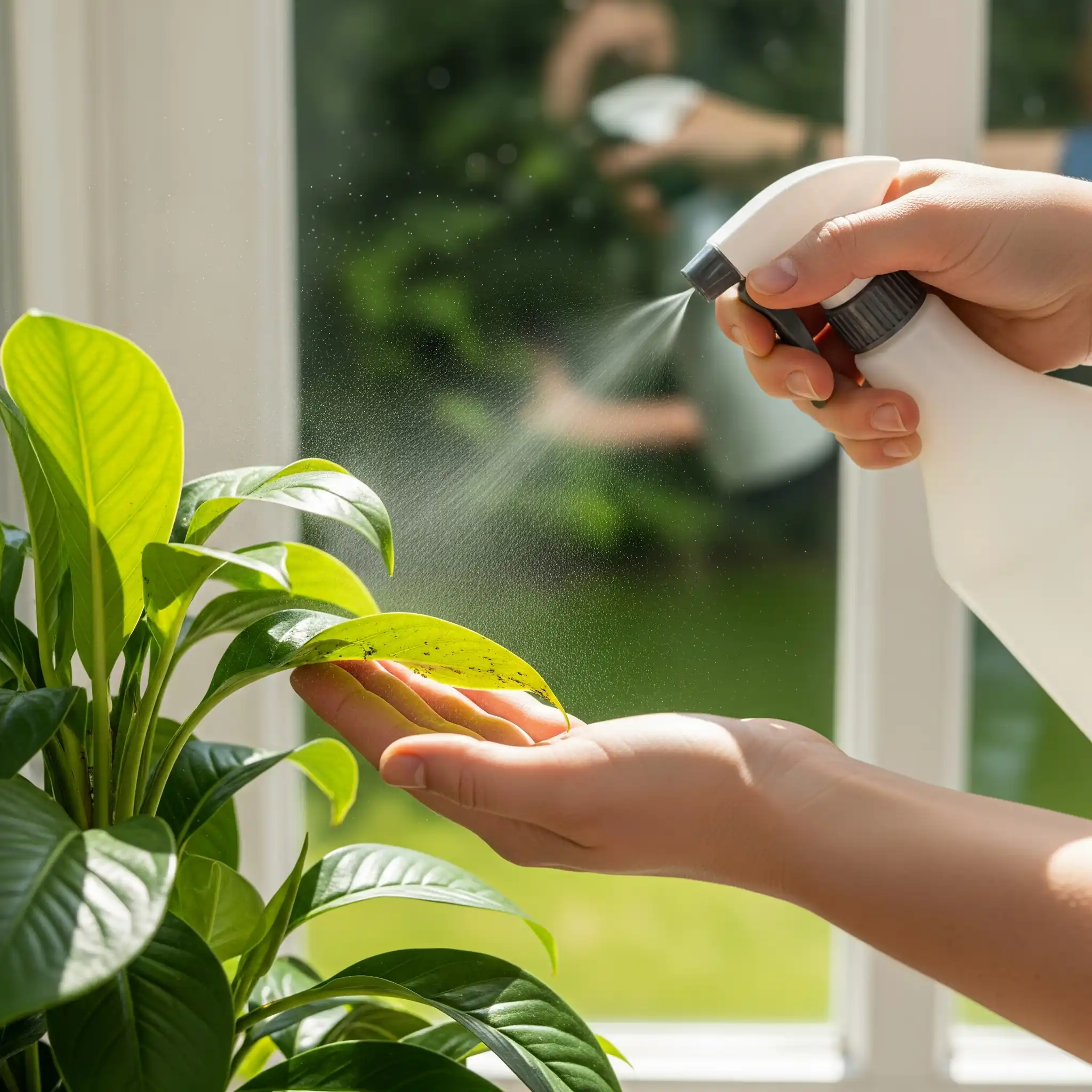
Mix 2.5 to 5 tablespoons of a potassium fatty acid-based insecticidal soap per gallon of water (a 1–2% solution). This concentration kills by three mechanisms simultaneously: it suffocates insects by blocking spiracles, disrupts cell membranes in soft-bodied stages, and strips the protective wax coating from nymphs — causing them to desiccate rapidly. The product has zero residual activity once it dries, which is why you need four to five applications at five-to-seven-day intervals to catch each new generation of crawlers.
Stop missing your zone's planting windows.
Select your US zone and month — get a complete checklist of what to plant, prune, feed, and protect right now.
→ View My Garden CalendarApply to all leaf surfaces, concentrating on undersides where nymphs feed. Avoid spraying when temperatures exceed 90°F or when plants are drought-stressed — both conditions increase the risk of phytotoxicity. Test on a single leaf 24 hours before treating the whole plant if you are dealing with a variety you have not sprayed before. See our full guide to using insecticidal soap correctly for mixing ratios and safety notes.
Neem Oil
Mix 1 ounce (2 tablespoons) of cold-pressed neem oil with 1 teaspoon of dish soap per gallon of water, and spray every five to seven days. The active compound, azadirachtin, works differently from soap: it disrupts the molting hormones of immature whiteflies. Crawlers and nymphs that absorb azadirachtin fail to develop to the next life stage and die without completing their cycle. Neem oil also acts as a feeding deterrent and repels egg-laying adults. Our guide to using neem oil safely covers the correct emulsification method, as poorly mixed neem separates in the sprayer and burns leaves.
Beauveria bassiana (Fungal Biopesticide)
Products containing Beauveria bassiana (sold as BotaniGard, Mycotrol, and others) apply living fungal spores that penetrate the whitefly’s cuticle enzymatically. Infected adults and nymphs die within three to seven days as the fungus digests them from inside; infected insects turn pink then brown. A 2024 Florida field trial published in PMC found that Beauveria bassiana combined with a mineral oil adjuvant (SuffOil-X) reduced silverleaf whitefly nymph counts by 73.5% across the fall season — the strongest result among all biopesticide options tested.
Beauveria is most compatible with a biological control program because it leaves parasitic wasps largely unharmed. Apply in early morning or evening, as UV light degrades the spores.
Rotating Treatments to Prevent Resistance
Whitefly populations exposed repeatedly to the same chemistry develop resistance within a few generations. To manage this: rotate between soap (physical mode of action), neem (hormonal disruption), and Beauveria bassiana (fungal infection) rather than running the same product for the full four-to-five-application sequence. No more than two consecutive applications of the same mode of action. This rotation approach also aligns with the integrated pest management principles covered in our IPM overview. For a direct comparison of neem and soap, see neem oil vs. insecticidal soap.
Preventing the Next Infestation
Treatment ends the current outbreak. These four steps prevent the next one.
Quarantine new plants for 1–2 weeks. Whiteflies enter most gardens on purchased plants — the nymphs are nearly invisible against a pale leaf. Isolate new plants before placing them near existing ones. Inspect leaf undersides with a hand lens before the quarantine ends. This is the highest-impact prevention step for indoor growers in particular, where no natural predators exist to catch stragglers.
Use reflective mulch. Silver polyethylene or aluminum-coated mulch reflects UV and visible light upward, disorienting whiteflies’ host-finding navigation. Research consistently shows 70–90% reductions in whitefly landing rates compared to bare soil or organic mulch. Lay it at the start of the season before whitefly pressure builds — once an infestation is established, the mulch effect is diminished. This works best for outdoor vegetable gardens in Zones 4–9 during the growing season.
Companion plant with repellents. Basil, marigolds, dill, and nasturtiums produce volatile compounds that interfere with whitefly host-finding. Interplant these at a ratio of roughly one repellent plant per three susceptible plants. Basil alongside tomatoes is particularly effective for the silverleaf whitefly. For a full companion planting reference, see our companion planting chart.
Support beneficial insects. Lacewings, ladybugs, and parasitic wasps (particularly Encarsia formosa and Eretmocerus eremicus) are natural whitefly predators. Attract them by planting sweet alyssum, fennel, or dill near susceptible plants — these provide nectar for the adult wasps. Avoid broad-spectrum pesticides that eliminate beneficial populations as thoroughly as they eliminate pests. If you have confirmed parasitoid activity (darkened nymphs), protecting that population is more valuable than any spray.
Frequently Asked Questions
Can whiteflies live in the soil?
No. All feeding and reproductive stages of whiteflies live on plant foliage — eggs, nymphs, and adults are found on leaf surfaces (primarily undersides). Whiteflies do not use soil as a life stage habitat, unlike fungus gnats, whose larvae live in potting mix. If you are seeing insects emerging from soil, the pest is something else.
Do whiteflies infest houseplants and outdoor gardens differently?
The biology is the same, but management differs. Outdoors, natural predators (lacewings, parasitic wasps) provide background suppression you can support. Indoors, no such suppression exists — an unchecked population can build faster and sooty mold is harder to manage in enclosed spaces. For indoor infestations, quarantine protocols matter most; for outdoor gardens, the reflective mulch and companion planting strategies add meaningful prevention.
What kills whitefly eggs?
No contact insecticide penetrates the waxy coating on whitefly eggs reliably. Neem oil’s azadirachtin can disrupt egg development if absorbed, but results are inconsistent. The most reliable approach is to accept that eggs will survive each spray and plan your five-application sequence to catch the crawlers that hatch from them — that is exactly what the five-to-seven-day interval is designed for.
How do I know if my treatment is working?
Check your yellow sticky traps weekly. A declining adult count over two to three consecutive weeks indicates suppression. Also inspect leaf undersides: nymph density should visibly decrease after the second or third application. New leaf growth that appears clean (no eggs, no stippling) after week three is the strongest sign of successful control.
Are whiteflies harmful to humans or pets?
Whiteflies do not bite, sting, or transmit disease to humans or animals. They are exclusively plant feeders. The treatments used against them — insecticidal soap and neem oil — are low-toxicity and safe around pets and children when applied and stored per label instructions.
The Logic of Getting Ahead of Whiteflies
Every whitefly management decision comes down to timing. The pest’s life cycle creates predictable vulnerability windows — crawlers and soft nymphs — surrounded by resistant stages that absorb spray without damage. Work with that rhythm: treat on schedule rather than reactively, rotate your products, and use reflective mulch and companion planting to reduce the pressure before it starts.
The 400-egg reproductive rate is not a reason for panic. It is a reason to act on the first cloud you see, to deploy sticky traps as early warning, and to treat the undersides of leaves rather than the tops. Get those two things right — timing and coverage — and the chemistry almost does not matter.
Sources
- UNH Extension — Greenhouse Whitefly Fact Sheet
- Colorado State University Extension — Greenhouse Whitefly
- Clemson Cooperative Extension (HGIC) — Insecticidal Soaps for Garden Pest Control
- University of Missouri Extension — Managing Whiteflies on Indoor and Outdoor Plants
- UConn Extension IPM — Biological Control of Whiteflies
- PMC (2024) — Evaluation of Biopesticides for Management of Bemisia tabaci in Florida Tomato


