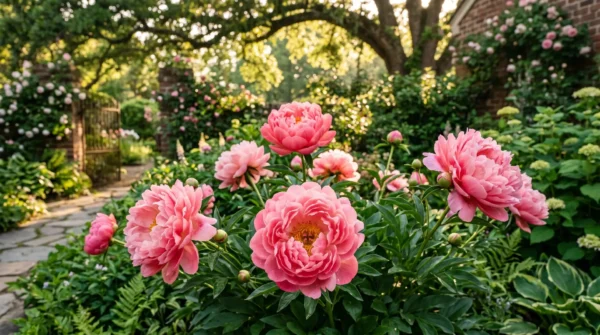
13 Flowers That Feed Bees, Butterflies, and Birds All Season Long

Feed bees, butterflies, and birds all season with these 13 flowers — from spring catmint to fall asters, each chosen for proven wildlife value.
Raising a single brood of five Carolina Chickadees takes 6,000 to 9,000 caterpillars — and those caterpillars come almost entirely from the plants growing in your yard. Research from the University of Delaware and the Audubon Society found that yards dominated by native plants produced 20 or more caterpillars in a five-minute search; yards planted with non-native ornamentals produced one or fewer. Since 86% of the land in the United States is privately owned, the flowers you plant this season have a direct, measurable effect on local wildlife populations.
Most wildlife garden lists are curated for curb appeal. This one is organized by mechanism — the biological reason each flower attracts a specific type of wildlife — and by season, so you’re not left with a gap between your last sunflower and first frost. Plant three or four from this list and you’ll see results. Plant all thirteen and you’ll have continuous wildlife activity from April through November.

Why Flower Architecture Determines Which Wildlife You Attract
Bees, butterflies, and birds don’t visit flowers for the same reasons, and they can’t always access the same flowers. Flower structure has co-evolved with pollinator anatomy over millions of years — which means planting the wrong shape for the wrong visitor results in no visits at all.
Bees favor shallow to medium-depth flowers in whites, yellows, blues, and purples. They detect ultraviolet patterns called nectar guides — concentric rings near the flower’s center, invisible to humans — that direct them straight to the reproductive structures. Bumble bees also perform buzz pollination, vibrating their wings at a specific frequency to shake pollen from anthers that otherwise release nothing when touched. Lavender and coneflowers trigger this behavior.
Butterflies prefer wide, flat flower surfaces with enough structure to land securely. Their proboscis can reach deeper tubes than most bees, but they still land to feed rather than hovering. Flat-topped flowers like Joe Pye Weed and composite heads like zinnias are optimal landing platforms.
Hummingbirds are evolved for tubular red and orange flowers. Their bills are precisely matched to flowers like bee balm and cardinal flower — a depth that excludes most bees and creates a near-exclusive nectar source. They’re also the only pollinator capable of hovering, so they don’t need a landing platform at all.
Seed-eating birds — goldfinches, sparrows, chickadees — arrive after the flowers fade. They need seed heads left standing, not deadheaded. Echinacea, black-eyed Susan, sunflower, and goldenrod deliver most of their bird value after bloom, in late summer and fall.

Seasonal Coverage at a Glance
| Flower | Peak Bloom | Bees | Butterflies | Birds | USDA Zones |
|---|---|---|---|---|---|
| Catmint | Spring-Summer | ✓✓ | ✓ | – | 3-8 |
| Trumpet Honeysuckle | Spring-Summer | – | ✓ | ✓✓ | 4-9 |
| Bee Balm | Summer | ✓ | ✓ | ✓✓ | 3-9 |
| Milkweed | Summer | ✓ | ✓✓ | ✓ | 3-9 |
| Lavender | Summer | ✓✓ | ✓ | – | 5-8 |
| Purple Coneflower | Summer-Fall | ✓ | ✓ | ✓✓ | 3-9 |
| Sunflower | Summer-Fall | ✓✓ | ✓ | ✓✓ | Annual |
| Cardinal Flower | Summer | – | ✓ | ✓✓ | 3-9 |
| Zinnia | Summer-Fall | ✓ | ✓✓ | ✓ | Annual |
| Black-eyed Susan | Summer-Fall | ✓ | ✓ | ✓ | 3-9 |
| Joe Pye Weed | Late Summer | ✓ | ✓✓ | – | 3-9 |
| Goldenrod | Fall | ✓✓ | ✓✓ | ✓ | 3-9 |
| New England Aster | Fall | ✓✓ | ✓✓ | ✓ | 3-8 |
Spring Starters: Opening the Season for Wildlife
1. Catmint (Nepeta x faassenii)
Catmint is one of the few ornamental perennials that legitimately competes with native species for bee traffic. It blooms from late April through June — often before most perennials have woken up — then reblooms in late summer if you shear it back by one-third after the first flush. Bumblebees, honeybees, mason bees, and carder bees all work it heavily. The reason: catmint’s volatile compounds act as a close-range attractant for bees (the same nepetalactone family found in catnip), and its lavender-blue flowers sit squarely in the UV range bees see best. Catmint is a non-invasive ornamental rather than a native, but it does what the niche playbook calls exotic ornamentals do well: it feeds adult foragers reliably when native bloom is sparse. Zones 3-8, full sun to part shade, drought-tolerant once established.
2. Trumpet Honeysuckle (Lonicera sempervirens)
The native trumpet honeysuckle — not to be confused with invasive Japanese honeysuckle — is the best hummingbird vine for eastern US gardens, reliably attracting Ruby-throated Hummingbirds from their spring arrival in April through September. Its red tubular flowers are precisely the right depth for a hummingbird bill and the wrong shape for most bees, creating an exclusive nectar source hummingbirds return to dependably. After the flowers drop, bright red berries form from August through October, attracting Purple Finches, Hermit Thrushes, and Baltimore Orioles. Train it up a trellis or fence post in full sun. Zones 4-9; deciduous to semi-evergreen depending on region. If you want to learn more about butterfly-attracting flowers to pair with it, there are several that extend the season.
Summer Backbone: Eight Flowers That Carry the Core Season
3. Bee Balm (Monarda didyma)
Bee balm’s shaggy scarlet flower heads are built for hummingbirds: each tubular floret is approximately 1.5 inches long, deep enough for a hummingbird bill but too deep for most bees to reach the nectar. The result is consistent hummingbird visitation all summer — typically July through August — while bumblebees and native bees work the pollen-bearing anthers at the flower’s entrance. It’s also a larval host for several native moths. Choose mildew-resistant cultivars like ‘Jacob Cline’ (red) or ‘Marshall’s Delight’ (pink) for the best performance in humid climates. Plant in full sun to part shade; this native prairie species grows wild from Michigan to Georgia and thrives in USDA zones 3-9.
4. Milkweed (Asclepias tuberosa / Asclepias syriaca)
Milkweed is the only plant monarch butterflies will lay eggs on. That’s not a gardening simplification — it’s an obligate biological relationship that has evolved over millions of years. Female monarchs identify milkweed by receptors on their feet and deposit eggs on the undersides of leaves. When caterpillars hatch, they feed exclusively on the foliage, ingesting cardenolide toxins that accumulate in their bodies and make both caterpillars and adult butterflies unpalatable to birds. The garden benefit extends beyond monarchs: milkweed’s nectar-rich flowers attract a wide range of native bees and, after seeds mature, American Goldfinches use the silk fiber from seed pods to line their nests. Use swamp milkweed (Asclepias incarnata) for wetter sites; butterfly weed (A. tuberosa) for dry, well-drained soils. Avoid tropical milkweed (A. curassavica) — its year-round bloom in warm climates disrupts monarch migration cues. Zones 3-9.
5. Lavender (Lavandula angustifolia)
Lavender’s appeal to bees is partly chemical and partly architectural. The flowers sit in the blue-violet spectrum that bees see vividly, and each floret carries UV nectar guides invisible to humans but clear as runway lights to foraging bees. English lavender blooms June through August and is reliably visited by bumblebees, carpenter bees, mason bees, and leafcutting bees — sometimes four to five species working the same plant simultaneously. Entomologist Gail Langellotto’s research at Oregon State University established that floral abundance is one of the strongest predictors of bee diversity in gardens, and lavender planted in drifts rather than individual specimens dramatically outperforms single-plant installations. Choose English lavender (‘Hidcote’, ‘Munstead’) for hardiness in zones 5-8; Spanish lavender is less cold-tolerant but blooms earlier in zone 7+.
6. Purple Coneflower (Echinacea purpurea)
Purple coneflower earns its spot on this list twice over: once in summer for pollinators, once in fall for birds. From July through September, its slightly reflexed petals and prominent central cone attract bumblebees performing buzz pollination and swallowtail butterflies using the flat-ish petal surface as a landing platform. Then, when the petals drop and the spiky cone dries to a seed head, American Goldfinches arrive — clinging to the cone with considerable acrobatic skill and extracting seeds one by one. Leave the seed heads standing through winter; the bird value peaks from October through January. Echinacea is native to the prairie states and performs in zones 3-9. For more variety, the full range of coneflower types includes white, orange, and yellow selections, though purple remains the strongest wildlife performer.
7. Sunflower (Helianthus annuus)
Each sunflower head is not a single flower — it’s a composite of 1,000 to 2,000 individual florets, each carrying nectar and pollen. This architecture makes sunflowers exceptionally productive for longhorn bees, sweat bees, leafcutting bees, and bumblebees, which work the florets outward from the center as each one opens. After bloom, the seed head becomes a critical fuel stop for migratory birds — white-crowned sparrows, goldfinches, purple finches, and chickadees all feed on sunflower seeds during fall migration. One important caveat from the RHS: avoid pollen-free sunflower cultivars. Varieties like ‘Infrared Mix’ or ‘Pro-Cut White’ have been bred to produce no pollen and are useless to bees. Choose open-pollinated varieties like ‘Mammoth’, ‘Lemon Queen’, or ‘Velvet Queen’ instead. Direct sow after last frost; grows as an annual across all USDA zones.


8. Cardinal Flower (Lobelia cardinalis)
Cardinal flower has one of the most focused wildlife relationships of any garden perennial. Its 1.5- to 2-inch tubular red flowers are precisely shaped for Ruby-throated Hummingbirds — the bill fits the tube, the forehead contacts the anthers, and pollen transfers. Most bees can’t reach the nectar at all, which means hummingbirds face no competition at this flower. This makes it an unusually reliable hummingbird magnet: once they find it, they return predictably. Cardinal flower blooms July through September, filling the mid-summer hummingbird feeding window. It grows naturally along stream banks and wet meadows from the eastern US into the Midwest, thriving in consistently moist soil in zones 3-9. It’s short-lived as a perennial (often 2-3 years) but self-seeds freely in suitable conditions.
9. Zinnia (Zinnia elegans)
Zinnias are one of the most butterfly-visited annuals in the US garden, largely because their flat composite heads provide the wide, stable landing platforms that swallowtails, fritillaries, and painted ladies require. Hummingbirds also visit the single-flowered varieties, which expose stamens and nectar — a distinction worth making when you buy seed. Double-flowered zinnias like ‘Benary’s Giant’ look full and impressive but have petals where the nectar-bearing reproductive structures should be, making them nearly inaccessible to pollinators. Choose single or semi-double varieties: ‘Profusion’, ‘Cut and Come Again’, or the heirloom ‘California Giants’ (semi-double with open centers). Sow directly in the garden after last frost; they bloom prolifically in full sun from July until hard frost in all zones.
10. Black-eyed Susan (Rudbeckia hirta)
Black-eyed Susan bridges the summer-to-fall transition more reliably than almost any other native perennial, blooming from July into October in most of the country. Its shallow, open disc makes pollen accessible to short-tongued native bees that can’t reach deep-tubed flowers, and the flat yellow ray petals give butterflies a clear landing target. The seed head that forms after bloom is eaten by American Goldfinches, Eastern Towhees, and various sparrow species through fall and winter. The growing guide for Rudbeckia covers cultivation in detail, but the wildlife basics are simple: plant in full sun, don’t deadhead, and leave the seed heads standing. Zones 3-9; short-lived perennial in most climates but self-seeds reliably.
Fall Fuel: Closing the Season for Migrating and Overwintering Wildlife
11. Joe Pye Weed (Eutrochium purpureum)
Joe Pye Weed blooms when much of the summer garden has wound down — late July through September — filling a critical gap in the nectar calendar. Its flat-topped clusters of dusty mauve flowers function as natural landing platforms, attracting monarch butterflies, giant swallowtails, and fritillaries in numbers that often surprise gardeners seeing it in action for the first time. Eastern Bumblebee queens, which need to build fat reserves before overwintering, work Joe Pye Weed heavily in August and September. This is a large native — 5 to 7 feet tall in full growth — suited to the back of a border or a naturalized area. Compact selections like ‘Baby Joe’ (2 to 3 feet) fit smaller gardens. Zones 3-9, full sun to light shade, tolerates moist soil.
12. Goldenrod (Solidago spp.)
Goldenrod is the most important late-season native for pollinators, and also the most unfairly maligned. The hayfever blame is a case of mistaken identity: goldenrod’s pollen is heavy and sticky, insect-carried only — it cannot become airborne. The plant that actually triggers late-summer hayfever is ragweed (Ambrosia), which blooms at the same time and looks nothing like goldenrod. Clearing that up matters, because goldenrod is a Tallamy-identified powerhouse plant: goldenrod species collectively support dozens of specialist bee species, and Solidago is among the 38 plant genera that produce the majority of caterpillar food in mid-Atlantic ecosystems. For gardeners, it’s also one of the best fall butterfly plants — monarch butterflies fuel up on goldenrod nectar before their Mexico migration, and painted ladies and sulphurs feed on it through October. Goldfinches and sparrows eat the seeds into winter. Choose native Solidago rugosa (‘Fireworks’) or S. nemoralis for garden-friendly, non-aggressive selections. Zones 3-9.
13. New England Aster (Symphyotrichum novae-angliae)
New England aster blooms September through October — one of the latest reliable nectar sources in the eastern US — and it’s timed almost perfectly with monarch migration and the final foraging push of native bees building fat reserves before winter. Studies of bee activity on fall-blooming natives consistently show asters among the top-visited plants of the season. For monarchs specifically, the timing matters enormously: the generation that hatches in late summer must feed intensively before flying to Mexico, and late-blooming nectar sources like asters and goldenrod are what make that migration physiologically possible. Asters also produce seeds eaten by juncos, white-throated sparrows, and American Tree Sparrows through November and December. In the garden, choose ‘Alma Potschke’ (bright rose-red) or ‘Purple Dome’ (compact, 18 inches) over the straight species, which can spread aggressively. Zones 3-8, full sun.
How to Get the Most Wildlife Value from These Plants
Planting these flowers individually produces some wildlife activity. Planting them in clusters produces dramatically more. Oregon State University entomologist Gail Langellotto’s research confirmed that floral abundance — the sheer density of available flowers — is one of the strongest predictors of bee diversity in garden settings. A drift of 9 lavender plants draws more species than a single specimen, because foraging bees can stay within a reliable patch rather than expending energy searching.
The second lever is native plant proportion. University of Delaware ecologist Doug Tallamy’s research, published in Nature, found that birds failed to breed successfully in yards where native plants fell below 70% of plant biomass. Above that threshold, populations thrived. You don’t have to rip out everything at once — replacing one non-native ornamental per season with a native from this list moves you toward that threshold incrementally.
Two practical rules apply across all 13 flowers. First, avoid double-flowered cultivars: the extra petals replace nectar-bearing structures and effectively remove the plant from the wildlife food chain. This applies especially to sunflowers and zinnias. Second, leave seed heads standing from October through February. The post-bloom phase of echinacea, black-eyed Susan, sunflower, and goldenrod provides more bird nutrition than the bloom phase — removing them defeats half the wildlife value.

Frequently Asked Questions
What single flower gives the most wildlife value?
Purple coneflower comes closest to a single best answer — it attracts bees and butterflies during bloom and feeds goldfinches and sparrows via its seed head through winter, covering three wildlife groups across two seasons. Goldenrod makes a strong argument for the fall season specifically, particularly for pollinators.
Stop missing your zone's planting windows.
Select your US zone and month — get a complete checklist of what to plant, prune, feed, and protect right now.
→ View My Garden CalendarDo all 13 flowers need to be native plants?
No. Lavender, catmint, and zinnia are non-native ornamentals but perform reliably for adult bee and butterfly foraging. The distinction matters more for butterfly larvae: specialist caterpillars are tied to specific native host plants. If supporting butterfly reproduction (not just adult feeding) is a priority, weight your selections toward natives — milkweed, coneflower, cardinal flower, aster, goldenrod, and bee balm all host specialist caterpillars.
Can I grow these in containers?
Several work well in containers: lavender, catmint, zinnia, and dwarf selections of echinacea (‘Magnus’ or ‘Cheyenne Spirit’) all perform in large pots (12 inches or bigger). Milkweed, Joe Pye Weed, and goldenrod need ground space to reach their full wildlife potential — a 5-gallon pot will keep them alive but limits the floral abundance that drives wildlife visitation.
Sources
- University of Missouri Extension. “Pollination Mechanisms and Plant-Pollinator Relationships.” extension.missouri.edu/publications/m402
- Ohio State University Extension (Ohioline). “Attracting Pollinators to the Garden.” ohioline.osu.edu/factsheet/ENT-47
- Oregon State University Extension Service. “Top Native Plants to Attract Bees and Butterflies.” extension.oregonstate.edu
- Audubon Society. “10 Plants for a Bird-Friendly Yard.” audubon.org
- Audubon Society. “New Research Further Proves Native Plants Offer More Bugs for Birds.” audubon.org
- University of Delaware (UDaily). “Powerhouse Plants” — Tallamy research. udel.edu
- Coastal Georgia Botanical Gardens (UGA). “The Connection Between Milkweed and Monarch Butterflies.” coastalbg.uga.edu