

Zone 9 Avocado Trees: 3 Cold-Hardy Varieties That Survive 20°F Winters — and the March Planting Window That Sets Them Up for Life

Zone 9 avocados succeed or fail on variety choice. Mexicola Grande survives 20°F winters; Hass does not. Get the planting calendar and frost protection guide.
Zone 9 sits squarely in the avocado sweet spot — warm enough to grow trees in the ground year-round, cool enough in winter to matter which variety you plant. The difference between a thriving 15-year-old tree and one that dies back to the graft union every February comes down to a single decision made at the nursery: choosing a Mexican-type variety over a Guatemalan hybrid cuts your frost risk in half and saves years of disappointment.
For the full story on variety selection, Type A/B pollinator pairing, cold tolerance by race, and year-by-year care, see the complete avocado tree growing guide.
This guide covers the three strongest varieties for zone 9, the March-to-June planting window that gives new trees maximum root establishment time before their first cold season, and the specific care practices — fertilizer timing, pre-freeze irrigation, frost cloth technique — that experienced zone 9 growers rely on. For a broader look at the full avocado growing journey, see our complete avocado growing guide.
What Zone 9 Means for Avocado Trees
Zone 9 spans a wide band: the Central Valley and coastal foothills of California, much of Texas from San Antonio south to the Rio Grande Valley, Jacksonville and northern Florida, and coastal stretches of Louisiana and the Gulf South. Gardeners comparing zone 9 to zone 8 avocado growing will find zone 9 meaningfully more forgiving — but still worth paying attention to in its coldest subzone.

Three pre-planned garden beds, free
Stop staring at empty beds: printable plans with exact layouts, plant lists and planting calendars — yours free from the Garden Library.
The USDA divides zone 9 into two subzones with real implications for avocado growers:
- Zone 9a: Minimum winter temperatures of 20–25°F. Covers inland Sacramento, Fresno, parts of the Texas Hill Country, and higher-elevation Central Valley sites.
- Zone 9b: Minimum winter temperatures of 25–30°F. Covers coastal Southern California, Houston, Baton Rouge, and much of Florida’s north-central corridor.
The practical difference: in zone 9b, the coldest nights rarely threaten a well-established Mexican-type tree. In zone 9a, you need the hardiest varieties combined with thoughtful site placement. A tree planted in a frost pocket in zone 9a can experience temperatures 3–5°F lower than a neighbor’s tree on a gentle south-facing slope — enough to push borderline cold events into damaging territory.
Best Avocado Varieties for Zone 9
The three-race classification — Mexican, Guatemalan, and West Indian — is the clearest framework for zone 9 variety selection. Mexican types evolved in the highlands of Mexico where winters bring genuine frost; they tolerate temperatures as low as 18–22°F as mature trees [7]. Guatemalan types handle 26–28°F. West Indian types, bred for the humid tropics, fail below 30°F and are unsuitable for any part of zone 9.
Three varieties stand out for zone 9 reliability:
1. Mexicola Grande (Type A)
The go-to choice for zone 9a gardeners who want in-ground permanence. It tolerates temperatures into the low 20s°F — the tightest cold margin available in standard nursery stock [7]. Fruit is small-to-medium with thin, glossy black skin and a rich, slightly smoky flavor with anise overtones. Oil content is high. The tree grows vigorously to 30 feet if unpruned, so plan for regular canopy management to keep harvesting manageable.
One honest note: the thin skin makes fruit vulnerable to rodent damage when ripe. If squirrels are a problem in your garden, net the canopy during harvest season or pick fruit slightly early and ripen it indoors at room temperature.
2. Bacon (Type B)
The best zone 9b primary tree for gardeners who want both reliability and fruit quality. Bacon tolerates 24–26°F for four-hour periods — more than adequate for most zone 9b winters [7]. The medium oval fruit has shiny green skin and a buttery, creamy texture with mild flavor. More importantly, Bacon holds its foliage well during heat events: in Southern California heat studies, Bacon trees came through 110°F+ episodes with foliage intact and retained young fruit at rates that outperformed Hass by a wide margin [8].
Bacon also serves as an excellent cross-pollinator for Mexicola Grande. Because Mexicola Grande opens as female in the morning (Type A) and Bacon opens as female in the afternoon (Type B), their schedules are complementary — planting one of each within 30–50 feet produces significantly better fruit set than either alone.
3. Fuerte (Type B)
The original California commercial variety before Hass took over, Fuerte is a Mexican-Guatemalan hybrid with moderate cold tolerance around 26–28°F and excellent fruit quality. The pear-shaped green fruit weighs 6–12 ounces with good oil content and a clean, buttery flavor [7]. As another Type B variety, Fuerte serves as a pollination partner for Mexicola Grande with the same complementary flowering schedule as Bacon.
Fuerte performs best in zone 9b where winter lows rarely reach its tolerance threshold. For zone 9a with cold winters, use Mexicola Grande as your primary tree and consider Fuerte only in a particularly warm microclimate.
| Variety | Type | Cold Tolerance | Zone | Fruit | Best Use |
|---|---|---|---|---|---|
| Mexicola Grande | A | Low 20s°F | 9a–11 | Small, black skin, rich/anise | Zone 9a primary tree |
| Bacon | B | 24–26°F | 9b–11 | Medium, green skin, buttery | Zone 9b primary; 9a pollinator |
| Fuerte | B | 26–28°F | 9b–11 | Large, pear-shaped, buttery | Zone 9b primary; warm 9a sites |
| Del Rio (Pryor) | A | ~15°F | 8–11 | Small, highest oil content | Most frost-exposed zone 9a |
Zone 9 Avocado Planting Calendar
March through June is the window, with important nuance by subzone [1][2]:
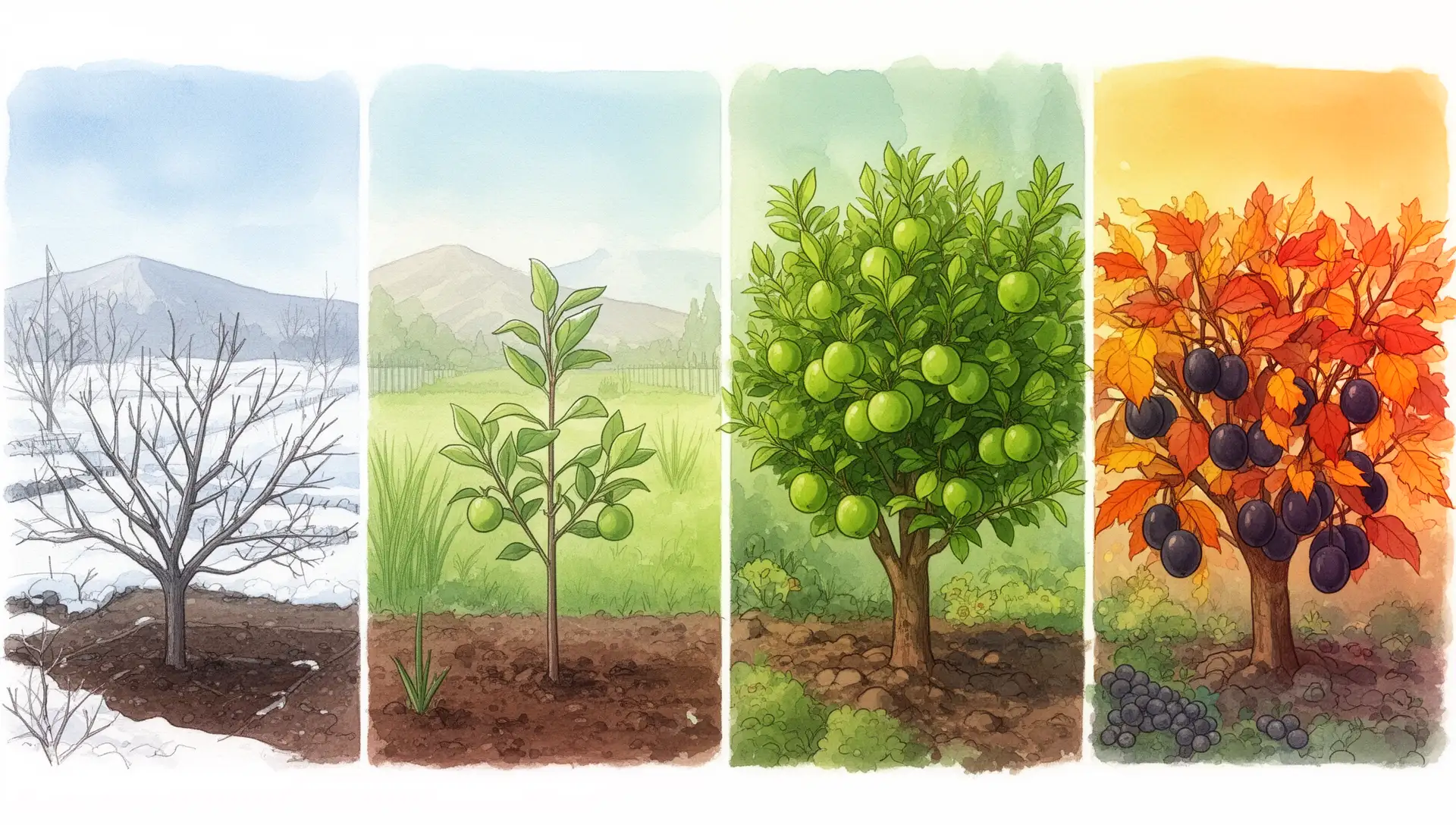
- March–April (zone 9b): Soil is warming, frost risk has passed, and the tree has the full growing season ahead to establish roots before its first cold winter. In coastal SoCal and Houston, March is ideal.
- May–June (zone 9a): Late cold snaps can extend into April in inland Sacramento and the Texas Hill Country. Waiting until May gives young trees a clean start without frost exposure in their critical first weeks.
- Avoid September–October: A fall-planted tree gets only 6–8 weeks of root growth before its first winter. A March-planted tree has 6+ months of establishment before cold arrives — the difference in resilience is measurable.
- Avoid July–August: Intense summer heat in inland zone 9 stresses newly transplanted trees that cannot yet absorb water efficiently through undeveloped roots. Leaf scorch on young transplants is common in July plantings in Fresno and inland SoCal.
Site Selection and Soil Preparation
Sun and wind: Avocados need at least 6 hours of direct sun daily. South or southwest-facing exposures give the best combination of warmth and sun in zone 9. Wind matters: avocados have brittle branch unions and shallow feeder roots, and persistent wind stresses the tree mechanically while desiccating foliage. A wall, fence, or established windbreak on the north and east sides noticeably improves performance on exposed zone 9a sites.
Avoid frost pockets: Cold air drains downhill and pools in low-lying areas. Plant on the upper portion of a slope, or against a south-facing masonry wall that radiates stored daytime heat throughout the night.
Drainage above everything else: Phytophthora root rot (Phytophthora cinnamomi) is the leading killer of avocados worldwide, and it thrives in waterlogged soil. The pathogen produces motile zoospores that swim through saturated soil to the feeder roots; once established, recovery is extremely difficult. Never plant in poorly drained soil. If your native soil is heavy clay, build a mound 1–2 feet high and 3–5 feet in diameter before planting [2]. For more on managing root rot and other avocado issues, see our guide to avocado tree problems.
Stop missing your zone's planting windows.
Select your US zone and month — get a complete checklist of what to plant, prune, feed, and protect right now.
→ View My Garden CalendarSoil pH and planting depth: Target pH 6.0–6.5. Dig a hole twice the width of the root ball and the same depth. Set the tree so the top of the root ball sits slightly above the surrounding soil level. Do not bury the graft union — avocado feeder roots are extremely sensitive, so keep the root ball intact and disturb surrounding soil as little as possible [2].
Watering and Mulching
Avocados have a shallow, dense feeder root system concentrated in the top 6 inches of soil. This makes them efficient at surface water uptake but vulnerable to both drought stress and waterlogging.
New trees need watering 2–3 times per week in the first year — roughly 1 gallon per session near the coast, more in hot inland zone 9a sites. By the end of the first year, reduce to once weekly. Mature established trees (3+ years) typically need watering every 10–14 days during dry periods and considerably less during California’s rainy season [2].
Mulch is not optional — it is the single highest-leverage maintenance task for zone 9 avocados. Apply 3–4 inches of coarse woody mulch in a ring extending to the drip line, keeping 6–8 inches clear of the trunk. The mulch moderates soil temperature, reduces moisture loss during hot zone 9 summers, and feeds the feeder root system as it breaks down. Avoid fine bark mulches that compact and restrict oxygen. Our complete mulching guide covers material selection and timing in detail.
Fertilizing Schedule
UC IPM provides a clear year-by-year nitrogen progression [3]:
- Year 1: 1 tablespoon of nitrogen fertilizer, applied 3 times during the growing season
- Year 2: 0.25 lb actual nitrogen annually
- Years 3–4: 0.5–0.75 lb actual nitrogen annually
- Year 5+: 1 lb actual nitrogen annually (approximately 5 lbs of ammonium sulfate)
Timing is as important as rate. Apply nitrogen between March 1 and October 1. UC ANR extension is explicit: nitrogen applied after October can break a tree out of dormancy quiescence just before cold arrives, directly increasing frost susceptibility [4]. Potassium can be applied year-round without this risk. Micronutrients (zinc, iron) should only go on in summer when the root system is actively growing — applications in cool soil accomplish nothing because uptake requires active roots [4].
Watch for zinc or iron deficiency, which appears as interveinal chlorosis: yellow leaves with green veins. Correct with foliar applications of chelated zinc or iron sulfate spray in spring when new growth is actively emerging [3].
Cold Protection for Zone 9
Young trees under 3 years old are significantly more vulnerable than established trees. Observable damage to mature trees begins below 30°F; significant damage occurs below 27°F. Young trees can suffer damage at 32°F, making their first two winters the critical period [6].
Pre-freeze irrigation: Water your tree thoroughly the day before a forecast freeze. Moist soil absorbs daytime solar radiation and releases it slowly overnight, keeping root-zone temperatures measurably warmer than dry soil [6]. This one step costs nothing and makes a real difference — especially for zone 9a trees in their first two winters.
Frost cloth: A 1.5-oz/sq-yd frost blanket draped over the canopy and extending to the ground provides a 3–4°F buffer. Install it before sunset to trap outgoing radiation before nighttime cooling begins. Lightweight frost blankets can stay in place during the day; remove heavier covers once the sun reaches the canopy to prevent overheating [6].
Supplemental heat: String old-style incandescent C9 Christmas lights beneath the frost blanket for an additional 3–5°F boost. LEDs generate no meaningful heat — only incandescent bulbs work for this purpose [6].
Trunk wrapping: For young trees in zone 9a, wrap the trunk with burlap from the base to the first branch before the first forecast freeze. Avoid plastic wrap, which traps moisture and encourages fungal issues at the graft union.
Zone 9a vs 9b: In zone 9b, an established Bacon or Fuerte tree typically needs no special protection — the subzone’s minimum temperatures stay above both varieties’ damage thresholds. Zone 9a growers with Mexicola Grande should run the full pre-freeze protocol (irrigation + frost cloth + lights) any time temperatures are forecast below 25°F.
Pollination and Fruit Set
Avocados use dichogamy — a single tree’s flowers open as female and male at different times to prevent self-pollination. Type A varieties open female in the morning on day one and male in the afternoon on day two. Type B varieties reverse this. A single tree will set some fruit through wind and insect activity, but yields improve substantially with a complementary partner nearby.
For zone 9, the recommended pairing is Mexicola Grande (Type A) + Bacon (Type B), or Mexicola Grande + Fuerte (Type B). Plant both trees within 30–50 feet of each other. These pairings also double your cold hardiness insurance: if an extreme cold event damages one tree partially, the other’s recovery flush still gets pollinated.
Expect 2–3 years before meaningful fruit from a nursery-grown grafted tree, with full production arriving by years 5–7. Seed-grown trees take 10–15 years and produce fruit with unpredictable quality — always buy a grafted named variety. For the complete avocado growing journey from tree selection to harvest, our avocado growing guide covers every stage.
Frequently Asked Questions
Can I grow avocados in zone 9a?
Yes, with the right variety. Mexicola Grande and Del Rio (Pryor) tolerate temperatures into the low 20s°F. Plant against a south-facing wall or on a slope, and provide young tree protection in the first two winters.
Do avocados need a lot of water in zone 9?
More than many fruit trees, but moist soil is not the same as wet soil. Young trees need 2–3 waterings per week; established trees every 10–14 days during dry periods. Drainage matters more than watering frequency — waterlogged soil triggers root rot.
Will one avocado tree produce fruit?
A single tree can set some fruit, but a complementary Type A/B pair produces substantially better yields. The second tree pays off quickly in fruit volume.
When will I get fruit?
Grafted nursery trees typically begin producing at 2–3 years, with meaningful harvests from year 4–5 onward. Seed-grown trees take 10–15 years and produce inconsistent fruit.
How tall do zone 9 avocado trees get?
Mexicola Grande can reach 25–30 feet unpruned. Most gardeners manage trees to 10–15 feet through annual canopy thinning, which also keeps fruit reachable and improves light penetration.
Sources
- Gardening Know How — Do Avocados Grow In Zone 9
- UC Master Gardeners of Orange County (UCANR) — How to Plant an Avocado Tree
- UC IPM / UCANR — Fertilizing Avocados
- UCANR Topics in Subtropics — When to Fertilize Avocado and Citrus in California
- UF/IFAS — Avocado Growing in the Florida Home Landscape (MG213)
- Greg Alder’s Yard Posts — Protecting Avocado Trees from Cold
- Gardener’s Path — 9 of the Best Cold-Hardy Avocado Trees
- Greg Alder’s Yard Posts — Heat Tolerance of Avocado Varieties
- Homestead and Chill — How to Grow Avocados


