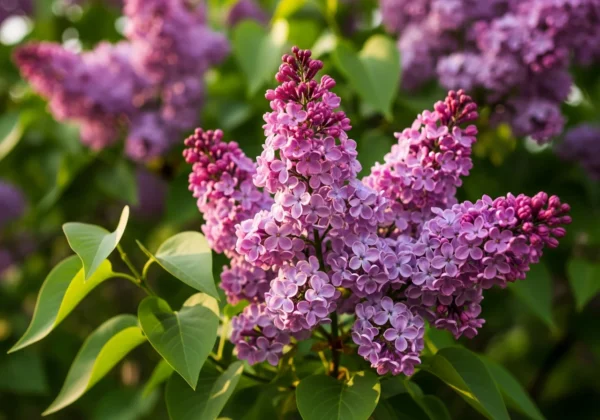
Violet Meaning: Why Napoleon Chose Violets as His Secret Emblem — and What They Still Symbolise

Discover the violet flower meaning: why the sweet violet symbolises modesty and faithfulness, its role in Greek mythology, Napoleon’s secret political code, Shakespeare’s use of violets, and the colour meanings of blue, white, and yellow varieties.
Few flowers carry their meaning as honestly as the violet. It grows in the shade, close to the ground, often overlooked until you are directly upon it — and then the scent stops you. The sweet violet (Viola odorata) has been read as a symbol of modesty and faithfulness for over two thousand years, not because someone arbitrarily decided it, but because the flower itself seems to enact those qualities. Small, unassuming, and extraordinary if you pay attention: this is the violet flower meaning at its most literal. This guide covers the full symbolism of Viola odorata — including its role in Greek mythology, its remarkable history as Napoleon’s secret political emblem, Shakespeare’s use of it, and what violet flower symbolism means when you give one today.
The Core Meanings of the Violet
In the Victorian language of flowers — the elaborate system of coded floral messages that governed gifting from the 1820s onward — the violet carried three interlocking meanings: modesty, humility, and faithfulness. These were not arbitrary choices. Each reflects something observable about the plant itself:
- Modesty: The violet blooms at ground level, tucked among leaves, rarely announcing itself visually. It signals its presence through fragrance rather than display.
- Humility: Its small size, its preference for woodland edges and hedgerows, its survival in dappled shade — everything about Viola odorata suggests a flower that does not demand the centre of the stage.
- Faithfulness: The violet returns every year to the same places, reliably, quietly. In an era when flowers were a precise language, this was read as a message of constancy: I will always be here.
These three meanings form a unified statement: the violet represents a love or loyalty that doesn’t shout. It doesn’t need to. For anyone who would like to understand how this tradition of flower meaning developed, our complete flower symbolism guide traces the full language of flowers across history and cultures.
Violet Flower Symbolism in Greek Mythology
Two of the most important Greek myths connect directly to the sweet violet, and both give the flower an unexpectedly charged symbolic weight.

Get a free pre-planned flower bed (vase-worthy from June to frost)
Printable planting plans for a cut-flower bed and a cottage pollinator bed — plant list, spacing, and calendar included.
The first involves Io and Zeus. According to Ovid and earlier Greek sources, Zeus fell in love with the nymph Io and, fearing Hera’s jealousy, transformed Io into a white heifer to conceal her. Unable to provide her with her usual food, the earth compassionately produced sweet violets for the transformed Io to eat. In this myth, the violet is a flower of divine compassion and transformation — it appears at the exact moment when someone has been stripped of their identity and needs tending. It is a flower of care offered without condition.
The second myth is starker. When Persephone was taken to the Underworld by Hades, she was in the act of gathering violets in a meadow. In ancient depictions, the scattered violets mark the threshold: the last moment of the upper world before the descent, the last flowers she held. This makes the violet a flower of spring, of transition, and of the between-worlds — the bloom that exists at the edge of one state and the beginning of another.

These two myths give the violet a symbolic range that is wider than the Victorian florists captured: not just modest faithfulness, but compassionate care and the poignant transience of spring. The Greeks were reading something real in the flower.
The Violet as Athens’ Emblem
In ancient Athens, the violet was not merely a garden flower — it was the city’s official emblem. Athens was known across the ancient world as Ioblepharos (violet-crowned), and the flower appeared on Athenian coins, in poetry, and in ritual. Athenians wove violet garlands to wear at feasts and crowned newlyweds with violets as a symbol of faithful love and civic identity. The poet Pindar praised “violet-crowned Athens” in the fifth century BCE, and the tradition continued for centuries.
That a major city chose the violet — rather than a more imposing flower — as its defining emblem says something significant. Athens was not choosing the rose or the lily: it chose a small, fragrant, ground-level flower that returned reliably every spring. The qualities the city wished to project through its emblem were not grandeur but fidelity, beauty, and perennial renewal.
Napoleon and the Violet: A Secret Political Code
The most dramatic episode in the violet’s symbolic history belongs to Napoleon Bonaparte — and it is one of the most extraordinary examples of a flower carrying genuine political meaning rather than merely sentimental value.
Napoleon’s association with violets began through personal preference: Josephine grew them in her garden at Malmaison, and Napoleon is recorded as bringing her violets on their wedding anniversary each year. But the flower took on a different, harder significance during his first exile to Elba in 1814. Before departing, Napoleon told his supporters: “I will return with the violets in spring.” His followers adopted the violet as a secret emblem. When they wore a bunch of violets, it signalled political allegiance to the exiled Emperor.
The identification deepened into an elaborate code. Bonapartists used the nickname “Corporal Violette” for Napoleon — a term that was simultaneously affectionate and covert. To identify a fellow sympathiser in public, you would ask: “Do you like violets?” The reply “Eh bien” (indeed) confirmed loyalty; “Ni oui ni non” (neither yes nor no) signalled a neutral or non-supporter. A flower had become a password.

When Napoleon returned from Elba in March 1815 — as promised, when the violets were in bloom — his supporters celebrated by wearing violets publicly. After his final defeat at Waterloo and exile to Saint Helena, they wore violets again, as an act of mourning and continued allegiance. The violet had carried an entire political movement in its petals.
Shakespeare’s Violets
Shakespeare used the violet with remarkable precision throughout his plays, always in the same symbolic register: faithfulness, constancy, and authentic feeling.
The most famous instance is in Hamlet. When Ophelia distributes flowers in her grief-fractured state, she specifically hands out violets for faithfulness — but then says she has none to give, because they “all withered when my father died.” Shakespeare’s audience would have understood immediately: Ophelia is saying that faithfulness itself has died. The violet’s traditional meaning transforms the line from simple sadness into a precise emotional statement.
Less discussed but equally deliberate: in Twelfth Night, Shakespeare named his heroine Viola — a character whose defining qualities are constancy, disguised loyalty, and faithful love expressed in an indirect register. The name is not coincidence. Viola embodies what the violet means.
Violet as the February Birth Flower
The violet shares the February birth flower designation with the iris — a pairing that places two flowers of constancy and spiritual depth in the same month. The violet represents faithfulness and modesty; the iris carries meanings of wisdom, hope, and eloquence. Together they describe a full emotional portrait of February: a month associated with both enduring love and emerging light.
A bouquet of sweet violets makes an unusually meaningful February birthday gift — it communicates “you are someone of genuine worth and quiet depth,” without the generic associations that roses carry. For a full picture of what flowers mean for each birth month, our guide to birth flowers and their meanings covers every month in detail.
Stop missing your zone's planting windows.
Select your US zone and month — get a complete checklist of what to plant, prune, feed, and protect right now.
→ View My Garden CalendarViolet Colour Meanings
The Victorian language of flowers distinguished between the three main violet colours, each with a specific meaning:
| Colour | Meaning | Best For |
|---|---|---|
| Blue-purple | Faithfulness, spiritual depth, constancy | Faithful friendship; quiet declarations of love |
| White | Innocent modesty, purity of intention | New beginnings; sincere but understated affection |
| Yellow | Cheerful worth, sunny character | Friendship; appreciation of a warm personality |
Blue-purple Viola odorata is the classic sweet violet: the flower of Napoleon, Athens, and Shakespeare. Its fragrance is the most potent of the three, and it carries the full weight of the modesty-faithfulness-humility triad. White violets share the same structural humility but carry a lighter, more innocent meaning — they are for someone whose goodness has not yet been tested, or whose sincerity you wish to honour without the intensity of purple. Yellow violets are the outlier: cheerful rather than contemplative, suited for platonic warmth rather than deep faithful affection.
The Symbolism of Small Size
One detail that runs through every tradition attached to the violet is its size. The flower reinforces its own meaning. It doesn’t shout from a tall stem like a sunflower; it whispers from the ground. In this it is physically modest in the way it is symbolically modest — the meaning is enacted in the growth habit. This quality made violets the gift of choice in Victorian culture specifically for people whose value was not obvious at first glance: the loyal friend who doesn’t seek attention, the faithful partner who doesn’t need praise. A violet said: I see what others overlook in you.
When to Give Violets
The violet’s meaning makes it ideal for a specific kind of gifting:
- For a faithful friend: The classic violet message — “your constancy matters to me and I notice it.”
- For February birthdays: The birth flower gift carries full symbolic weight for people born in the month most associated with faithfulness and enduring love.
- For someone who embodies quiet strength: The violet is the right flower for someone whose value is in their reliability, not their showiness.
- As a message of “I am always thinking of you”: The violet says this without drama — it is the opposite of a grand gesture. It is the everyday, faithful kind of affection that doesn’t need occasion.
- Avoid if you need drama: If the message needs to be unmistakable from across a room, violets are not the right flower. Their power is in their subtlety — the recipient needs to know the language.
Frequently Asked Questions
What does the violet flower mean?
The violet flower primarily means modesty, humility, and faithfulness. In the Victorian language of flowers, the sweet violet (Viola odorata) was the standard gift for expressing loyal, understated affection — love or friendship that doesn’t require display to be genuine. The colour modifies the message: blue-purple for deep faithfulness, white for innocent modesty, yellow for cheerful worth.
What is the meaning of the violet in the language of flowers?
In Victorian floriography, the violet meant modesty and faithfulness above all other flowers. It was chosen specifically when the giver wanted to communicate constancy without ostentation — the message was “I am always thinking of you” or “your loyalty is valued” rather than any passionate declaration. The flower’s small size and ground-level growth reinforced the message physically.
Why is the violet connected to Napoleon?
Napoleon chose the violet as his personal emblem before his exile to Elba in 1814, promising to return “with the violets in spring.” His supporters wore violet bunches as a secret political badge of loyalty to him, and used a coded question — “do you like violets?” — to identify fellow Bonapartists. The affirmative reply “Eh bien” confirmed allegiance. When Napoleon returned in March 1815, violets were in bloom exactly as he had predicted, and his supporters wore them publicly in celebration. He was nicknamed “Corporal Violette.”
Is the violet the February birth flower?
Yes. The violet is one of two February birth flowers, alongside the iris. The pairing places two flowers associated with faithfulness and spiritual depth in the same month. Violets are a traditional February birthday gift that communicates quiet appreciation for someone whose constancy and genuine character you value.
Sources
- V&A Museum — Floriography collection and Victorian language of flowers documentation
- Napoleon Foundation (fondation-napoleon.fr) — Napoleon and the violet: historical records of the “Corporal Violette” nickname and exile emblem
- Missouri Botanical Garden — Viola odorata species profile and cultivation history
- RHS — Sweet violet growing guide and species identification
- Kew Gardens — Viola odorata botanical record and historical uses