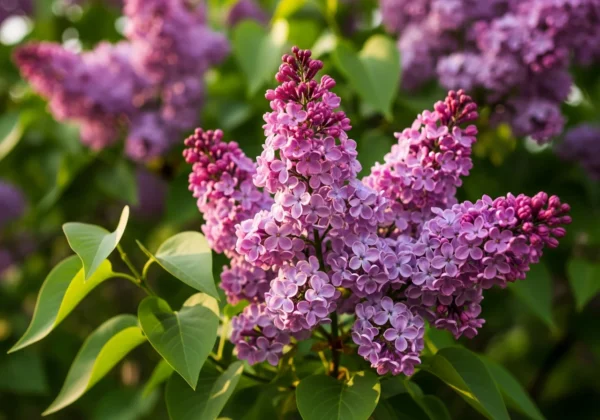
Iris Flower Meaning: Named for the Rainbow Goddess — and What Each of Its 8 Colours Represents

Discover what the iris flower means — from its Greek goddess origin and colour-by-colour symbolism to the fleur-de-lis, Van Gogh, and gifting traditions.
The iris is unusual among garden flowers in this: it carries its mythology in its very name. Every iris — from the purple bearded varieties lining an English herbaceous border to the slender blue flags growing in a French meadow — takes its name from Iris, the ancient Greek goddess of the rainbow and divine messenger between the gods and the mortal world. When ancient Greeks planted irises on a woman’s grave, they were not simply honouring her memory. They were placing a beacon for the goddess to find, so she could guide that soul to the underworld along the rainbow bridge.
That origin sets the iris apart. Most flowers acquired symbolic meanings gradually, through medieval herbalists or Victorian florists. The iris arrived in floriography already carrying thousands of years of divine association, royal history, and artistic legacy. This guide covers what the iris means across colours and cultures — and why it remains one of the most symbolically loaded flowers you can give or grow. For the broader tradition it belongs to, see our complete flower symbolism guide.
What Does an Iris Symbolise?
The iris carries four primary meanings: faith, hope, wisdom, and courage. These are not random Victorian assignments — they map directly onto the flower’s three upright petals and three drooping sepals, which have been interpreted symbolically for at least a millennium.

In Christian tradition, the three petals represent the Holy Trinity — Father, Son, and Holy Spirit. This reading appears in medieval religious art, where the iris stands in for the lily in Annunciation scenes, particularly in Flemish and Italian Renaissance painting. It carries the same associations of purity and divine grace, with the added weight of the Trinity symbolism in the petal count.

Get a free pre-planned flower bed (vase-worthy from June to frost)
Printable planting plans for a cut-flower bed and a cottage pollinator bed — plant list, spacing, and calendar included.
The French royal interpretation is different but equally deliberate. The three petals were understood to embody the virtues of the French crown: faith (foi), wisdom (sagesse), and courage (valeur). When the fleur-de-lis became the emblem of French royalty, these were precisely the qualities it was meant to signify — a monarchy claiming divine sanction alongside military and intellectual virtue.
Kate Greenaway’s 1884 Language of Flowers gave the iris a single, precise meaning: “Message” [1] — a direct reference to the goddess Iris’s role as divine messenger between worlds. Of all Victorian flower meanings, this one has the most traceable origin.
Iris Meaning by Colour
The iris genus spans a wider colour range than almost any other garden flower, and each colour carries its own symbolic register. Here is how each reads:

| Colour | Meaning | Note |
|---|---|---|
| Purple | Royalty, wisdom, admiration | The most symbolically powerful iris; purple has been the colour of royalty since Roman emperors reserved Tyrian dye exclusively for imperial use |
| Blue | Faith, hope, trust | The classical meaning linked directly to the goddess; ancient Greeks planted blue and purple irises on graves as a guide for departing souls |
| Yellow | Passion and creative energy | One of the few yellow flowers that means passion rather than friendship — the yellow iris inverts the usual yellow flower convention |
| White | Purity and innocence | Common in ceremonial contexts; carries the same clean spiritual associations as white lily and white rose |
| Orange | Enthusiasm and warmth | The most energising iris colour; associated with vitality rather than the gravity of purple or the serenity of blue |
The yellow iris deserves a specific note because it is a genuine exception to a broad rule. Yellow flowers almost universally carry friendship meanings — yellow roses, yellow tulips, yellow chrysanthemums all signal cheerful affection without romantic weight. The yellow iris breaks this pattern. Its meaning leans toward passion and creative fire — closer in emotional temperature to orange than to the familiar friendship yellow. If you’re choosing irises deliberately, a yellow iris bouquet carries a very different message than you might assume.
Iris Symbolism Across Cultures
Few flowers have accrued as much cross-cultural symbolic weight as the iris. Its meanings span ancient Greece, pharaonic Egypt, medieval France, and the Christian tradition — and in each case the symbolism derives from distinct sources.

Ancient Greece
The goddess Iris is one of the few divine figures in Greek mythology whose name passed directly to a flower. Homer’s Iliad is among the earliest major literary sources: Iris appears repeatedly as the swift messenger of Zeus, moving “swift as the wind” between the realms of gods and mortals to deliver commands, warnings, and divine proclamations [2]. In Book 2, she takes on a mortal form to carry Zeus’s message to the Trojan forces; in Book 3, Athena dispatches her to fetch Helen for the single combat scene.
Her later mythological role extended to guiding the souls of deceased women to the underworld along the rainbow — which is precisely why ancient Greeks planted purple irises on women’s graves. They were not making a decorative gesture. They were performing a communication ritual, placing a flower to summon the divine messenger and ensure the soul reached its destination safely.
Ancient Egypt
The iris appears in Egyptian art and hieroglyphs, where it was associated with power and magical protection — particularly against serpents, which carried enormous symbolic significance in a culture where cobra imagery was tied directly to royal and divine authority. The stylised iris blossom features in pharaonic imagery, suggesting its arrival in Egypt along ancient Mediterranean trade routes predated its formal naming in the Greek tradition.
French Royal History
The fleur-de-lis is not merely inspired by the iris — it is the iris, stylised into heraldic form. The three petals of the classic fleur-de-lis trace directly back to the bearded iris (Iris germanica) or possibly the yellow flag iris (Iris pseudacorus) native to French wetlands. The Frankish king Clovis I is credited in tradition with adopting the iris emblem following his victory at the Battle of Tolbiac in 496 AD [3]. By the 12th century, the fleur-de-lis was the definitive emblem of the French crown, appearing on the arms of Louis VII and remaining the royal standard for over a millennium — one of the longest continuous uses of a single flower as a national symbol in recorded history.
Christian Tradition
Beyond the Trinity interpretation, the iris carries a specifically Marian association rooted in the shape of its leaves. The sword-like foliage of many iris species was linked to the grief of the Virgin Mary at the Crucifixion — referencing Luke 2:35, “a sword will pierce your own soul.” This reading appears in devotional painting from Hans Memling’s Virgin and Child onwards. The iris thus operates on two symbolic registers in Christian art: the purity of the flower’s bloom and the sorrow implicit in its leaves.
The iris is also one of the birth flowers for February — its association with hope and new beginnings aligning with its position at the threshold of spring.
The Spiritual Meaning of the Iris
The iris’s spiritual identity is defined by its mythological origin as Iris the messenger. Among flowers, few carry so specific a spiritual function: not general beauty or divine blessing, but the active role of carrying communications between worlds — from the sacred to the human and back.

In contemporary spiritual traditions that draw on Greek symbolism, the iris represents divine communication and the openness to receive revelation. The idea that insight, like a message, arrives from outside the self is central to this reading. The rainbow bridge metaphor extends it further: the iris sits at the point of connection between the visible and invisible worlds, between grief and comfort, between the living and the dead.
There’s something genuinely moving about the specificity of ancient Greek grave-planting practice. This wasn’t symbolic decoration — it was a functional act, placing the flower that bore the messenger goddess’s name to ensure she would arrive and do her work. The iris carries this ancient charge as a sympathy flower even when we’ve entirely forgotten the story behind the gesture.
Stop missing your zone's planting windows.
Select your US zone and month — get a complete checklist of what to plant, prune, feed, and protect right now.
→ View My Garden CalendarYou might also find flower colours mean? colour symbolism helpful here.
What Does an Iris Mean as a Gift?
The iris is one of the most intentional flowers you can give because its symbolism is precise enough to carry a specific message. It communicates best when faith in the recipient is part of what you want to say — faith in their abilities, their judgement, their path forward.

The iris is particularly well suited to:
- Celebrating professional achievement or graduation — wisdom and the faith you have in the recipient’s future, combined in a single stem
- Mentorship occasions — an iris given to a teacher, mentor, or counsellor conveys appreciation for their wisdom in a way that a generic bouquet doesn’t
- February birthdays — the iris is the birth flower for February [link to February birth flower article to be added when published]
- Sympathy — the iris has the most historically grounded case for inclusion in sympathy flowers of almost any bloom, rooted directly in the ancient Greek tradition of grave-planting; alongside the forget-me-not meaning and blue flower symbolism, it is one of the most charged choices you can make
- 12 Iris Varieties for Every US Garden
A specifically Victorian giving tradition worth preserving: three irises together were understood to carry the message of faith, hope, and love — a compact triad matching the three petals. If you’re giving irises for an occasion where all three of those qualities are present, three stems is the historically resonant number.
If you grow irises in your own garden and want to understand the plant’s requirements and care calendar, our guide on how to grow iris flowers covers the full growing cycle from planting to division.
Iris in Mythology and History
Homer’s Iliad is the earliest major literary source for the goddess Iris. She is Zeus’s and Hera’s preferred messenger — efficient, swift, and reliable in a way that Hermes (who also serves as divine messenger) is not always. Her appearances in the text are functional: she delivers urgent commands and warnings, moving between Olympus and the Trojan plain with a directness that contrasts with the more elaborate interventions of other gods [2].

Dante placed an iris in Paradiso (Canto XII) as a symbol of the rainbow and heavenly mediation — aligning his theological imagery with the pre-Christian Greek tradition, centuries after Christianity had otherwise displaced the Olympian gods. The resonance held because the iris’s symbolic function (messenger, bridge between realms) translated naturally into Christian imagery.
Van Gogh painted irises obsessively during his voluntary confinement at the Saint-Paul-de-Mausole asylum in Saint-Rémy-de-Provence in 1889. His letters to his brother Theo, preserved in the Van Gogh Museum archives, describe painting the irises growing in the asylum garden as one of his first acts after his breakdown — a way of steadying his concentration and re-engaging with the observable world [4]. The large Irises (1889, now at the Getty Museum) was completed in the first week of his stay, before he resumed more complex subjects. The irises were not a symbolic choice for Van Gogh — they were proof that the world was still there and still worth looking at. That personal context makes the painting one of the most emotionally direct examples of flower symbolism in Western art, even though the symbolism was entirely unintentional on his part.
In Japan, the June iris festival — Hanashobu — centres on Iris ensata, the Japanese water iris, which blooms at the beginning of the rainy season. The festival has been celebrated since the Heian period (794–1185 CE). Iris leaves were placed in baths and under pillows on Children’s Day (5 May) — the sword-shaped foliage associated with warrior virtues and protective strength. The iris in Japanese culture is less about divine communication and more about vigour, protection, and seasonal transition: a different emphasis that reveals how flower meaning shifts when mythology does.
The hyacinth shares a similarly layered classical origin story — see our guide to hyacinth meaning and spring bulb symbolism for how Ovid’s Metamorphoses shaped another spring flower’s symbolic identity.
Frequently Asked Questions
What does the iris flower symbolise?
The iris primarily symbolises faith, hope, wisdom, and courage. Its name derives from the ancient Greek goddess Iris — divine messenger and personification of the rainbow — giving it additional associations with communication, divine guidance, and the safe passage of souls between worlds. In the Victorian language of flowers, Kate Greenaway assigned it the meaning “Message” [1].
What is the meaning of the fleur-de-lis?
The fleur-de-lis is a stylised iris. It became the emblem of French royalty when Clovis I adopted it following his victory at the Battle of Tolbiac in 496 AD [3], and it remained the French royal standard for over a millennium. Its three petals were interpreted as representing faith, wisdom, and courage — the three defining virtues of the French crown.
Why is iris a February birth flower?
The iris is associated with February because it is among the earliest spring-blooming bulbs, pushing through cold ground at the end of winter. Its symbolism of hope, faith, and new beginnings aligns with the position of February at winter’s threshold. [Link to February birth flower article to be added when published.]
Sources
- Kate Greenaway, Language of Flowers (1884, Frederick Warne & Co.). The primary Victorian flower dictionary. Freely available at Project Gutenberg, ebook #31591.
- Homer, Iliad, Books 2 and 3 (trans. A.T. Murray, Loeb Classical Library). Iris as divine messenger of Zeus.
- Société française d’héraldique et de sigillographie, documentation on the fleur-de-lis and its origins in the iris genus. See also: RHS Iris genus page for botanical context.
- Van Gogh Museum, The Letters of Vincent van Gogh. Letter 776 (to Theo van Gogh, c. 12 May 1889) describing the Saint-Rémy irises. Available at vangoghmuseum.nl.