

Mushrooms Suddenly Appearing in Your Yard? Here’s What Your Soil Is Telling You

Your soil is trying to tell you something. Learn what each mushroom outbreak pattern means and the one step that permanently stops them.
Walk outside the morning after a good rain and you might find your lawn has grown a small collection of mushrooms overnight. It looks sudden, but the fungus causing it has been living in your soil for months, maybe years. What changed wasn’t the fungus — it was the weather.
Most homeowners want to know two things: what is actually causing this, and whether they need to worry. The answer to both depends on which type of outbreak you’re seeing. A ring of mushrooms tells a completely different story from a cluster at the base of a tree or a scatter of random caps across an open lawn. Each pattern traces back to a different underground cause — and that distinction determines what, if anything, you need to do. This guide draws on university extension services and peer-reviewed mycology to give you a specific answer, not a generic one.
What You’re Actually Seeing: The Fungal Iceberg
The mushrooms in your yard are fruiting bodies — the reproductive structures of a much larger underground organism. The real fungus lives as mycelium: a dense web of thread-like filaments called hyphae that colonize soil, dead wood, and organic debris without any visible sign at the surface. You can have several square feet of active mycelium in your lawn and not know it until weather conditions trigger reproduction.
When soil temperature, moisture, and available nutrients align, the mycelium shifts from its vegetative phase into its reproductive phase and pushes up mushroom caps. Those caps mature in as little as 12 to 24 hours, release millions of spores into the air, and then collapse — often within a day or two. The mushrooms disappear, but the underground organism carries on exactly as before. According to NC State Extension, fungi serve as ‘a major recycler of organic carbon, the compounds necessary for all life.’ The mushrooms you see represent that recycling becoming briefly visible.

Three pre-planned garden beds, free
Stop staring at empty beds: printable plans with exact layouts, plant lists and planting calendars — yours free from the Garden Library.
This also explains why mushrooms return to the same spot season after season. The underground mycelium persists as long as its food source remains. Iowa State Extension puts it plainly: mushrooms will reappear ‘periodically over the next several years during favorable environmental circumstances’ until the organic matter they are feeding on is completely exhausted.
The Pattern Tells the Story: Ring, Cluster, or Scatter?
The location and arrangement of your mushroom outbreak is the fastest diagnostic tool you have. Each pattern points to a different underground cause, a different level of concern, and a different response. Identify your pattern first — then you know exactly what you’re dealing with.
| Pattern You See | What’s Underground | Concern Level | First Action |
|---|---|---|---|
| Scattered caps across open lawn | Buried wood debris, old roots, or thick thatch | Low | Dethatch; wait for debris to decompose |
| Dense cluster at tree base or stump | Wood-decay fungus — possibly Armillaria | Medium — check the tree | Assess tree health; consult arborist if tree shows canopy dieback |
| Ring or arc of mushrooms | Expanding fairy ring colony | Low to medium (see type) | Identify ring type; see fairy ring section |
| Mushrooms in mulched bed | Decomposing mulch or buried roots | Low | Turn mulch layer; replace if appearance bothers you |
| Single large mushroom near tree roots | Mycorrhizal fungus in beneficial partnership | None | No action — this is a healthy soil signal |
The most important distinction in that table is the cluster at a tree base. Most lawn fungi are saprophytic — they decompose dead organic matter and cause no harm to living plants. Armillaria (honey mushroom) species are the exception. Unlike saprophytic species, Armillaria can parasitize living root systems and cause structural decay in trees. Dense golden-brown clusters at the base of a living tree, especially one showing canopy dieback, warrant a closer look from a certified arborist. For context on how to distinguish fungal problems from other plant pests and diseases, it helps to understand the difference between a pathogen and a decomposer.
The 5 Underground Causes
1. Buried Organic Matter
This is the most common cause of scattered lawn mushrooms. Buried tree roots, stumps that weren’t fully removed, scraps of construction lumber left underground during landscaping, and layers of accumulated thatch all function as fungal food. The mycelium colonizes this material and continues fruiting until it is fully decomposed — a process that can take three to ten years depending on the size and type of the wood. Removing visible mushrooms has no effect on this process.
2. Accumulated Thatch
Thatch is the layer of partially decomposed grass stems, stolons, and roots that accumulates between the grass blades and the soil surface. When this layer exceeds half an inch, it holds moisture, provides organic material for saprophytic fungi, and reduces airflow — creating ideal conditions for mushroom outbreaks. Dethatching with a power rake in early spring or fall physically removes this reservoir.
3. Compacted, Poorly Draining Soil
Compacted soil restricts the downward movement of water, keeping the upper soil profile persistently moist. That sustained moisture is a primary environmental trigger for mycelial fruiting. Core aeration — pulling cylindrical plugs of soil with a core aerator — directly addresses this by opening drainage channels and improving airflow. University of Minnesota Extension recommends fall aeration for this purpose. For broader guidance on building better soil structure, our soil improvement guide covers drainage, compaction, and amendment strategies.
4. Tree Stumps and Dead Root Systems
After a tree is removed, its root system continues to decay underground for years. The larger the tree, the larger the root mass — and the longer the fungal food supply lasts. Grinding the stump below soil level helps, but lateral roots can extend far beyond the visible stump area. Expect periodic mushroom outbreaks near the site of a large tree removal for several years after the stump is gone.
5. Natural Mycorrhizal Networks
Not all lawn mushrooms indicate a decomposition problem. Mycorrhizal fungi form beneficial partnerships with living tree and plant roots, trading soil minerals for plant-produced sugars. The mushrooms they produce tend to appear singly near tree root zones, not in clusters, and are not associated with dead material. These are a sign of biologically active, healthy soil. No management is needed or warranted.
Why Mushrooms Seem to Appear Overnight
A mushroom cap can go from underground primordia to fully developed in 12 to 24 hours under the right conditions. A lawn that looks clear at dusk can be mushroomed at dawn. The ‘sudden’ appearance is real — but the organism causing it has been present and waiting for much longer.
The trigger is three conditions arriving simultaneously: sustained soil moisture that penetrates to where the mycelium lives (not just surface dampness), soil temperatures in the 50°F–70°F range, and sufficient available nutrients from ongoing organic matter decomposition. Heavy spring and fall rains satisfy all three conditions at once, which is why mushroom outbreaks peak in those seasons rather than in midsummer heat or winter cold.
Extended dry periods followed by heavy rain can produce unusually large fruiting events. The mycelium accumulates carbohydrate reserves during drought and responds strongly when moisture finally arrives — triggering a synchronized fruiting across the entire colony. A single substantial rainstorm in late August after a dry stretch can produce more mushrooms than weeks of steady June rain. The most striking example I have seen firsthand: a lawn I had been maintaining for several years showed nothing unusual all summer, then overnight after the first heavy September rain produced dozens of caps in a concentrated patch — directly above where a large stump had been ground out two years earlier. The mycelium had been building up resources through the entire dry period, waiting. This is worth knowing if your lawn has a history of seasonal outbreaks: they’re not random, they follow the pattern of your soil’s moisture-temperature cycles.
Fairy Rings: What the Circle Actually Means
A ring or arc of mushrooms is a fairy ring, and its formation explains why it behaves so differently from scattered lawn mushrooms. Fairy rings begin as a single fungal spore that germinates and grows outward from its starting point in all directions. The mycelium expands radially, consuming organic matter as it goes. As the interior of the colony exhausts its food supply and accumulates self-inhibitory compounds — a mechanism researchers call ‘self-DNA autotoxicity,’ where the fungus essentially poisons its own interior — the growing edge remains confined to the outer perimeter. The result is a ring, not a solid disk of mushroom activity, expanding year after year.
Growth rates vary by species. According to peer-reviewed research published in 2025, Clitocybe species expand at approximately 75 centimeters per year, while Lepista sordida grows at up to 125 centimeters per year. Some fairy ring colonies have been estimated at 1,500 to 2,400 years old, making individual rings among the oldest and largest living organisms on Earth.
University of Maryland Extension classifies fairy rings into three functional types based on their effect on surrounding grass:
Stop missing your zone's planting windows.
Select your US zone and month — get a complete checklist of what to plant, prune, feed, and protect right now.
→ View My Garden CalendarType 1 is the most damaging. The mycelium produces hydrophobic proteins called hydrophobins that coat soil particles and make them water-repellent. Even during heavy rainfall, the soil in the affected band stays dry, and the grass above it dies. This creates the classic three-zone pattern: a ring of dark green lush grass on the outer edge, a dead brown band in the middle, and another green ring inside. Remediation requires deep irrigation, core aeration, and in severe cases, soil removal to a depth of 12 inches extending at least 2 feet beyond the visible ring edges.
Type 2 produces a band of distinctly darker, denser grass rather than a dead zone. This is the result of nitrogen mineralization at the ring’s outer edge. As the mycelium decomposes organic matter, it releases ammonium into the surrounding soil. Research has documented a 455% increase in ammonium-N concentrations in fairy ring zones compared to unaffected surrounding soil — essentially, the fungus is fertilizing your grass. Type 2 rings look alarming because of the visible banding, but they are not harming the lawn.
Type 3 produces mushrooms without any visible effect on the grass — no dead zones, no greener rings. Many homeowners have a Type 3 fairy ring in their lawn without ever realizing it until mushrooms appear after rain.
For most homeowners, Type 2 or Type 3 rings are the norm. Removing the mushrooms to prevent spore dispersal and reduce hazards for children or pets is worthwhile, but the ring itself is not damaging the lawn.
Are These Mushrooms Dangerous?
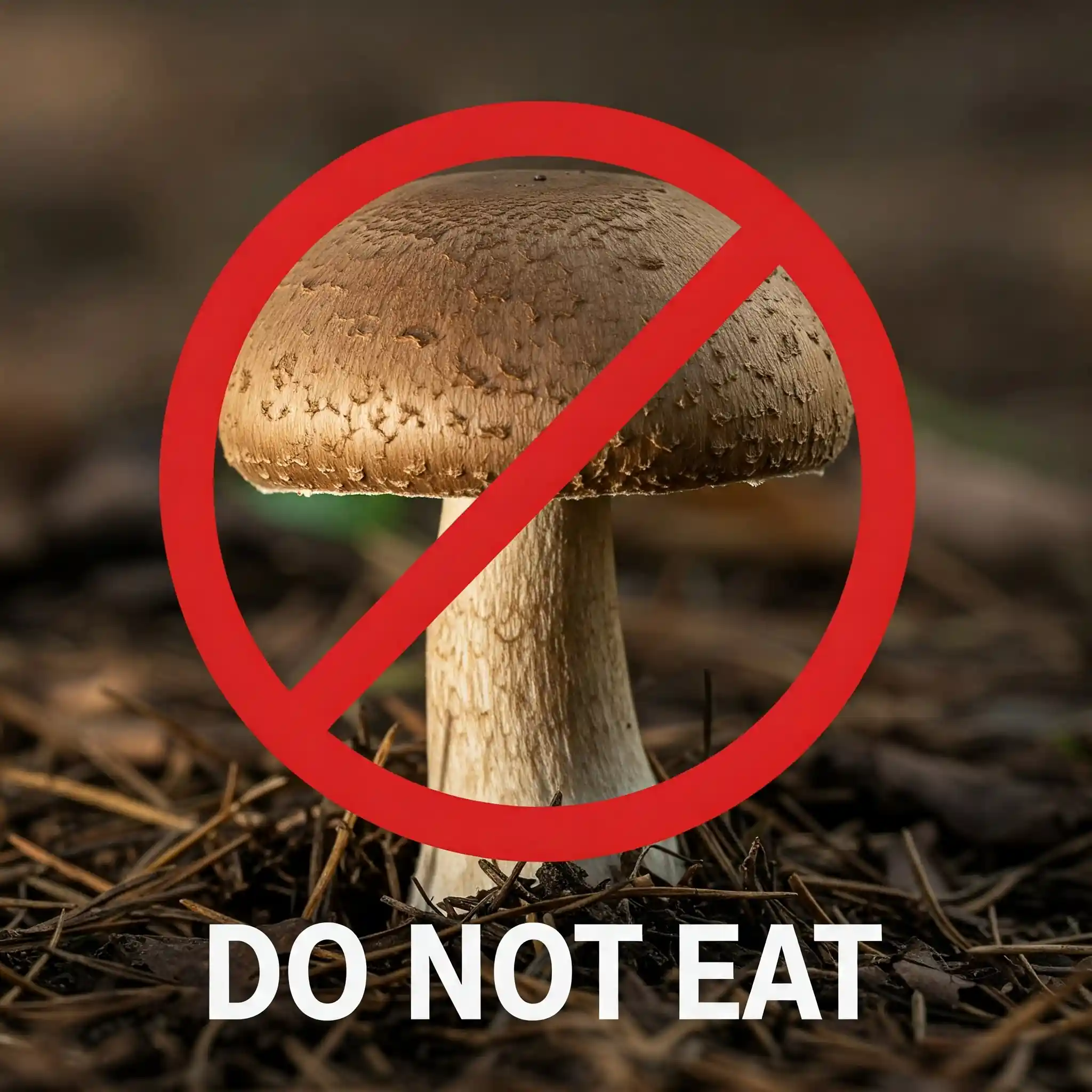
The direct answer: dangerous to eat, not dangerous to the lawn.
Most lawn mushrooms are saprophytic and cause no harm to your grass or garden plants. University of Minnesota Extension states that ‘a vast majority of mushrooms in lawns are not related to disease.’ These fungi are performing decomposition work and releasing nutrients in the process. For standard lawn care purposes, they are ecological allies.
The danger is ingestion. Several common lawn mushroom species are toxic. NC State Extension names White Amanita, Chlorophyllum molybdites (the false parasol), Clitocybe, and Inocybe as dangerous species commonly found in yards. Chlorophyllum molybdites deserves particular attention: it closely resembles edible parasol mushrooms, develops a greenish rather than white spore print as it matures, and is responsible for more mushroom poisoning calls in North America than any other species. It prefers lawns and pastures in warm climates and is widespread across the US from Zone 5 southward.
The rule is simple: never eat wild lawn mushrooms unless they have been positively identified by a trained mycologist. Touching them is safe — mushroom toxins require ingestion to cause harm. Teach children not to handle or taste them. If a child or pet ingests a yard mushroom, call Poison Control at 1-800-222-1222 or your veterinarian immediately, and bring a sample of the mushroom if possible.
The one case where lawn mushrooms signal genuine plant damage: dense clusters of golden-brown mushrooms at the base of a living tree, especially one showing yellowing or thinning in its upper canopy. This points to Armillaria infection of the root system — a pathogen, not a decomposer. Have a certified arborist evaluate the tree if you see this combination.
How to Remove Lawn Mushrooms
Remove mushrooms before they open and release spores — the cap is at its tightest in the morning. Pick them by hand wearing disposable gloves and bag the debris. Do not compost lawn mushrooms: spores survive hot composting and can reinfect other areas of your garden or lawn.
If you use a mower, use a bagging attachment rather than mulching mode. A mulching mower shreds caps and distributes spores across the full mowing path — effectively spreading the problem rather than solving it. A mower with a bagging attachment removes the material cleanly.
Spraying a diluted white vinegar solution directly on the caps (5 tablespoons per gallon of water, per SDSU Extension) before removal can accelerate desiccation and reduce spore viability. This is a useful step if you’re dealing with a large flush. It has no effect on the mycelium below the surface.
Fungicides are not a practical tool for lawn mushrooms. Turf fungicides are formulated for pathogenic fungi that infect living grass tissue — they are not labeled for saprophytic fungi, and the mycelium lives too deep in the soil to be reached at effective concentrations without damaging the turf above. Iowa State Extension is direct: ‘There is nothing that can be applied to the ground that will prevent them from coming up.’
Prevention: Removing the Invitation
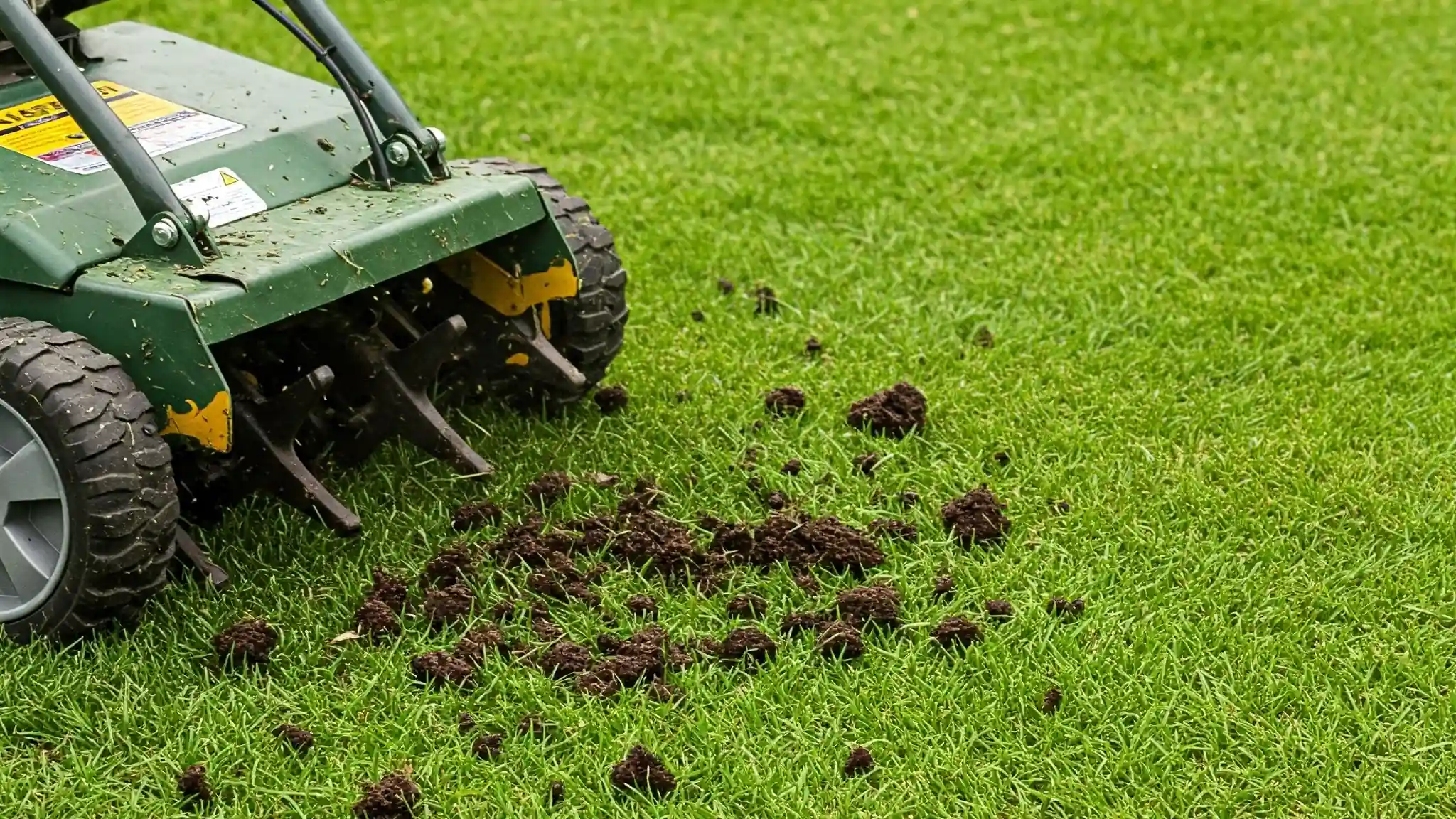
Effective prevention reduces either the food supply or the moisture conditions that trigger fruiting. Eliminating both takes time, but each step meaningfully reduces outbreak frequency.
Excavate or Exhaust the Organic Matter Source
The most permanent solution is physical: grind tree stumps below soil level, excavate buried lumber scraps if their location is known, and remove large accumulations of dead roots. Once the food source is gone, the fungal colony will eventually collapse. The tradeoff is that large buried root systems can take years to decompose even after excavation is no longer practical; in those cases, patience is part of the strategy.
Dethatch When Thatch Exceeds Half an Inch
Use a dethatching rake or power dethatcher in early spring or fall to remove the accumulated layer. A thin thatch layer under half an inch is normal and beneficial for the lawn; anything thicker creates a moisture-retaining organic mat that saprophytic fungi exploit. Dethatching also improves fertilizer and water penetration, so it benefits the lawn independently of the mushroom problem.
Core Aerate in Fall
Fall core aeration is the single most practical intervention for mushrooms driven by compaction or poor drainage. Pulling soil plugs opens drainage channels, improves air circulation, and mechanically disrupts surface mycelium. The fall timing allows the lawn to recover before winter and positions it to resist wet spring conditions. For a full seasonal lawn maintenance schedule that includes aeration timing, see our guide to preparing your lawn for spring.
Switch to Deep, Infrequent Watering
Daily shallow watering keeps the top inch of soil perpetually moist — ideal conditions for active mycelium. Switching to deep watering two or three times per week, applying enough water to reach 6 inches deep, allows the surface soil to dry between sessions and encourages grass roots to grow deeper into the soil profile. Deep-rooted turf is more drought-tolerant and competes better against surface moisture that fungi need.
Improve Light and Airflow
Trim lower limbs of trees and large shrubs to increase light penetration and air movement at ground level. Shade keeps soil cooler and wetter, extending the window of conditions favorable to mushroom outbreaks. This won’t eliminate an active fungal colony, but it reduces the frequency and duration of the moisture conditions that trigger fruiting.
Set Realistic Expectations
If buried organic matter remains in the soil, periodic mushroom outbreaks are a predictable consequence. Prevention measures reduce their frequency and size; they do not stop them immediately. The timeline depends on the size of the buried material — small root remnants may exhaust in two or three years; large stumps or substantial buried lumber can take a decade. The mushrooms will stop on their own when the food runs out. For guidance on building soil that supports healthy decomposition and strong turf, our guide to improving soil covers the full range of amendments and structural fixes.
Frequently Asked Questions
Why do mushrooms keep coming back in the same spot year after year?
Because the underground mycelium is still alive and the organic matter it feeds on hasn’t been exhausted. Removing visible mushrooms doesn’t affect the fungus below the surface. The colony will continue fruiting every time temperature and moisture conditions become favorable — which in most climates means spring and fall — until the buried organic material is fully decomposed.
Are lawn mushrooms a sign of a healthy lawn?
Mostly yes. Active saprophytic fungi indicate that biological decomposition is occurring in your soil, which improves nutrient cycling and supports healthy turf. Mycorrhizal mushrooms near trees are a direct sign of biologically rich soil. The exception is Armillaria clustered at a living tree’s base, which can indicate root disease. Scattered or ring-forming mushrooms across open lawn are rarely a concern for grass health.
Can I let my dog eat lawn mushrooms?
No. Chlorophyllum molybdites, one of the most common lawn mushroom species in the US, causes severe gastrointestinal illness in dogs and is among the most common sources of mushroom poisoning in North America. Do not allow pets to eat wild mushrooms of any kind. If ingestion occurs, contact your veterinarian or the ASPCA Animal Poison Control Center at 888-426-4435 immediately, and bring a sample of the mushroom if possible.
Will vinegar or dish soap kill lawn mushrooms permanently?
No. Surface applications affect only the visible mushroom cap. The mycelium lives several inches underground, out of reach of topical treatments at any practical concentration. Vinegar can accelerate cap desiccation and reduce spore release — useful short-term — but it has no lasting effect on the organism producing the mushrooms. Permanent elimination requires removing the organic matter the fungus is feeding on.
Sources
- NC State University Extension — Why Mushrooms Grow in My Yard (Sometimes)
- University of Minnesota Extension — Mushrooms in Lawns
- University of New Hampshire Extension — Why Are There So Many Mushrooms Coming Up in My Yard?
- University of Maryland Extension — Mushrooms and Slime Molds in Lawns
- PMC (2025) — Fungal Fairy Rings: History, Ecology, Dynamics and Engineering Functions
- SDSU Extension — Managing Mushroom Growth in Home Lawns
- Iowa State Extension — How Do I Get Rid of Mushrooms in My Yard or Garden Bed?


