

The Truth About Using Coffee Grounds for Tomatoes

Well, hi, fellow gardener. If you have spent any time at all browsing social media feeds or gardening websites, you almost likely came across this very popular “hack”: using coffee grounds for tomatoes. Presented as the ultimate secret weapon, a free and basic kitchen scrap that claims to boost your yield, prevent pests, and produce the juicest, most flavorful tomatoes you have ever produced. Surely that sounds almost too beautiful to be true. That small seed of uncertainty you possess? It’s a wise one. I’m here to have an honest, friendly conversation about this piece of digital folklore as a gardener who has spent years tending to everything from fussy fiddle leaf figs to vast vegetable fields right here in the US.
Let us thus get right to it and clear the air. Should you really be spreading your leftovers from morning coffee around the base of your valuable tomato plants? The honest, scientifically based response is no; you most certainly shouldn’t be immediately sprinkling fresh coffee grounds on your tomatoes. I know, I know—that can be exactly contrary what you have been advised. But hang with me for a bit; the secret to releasing really amazing outcomes in your garden is knowing the “why” behind this advise. From limiting your plants’ development to stopping water from ever reaching their roots, the truth is that using those grounds the wrong manner might cause more damage than good even if those grounds do possess potential.

Not to panic; this is not a reprimand. Consider me as your friendly guide, here to help you negotiate the misconceptions and straight forwardly apply the techniques that really do work. By arming you with the correct knowledge, I hope to enable you to feel confident, not perplexed, in your garden decisions. We will delve deeply into this subject together in this essay. We’ll investigate just why this “hack” initially became so famous, dissect the shocking science of what fresh coffee grounds actually do to your soil, and—most importantly—show you the right way to use their power (hint: it includes a little patience and a compost bin). By the time we finish, you will not only have a clear solution but also a toolset of tested substitutes your tomatoes will surely adore. All set to raise the finest tomatoes on the block? Let we begin.
Why Coffee Ground Became a Tomato “Hack”? The Digital Folklore
It is only reasonable that we investigate the reasons for the popularity of the myth before we bust it. Good stories are quite convincing since, after all, they often include a kernel of truth. Using coffee grounds on plants seems to make logical sense on first glance. You have most likely heard some of these debates, and at first look they make great logic.
Above all, is the promise of free fertilizer. Plants, particularly nitrogen for tomatoes to grow those rich, green leaves, are clearly nutrient-dependent. Coffee grounds include a reasonable concentration of nitrogen, hence the reasoning is that adding them to your soil directly increases the nutrients for your plants. It’s rather attractive to consider turning kitchen trash into a potent do-it-yourself fertilizer without spending any money.
Then there’s the angle on pest control. Claims that the strong aroma and abrasive texture of coffee grounds produce a barrier that slugs, snails, and even cats find uncomfortable are not new. Any organic gardener will find great appeal in the idea of a basic, natural pest control solution keeping your priceless tomatoes from turning into a bug’s feast.
And last, there’s the case of soil acidity. Fresh coffee grounds are actually acidic; tomatoes are known to enjoy somewhat acidic soil. Right now, it looks like the ideal match. You are providing exactly what your acid-loving plants yearn for. Combining these three ideas helps one to understand how this advice went viral. This is an easy, environmentally friendly, apparently scientific fix. As we will soon learn, though, the interaction of these components in actual soil is far more complex.

The Gardener’s Opinion on Coffee Ground Use with Tomato Plants
Alright, so now we know the reason the coffee ground theory is rather persuasive. Let us now softly draw back the curtains and see what the science says. Here we address the main question: are straight application coffee grinds beneficial for tomato plants? Actually, the reality is somewhat more complex and will help you avoid many problems.
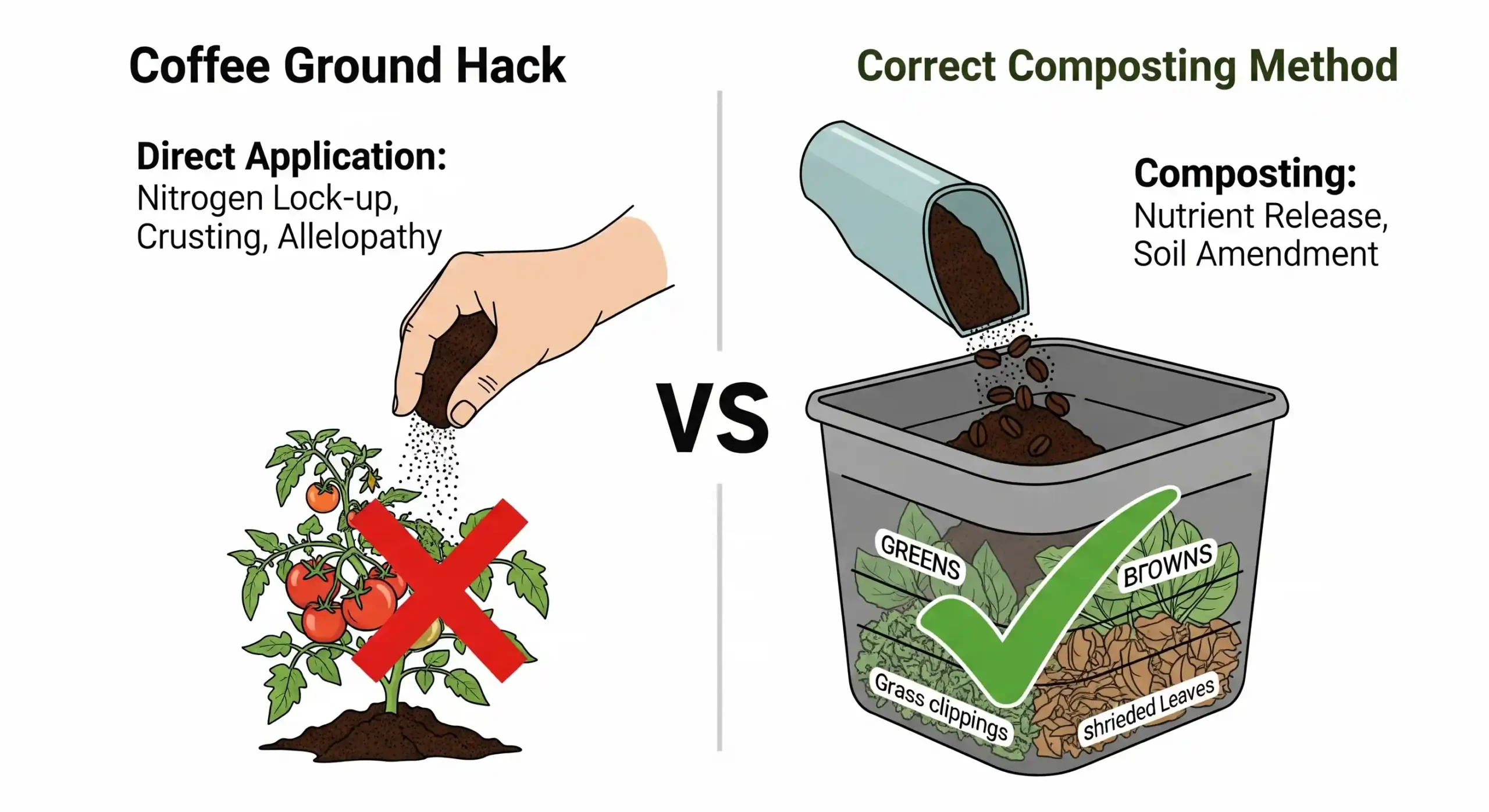
Let us first address the most important selling feature: nitrogen. Coffee grounds do really include nitrogen. That nitrogen isn’t ready for your plants to consume is the essential fact that is omitted from the social media messages, though. See it as locked up in a safe. Microorganisms in the earth must break down the grounds if we are to access it. The problem is that the decomposition process consumes a lot of energy, and the microorganisms draw that energy from the nitrogen your soil already contains.
Basically, adding fresh coffee grounds may momentarily deprive your tomatoes of the very vitamin you are trying to provide them. Not very useful is it to give someone a locked-up gift card without the PIN number? Particularly in young, sensitive plants, this transient nitrogen deprivation can cause yellowing leaves and slowed growth.
Let me now discuss the acidity. Fresh, unbrewed coffee grounds are acidic; the grounds you scoop out from your coffee maker have had much of that acid washed away. Perfect for a compost pile, used coffee grounds actually have a pH level quite near to neutral (between 6.5 and 6.8), which will not help to reduce the pH of your soil for your acid-loving tomatoes. Thus, the theory that you are generating a unique acidic environment is mostly a fallacy.
Two further elements should be taken into account. First is the effect of caffeine on flora. Lingering coffee in the grounds can have a “alternative” effect—that is, a fancy way of stating it can stop other plants, including your tomato seedlings from growing. At last, there’s an easy physical one. When layered above the ground, fine coffee grinds can dry into a hard, compacted crust. Like a waterproof barrier, this crust keeps air and water from seeping into the ground and getting to your tomato’s thirsty roots.
Therefore, even if the intentions are good, the research reveals that adding fresh grounds straight to your garden is not the quick fix for success we all imagined it would be.
Keep them from being thrown out! How to Use Coffee’s Power Safely in Your Compost
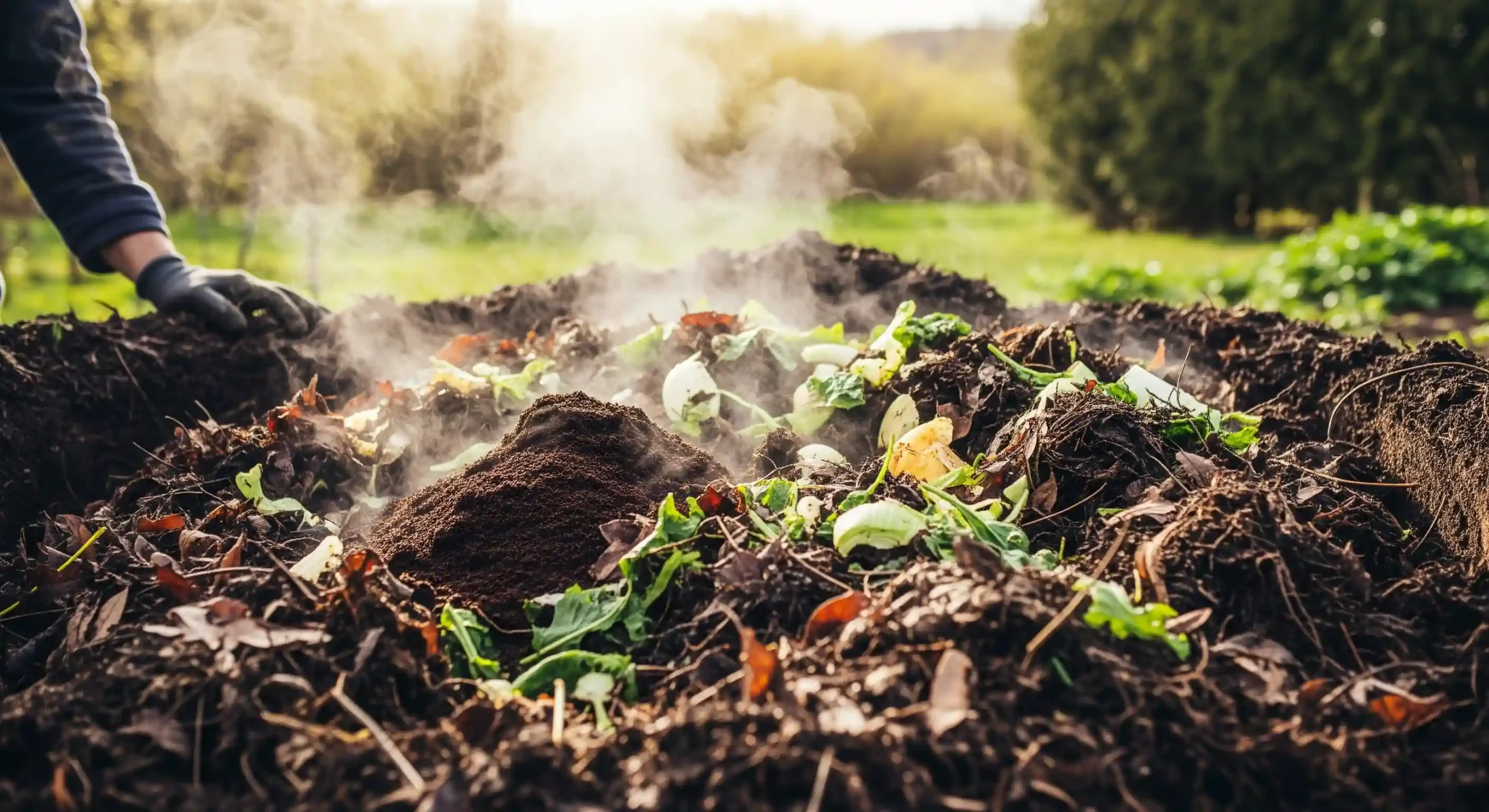
After all that, you could be tempted to just discard your spent grinds in the garbage. But kindly not! They are a useful resource even if they are not very good for immediate application. You just have to get them working in the correct location—your compost heap. The magic truly comes through here. The single greatest approach to securely release their advantages is by composting coffee grounds.


Consider your compost pile as a busy microbial city. Their purpose is to transform organic materials into a lovely, dark, earthy-smelling soil amendment gardeners affectionately refer to as “black gold.” You must strike a mix in this city between “greens” and “browns.”
- Greens are materials high in nitrogen, like grass clippings, vegetable wastes, and—you guessed it—coffee grounds. For the bacteria, they supply the protein and energy.
- Browns are carbon-rich materials like shredded cardboard, dried leaves, shredded paper, and small twigs. They give the pile aeration and structure.
Your coffee grinds are a really great “green” component. You are doing something very important by including them into your compost: you are letting that nitrogen-locking breakdown process occur before it approaches your tomato plants. Breaking down the grounds, stabilizing the nitrogen, and neutralizing any residual caffeine, the microorganisms in the pile will handle all the heavy work.
It’s just this: simple.
- Keep a small liddable jar in your kitchen to gather used coffee grounds and filters.
- When you remove them to your compost bin, just toss them straight in to the pile.
- Balance with browns: Try to include two to three parts of “brown” components for every part of coffee grinds you add. A good, quick-working, odor-free pile depends on a green and brown compost mix. If at all possible, quickly mix it with a pitchfork.
Your compost will be dark, crumbly and nutrient-rich by the end of the procedure. This completed compost has slow-release nutrients in a form your tomatoes can readily absorb and is bursting with helpful bacteria. Everyone gains from your effective conversion of your kitchen “waste” into a powerhouse nourishment for your garden.
Forget the Coffee; Three Soil Boosters Will Love Your Tomatoes
Let’s discuss what to do while you wait for that amazing compost to grow now that you know the trick to using coffee grinds safely. Feeding tomatoes for the greatest possible results is about providing them what they really need, when they need it. Three tried-and-true boosters here will help you to recover on your journey to a big crop.
You might also find planting tomatoes spacing helpful here.
High-Quality, Finished Compost
Without a doubt, this is the most important thing you can offer your soil. Finished compost is the best soil conditioner whether you purchase it by the bag or utilize your own homemade supply (made with coffee grounds!). It helps retain moisture, enhances soil structure, and offers a mild, slow-release supply of a broad spectrum of nutrients. Mix a lot of compost into the planting hole when you sow your tomatoes. For an additional boost, you could “top dress” mid-season around the base of the plants.
A Balanced Tomato Fertilizer
Tomatoes are big eaters, hence occasionally they require more than simply compost—especially if your soil lacks certain minerals. This is where a good fertilizer finds application. Search for the best fertilizer for tomatoes—more especially, one made especially for veggies or tomatoes. From green leaves to strong roots and most importantly, loads of fruit, these have a balanced N-P-K (nitrogen-phosphorus-potassium) ratio that promotes all phases of growth. A mild, efficient feed would be best from an organic tomato fertilizer such as one based on fish emulsion or worm castings. To prevent over-fertilizing, always follow package guidelines.

Crushed Eggshells for Calcium
On the bottom of your tomatoes, have you ever seen those nasty, dark, sunken areas? A calcium deficit causes the widespread problem known as blossom-end rot. Eggshells are another kitchen scrap that really works here. They load with calcium carbonate. Rinse your plants, let them dry totally, then crush them into a fine powder—a coffee grinder or blender would be perfect for this. When you plant your tomatoes, toss a tablespoon of the powder into the hole. This free, basic approach is a great method to help stop this annoying issue from ever happening.
Your Coffee Ground Questions Answered Here
You could still have some queries flying about even with all this knowledge. That’s quite usual! Here let’s address some of the most often occurring ones to help you feel totally confident.
Stop guessing your soil pH.
Enter your soil type and test reading — get exact lime or sulfur rates for your plants in seconds.
→ Calculate Soil NeedsWhat about hydrangeas or blueberries, two acid-loving plants?
This is a really good question. Fresh, unpackled grounds are acidic while used coffee grounds are almost pH neutral. For these plants, you could theoretically work a tiny amount of fresh ground into the soil. Still, you run upon the same nitrogen-locking problem. Using soil acidifiers such as elemental sulfur or products made especially for acid-loving plants can help to reduce soil pH for these plants the safest and most efficient method. It won’t slow their development and is more dependable.
Do coffee grounds actually discourage other pests including slugs?
Here the information is essentially anecdotal and not very firmly backed by studies. Although some gardeners swear by it, many discover that slugs and snails will slink right over a barrier of coffee grounds to reach a delicious plant. In excessive doses, the caffeine can be harmful to them; nevertheless, the amount in used grounds is unlikely to be a strong deterrent. Using tried-and-true techniques like slug baits or beer traps will help you more broadly.
Could I overload my compost pile with coffee grounds?
Indeed, a good thing may be overdone. Recall that it’s all about striking the balance between “browns” (such leaves) and “greens” (like coffee). Coffee grounds should make up no more than roughly 20–25% of your overall compost volume generally. Your pile may get dense, soggy, and smelly if you add too many without adequate browns to counter them.
I have not set up a compost pile. Exists another method I might use them?
If you’re not composting, the best thing to do is either toss them or find out whether a neighbor or community garden using a compost system would like them. With “trench composting,” in which you dig a trench in an unoccupied area of the garden, bury kitchen waste (including coffee grounds), and cover it with dirt, allowing it to break down there for a season before planting, some find success. Avoid adding them straight to your active growing beds, though, for instant usage.
From Garden Wisdom to Kitchen Waste
We so return to our original query: should you actually use coffee grinds for tomatoes after sorting through the science and the mythology? As we have seen, the response is a confident “no“—at least not exactly. Although it’s a well-meaning shortcut, sprinkling fresh grinds all around your plants could backfire by locking up nitrogen and building a waterproof crust on your ground.
The true secret, though, is to use them sensibly rather than to give them up entirely. Your coffee grounds become one of the best, most nutrient-dense components for producing the good soil that results in healthy tomato plants when you add them to a compost pile, instead of a possible troublemaker. Gardening is a path of knowledge, discovery, and comprehension of the “why” underlying our activities. Armed with this knowledge, you can avoid dubious tips and concentrate on tested methods, transforming kitchen wastes into garden success. Happy growing!


