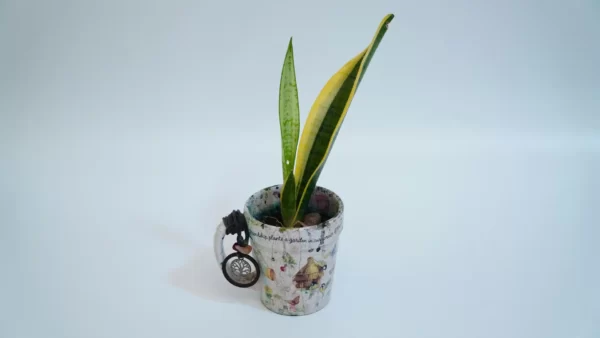
6 Reasons Your Snake Plant Won’t Flower — and the Stress Trigger That Finally Works

Your snake plant flowers from stress, not happiness — here are the 6 reasons it’s not getting that signal and how to fix each one.
That creamy white flower stalk, rising 2–3 feet from the center of the rosette and releasing a vanilla-like scent after dark — many snake plant owners go years without ever seeing one. That’s not bad luck. It’s almost always one of six fixable causes.
Snake plants (now officially Dracaena trifasciata, reclassified from Sansevieria by NC State Extension [3]) are so resilient that most owners assume they’ll bloom eventually if left alone long enough. They won’t. The same toughness that keeps a snake plant alive in a dim corner is exactly what prevents flowering — and understanding the biology behind that makes the fix obvious.
Below you’ll find all six causes, a diagnostic table to pinpoint yours, and the specific stress-trigger combination that prompts bloom. Check out our complete snake plant care guide for the full growing picture.
Why Snake Plants Flower at All (the Biology)
Snake plants don’t flower because they’re happy. They flower because they’re mildly stressed.
In their native West African habitat — rocky outcrops, dry savanna edges, shallow soils — Dracaena trifasciata experiences annual drought seasons. When root space tightens and water becomes scarce, the plant diverts energy from producing new leaves to producing a flower spike. The evolutionary logic: if conditions are deteriorating, reproduce now before they get worse. Drought stress, root confinement, and intense light act as a combined “survival” signal that triggers reproduction.
This is why advice like “neglect your snake plant to make it bloom” has a kernel of truth. What that actually means: create the right kind of mild stress — drought, root confinement, adequate light — without tipping into damaging stress (root rot, cold injury, pest pressure).
One biology note worth knowing: when a rosette commits to producing a flower spike, it uses its apical meristem (the growing tip) for that purpose. That rosette won’t produce new leaves after blooming. The plant keeps growing through the pups it sends out from the base rhizome. This is normal and doesn’t harm the plant — it just changes where its energy goes.
6 Reasons Your Snake Plant Won’t Flower
1. Not Enough Light
This is the most common cause. Snake plants tolerate low light — but tolerance isn’t the same as thriving. Photosynthesis powers everything, including the energy reserves the plant needs to build a flower spike. A plant in a dim corner is running a caloric deficit. It survives, but it won’t reproduce.
Iowa State University Extension recommends bright indirect light — bright enough to cast a shadow — for healthy development [2]. At minimum, your snake plant needs 4 hours of bright indirect light per day. A spot 2–3 feet back from an east or south-facing window is usually enough. A dedicated 6500K LED grow light positioned 12 inches above the plant for 12–14 hours per day is a reliable substitute where natural light is limited.
2. The Plant Is Too Young
Snake plants need at least 2–3 years of growth before they’re mature enough to flower, and most produce their first bloom between years 3 and 5. The plant simply hasn’t built the root mass or energy reserves to support reproduction yet.
Mississippi State University Extension confirms that blooms appear on “mature, established plants” [4]. If you’ve had yours under two years, the answer isn’t adjusting conditions — it’s patience. Optimize light and watering now so the plant builds reserves, but don’t expect a spike until it matures.
3. The Pot Is Too Large (or You Just Repotted)
Counter-intuitive but well-supported: snake plants are more likely to bloom when slightly root-bound. Mississippi State University Extension specifically notes plants bloom more readily when root-bound and positioned in bright indirect light [4].
The mechanism is the same as drought stress — when roots fill the pot and start circling the bottom, the plant reads this as a signal that expansion space is running out. That mild root pressure nudges it toward reproduction rather than continued vegetative growth.
A plant in a large pot with open soil space, or one repotted recently, spends its energy expanding roots and pushing out new leaves instead. Penn State Extension recommends repotting only every 5 years for most varieties — and only when roots are actively escaping through drainage holes [1].
4. Overwatering
Overwatering is the most common way to prevent flowering — and the surest way to kill the plant outright.
The drought stress that triggers blooming requires dry periods. A snake plant sitting in consistently moist soil never receives that reproductive signal. Worse, chronically wet soil leads to root rot, which eliminates the plant’s ability to flower entirely. UConn Extension calls overwatering “the quickest way to kill any houseplant, but especially so with these” [5].
Correct schedule: let the top 2 inches of soil dry completely between waterings during the growing season. Use the finger or skewer test — insert a wooden skewer to 2 inches; if it comes out damp, wait. In winter, reduce to once per month at most [5].
5. No Seasonal Temperature Shift
In their native habitat, snake plants experience a dry winter season followed by warmer, wetter conditions — a seasonal rhythm that primes flowering. Mississippi State Extension reports that blooms typically emerge in winter to early spring on established plants [4], which maps directly to this seasonal cue.
Iowa State Extension recommends maintaining 70–90°F for healthy growth [2], but that doesn’t mean holding a constant 75°F year-round. A natural indoor variation — allowing temperatures to settle to 65°F at night in winter, combined with reduced watering — replicates the seasonal signal the plant evolved alongside.
Keep plants away from cold drafts and single-pane windows in freezing weather (below 55°F damages roots [5]), but don’t artificially maintain summer warmth all year. The transition from a cooler, drier winter to a brighter, warmer spring is often the immediate trigger for a flower spike.
6. Too Much Nitrogen Fertilizer
Heavy or frequent fertilization — especially high-nitrogen products — drives vegetative growth. Nitrogen fuels leaves and stems. A well-fed snake plant produces lush new growth at the expense of reproductive effort.
Both Penn State and Iowa State Extension recommend fertilizing at half or quarter strength, and only during the growing season [1][2]. Skip fertilizer entirely from October through January. In February, a single application of a low-nitrogen, phosphorus-rich formula (such as a 5-10-10 or bloom booster) at half strength can support flower development without pushing leaf production. Resume a balanced half-strength fertilizer as spring gets underway.
Diagnostic Table: Match Your Symptoms to the Cause
| What you observe | Most likely cause | Fix |
|---|---|---|
| Never bloomed after 1–2 years of ownership | Plant too young | Optimize light and watering now; wait until year 3+ |
| Lots of new leaf growth, no flower spike | Pot too large, or too much nitrogen | Don’t repot; switch to low-N fertilizer or skip entirely |
| Plant sits in a dim corner or away from windows | Insufficient light | Move to within 2–3 feet of a bright east or south window |
| Soil stays damp for 10+ days after watering | Overwatering removes drought stress signal | Let top 2 inches dry fully before next watering; reduce to monthly in winter |
| Room stays at 72–75°F year-round | No seasonal temperature cue | Allow 65°F nights in winter + reduce watering to simulate dry season |
| Flowered once, hasn’t again in 2+ years | Bloomed rosette is spent; pups need time | Replicate prior winter’s dryness and light; wait 3+ years for pups to mature |

How to Set the Stress Trigger Correctly
Getting a snake plant to bloom requires combining mild stressors — not a single trick. Here’s how to set those conditions intentionally.
Fix the light first. Move the plant to within 2–3 feet of an east or south-facing window. Without adequate light, no other change matters — the plant lacks the energy to produce a flower spike regardless of what else you adjust. Bright indirect light is the minimum requirement; direct morning sun through a window is even better.
Stop missing your zone's planting windows.
Select your US zone and month — get a complete checklist of what to plant, prune, feed, and protect right now.
→ View My Garden CalendarApply controlled drought. During spring through fall, let the top 2 inches of soil dry completely before watering. In winter, hold back to once per month. You’re replicating the dry season that triggers the plant’s reproductive signal — not stressing it to the point of damage, just removing the consistent moisture that keeps it in “comfortable growth mode.”
Stop repotting. Unless roots are actively escaping through drainage holes, leave the plant in its current pot. Root confinement is a bloom trigger, not a problem to fix. If you’ve just repotted, give the plant a full growing season to re-establish before expecting any flower spike development.
Allow a mild winter cool-down. Keep the plant away from cold drafts and freezing windowsills, but let room temperatures fall naturally in winter — 65°F at night rather than a forced 75°F year-round. Pair this with reduced watering to create the seasonal shift the plant needs as a timing cue.
Adjust your fertilizer schedule. Skip all fertilizer from October through January. In February, apply one dose of a bloom-promoting formula (low nitrogen, higher phosphorus) at half strength. Resume balanced fertilizer as spring arrives and active growth picks up.
What to Expect After You Make Changes
Even after optimizing every condition, most snake plants take 6–18 months to produce a flower spike — and some won’t, particularly cultivars that simply tend toward lower bloom frequency or plants that spent years in low light before conditions changed.
What the flower looks like: A slim stalk rises 2–3 feet from the base of a rosette. Clusters of small cream to greenish-white tubular flowers open along the stalk. Iowa State Extension describes the scent as vanilla or jasmine-like, strongest at night [2]. The stalk produces sticky nectar droplets that can drip on surfaces below, so position the plant accordingly during bloom.
What happens to the bloomed rosette: The rosette that flowers won’t produce new leaves afterward — it’s committed its growing tip to the flower spike. The plant continues through offsets (pups) at the base, which is also an ideal time to consider propagating if you want new plants.
When not to force it: Don’t apply drought stress or withhold water from a plant showing signs of root rot, pest damage, or recent repotting shock. Stress-triggering works on healthy plants. On a struggling plant, the same conditions accelerate decline. If your plant looks unwell, use our plant dying diagnostic to rule out other problems first.
Frequently Asked Questions
Will moving my snake plant to a brighter spot make it flower immediately? No. Light is a prerequisite, not a trigger on its own. The plant also needs to be mature, slightly root-bound, and receive the drought-plus-temperature seasonal cue. Think of adequate light as the cost of entry.
My snake plant flowered once — why hasn’t it bloomed again? The rosette that bloomed won’t repeat — it used its growing tip for the flower spike. New pups need 2–3 years to mature and then experience the right seasonal cycle. The answer is usually: replicate whatever winter conditions the plant experienced the year it first bloomed.
Is a flowering snake plant dying? No. Flowering is a reproductive response, not a distress signal. A bloom alongside healthy, firm, green leaves means the plant is in good shape. Check overall leaf condition: wilting, yellowing, or soft leaves alongside a flower spike would indicate a separate problem worth investigating.
The Short Version
Snake plant flowers aren’t a reward for perfect care — they’re a response to the right combination of mild stress: adequate light, dry spells, root confinement, and a seasonal temperature shift. Most non-flowering plants are missing at least one of these conditions.
Start with the most obvious issue from the diagnostic table above. Fix the light and let the soil dry out properly through winter. Those two changes alone address the majority of indoor bloom failures. Then be patient — it takes a full seasonal cycle for the trigger to register.
Sources
[1] Penn State Extension — Snake Plant: A Forgiving, Low-maintenance Houseplant
[2] Iowa State University Extension — Yard and Garden: Caring for Sansevieria
[3] NC State Extension — Dracaena trifasciata (Snake Plant)
[4] Mississippi State University Extension — Sansevieria: A Stylish Houseplant for Everyone
[5] UConn Home & Garden Education Center — Sensational Sansevieria