

How to Care for Aloe Vera at Home: The Watering Schedule, Light Rules, and One Mistake That Kills It

Learn how to care for aloe vera at home the right way: the soak-and-dry watering schedule, light placement, soil, propagation, and a diagnostic table for every common problem.
Aloe vera survives seven months of drought in the Atacama Desert — one of the most hostile environments on Earth — and yet it dies on windowsills every day. The reason is not that it is delicate. It is that the one thing that kills it, overwatering, looks like kindness.
This guide covers everything you need to keep aloe vera thriving at home: the right watering rhythm, the best window placement, how to pot it, and how to diagnose every common problem. More than a list of rules, it explains the biology behind each one. When you understand why aloe stores water in its gel and opens its stomata at night, the care decisions become obvious. For a look at the many aloe varieties available, see our aloe vera varieties guide.
Why Aloe Vera Tolerates Neglect — but Not Overwatering

Aloe vera is a CAM plant — it uses Crassulacean Acid Metabolism, a photosynthetic pathway shared with cacti and agave. Unlike most houseplants, which open their stomata during the day to absorb CO₂, aloe opens its stomata at night when temperatures are cooler and humidity is higher. By morning, the stomata are closed and CO₂ is being processed internally. The plant loses almost no water through transpiration during the heat of the day.
Inside each leaf, a specialized tissue called the hydrenchyma — the clear gel you see when you slice a leaf open — acts as a water reservoir. Research published in iScience on the aloe vera genome found that 60.81 percent of the genes showing signs of adaptive evolution were directly tied to drought-stress-tolerance functions (Baniaga et al., 2021). A separate study published in the journal Plants documented aloe vera surviving 222 consecutive days without irrigation in the Atacama Desert, with 100 percent of plants alive at the end — though leaf thickness declined 55–65 percent as the hydrenchyma progressively released its stores (Ortíz et al., 2022).

Three pre-planned garden beds, free
Stop staring at empty beds: printable plans with exact layouts, plant lists and planting calendars — yours free from the Garden Library.
This biology explains the cardinal rule: underwatering is recoverable; overwatering is not. When you underwater, the hydrenchyma shrinks — leaves look thin and slightly concave — but the plant recharges within 48–72 hours of a thorough watering. When you overwater, soil stays saturated, oxygen is excluded from the root zone, and roots lose the ability to absorb water at all. Leaves turn soft and yellow-brown, the stem base goes mushy, and by the time symptoms are visible, root rot is usually advanced.
How to Water Aloe Vera: The Soak-and-Dry Method
The correct approach is soak and dry: water thoroughly until water flows freely from the drainage holes, then do nothing until the top 2 inches of soil are completely dry. According to SDSU Extension, this mimics the plant’s natural cycle of heavy rain followed by weeks of drought.
To test soil moisture, push a finger 2 inches into the soil — not just the surface, which can feel dry while the lower soil is still wet. Alternatively, lift the pot: a dry pot feels noticeably lighter than one with moist soil. Both tests beat any fixed watering schedule, because how quickly soil dries depends on light, temperature, pot material, and the season.
Seasonal frequency:
- Spring and summer (active growth): every 2–3 weeks for most indoor conditions; more frequently if your home is consistently above 80°F
- Fall and winter (near-dormancy): every 4–6 weeks; the plant’s metabolic rate drops, roots absorb far less, and wet soil in low-light conditions is the fastest route to root rot
Never let the pot sit in a saucer of standing water. UF/IFAS notes that improper drainage is the most common cause of death in container-grown aloe. Empty the saucer within 30 minutes of watering. If you already see soft, brown leaves or a mushy stem base, see our guide to aloe vera root rot for the rescue protocol.
Light Requirements: Bright Indirect Is Not Just a Suggestion
Aloe vera needs at least 6 hours of bright light per day. NC State Extension classifies it as a full-sun plant outdoors; indoors, bright indirect light is the practical target. Window direction matters:
- South or west-facing window: ideal for most of the year; direct afternoon sun through glass in peak summer may cause leaf burn on unacclimated plants
- East-facing window: adequate if the plant sits within 2 feet of unobstructed glass
- North-facing window: insufficient; plants become leggy and pale within weeks
Sunburn appears as dry, brown, papery patches — always on the leaf surface facing the light source. The damaged tissue does not recover, but new growth will be clean. If you are moving a plant from indoors to a patio for summer, transition it over 2–3 weeks: start with morning shade and gradually increase sun exposure. UF/IFAS specifically flags this rapid-transition scenario as the primary sunburn trigger.
Etiolation (too little light) looks different: leaves grow longer, thinner, and paler, and the plant leans toward the light source. Move it to a brighter window, but do so gradually over 10–14 days to avoid triggering sunburn on tissue that has not yet acclimated.
Drafty windows in winter are a separate hazard. According to UNH Extension, cold air from window gaps causes discolored foliage and damaged leaf tips even when room air is comfortably warm. Move plants at least 6 inches from the glass surface on cold nights.
If natural light is insufficient, a full-spectrum grow light positioned 6–12 inches above the plant for 14–16 hours per day compensates reliably.
Soil and Potting: Drainage Above Everything Else
Aloe naturally grows in nutrient-poor, fast-draining desert soils. Replicating this indoors requires the right mix and the right pot.
Soil mix: Use a commercial cactus and succulent potting mix. If available options feel heavy or peat-like, amend with 30–50 percent coarse perlite or coarse horticultural sand. The goal is a mix that drains within seconds of watering and does not clump when squeezed. RHS recommends peat-free cactus compost with added sharp sand or grit for UK growers.
Pot material: Terra cotta is the best choice. NC State Extension confirms clay pots are preferred for drainage and stability. Clay is porous — it wicks moisture away from soil and dries faster than plastic or glazed ceramic, which matters most in winter when drying time is already slow. Clay is also heavier, which stabilizes a top-heavy mature aloe that might otherwise tip over.
Drainage holes: Non-negotiable. A single drainage hole works; multiple holes are better. No drainage holes means inevitable root rot, regardless of how carefully you water.
Stop missing your zone's planting windows.
Select your US zone and month — get a complete checklist of what to plant, prune, feed, and protect right now.
→ View My Garden CalendarPot sizing: Choose a pot only 1–2 inches wider than the root ball. As UF/IFAS notes, oversized pots retain excess moisture around the roots and dramatically increase rot risk. Here is the counter-intuitive insight most guides omit: a slightly root-bound aloe produces more pups. When roots fill the pot, the plant shifts energy from root expansion to reproduction — so if you want offsets to propagate, resist the urge to jump up several pot sizes.
Signs it is time to repot: roots emerging from drainage holes, pups destabilizing the pot, or soil so compacted it pulls away from the pot sides. Spring is the best time. See our detailed guide to repotting aloe vera.
Temperature and Placement
Aloe vera thrives between 55 and 85°F (13–29°C) — the range that mirrors its native Arabian Peninsula climate, according to SDSU Extension. Most homes fall within this window, but watch for three specific hazards:
- Cold windowsills in winter: The glass surface of a single-pane window can approach outdoor temperatures on a cold night even while room air stays at 65°F. Move plants 6 inches from the glass once outdoor nighttime temperatures fall below 40°F.
- Radiators and heating vents: Forced-air heat above or beside a plant rapidly desiccates the soil and scorches leaf tips. Do not place aloe directly on or beside a radiator.
- Cold drafts: UNH Extension identifies air gaps around window frames and exterior doors as a cause of leaf discoloration and tip damage — symptoms often confused with underwatering.
Outdoor growing: Aloe grows as a perennial outdoors in USDA zones 10a–12b, according to NC State. In zones 8–9, it survives outside but needs frost protection. In zone 7 and colder, bring it inside before temperatures drop below 50°F. Outdoor plants in a warm, sunny spot produce tall flower spikes with tubular yellow or red blossoms in late winter or spring — something indoor plants rarely achieve. If flowering is your goal, a summer outdoors followed by a cool, bright winter indoors gives the best results.
Fertilizing: Why Skipping It Is Often Correct
Aloe evolved in nutrient-poor soil, and heavy feeding does more harm than good. SDSU Extension states plainly that no fertilizer is usually required to keep the plant healthy. A plant with the right soil, adequate light, and correct watering can go years without a single feeding.
If you do fertilize:
- When: Spring and summer only (active growth period)
- What: Balanced liquid fertilizer, such as 10-10-10 or a dedicated succulent formula
- How much: Half the label’s recommended dose
- How often: Once a month at most
Never fertilize in fall or winter. The plant is in near-dormancy and cannot process nutrients, so salts accumulate in the soil instead. Signs of salt buildup: persistent brown leaf tips and a white crust forming on the soil surface. Fix it by thoroughly flushing the soil with plain water until it drains freely, then allow it to dry completely before the next watering.
Seasonal Care Calendar
| Season | Watering | Light | Fertilizing | Other Actions |
|---|---|---|---|---|
| Spring | Every 2–3 weeks; increase as days lengthen and growth resumes | Move to brighter spot if needed; introduce outdoor light gradually | Begin: half-strength balanced fertilizer, once monthly | Repot if root-bound; separate and pot pups |
| Summer | Every 2 weeks, or when top 2 inches are dry | Bright indirect; shield from direct afternoon sun through glass | Continue monthly | Move outdoors for a growth boost; acclimate over 2–3 weeks |
| Fall | Reduce to every 4–5 weeks | Move away from cold windowsills as outdoor temperatures drop | Stop by early September | Bring outdoor plants in before first frost |
| Winter | Every 5–6 weeks (or less if growth is minimal) | Brightest available window; add grow light if needed | None | Keep above 50°F; check for cold drafts and glass contact |
Common Problems: Diagnostic Table
Most aloe problems trace to one of six causes. The table below maps symptoms to cause, with a confirming sign to distinguish look-alikes before you act.
| Symptom | Likely Cause | Confirming Sign | Fix |
|---|---|---|---|
| Soft, yellow-brown leaves; mushy or darkened stem base | Overwatering or root rot | Soil damp; roots black or brown and slimy when checked | Remove from pot; trim rotten roots; repot in dry cactus mix; withhold water 1–2 weeks |
| Thin, puckered, concave leaves; pot feels very light | Underwatering | Soil bone dry; leaves slightly wrinkled and translucent | Water thoroughly; leaves recharge within 48–72 hours |
| Dry, brown, papery patches on leaf surface | Sunburn | Patches only on the side facing the light source | Move to indirect light; damaged tissue will not recover, but new growth will be clean |
| Long, thin, pale leaves; plant leaning toward window | Etiolation (insufficient light) | New leaves much longer and narrower than older ones | Move to a brighter window over 10–14 days to avoid triggering burn |
| White cottony clusters at leaf base or between leaves | Mealybugs | Sticky residue nearby; waxy white threads in crevices | Dab with rubbing alcohol on a cotton swab; repeat every 5–7 days until clear |
| Small circular spots with yellow border, brown center | Aloe rust (fungal) | Spots on upper leaf surface only; tissue beneath is firm | Improve air circulation; SDSU Extension notes treatment is usually not required |
For more detail on leaf color changes, see our guides to why aloe vera turns yellow and why aloe vera turns brown.
How to Propagate Aloe Vera from Pups

A mature, established aloe — especially one that is slightly root-bound — produces pups (offsets) at its base. These are genetically identical to the parent plant and root reliably. Pups rarely appear on plants growing in oversized pots, because the plant redirects energy toward root expansion rather than reproduction.
Wait until pups are at least 2–3 inches tall before separating them. At this size they have enough leaf tissue to support themselves through rooting.
Step-by-step propagation:
- Remove the parent plant from its pot
- Locate where the pup connects to the parent’s root system — it will share a rhizome or short stem attachment
- Use a clean, sharp knife to separate the pup, keeping at least a 1-inch stem section and as many roots as possible
- Set the pup aside in a warm, dry spot for 2–3 days to allow the cut to callus — a dry wound resists infection; planting immediately risks rot
- Plant in a small pot barely wider than the pup’s root system, filled with dry cactus mix
- Wait 3 days before the first watering, allowing minor root damage to heal
- After the first watering, treat as a mature plant following the schedule above
If your plant is not producing pups and has never flowered, see our guide to why aloe vera is not flowering.
How to Harvest Aloe Vera Gel at Home
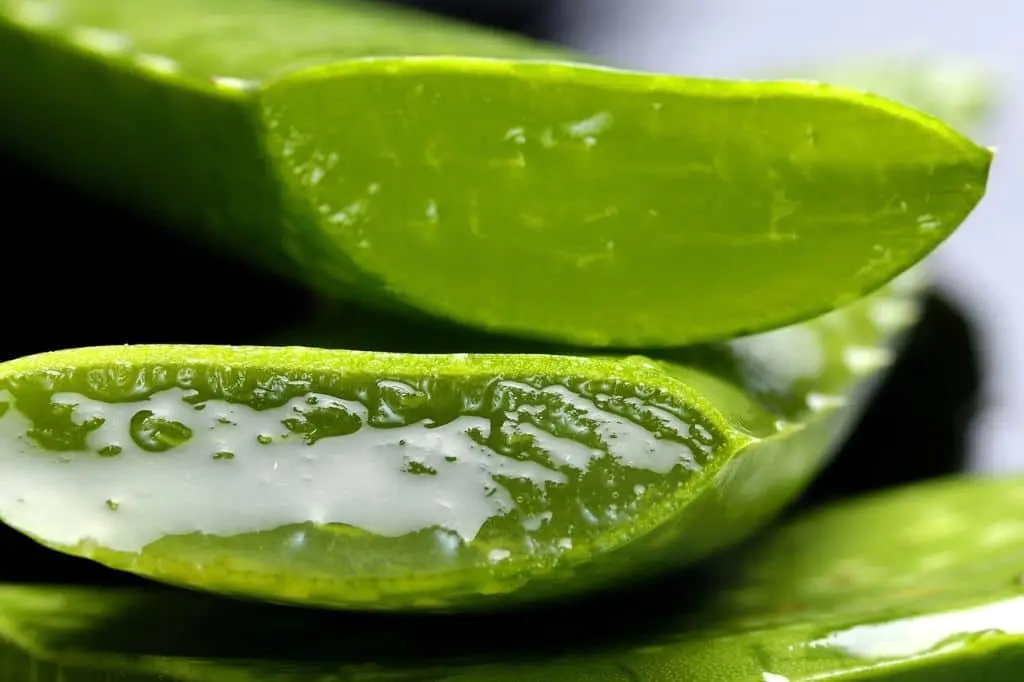
Aloe vera gel is the most practical reason many people grow this plant — it soothes minor burns, sunburn, and dry skin without the additives found in commercial products. To harvest without stressing the plant:
- Choose outermost leaves first: always cut the oldest, most mature leaves at the perimeter of the plant; never cut from the center, where new growth originates
- Cut close to the base with a clean, sharp knife or scissors
- Rinse the cut leaf under cold running water for 30 seconds to remove the yellow latex (aloin) just under the skin — aloin is a strong laxative and can irritate sensitive skin
- Fillet the skin off both flat sides; the clear gel inside is what you want
- Use immediately or store in a sealed container in the refrigerator for up to one week; freeze in ice cube trays for longer storage
SDSU Extension notes that aloe gel can cause nausea and indigestion if ingested in large quantities. Topical use is safe for most people. Limit harvesting to 2–3 leaves per session, and only harvest from plants that are at least 3 years old — younger plants lack the reserves to recover quickly between cuttings.
Frequently Asked Questions
How often should I water aloe vera at home?
Every 2–3 weeks in spring and summer, and every 4–6 weeks in fall and winter. Always check the soil before watering: the top 2 inches must be completely dry. Frequency varies with light, temperature, pot size, and material — the soil-moisture test is more reliable than any fixed schedule.
Can aloe vera grow in low light?
It survives in low light but does not thrive. Insufficient light causes etiolation: leaves grow long, thin, and pale, and the plant leans toward any available light source. Move it to the brightest available window, or add a full-spectrum grow light set to run for 14–16 hours per day.
Why are my aloe vera leaves turning brown?
The three most common causes are sunburn (dry, papery patches on the sun-facing side of leaves), overwatering (soft, yellow-brown leaves with a mushy base), and fertilizer salt buildup (brown tips with a white crust forming on the soil surface). Use the diagnostic table above to pinpoint the cause before acting.
Can I grow aloe vera outdoors?
Yes — permanently in USDA zones 10–12, and as a seasonal outdoor plant in zones 8–9 with frost protection. In cooler climates, move it outside after the last frost date and back indoors in early autumn before temperatures drop below 50°F.
Sources
- SDSU Extension — Aloe Vera: Houseplant How-To
- UF/IFAS Gardening Solutions — Aloe Vera
- NC State Extension — Aloe vera Plant Toolbox
- Royal Horticultural Society — Aloe Plant Guide
- UNH Extension — Growing Aloe at Home
- Baniaga et al. (2021) — The genome sequence of Aloe vera reveals adaptive evolution of drought tolerance mechanisms. iScience
- Ortíz et al. (2022) — Preconditioning to Water Deficit Helps Aloe vera to Overcome Long-Term Drought during the Driest Season of Atacama Desert. Plants


