

12 Low Maintenance Indoor Plants That Thrive on Neglect — Ranked by Drought Tolerance, Light Flexibility, and Pet Safety

These 12 low maintenance indoor plants can go weeks without water — see how each scores on drought tolerance, light needs, and whether it’s safe for pets.
Most indoor plant guides hand you a list and say water “occasionally.” I’ve had ZZ plants survive three-week house sits without a single drooping leaf — and I’ve watched peace lilies collapse in under two weeks without water. The difference between those outcomes comes down to understanding exactly how drought-tolerant each species actually is.
This article scores 12 genuinely low-maintenance indoor plants on three axes: drought tolerance (how long they survive without water), light flexibility (how far they can grow from a window), and pet safety based on ASPCA Animal Poison Control data. Each plant gets a numeric score so you can compare at a glance and match the plant to your specific situation — whether that’s a north-facing office, a household with curious pets, or a travel schedule that means weeks between waterings.
The Scoring System
Scores are drawn from university extension service care guides and ASPCA Animal Poison Control toxicity records. Higher numbers mean more forgiving.
| Dimension | Score 1 | Score 3 | Score 5 |
|---|---|---|---|
| Drought Tolerance | Water every 5–7 days | Every 2–3 weeks | Every 4–6+ weeks |
| Light Flexibility | Needs bright indirect light (within 2 ft of window) | Tolerates medium indirect light | Thrives in low light (north-facing rooms, fluorescents) |
| Pet Safety | SAFE = ASPCA confirmed non-toxic | CAUTION = toxic compound listed (contact vet if ingested) | ||
1. ZZ Plant (Zamioculcas zamiifolia) — Drought 5/5 | Light 5/5 | Pet Safety: CAUTION
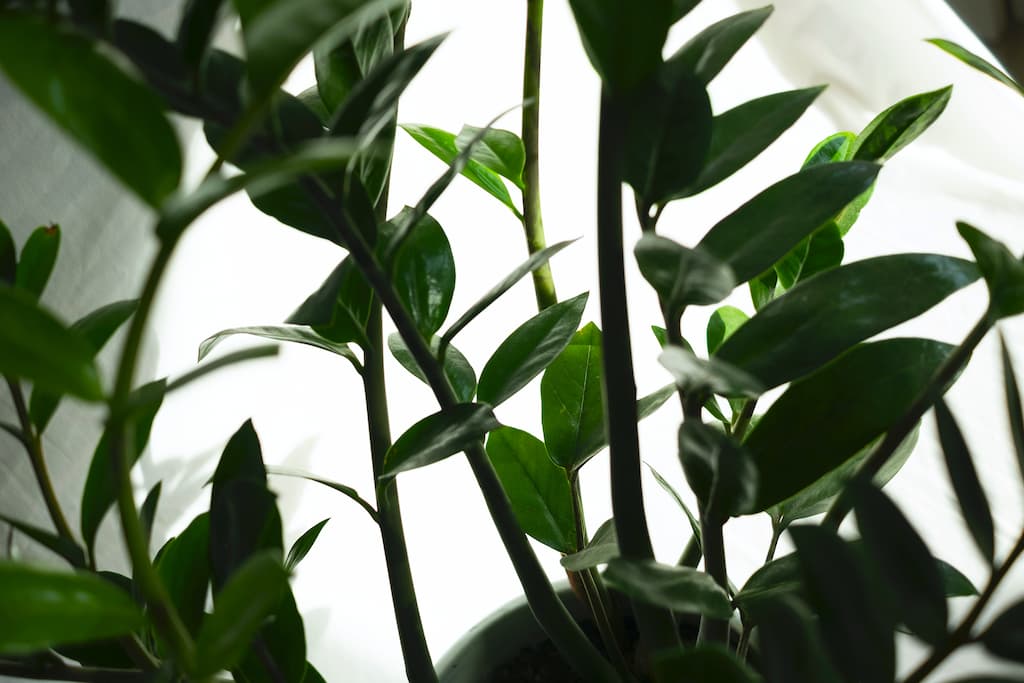
The ZZ plant is the closest thing to an indestructible houseplant. Its drought resistance comes from two mechanisms working together. First, thick potato-like rhizomes underground store water and nutrients for months, functioning as a private reservoir the plant draws on during dry periods. Second, ZZ plants use CAM (Crassulacean Acid Metabolism) photosynthesis — the same water-conserving strategy employed by cacti. The stomata open only at night to absorb CO2, remaining shut during daylight hours when evaporation is highest.
Iowa State University Extension rates the ZZ plant as tolerating very dry conditions and very low humidity simultaneously — a combination that defeats most other tropical houseplants indoors. Water every 2–4 weeks, only when the soil is completely dry. It grows under office fluorescents without complaint, and in low-light conditions can go even longer between waterings. The only reliable way to kill one is to overwater it: soggy soil rots the rhizomes quickly.
Pet safety: Contains calcium oxalates. Causes oral irritation if ingested by pets or humans. Contact your vet if a pet chews on it. See our full ZZ plant care guide for soil, pot size, and troubleshooting.
2. Snake Plant (Dracaena trifasciata) — Drought 5/5 | Light 5/5 | Pet Safety: CAUTION
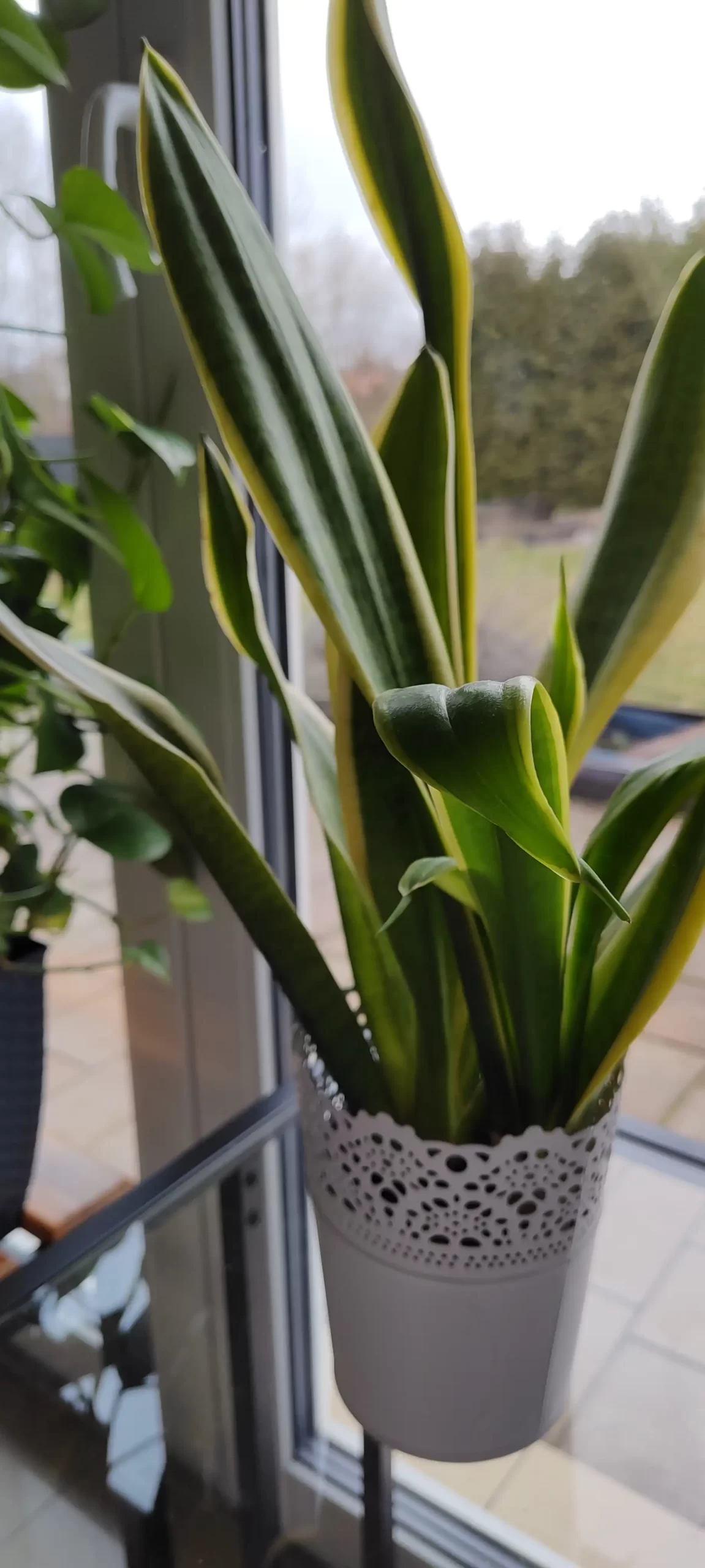
Penn State Extension describes the snake plant as one that can “go a month or so without water and be no worse for wear.” That resilience is earned through biology. The leaves are succulent, storing water directly in thick leaf tissue. Like the ZZ plant, snake plants use CAM photosynthesis: stomata close during the day and open only at night, cutting water loss compared to standard tropical houseplants.
NC State Extension Plant Toolbox documents it tolerating very low light while accepting up to 2–6 hours of direct sun daily — one of the widest light windows of any indoor plant. In winter, water just once every 1–2 months. Note: the genus was reclassified from Sansevieria to Dracaena following genetic research, though many garden centres still use both names. Our snake plant care guide covers the main varieties and common problems in detail.
Pet safety: ASPCA lists snake plants as toxic to cats and dogs (saponins). Symptoms include vomiting, diarrhea, and depression. Keep out of reach of pets.
3. Haworthia (Haworthia / Haworthiopsis spp.) — Drought 5/5 | Light 3/5 | Pet Safety: SAFE ✓
Haworthias are small, slow-growing succulents that store water in fleshy leaves and need watering roughly once a month in summer, even less in winter. Unlike aloe vera, haworthia is confirmed non-toxic to cats and dogs by the ASPCA — making it the most pet-safe succulent on this list.
They prefer bright indirect light from an east- or north-east-facing window but tolerate lower light better than most succulents without immediate etiolation. Avoid direct midday sun, which scorches the translucent leaf tips. Most species stay under six inches tall, ideal for shelves, desks, or windowsills where a snake plant would be too dominant. Use a gritty cactus mix and a pot with drainage holes — overwatering is the main killer. Our haworthia growing guide covers the key species and repotting timing.
Pet safety: ASPCA confirmed non-toxic to cats and dogs.
4. Aloe Vera (Aloe vera) — Drought 5/5 | Light 3/5 | Pet Safety: CAUTION

Aloe vera stores water in thick, gel-filled leaves and thrives on neglect: water every 3–4 weeks in summer, every 6–8 weeks in winter. Penn State Extension notes it stores water in leaves, stems, and roots, enabling it to survive extended dry periods. It’s also one of the most practically useful plants on this list — the clear gel from mature leaves soothes minor burns, cuts, and skin irritation.
Where aloe loses points is light flexibility. It needs bright indirect light and tolerates a few hours of direct morning sun. Place it in a dark corner and it etiolates within weeks: the leaves go pale and floppy as the plant stretches toward light. A south- or west-facing windowsill is the ideal indoor position. Our full aloe vera care guide covers soil, repotting, and propagation.
Pet safety: Despite medicinal uses for humans, the ASPCA lists aloe as toxic to cats and dogs. The culprit is saponins and anthraquinones concentrated in the latex layer — the yellow sap just beneath the leaf skin. The ASPCA notes the inner gel is considered edible; the rest of the plant is not safe for pets. Symptoms include vomiting, lethargy, and diarrhea.
5. Cast Iron Plant (Aspidistra elatior) — Drought 4/5 | Light 5/5 | Pet Safety: SAFE ✓
The name delivers on its promise. Clemson HGIC documents the cast iron plant tolerating dappled to full shade — meaning it genuinely thrives in north-facing rooms with no direct natural light at all. It also tolerates heat, dust, temperature fluctuations, and irregular watering. The ASPCA confirms it is non-toxic to cats, dogs, and horses. For households combining truly low light with curious pets, this combination is unmatched on this list.
Growth is slow: two to four new leaves per year is typical, which means it won’t outgrow its pot for years. Water when the soil is dry 2–3 inches down; never leave water pooling in the saucer. One firm warning from Clemson: avoid direct sun entirely. Scorched cast iron leaves do not recover — unlike many plants, the damage is permanent. For a head-to-head comparison, see our cast iron plant vs. snake plant guide.
Pet safety: ASPCA confirmed non-toxic to cats, dogs, and horses.
6. Dracaena marginata (Dragon Tree) — Drought 4/5 | Light 4/5 | Pet Safety: CAUTION
The dragon tree tolerates irregular watering better than most tropical houseplants. Water when the top 2 inches of soil are dry, typically every 2–3 weeks in the growing season. It accepts moderate to bright indirect light but handles lower light well, making it one of the few tall, architectural plants that can fit in a dimmer room. Clemson HGIC describes dracaenas as rugged, carefree houseplants for novices. It can reach 6–8 feet indoors over several years, providing a structural focal point without demanding much attention.
One care note: dracaenas are sensitive to fluoride in tap water. If leaf tips brown consistently despite correct watering, switch to filtered or collected rainwater. Also available as Dracaena fragrans (the corn plant), which shares the same care profile. See our Dracaena marginata vs. fragrans comparison if choosing between the two.
Pet safety: The ASPCA flags all dracaena species as toxic to both cats and dogs (saponins). Symptoms include vomiting — sometimes with blood — depression, anorexia, and dilated pupils specifically in cats. Keep well out of reach of pets.
7. Pothos (Epipremnum aureum) — Drought 3/5 | Light 4/5 | Pet Safety: CAUTION
Pothos earns its reputation as the most beginner-friendly trailing plant. It tolerates watering as infrequent as every 2 weeks without permanent damage. Drooping leaves signal thirst, then perk back up within hours of drinking — one of the clearest feedback loops of any houseplant. South Dakota State University Extension confirms it handles low-light areas and locations with fluorescent light, such as offices and dorm rooms.
Clemson HGIC notes that variegated cultivars like ‘Marble Queen’ lose their patterning in very low light, reverting toward plain green as the plant reallocates resources to chlorophyll. If maintaining the variegation matters, give it brighter indirect light. For detailed growing, propagation, and troubleshooting, visit our pothos care hub.
Pet safety: All parts contain insoluble calcium oxalates — toxic to cats and dogs per the ASPCA. Symptoms include oral irritation, pain and swelling of the mouth and tongue, excessive drooling, and difficulty swallowing. Place it on a shelf rather than the floor if you have pets.
Stop killing plants with wrong watering.
Select your plant, pot size, and climate zone — get a precise watering schedule with amounts and timing.
→ Build Watering Schedule8. Heartleaf Philodendron (Philodendron hederaceum) — Drought 3/5 | Light 4/5 | Pet Safety: CAUTION
Heartleaf philodendron is frequently mistaken for pothos. Both have heart-shaped leaves, trail or climb, and tolerate low light and irregular watering. The reliable difference is texture: philodendron leaves are matte and slightly velvety; pothos leaves have a waxy sheen with a more pronounced central ridge.
Iowa State University Extension notes heartleaf philodendron thrives in low to indirect light and handles evenly moist soil well. Water every 1–2 weeks. It is marginally more tolerant of inconsistent humidity than pothos, and slightly less tolerant of extended dry spells. NC State Extension documents that all parts contain calcium oxalate crystals, confirming the ASPCA toxicity classification.
Pet safety: ASPCA confirmed toxic to cats and dogs (insoluble calcium oxalates). Symptoms: oral irritation, drooling, vomiting, difficulty swallowing. Keep out of reach of pets.
9. Chinese Evergreen (Aglaonema) — Drought 3/5 | Light 5/5 | Pet Safety: CAUTION
Chinese evergreens are among the best houseplants for genuinely low-light conditions: north-facing rooms, hallways, and offices far from windows. Cultivar selection matters. Deeper green, less variegated varieties such as ‘Silver Queen’ or ‘Emerald Beauty’ handle the deepest shade. Brightly colored cultivars like ‘Red Siam’ or ‘Pink Dalmatian’ need more light to hold their pigment and revert to plain green without it.
Clemson HGIC notes Chinese evergreens tolerate poor light, low humidity, air conditioning, and neglect — four conditions that routinely defeat other plants. Water when the top 1–2 inches of soil are dry, every 1–3 weeks. Overwatering is the bigger risk. See our Chinese evergreen care guide for humidity, fertilizing, and repotting details.
Pet safety: ASPCA lists Chinese evergreen as toxic to cats and dogs (insoluble calcium oxalates). Oral burning, excessive drooling, vomiting, difficulty swallowing.
10. Spider Plant (Chlorophytum comosum) — Drought 3/5 | Light 3/5 | Pet Safety: SAFE ✓
The spider plant occupies a unique position on this list: it’s the only plant here that combines moderate light tolerance, moderate drought resilience, and ASPCA-confirmed non-toxic status for both cats and dogs. It won’t survive the same extended dry spells as the succulents, but for households where pet safety is the priority, it’s the most broadly adaptable choice.
Its thick, fleshy roots evolved to store water, allowing it to survive inconsistent watering better than most tropical plants. Water every 1–2 weeks, letting the top inch of soil dry first. The cascading offshoots — called spiderettes — can be rooted in water in 2–3 weeks, making it one of the easiest plants to propagate. For more pet-safe options, see our guide to pet-friendly non-toxic houseplants.
Pet safety: ASPCA confirmed non-toxic to cats and dogs — one of only three confirmed-safe plants on this list.
11. Peace Lily (Spathiphyllum) — Drought 2/5 | Light 4/5 | Pet Safety: CAUTION

The peace lily is the only flowering plant on this list. It earns its place through genuine low-light tolerance: it’s one of the few flowering houseplants that performs in rooms with limited natural light. Clemson HGIC notes it grows in low light but flowers best in indirect sunlight, so flowering frequency depends directly on available light. In a north-facing room expect mostly foliage; near an east-facing window expect periodic white blooms throughout the year.
The peace lily is also the most water-sensitive plant here at 2/5 on drought. Drooping leaves signal thirst and the plant recovers quickly after watering, but regular extended dry periods stress the root system over time. It needs more consistent attention than the other 11 plants on this list. If you want flowering with manageable care, it remains the best option here — just don’t expect the month-long forgiveness of a ZZ plant.
Pet safety: The ASPCA lists peace lily as toxic to cats and dogs (insoluble calcium oxalates), causing intense oral burning, excessive drooling, vomiting, and difficulty swallowing. The word “lily” creates confusion: true lilies (Lilium genus) can cause acute kidney failure in cats. Peace lily is less dangerous but still warrants real caution in pet households.
12. Rubber Plant (Ficus elastica) — Drought 3/5 | Light 3/5 | Pet Safety: CAUTION
The rubber plant brings bold visual impact: large, glossy leaves up to 12 inches long in dark green or deep burgundy. Water when the top inch of soil is dry, roughly every 1–2 weeks in the growing season and less in winter. It prefers bright indirect light and tolerates medium light, but won’t thrive in a dark corner.
Its appeal is scale: few plants match its combination of sculptural presence and manageable care. It can reach ceiling height indoors over several years with minimal intervention, and the leaf size and deep color are hard to replicate with other low-maintenance options. For a comparison with another bold-foliage plant, see our fiddle-leaf fig vs. rubber plant guide.
Pet safety: Ficus species are listed by the ASPCA as toxic to cats and dogs (ficin, a proteolytic enzyme, and psoralen). The milky latex sap from cut stems is the primary irritant. Wear gloves when pruning or repotting, as the sap also causes skin irritation in sensitive people.
All 12 Plants: Quick Comparison
| Plant | Drought (1–5) | Light (1–5) | Pet Safety |
|---|---|---|---|
| ZZ Plant | 5 | 5 | CAUTION |
| Snake Plant | 5 | 5 | CAUTION |
| Haworthia | 5 | 3 | SAFE ✓ |
| Aloe Vera | 5 | 3 | CAUTION |
| Cast Iron Plant | 4 | 5 | SAFE ✓ |
| Dracaena marginata | 4 | 4 | CAUTION |
| Pothos | 3 | 4 | CAUTION |
| Heartleaf Philodendron | 3 | 4 | CAUTION |
| Chinese Evergreen | 3 | 5 | CAUTION |
| Spider Plant | 3 | 3 | SAFE ✓ |
| Peace Lily | 2 | 4 | CAUTION |
| Rubber Plant | 3 | 3 | CAUTION |
Which Plant Fits Your Situation?
If you travel frequently or consistently forget to water: ZZ plant or snake plant. Both score 5/5 on drought and can go 4–6 weeks between waterings without harm. Haworthia and aloe vera also score 5/5 but need brighter light.
If you have a north-facing room with no direct light: Cast iron plant (SAFE, non-toxic) is the top pick. Chinese evergreen and ZZ plant are strong runners-up. All three score 5/5 on light flexibility.
If you have cats or dogs: Haworthia, cast iron plant, and spider plant are the ASPCA-confirmed non-toxic options. Spider plant handles the broadest range of light conditions and is the most beginner-friendly of the three. For a broader selection, see our pet-friendly non-toxic houseplants guide.
If you want a tall statement plant: Snake plant or rubber plant. Snake plant also wins on drought tolerance and light flexibility.
If you want something that flowers: Peace lily is the only flowering option here. Budget for more consistent watering and keep it away from pets.
Frequently Asked Questions
Which indoor plants can go the longest without water?
ZZ plant, snake plant, haworthia, and aloe vera all score 5/5 on drought tolerance and can realistically go 4–6 weeks without water in cool conditions. The ZZ plant’s combination of underground rhizome storage and CAM photosynthesis makes it arguably the most drought-resistant of the four. For guidance on watering schedules, see our how often to water houseplants guide.
Are low maintenance indoor plants safe for cats and dogs?
Not automatically. Many popular “easy” plants — pothos, peace lily, ZZ plant, snake plant, dracaena, Chinese evergreen, heartleaf philodendron, and rubber plant — are all listed as toxic by the ASPCA. The confirmed non-toxic choices from this list are haworthia, cast iron plant, and spider plant. If pets are the priority, start with those three.
Why does my easy-care plant keep dying even though I water it?
Overwatering kills drought-tolerant plants far more reliably than underwatering. Snake plants, ZZ plants, aloe vera, and haworthia all store water in their tissue. Watering on a fixed weekly schedule regardless of soil moisture leaves roots sitting in wet soil, which causes rot. Always check that the top 1–2 inches of soil (2–3 inches for succulents) are completely dry before watering. If your plant has already declined, see our guide on how to revive a dying houseplant.
Sources
- Penn State Extension — Snake Plant: A Forgiving, Low-maintenance Houseplant
- NC State Extension Gardener Plant Toolbox — Dracaena trifasciata (Snake Plant)
- Clemson HGIC — Cast Iron Plant (Aspidistra elatior)
- Clemson HGIC — How to Grow Pothos Indoors
- Iowa State University Extension — Easy Low-Maintenance Houseplants
- South Dakota State University Extension — Pothos (Devil’s Ivy, Golden Pothos)
- ASPCA Animal Poison Control — Snake Plant
- ASPCA Animal Poison Control — Pothos
- ASPCA Animal Poison Control — Peace Lily
- ASPCA Animal Poison Control — Aloe
- ASPCA Animal Poison Control — Spider Plant
- ASPCA Animal Poison Control — Cast Iron Plant
- ASPCA Animal Poison Control — Chinese Evergreen
- ASPCA Animal Poison Control — Heartleaf Philodendron
- ASPCA Animal Poison Control — Dracaena
- ASPCA Animal Poison Control — Haworthia


