How Often to Water Basil: The 1-Inch Rule, Not the Wilt Test

Wilting basil can mean too little water — or too much. Here’s the 1-inch test, real watering frequencies by setting, and how to tell which mistake you made.
A drooping basil plant sends gardeners straight for the watering can — and that’s the mistake that kills as many basil plants as drought does. Wilting is basil’s response to both too little water and too much of it, through two completely different mechanisms inside the plant, which is why “just water it more” is right about half the time and actively harmful the other half. This guide covers exactly how often to water basil by setting and season, the simple test that replaces guesswork, and how to read the signals your plant is actually giving off before you reach for the can. For everything else — light, soil, harvesting, and pinching — see our full basil growing guide.
How Often to Water Basil, By Setting
Basil needs roughly 1 to 1.5 inches of water a week overall, but exactly how often that translates to depends heavily on where it’s growing and how hot it is — there’s no single number that works for a windowsill pot and a garden row alike. Utah State University Extension puts basil’s baseline need at 1 to 1.5 inches per week and notes that actual watering needs shift with soil type and temperature [1].
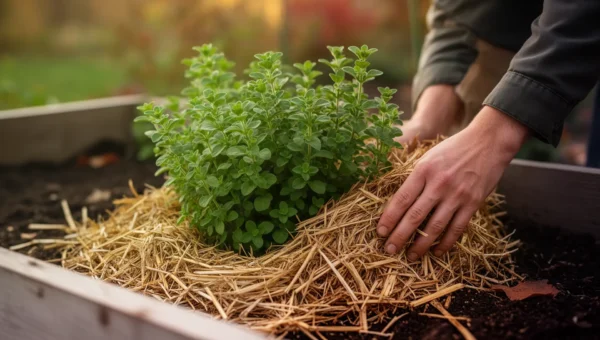
In garden beds: University of Illinois Extension recommends watering at least once a week, more often when temperatures climb, adjusted for how much rain has actually fallen [2]. A 2 to 3 inch layer of mulch reduces how often you need to repeat that, by slowing evaporation between waterings [2].
In containers: Basil in pots dries out far faster because the soil volume is so much smaller, and Illinois Extension’s container-gardening guidance notes that daily watering is often necessary for potted plants in general [3]. In practice, check container basil daily during hot weather and water whenever that top inch has dried out. See our guide to growing basil in containers for pot size and soil mix specifics that affect how fast it dries.

Skip the guesswork — get a pre-planned 4×8 kitchen garden bed
Free printable planting plan: what goes where, when to plant it, and how to keep it alive. Plus two bonus flower bed plans.
The 1-Inch Finger Test Beats a Fixed Schedule
Skip the calendar and check the soil instead: push a finger into the soil up to the first knuckle, and water only when that top inch is dry. Illinois Extension is blunt about why a fixed schedule fails — “there are no hard and fast rules when it comes to watering,” and a water meter is no substitute for actually feeling the soil yourself [3]. Basil’s water needs shift with weather, container size, and how root-bound the plant is, so a number that was correct in June can be wrong by August.
When you do water, water thoroughly rather than little and often — for potted basil, that means until water runs from the drainage holes, which also flushes out any built-up mineral salts. A quick surface splash that never reaches the root zone trains roots to stay shallow, making the plant even more vulnerable to the next hot, dry stretch.

Why a Wilting Basil Plant Doesn’t Tell You What’s Wrong
Wilting looks identical whether basil has too little water or too much, because both problems shut off the same mechanism from opposite directions: turgor pressure, the water pressure inside plant cells that keeps stems and leaves rigid.
Underwatering: When soil moisture runs out, the plant keeps losing water through its leaves (transpiration) faster than the roots can pull replacement water from dry soil. As the Extension Master Gardener Volunteers of Durham County explain, once cells lose more water than they take in, turgor pressure drops and the plant goes limp — a straightforward supply problem [4].
Overwatering: Here the soil often isn’t short on water at all — it’s short on oxygen. Purdue University’s Vegetable Crops Hotline explains that in waterlogged soil, roots stop growing and root tips die from lack of oxygen, and the surviving root tissue simply can’t conduct water well anymore. The plant wilts not because water is scarce in the soil, but because its damaged roots can no longer move the water that’s there [5]. Purdue also notes a detail most basil guides miss entirely: root damage can actually get worse for a period after the soil dries back out, as compounds that built up during waterlogging react with the returning oxygen [5].
The practical upshot: never diagnose a wilting basil plant by the leaves alone. Check the soil first — dry soil plus wilting means underwatering; damp or soggy soil plus wilting almost always means the roots are already in trouble.
Signs of Underwatered Basil
Underwatered basil wilts with soil that’s visibly and genuinely dry to the touch, often paired with leaves that feel thin and papery rather than soft. Look for these signs together, not in isolation:
- Leaves droop but perk back up within an hour or two of watering — a quick recovery confirms it was thirst, not root damage.
- Lower, older leaves yellow and drop first, as the plant sheds tissue it can’t support with limited water.
- Leaf edges turn crisp and curl inward, especially during hot afternoons.
- Soil visibly pulls away from the container’s edge, a sign potting mix has dried and shrunk.
- The plant bolts (flowers) early — heat and water stress together are a well-documented trigger for basil to rush to seed [1].
Left unaddressed, chronic underwatering doesn’t just wilt basil temporarily — USU Extension notes that inadequate irrigation slows growth, damages roots, and stunts the plant outright, not just in the moment but for the rest of the season [1].
Signs of Overwatered Basil
Overwatered basil shows a different fingerprint, and the soil is the giveaway: it stays wet, sometimes with a sour or swampy smell, well after you’d expect it to have dried.
- Yellowing that spreads more broadly across the plant, not just the oldest leaves — this tracks with impaired nutrient uptake from damaged roots, not simple aging [5].
- Leaves and stems curl downward, a response tied to ethylene buildup in oxygen-starved roots [5].
- Wart-like, crusty brown or beige bumps on the underside of leaves — this is edema, a physiological reaction that occurs when roots absorb more water than the leaves can release, and it’s frequently mistaken for a pest or disease when it’s actually a watering problem [6].
- Soft, mushy, dark stems at the soil line, often with a foul odor — a strong sign of root or stem rot. Excessively wet basil is also at risk from Pythium root rot — this water mold swims through films of standing water to infect roots, and it takes hold under exactly the excessive-moisture conditions chronic overwatering creates [7].
If you catch overwatering before stems turn mushy, let the soil dry out fully before watering again and improve drainage — a saucer that’s constantly holding water is a common hidden cause in containers. Once stems have gone soft and blackened, the plant rarely recovers; cut losses and start a new plant in fresh, well-draining mix.

How You Water Matters as Much as How Often
Basil is more prone to fungal and water-mold disease from wet foliage than from wet soil, so how you water matters almost as much as how often. Water at the base of the plant rather than overhead, ideally in the morning so any splashed leaves dry quickly in the sun rather than staying damp overnight.
This isn’t just tidiness — it’s specifically aimed at basil downy mildew, caused by Peronospora belbahrii, an oomycete that needs humidity to stay under 85% within the plant canopy to be kept in check, according to Cornell University’s Vegetables program. Cornell’s cultural controls line up exactly with good watering practice: drip irrigation instead of overhead watering, maximizing plant spacing, and siting basil in full sun with good air movement [8]. The Royal Horticultural Society adds that basil seedlings are also prone to damping-off from overwatering, and that established basil simply “hates having wet roots overnight” [9]. If you’re seeing gray, fuzzy patches on leaf undersides in humid weather, compare against our guide to common basil diseases before assuming it’s a watering fix alone.
Drip irrigation, where practical, sidesteps this entirely by delivering water straight to the soil. Clemson Cooperative Extension recommends a soaker hose, drip line, or hand-watering at the base specifically so the foliage stays dry, paired with a mulch layer to conserve soil moisture between waterings [10].
Quick Diagnosis: Symptom, Cause, and Fix
Most basil watering problems boil down to reading the soil correctly alongside the leaves — the table below maps the symptoms above to their most likely cause and the fix that actually addresses it.
Stop killing plants with wrong watering.
Select your plant, pot size, and climate zone — get a precise watering schedule with amounts and timing.
→ Build Watering Schedule| Symptom | Likely Cause | Fix |
|---|---|---|
| Wilting, soil dry to the touch | Underwatering | Water deeply now; check more often in future heat |
| Wilting, soil wet or soggy | Overwatering — oxygen-starved roots | Let soil dry fully before next watering; improve drainage |
| Lower leaves yellow and drop, soil dry | Underwatering stress | Water on a consistent schedule matched to setting |
| Yellowing spread broadly, soil stays wet | Root damage limiting nutrient uptake | Repot into fresh, well-draining mix; trim rotted roots |
| Crusty brown bumps on leaf undersides | Edema from overwatering | Let soil dry more between waterings; add airflow |
| Soft, mushy, dark stems at soil line | Root or stem rot (Pythium) | Remove affected growth; improve drainage; avoid standing water |
| Gray fuzzy patches under leaves in humid weather | Downy mildew, favored by wet foliage | Water at soil level in the morning; increase spacing |
| Crisp, curled leaves; soil pulling from pot edge | Severe underwatering | Water thoroughly, including a bottom-soak if very dry |
When Not to Water
Basil leaves can droop slightly on a scorching afternoon even when the soil underneath is perfectly moist — it’s losing water through its leaves faster than it can resupply the stem, not because it’s thirsty. This is a temporary heat response, not a watering emergency. Check the soil before adding more water; if it’s still moist an inch down, the plant almost always perks back up on its own once temperatures drop in the evening. Watering on top of already-moist soil is exactly how overwatering symptoms start, so resist the urge to water every time you see a droopy leaf.
One more caveat worth knowing: wilting isn’t always a watering problem at all. Clemson Cooperative Extension notes that basil wilt can also signal Fusarium wilt, a soilborne fungal disease that blocks the plant’s own water-conducting tissue from the inside — no amount of watering (or withholding it) fixes that [10]. If a plant keeps wilting despite consistently correct soil moisture, disease is worth ruling out before you keep adjusting the watering can.
Basil Watering FAQ
How do I know if my basil needs water right now?
Push a finger into the soil to the first knuckle. If that top inch is dry, water; if it’s still moist, wait and check again the next day. This beats any fixed schedule because basil’s actual water use shifts with heat, pot size, and rainfall [3].
Can overwatered basil be saved?
Often, yes — if you catch it before the stems go soft and mushy. Stop watering until the soil dries out fully, improve drainage, and remove any visibly rotted growth. Once the main stem has turned dark and mushy at the soil line, the plant usually can’t recover [7].
Does basil need more water in containers than in the garden?
Yes, generally. Containers hold far less soil volume, so they dry out faster and often need checking daily in hot weather, compared with garden-bed basil, which university extension guidance puts at a deep watering at least once a week, adjusted upward for heat and downward for rainfall [2][3].
Should I water basil leaves or just the soil?
Water the soil, not the leaves. Wet foliage — especially overnight — is what allows basil downy mildew and damping-off to take hold; watering at the base in the morning lets any incidental splashing dry quickly [8][9].
Sources
- Utah State University Extension. Basil in the Garden. Yard and Garden Research
- University of Illinois Extension. Growing Basil in Your Backyard. Flowers, Fruits, and Frass
- Illinois Extension. Watering. Container Gardens
- Extension Master Gardener Volunteers of Durham County. Why Plants Wilt
- Purdue University. Waterlogged Soils and Plant Growth. Vegetable Crops Hotline
- University of Maryland Extension. Edema of Indoor Plants
- Utah State University Extension. Pythium Root Rot. IPM Ornamental Pest Guide
- Cornell University. Basil Downy Mildew. Cornell Vegetables
- Royal Horticultural Society. How to Grow Basil
- Clemson Cooperative Extension. Basil. Home & Garden Information Center