How to Grow Raspberries in Zone 8’s Summer Heat — and Pick a Second Crop in Fall

Zone 8 raspberries yield two harvests a year with the right variety. Get specific planting dates, a monthly care calendar, and heat tips for PNW and Gulf Coast.
Zone 8 gardeners routinely get warned off raspberries. “They prefer cool summers,” the advice goes, and for someone gardening in coastal Texas or lowland Georgia, that sounds like an automatic disqualifier.
The problem is not zone 8 — it is treating a massive, geographically diverse climate band as a single growing environment. Western Oregon’s Willamette Valley, home to some of the most productive commercial raspberry farms in North America, is zone 8. So is coastal Houston in midsummer, where weeks of 100°F heat make a very different story. These are not the same garden.

Grow raspberries in zone 8 the right way and you get two harvests a year — a summer flush and a fall crop from everbearing varieties. In the Pacific Northwest, nearly any standard variety delivers both. In the South and Gulf Coast, variety selection narrows: Dormanred, bred specifically for Southern heat, is the proven performer. For a full foundation on raspberry cane types and trellis systems, see our complete raspberry growing guide.
Zone 8 Is Two Different Climates — Know Which One You’re In
Zone 8 covers minimum winter temperatures of 10–20°F, but that shared number masks a striking range of summer conditions.
Pacific Northwest zone 8 (western Oregon, coastal Washington, northern California): Summer highs typically run in the low-to-mid 70s°F. Raspberries evolved in northern Europe and northern Asia under similar conditions, which is why Oregon’s Willamette Valley ranks among the premier commercial raspberry-growing regions in the country. The challenges here are practical: heavy winter rainfall causes Phytophthora root rot in poorly drained soils, and autumn rain can arrive during harvest.
South and Gulf Coast zone 8 (east Texas, Louisiana, Mississippi, Alabama, Georgia, South Carolina coastal plain): Summer highs routinely exceed 95°F for weeks, with high humidity. Asking a standard European raspberry variety to thrive in these conditions means fighting its evolutionary instincts. With the right variety and afternoon shade, it works — but the approach is deliberately different from the PNW.
The key mechanism is chill hours: raspberries need between 200 and 800 hours of temperatures between 32°F and 45°F each winter to break dormancy properly, form flower buds, and set fruit. According to LSU AgCenter, zone 8 typically accumulates 500 or more chilling hours annually — enough to satisfy most varieties. The bottleneck in zone 8 is not winter cold. It is summer heat. Choose your variety accordingly.
Best Raspberry Varieties for Zone 8
Not all varieties sold at garden centers perform well across the full range of zone 8. This table prioritizes performance data from extension service trials rather than nursery marketing. For a broader look at raspberry types and their differences, our raspberry varieties guide covers the full spectrum.
| Variety | Type | Zones | Heat Tolerance | Best For |
|---|---|---|---|---|
| Dormanred | Everbearing (trailing) | 7–9 | Excellent | South/Gulf Coast zone 8 |
| Heritage | Everbearing (erect) | 4–8 | Good | All zone 8; reliable fall crop |
| Caroline | Everbearing (erect) | 4–8 | Good | All zone 8; East Texas |
| Joan J | Everbearing (erect) | 4–8 | Good | All zone 8; thorn-free harvesting |
| Cascade Delight | Summer-bearing | 6–9 | Moderate | PNW zone 8; large fruit |
| Meeker | Summer-bearing | 5–8 | Moderate | PNW zone 8; firm commercial-quality |
| Mandarin | Everbearing | 5–9 | Excellent | South zone 8 alternative |
| Fall Gold | Everbearing (yellow) | 4–9 | Good | All zone 8; ornamental and edible |
For Pacific Northwest zone 8: Cascade Delight and Meeker perform excellently as summer-bearing varieties — the PNW’s mild summers let standard varieties hit their stride. Add Heritage or Caroline if you want the fall second crop.
For South zone 8: Dormanred is the standout. Developed at Mississippi State University from a cross involving Rubus parvifolius — a heat-adapted Australian thimbleberry — it tolerates the sustained summer heat that wilts European-origin varieties. The berries are extra-large and firm; they need to reach full ripeness before sweetness develops and are excellent for jams and preserves. Caroline has shown promise in East Texas as a softer-fruited alternative.
One note on Southland, sold widely in zone 8 garden centers: extension trials have found it less heat tolerant than Dormanred with inferior fruit quality. If your nursery offers Dormanred, choose it over Southland.
Zone 8 Planting Dates

The key timing insight for zone 8: plant bare-root canes 4–6 weeks before your last frost date, not after it. Waiting until after last frost means planting in March into warming soil with summer arriving before roots can establish. Bare-root canes planted in light frost conditions establish more slowly above ground but root aggressively below, setting up a stronger first-year plant.
| Month | Zone 8B (last frost ~Mar 12) | Zone 8A (last frost ~Mar 20) | PNW zone 8 |
|---|---|---|---|
| January | Order bare-root canes; prepare beds | Order canes; amend beds | Plant bare-root now (dormant season) |
| February | Plant bare-root canes | Plant bare-root canes | Plant bare-root; install trellis |
| March | Plant containers; fertilize established beds | Plant containers; fertilize | Fertilize established plants |
| April | New growth emerges; remove first-year flowers | New growth emerges; remove flowers | Growth accelerates rapidly |
| May | First-year canes building root system | Same | Early summer crop begins |
| June | Everbearing first flush begins | Same | Peak summer harvest (summer-bearing) |
| July | Heat peak — deep watering, check mulch | Same | Summer-bearing harvest wraps up |
| August | Fall primocane tips resume growth | Same | Fall crop begins (everbearing) |
| September | Peak fall harvest | Same | Fall harvest continues |
| October | Final fall harvest; prepare for pruning | Same | Last harvest; autumn rains begin |
| November | Prune floricanes; apply 3–4 in. mulch | Same | Prune and mulch |
| December | Dormant — no active care needed | Same | Dormant |
Site Selection and Soil Preparation
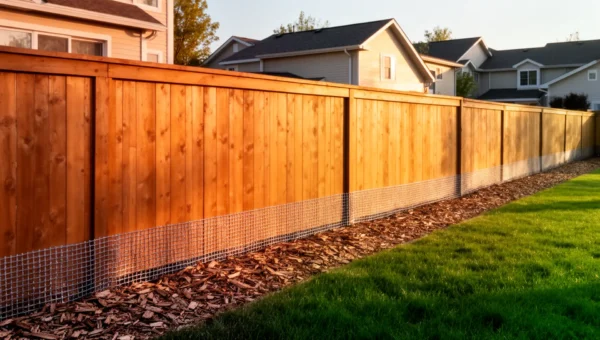
Sunlight: The baseline is 6+ hours of direct sun daily. In South zone 8, choose the east side of a fence, wall, or tall planting so your bed gets morning sun through early afternoon, then shade as temperatures peak. Afternoon shade from roughly 1 PM onward cuts heat stress where it matters most — raspberries photosynthesizing efficiently in the morning hours can tolerate some afternoon shade without meaningful yield loss.
Drainage comes first: Raspberry roots suffocate in waterlogged soil for even a few days during the growing season. Oregon State University Extension recommends raised beds or ridges 12–18 inches high in the PNW specifically to prevent Phytophthora root rot in the region’s heavy, winter-wet soils. In South zone 8, where native soils alternate between clay-heavy and sandy, raised beds serve the same function — they let you control root-zone conditions regardless of what’s beneath.


Soil pH: Target 5.6–6.5. Test before planting using a basic kit from a garden center, or send a soil sample to your county cooperative extension office for a full nutrient analysis. Correct before planting with elemental sulfur (to lower pH if above 6.5) or ground lime (to raise pH if below 5.6).
Organic matter: OSU Extension sets the target at above 3% soil organic matter. Work in 3–4 inches of compost or well-rotted manure to 10–12 inch depth before planting. In South zone 8, good organic matter improves drainage in clay soils and moisture retention in sandy ones simultaneously.
What to avoid: Don’t plant raspberries where tomatoes, peppers, potatoes, eggplant, or strawberries have grown within the past five years. These crops harbor Verticillium wilt and Phytophthora spores that persist in soil and attack raspberry roots.
Planting and First-Year Care
Set bare-root canes with the highest root attachment point 1–2 inches below the soil surface, roots fanned out horizontally in the hole — never balled up. Space plants 2–2.5 feet apart within rows; keep rows 8–10 feet apart for air circulation and trellis access.
Remove first-year flowers. This feels counterproductive, but the mechanism is clear: a first-year plant directing energy to fruit is diverting it from root development. The roots established in year one determine the vigor and yield of every subsequent season. Pinch off flowers as they appear through May and June of the first year.
Mulch immediately: Apply 3–4 inches of wood chips, straw, or shredded bark around each cane, keeping mulch a couple of inches clear of the cane itself to prevent crown rot. In South zone 8, mulch keeps root-zone temperatures noticeably cooler than bare soil on a hot afternoon — one of the most effective and lowest-effort heat management tools available.
Install the trellis at planting time: Erect-cane varieties (Heritage, Caroline, Joan J) need two horizontal wires at 3 and 5 feet on 7-foot posts. Trailing Dormanred uses the same structure with canes trained along the wires. Setting up the trellis before planting avoids working around established roots later.
Watering, Fertilizing, and Pruning
Watering: Established raspberries need 1–1.5 inches of water per week during the growing season. Drip irrigation with ½-gallon-per-hour emitters every 18 inches along each row is the best system for zone 8. It keeps foliage dry — an important advantage in South zone 8’s humid summers, where wet leaves during warm weather drive Botrytis gray mold. During July–August heat peaks in the South, increase to 2 inches per week. Even one week of moisture stress during berry development reduces berry size, as fruit cells cannot expand without water pressure.
Fertilizing: In early spring (February in zone 8B, early March in zone 8A), apply a balanced 10-10-10 granular fertilizer at label rates along each row, or work in 3½ cubic feet of composted manure per 100 square feet. Split nitrogen across two applications — late February or early March, and again in May — rather than applying all at once. OSU Extension recommends 2–3 oz of actual nitrogen per 10 feet of row for summer-bearing varieties; 3 oz per 10 feet for everbearing.
Pruning: Raspberry canes are biennial — they grow in year one (primocanes), fruit in year two (floricanes), then die. Getting this right is where zone 8 yields are made or lost. For a detailed walkthrough with pruning photos, see our raspberry pruning guide. The zone 8 essentials:
Stop missing your zone's planting windows.
Select your US zone and month — get a complete checklist of what to plant, prune, feed, and protect right now.
→ View My Garden CalendarSummer-bearing varieties (Meeker, Cascade Delight): After summer harvest wraps up, cut all floricanes to ground level — they’re spent and will harbor disease if left standing. Leave the current season’s green primocanes; these fruit next summer. In late winter (February in zone 8), thin primocanes to 3–4 of the strongest per foot of row.
Everbearing, single fall-crop system: Cut every cane to ground level in late January or February. All new growth that season is fresh primocanes. They fruit once, heavily, in September–October. This is simpler to manage and often preferred in South zone 8, where summer heat makes the early crop unreliable — one concentrated fall flush beats two weak crops.
Everbearing, double-crop system: Let primocanes grow through summer and fruit at their tips in fall. After fall harvest, remove only the tip section that fruited. These canes then fruit lower down the following summer. After that summer harvest, remove the spent cane entirely, leaving new primocanes to take over.
Managing Zone 8 Challenges
| Challenge | Where It Hits Hardest | Symptom | Solution |
|---|---|---|---|
| Summer heat stress | South zone 8 (TX, LA, MS) | Canes slow in July; reduced berry size | Afternoon shade; drip irrigation 2 in./week; mulch roots |
| Botrytis gray mold | South zone 8 (humid summers) | Gray fuzzy coating on ripe fruit | Drip irrigation only; 2.5-ft spacing; harvest promptly |
| Phytophthora root rot | PNW zone 8 (wet winters) | Canes yellow and collapse from base | Raised beds 12–18 in.; well-amended, fast-draining soil |
| Spotted wing drosophila | PNW zone 8 | Larvae inside ripe fruit; early drop | Harvest within 1–2 days of ripeness; fine-mesh netting |
| Verticillium wilt | All zone 8 | Sudden wilting; brown vascular streaks | 5-year rotation away from tomatoes, peppers, potatoes |
In South zone 8, expect raspberries to go semi-dormant in July when temperatures stay above 95°F for extended stretches. Cane growth slows and photosynthesis efficiency drops — this is self-protective behavior, not disease. Maintain irrigation, skip fertilizer during the heat event, and wait. When temperatures ease in August, fall primocane tips resume growth and the fall crop develops normally. For help identifying specific symptoms, see our guide to common raspberry problems and solutions.

Frequently Asked Questions
Can raspberries really survive zone 8 summers?
Yes, with the right variety. Dormanred, bred at Mississippi State University specifically for Southern heat tolerance, handles zone 8 Gulf Coast summers far better than European-origin varieties. In PNW zone 8, nearly any standard variety thrives through the mild summers.
When should I plant raspberries in zone 8?
Plant bare-root canes 4–6 weeks before your last frost: late January to mid-February in zone 8B (last frost around March 12), February in zone 8A (last frost around March 20). Container plants go in a few weeks later. The priority is root establishment before summer heat arrives.
What is the best raspberry variety for Texas or Georgia?
Dormanred is the consensus pick from LSU AgCenter and Mississippi State University extension research. Caroline has shown promise in East Texas as a softer-fruited option. Avoid Southland — it lacks Dormanred’s heat tolerance and delivers inferior fruit quality.
Do zone 8 raspberries produce twice a year?
Yes — everbearing varieties produce a fall crop on primocane tips in September and October after a summer flush. In South zone 8, the fall crop is often the more reliable of the two. The single-crop pruning system (cut all canes to ground in late winter) concentrates energy into one productive fall harvest.
How much water do zone 8 raspberries need in summer?
1–1.5 inches per week under normal conditions; up to 2 inches per week during South zone 8 heat peaks. Drip irrigation prevents the leaf wetness that drives Botrytis gray mold in the humid Southern climate.
Sources
- Growing Raspberries in Your Home Garden (EC-1306) — Oregon State University Extension Service
- Raspberry Planting and Care for Home Gardeners — Penn State Extension
- Growing Raspberries in the Home Garden — University of Minnesota Extension
- Right Plant, Right Place: Fruit Selection for Zone 8 — LSU AgCenter
- Red Raspberries in the South — Mississippi State University Fruit Extension
- Zone 8 Planting Calendar for Raspberries — GardeningByZone.com
- Raspberries Zone Planting Guide — Bonnie Plants