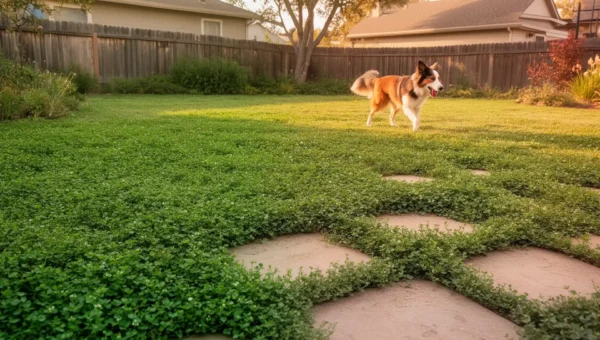
How to Amend Clay Soil: Why 2–4 Inches of Compost Outperforms Gypsum in Most Gardens

University research from Iowa State, Purdue, and MSU shows gypsum rarely improves clay soil. Here’s the organic matter method that actually works, plus when gypsum is the right call.
Buy a bag of gypsum from any garden center and the label promises it loosens clay, improves drainage, and transforms heavy soil. It’s one of the most consistently marketed soil amendments in the US — and one of the most consistently questioned by university extension research.
Iowa State University Extension states plainly that gypsum offers “little benefit” to typical Midwestern clay soils. Purdue University calls it “probably not” an effective amendment for Indiana. Michigan State University Extension found no evidence it improves Michigan clay. The reason comes down to the ion chemistry of clay — which also explains why one amendment consistently outperforms everything else you can buy or make.

This guide covers what clay soil is, why gypsum fails in most US gardens, the narrow case where it genuinely helps, and the organic matter strategy backed by research from four extension services. You’ll also find the common mistake that reverses months of careful amendment work, and an honest year-by-year timeline for what improvement actually looks like. For a broader overview of soil types and growing mixes, see our potting soil growing guide.
What Makes Clay Soil Difficult to Work With — and Why It’s Worth Fixing
Clay particles measure less than 0.002 millimeters in diameter — more than 1,000 times smaller than the smallest grain of sand [2]. Unlike rounded sand grains that let water and air move freely between them, clay particles are flat and plate-shaped, stacking together the way cards slide into a deck. Under pressure, they form dense layers called “pans” that water and roots struggle to push through. Drainage can be as slow as 0.01 to 0.5 inches of water per hour, compared to 1–3 inches per hour for sandy loam [3].
Those same properties also make clay remarkably fertile. Its negative electrical charge and enormous surface area hold onto positively charged nutrients — potassium, calcium, magnesium — far better than sandy soil. A well-amended clay garden typically needs less fertilizer, not more. The goal of amendment isn’t to replace the clay; it’s to create enough pore space between those flat particles that water drains, air enters, and roots can push through. Understanding this distinction tells you what any amendment actually needs to accomplish.
If you’re deciding which plants to grow in clay while you work on improving it, our guide on plants that thrive in clay soil covers more than 40 species that genuinely prefer it.
The Gypsum Myth: What University Research Actually Says
Gypsum (calcium sulfate, CaSO₄) works through an ion-exchange mechanism. When it dissolves in soil water, calcium ions (Ca²⁺) replace sodium ions (Na⁺) that are clinging to clay particle surfaces. As sodium is displaced, the particles flocculate — they clump into larger aggregates with better drainage and structure. Sodium washes away as sodium sulfate with irrigation. Structure improves. This is a real, documented process.
The problem is that this process requires sodium to displace. In most US soils — especially across the Midwest, Northeast, Appalachian region, and Pacific Northwest — the underlying geology is limestone. Soils derived from limestone are already calcium-rich. Purdue University’s turf science program states the problem directly: “This does not work in Indiana because the parent material for most Indiana soils is limestone — thus calcium is far more common than sodium.” There is no sodium excess for the gypsum calcium to replace, so it produces little or no structural effect [4].
Iowa State Extension confirms this for the Midwest [1]. MSU Extension goes further, noting that adding gypsum to already calcium-rich soil may actually reduce potassium and magnesium levels, creating a secondary nutrient imbalance — the opposite of what you wanted [5].
The marketing around gypsum rarely mentions any of this. It exploits the fact that gypsum genuinely transforms sodic soil, then implies that benefit applies to all clay — a logical leap the chemistry doesn’t support in most of the US.

When Gypsum Is Actually the Right Choice
Gypsum has a legitimate, narrow use case: sodic soils. These form mainly in arid western states — parts of California, Nevada, Arizona, and Utah — and in coastal regions where salt spray or irrigation water contributes to sodium accumulation over time [1].
If you’re in one of these areas, a standard soil test can measure the sodium adsorption ratio (SAR). An SAR above 13 indicates sodic conditions where gypsum will genuinely help. An SAR below 9 means your soil is not sodic and gypsum will have little effect on clay structure, regardless of how compacted the soil feels.
The Royal Horticultural Society takes a more permissive view for British gardeners, noting that gypsum (the active ingredient in many UK “clay improver” products) can help certain non-acidic UK clays aggregate. UK heavy clay — especially in the Midlands and southern England — can have different sodium dynamics than American limestone soils. A small test patch is reasonable if you’re gardening in the UK and your soil is not acidic [6].
For the majority of US home gardeners in the Midwest, Mid-Atlantic, New England, Southeast, and Pacific Northwest: gypsum is money better spent on compost.


The Amendment That Actually Works — and the Science Behind It
Most gardening guides describe organic matter as improving clay because it “feeds soil organisms.” The actual biology is more specific — and understanding it helps you make better decisions.
When you add compost, aged manure, or leaf mold to clay soil, you feed a community that includes arbuscular mycorrhizal fungi. These fungi produce a glycoprotein called glomalin, which the USDA Agricultural Research Service describes as functioning like “gobs of chewing gum” in the soil [9]. Glomalin coats the fungi’s hairlike hyphae and sticks clay particles together with surrounding organic matter, building the soil aggregates — stable crumbles with actual pore space between them — that make amended clay feel completely different to work.
Those aggregates are transformative. Where flat clay particles once lay sheet against sheet with almost no gap, you now have irregular crumbles with drainage channels between them. USDA research found that glomalin stores an average of 15% of soil carbon in undisturbed native vegetation (ranging from 9% in Georgia soils to 30% in Colorado soils), and that glomalin carbon resists decomposition for up to 100 years [9]. The structure you build through consistent organic matter additions is genuinely durable — far more so than a mineral amendment that washes or leaches away.
One implication worth noting: mechanical rototilling destroys mycorrhizal networks. This is part of why the no-dig approach works especially well for clay. Every time you run a tiller through a clay bed, you reset the fungal community that would otherwise have produced glomalin throughout the season. For an overview of how to build quality compost to feed that process, see our guide to making compost at home.
How to Add Organic Matter to Clay Soil: A Step-by-Step Guide
Step 1: Choose the Right Amendments
The most effective amendments for clay are well-broken-down organic materials:
- Compost (homemade or bagged): the most reliably processed option; suitable for immediate incorporation
- Aged or composted manure: horse, cow, or chicken manure that has had at least 6 months to break down
- Composted bark: slower to decompose but an excellent long-term structure builder; apply in fall if using high-carbon wood material so decomposition completes before spring planting [7]
- Leaf mold: shredded autumn leaves decomposed for 1–2 years; free and highly effective
What not to add:
- Sand: Utah State University Extension is emphatic on this — mixing sand into clay without a precise ratio creates a material “similar to low-grade concrete” [3]. The RHS calculates you’d need approximately 250 kg of grit per square meter to meaningfully alter clay texture [6] — impractical for any home garden bed. Even a partially correct ratio worsens drainage rather than improving it.
- Peat moss: while it does improve structure, extraction is ecologically damaging and it degrades quickly in warm seasons. Compost is a better long-term investment.
Step 2: Apply at the Right Rate
For new beds or heavily compacted clay that has never been amended: spread 2–4 inches of organic matter across the entire planting area, then work it into the top 6–10 inches of soil [7][8]. The phrase “entire area” matters — amending a narrow strip around individual plants produces uneven root zones and inconsistent drainage.
For established beds with existing plants: apply 1–2 inches as a top dressing and allow earthworms and soil organisms to incorporate it gradually. OSU Extension recommends this approach for clay specifically because it disturbs fungal networks less than digging [2].
For lawns on clay: both Iowa State and Purdue Extension recommend core aerification over soil amendment. Remove plugs 3⁄4 inch in diameter and 3 inches deep, at 20 to 40 holes per square foot. Timing in most US regions: April and again in September [1][4].
Step 3: Avoid the Tree and Shrub Mistake
Never amend only the individual planting hole when installing trees or shrubs into clay soil. Both Missouri University Extension and NC State Cooperative Extension flag this as a critical error: if the immediate hole is much richer than the surrounding clay, roots circle within the enriched zone rather than extending outward, eventually girdling the trunk [7][8].
Stop missing your zone's planting windows.
Select your US zone and month — get a complete checklist of what to plant, prune, feed, and protect right now.
→ View My Garden CalendarThe correct approach is to amend the entire area 2–5 feet outward from the planting location, or to backfill with native clay soil and begin annual top-dressing over the broader bed. Circling roots are not always visible at planting and may not cause problems for 5–10 years, making this a genuinely invisible long-term risk.
Step 4: Repeat Every Year
Organic matter breaks down. OSU Extension is direct: “The soil will remain clay — forever.” [2] Annual additions of 1–2 inches maintain the improvement. Without them, the glomalin-producing fungal community contracts, aggregate formation slows, and compaction gradually returns. Think of it as annual maintenance, not a one-time renovation.
Cover Crops: The Living Amendment Clay Soil Responds To
If you have a section of heavy clay that’s temporarily unplanted, cover crops do something organic matter alone can’t: they break compaction physically while building organic matter simultaneously.
Fibrous-rooted species like annual rye and annual ryegrass work best for clay. Their root systems create new macropores — drainage channels — where compaction has collapsed the structure. According to Penn State Extension, living cover crops in Ohio State’s four-year study consistently outperformed annual mechanical subsoiling for compaction relief [10]. The roots also actively transpire moisture from the soil, lowering water content and making clay less plastic and more workable when you return to dig.
The timing detail matters: these benefits require living plants. Once cover crops are killed (mowed or incorporated), the mulch actually retains surface moisture, temporarily increasing compaction risk. Incorporate them while still green and vigorous for maximum clay benefit [10].
Good choices for US home gardens: winter rye (Secale cereale) sown September through October for spring incorporation; buckwheat for summer gaps; crimson clover for simultaneous nitrogen-fixing and structure building.
The One Rule That Cancels Everything Else: Never Work Wet Clay
All the organic matter you’ve built into your clay can be destroyed in a single afternoon of digging or tilling at the wrong time.
Clay in a wet, plastic state deforms under pressure rather than fracturing into crumbles. When you work it — especially with a rototiller — the flat particles get smeared against each other and re-aligned, forming dense, airless layers that can be functionally worse than the original undisturbed clay. Even a garden fork pressed into wet clay leaves a smeared, glazed surface on the hole walls that dramatically slows water infiltration for weeks.
The simple readiness test: pick up a handful of soil and squeeze it into a ball. If it holds a smooth, shiny impression of your fingers, it’s too wet to work. If it crumbles when you press it with your thumb, conditions are right.
Best timing for clay work in most US regions is late autumn or early winter — when the soil has partially dried after the growing season — and again in mid-spring after the soil has dried for several weeks. The RHS recommends waiting at least six weeks after last frost before planting into freshly amended clay [6]. In zones 7 and warmer, late September through October offers ideal working conditions before winter rains arrive.
Timeline: What to Expect Year by Year
| Timeframe | What You’ll Notice | What’s Still Clay-Like |
|---|---|---|
| After first season | Noticeably easier digging; surface drainage improves; plants perform better; earthworms appear | Still compacts when walked on; still slow to dry in spring |
| Years 2–3 | Visible crumb structure developing; earthworm populations increase; spring workability markedly improved | Still needs annual organic matter to maintain; will revert without maintenance |
| Years 3–5 | Significant improvement in drainage and workability; measurably higher soil organic matter; excellent plant establishment | Underlying clay texture unchanged — it is still clay soil, and always will be |
Research on long-term organic amendments consistently shows measurable increases in soil organic matter over 3–5 years of consistent application — but only with annual additions. Skip a year and improvement stalls; skip two and structural regression begins.
The honest message: you will not convert clay into loam. But you can build and maintain a clay soil that is productive, workable, and genuinely pleasant to garden in — for the cost of a couple of cubic yards of compost per year, not an expensive mineral bag that the science doesn’t support. For a full comparison of soil amendment types and when to use each, see our soil amendments guide.
Key Takeaways
- Clay improves through aggregate formation driven by glomalin — a glycoprotein produced by mycorrhizal fungi that needs organic matter to function, not minerals like gypsum.
- Gypsum works only where sodium dominates clay surfaces (sodic soils, mainly arid western US). In limestone-derived soils of the Midwest, East, and Pacific Northwest, multiple extension services confirm it is ineffective and may cause secondary nutrient imbalances.
- The correct amendment is compost or aged organic matter: 2–4 inches worked into the top 6–10 inches of new beds, or 1–2 inches as annual top dressing for established ones.
- Never work clay when wet. The squeeze test tells you: shiny impression = wait; crumbles under thumb = go.
- Improvement takes 3–5 years of consistent annual additions. The underlying clay texture never changes, but the structure and workability can become genuinely excellent.

Frequently Asked Questions
Does gypsum ever work for clay in the US?
Yes, but only for sodic soils in arid western states where sodium dominates the clay’s cation exchange sites. A soil test showing a sodium adsorption ratio (SAR) above 13 is the signal that gypsum will help. For most US home gardens in limestone-derived soils of the Midwest, East, and Pacific Northwest, gypsum has little documented benefit and may reduce potassium and magnesium levels.
How long does clay soil actually take to improve?
Expect noticeable improvement in workability and drainage after the first growing season with consistent organic matter additions. Meaningful structural improvement — visible aggregate formation, earthworm populations, spring workability — takes 2–3 years. Significant organic matter increase takes 3–5 years. The soil will always remain clay; the goal is building and maintaining a permanently improved structure through annual compost applications.
Can I use fresh wood chips directly on clay?
Yes, as a surface mulch — not as a dug-in amendment. Fresh wood chips on the surface gradually improve clay structure as they decompose, but if tilled in while undecomposed, they temporarily tie up soil nitrogen as bacteria work on the high-carbon material. Apply in autumn so decomposition completes before spring planting. Composted bark is safer to incorporate directly at any time.
Is raised bed gardening better than amending in-ground clay?
For vegetable gardens and annual flowers, a raised bed filled with quality growing medium is the fastest route to productive gardening on clay. For permanent plantings — trees, shrubs, perennials, roses — amending in-ground soil and training roots into improved native clay produces far more resilient long-term plants than containerized roots that eventually hit a clay boundary.
Do I need to test my soil before amending clay?
A soil test isn’t required before adding compost — compost improves almost any soil regardless of chemistry. Testing becomes important if you’re considering gypsum (you need to confirm sodic conditions), if you’re seeing persistent pH-related symptoms, or if you’re in the Southeast, where clay is often acidic at around pH 5.5 and may benefit from dolomitic lime alongside organic matter. Most state cooperative extension services offer low-cost or free soil testing.
Sources
- [2] Clay Soil Challenges and Solutions for Oregon Gardeners — OSU Extension Service
- [3] Gardening in Clay Soils — Utah State University Extension
- [7] Clay Soil: A Mixed Blessing, But Easily Corrected — Missouri University Extension
- [8] Improving Clay Soils for Better Gardens — NC State Cooperative Extension
- [1] Iowa State University Extension — Will Application of Gypsum Improve a Clay Soil? (linked inline)
- [4] Purdue University Turf — Gypsum as a Soil Amendment, Probably Not (linked inline)
- [5] Michigan State University Extension — Gypsum as a Soil Additive: Use It or Lose It? (linked inline)
- [6] Royal Horticultural Society — Clay Soils (linked inline)
- [9] USDA Agricultural Research Service — Glomalin: What Is It and What Does It Do? (linked inline)
- [10] Penn State Extension — Do Cover Crops Help Reduce Soil Compaction? (linked inline)