

Don’t Do It! Here’s Exactly What Happens When You Water Plants with Soda

Watering plants with soda causes root rot, fungal growth, pest infestations, and nutrient lockout. Learn the science behind why soda harms plants, which species are most vulnerable, and what to do if you’ve already made this common mistake.
From dusting coffee grounds in your soil to watering with boiled pasta water, practically everything can be found in the realm of internet plant hacks and social media suggestions. One of the most persistent myths is watering your plants with leftover, flat Coke. The reasoning sounds logical on the surface: “Plants use sugar for energy, and soda is full of sugar, so it must be good for them, right?”
Particularly when you’re staring at a half-empty Coke bottle from last night’s gathering, it’s a seductive idea. Let me be very clear before you pour that flat soda into your beloved ficus: you will encourage a range of problems that can seriously damage or even kill your plant, including aggressive root rot, rampant fungal growth, and persistent pest infestations. In the fragile ecosystem of your potting soil, high sugar and acid combine to create a catastrophe.
This guide will break down the science behind why this is such a bad idea, investigate the specific damage it causes to roots and soil, reveal which plants are most and least vulnerable, and give you an emergency action plan if you’ve already made this common mistake. Let’s debunk this myth for good.
Clarifying the “Sugar for Energy” Myth
The foundation of this myth is a basic misunderstanding of how plants acquire their energy. Since we eat sugar for energy, it seems reasonable that plants might benefit from it too. But plants are significantly more self-sufficient than we are in this regard.

Three pre-planned garden beds, free
Stop staring at empty beds: printable plans with exact layouts, plant lists and planting calendars — yours free from the Garden Library.
The Truth About Photosynthesis

Plants do run on sugar, specifically glucose. But they are skilled producers who manufacture their own supply. Through the process of photosynthesis, they convert sunlight, water, and carbon dioxide from the air into all the glucose they need to power their growth, repair damage, and produce flowers and fruit. They neither need nor are equipped to handle an outside supply of sugar delivered to their roots.
Think of it this way: giving a plant sugar through its roots is like trying to feed a professional chef a microwave meal. They already have the raw ingredients and the skill to create something far better on their own.
The Wrong Type of Sugar
Even if plants could somehow benefit from external sugar, the kind found in soda is completely wrong. The sugar in most soft drinks is sucrose or high-fructose corn syrup. Plant roots have evolved to absorb mineral ions and water, not complex carbohydrates. Their root systems simply cannot process these large sugar molecules arriving through the soil. It’s like trying to run a car on crude oil instead of refined gasoline—the raw material for energy is theoretically present, but the engine can’t use it in that form.
What actually happens is that the sugar sits in the soil, unabsorbed by the plant, and becomes food for organisms that can break it down—many of which are harmful to your plant’s health.
The Science Behind It: What Soda Actually Does to Soil Chemistry
Understanding exactly why soda is so destructive requires looking at three interconnected chemical processes that occur the moment sugary liquid hits your potting mix.
Osmotic Stress and Reverse Water Flow
Plant roots absorb water through osmosis—water naturally moves from areas of low solute concentration (the soil) to areas of high solute concentration (inside the root cells). When you pour soda into the soil, you dramatically increase the solute concentration outside the roots. A standard can of Coca-Cola contains roughly 39 grams of sugar per 355 ml, creating a solution that is far more concentrated than anything roots are designed to handle.
This can actually reverse the direction of water flow. Instead of water moving into the roots, it begins moving out of them—a process called plasmolysis. The plant effectively dehydrates even while sitting in wet soil. Visible symptoms include wilting, leaf curl, and browning leaf edges that mimic drought stress, which confuses many gardeners into watering even more.
Soil pH Disruption
Most houseplants thrive in soil with a pH between 6.0 and 7.0. Coca-Cola has a pH of approximately 2.5—comparable to vinegar and lemon juice. Phosphoric acid (found in colas) and citric acid (found in citrus-flavoured sodas) are the primary culprits.
When acidic soda is added to soil, several things happen simultaneously:
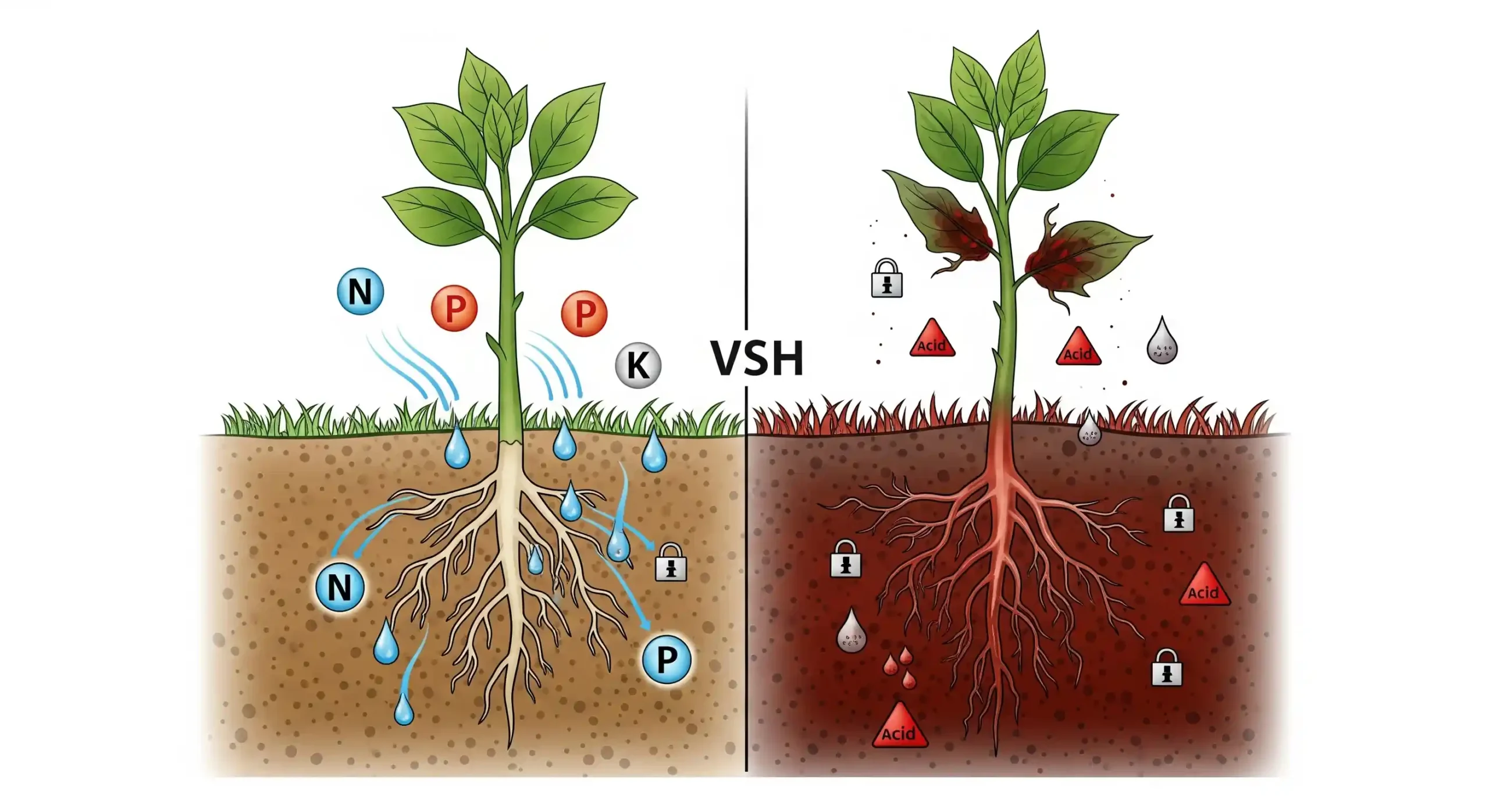
- Essential nutrients become chemically locked. Iron, manganese, and aluminium become overly available at low pH (potentially reaching toxic levels), while phosphorus, calcium, and magnesium become unavailable. This creates a paradox where the soil may contain adequate nutrients, but the plant cannot access them.
- Beneficial soil microbes die off. The bacteria and fungi that form symbiotic relationships with plant roots—such as mycorrhizal fungi that extend the root network—are sensitive to sudden pH shifts. A single application of soda can collapse these populations.
- Root cell membranes are damaged. The delicate root hairs responsible for most water and nutrient uptake can be chemically burned by direct contact with highly acidic solutions, reducing the plant’s absorptive capacity.
Microbial Population Explosion
The sugar in soda is an energy bonanza for soil microorganisms. Within 24 to 48 hours of application, bacterial and fungal populations can increase by orders of magnitude. Research published in the journal Applied Soil Ecology has shown that adding simple sugars to soil causes a rapid bloom of opportunistic microbes that consume available oxygen in the process.
This oxygen depletion creates anaerobic conditions—exactly the environment in which root-rotting pathogens like Pythium, Fusarium, and Phytophthora thrive. You are essentially creating the perfect storm for root disease: abundant food for pathogens, no oxygen to support healthy roots, and a weakened plant that cannot mount a defence.
The Damage Sugar and Acid Do to Plant Roots
Now that you understand the underlying chemistry, here is what the damage actually looks like in practice. When you pour soda into a pot, the soil experiences a cascade of harmful effects that compound over hours and days.
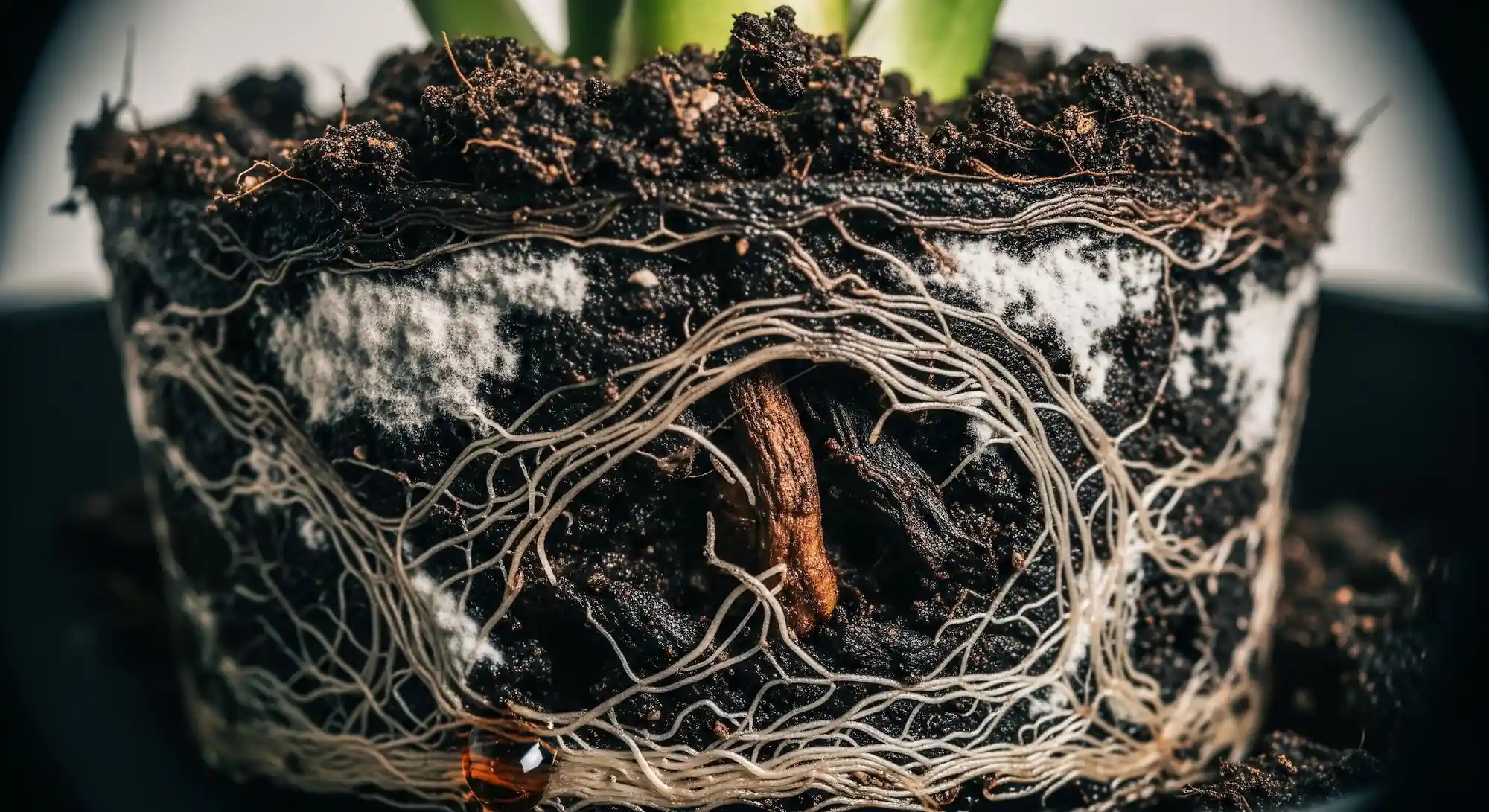
- It Feeds Fungus and Bacteria: Although your plant cannot consume the sugar, the microorganisms in your potting mix certainly can. The sugar in soda is a high-energy feast for pathogens that cause root rot and other fungal diseases. You are essentially inviting disease to an unlimited buffet. This triggers rapid mold growth on the soil surface and, more dangerously, fuels the expansion of root-rotting fungi like Pythium and Phytophthora deep within the root zone.
- It Attracts Pests: The sticky, sugary soil becomes an open invitation for pests. Fungus gnats arrive first—their larvae feed on the fungus that’s now thriving on the sugar. Ants may follow, finding your pot an ideal nesting location. The sugary residue can also attract cockroaches and other unwanted household guests.
- The Acid Attack: Most sodas are highly acidic. Colas typically have a pH between 2.5 and 3.5, containing phosphoric acid. Most houseplants require soil pH between 6.0 and 7.0. Pouring an acidic beverage into your pot drastically lowers the soil pH, which can shock the plant, physically burn its delicate root hairs, and chemically lock essential nutrients so the plant cannot absorb them.
- It Disrupts Water Absorption: The high sugar and solute concentration in soda creates a hostile osmotic environment for the roots. Plant roots absorb water because the fluid inside their cells is more concentrated than the surrounding soil water. Flooding the soil with a super-concentrated sugar solution can reverse this process. Through reverse osmosis, the roots actually lose water back into the soil, dehydrating the plant even while it sits in moist soil.
Which Plants Are Most and Least Vulnerable
Not every plant reacts to soda exposure with the same severity. Factors such as root sensitivity, preferred soil pH, and drought tolerance all influence how quickly damage sets in. The table below ranks common houseplants and garden species by their vulnerability to soda damage.
| Plant | Vulnerability | Why |
|---|---|---|
| Orchids | Extreme | Epiphytic roots are fully exposed; no soil buffer. Acid and sugar cause immediate damage to velamen tissue. |
| Ferns (Maidenhair, Boston) | Very High | Fine, delicate root systems extremely sensitive to pH shifts and osmotic changes. Prefer consistently moist, neutral soil. |
| African Violets | Very High | Shallow, fibrous roots with no tolerance for soil chemistry changes. Prone to crown and root rot in sugary conditions. |
| Peace Lilies | High | Sensitive to chemicals and salts in soil. Sugar-fed fungal growth quickly overwhelms their compact root balls. |
| Succulents & Cacti | High | Adapted to dry, low-nutrient conditions. Sugar-laden soil retains moisture and breeds pathogens these plants cannot tolerate. |
| Monstera | Moderate | Larger root mass provides some buffer. However, aerial roots offer no protection if soil-based roots are compromised. |
| Pothos | Moderate | Hardy and fast-growing, but repeated soda exposure will still overwhelm its resilience over time. |
| Spider Plant | Moderate–Low | Thick, tuberous roots store water and provide some buffer against osmotic stress. Can survive a single incident. |
| Snake Plant (Sansevieria) | Low | Extremely tough rhizomes and minimal water needs mean it can tolerate a single incident—but repeated exposure will still cause rot. |
| Blueberries (outdoor) | Low (acid only) | Prefer acidic soil (pH 4.5–5.5), so mild acidity is tolerated. Sugar component is still harmful, feeding soil pathogens. |
Key takeaway: No plant genuinely benefits from soda. Even the hardiest species on this list will suffer from repeated exposure. Plants with fine, delicate root systems and those preferring neutral-to-alkaline soil are at the greatest risk from even a single application.
Stop buying the wrong pot size.
Enter plant type and growth goal — get exact pot diameter, depth, and volume before you spend a cent.
→ Find the Right PotRisks and Limitations of Common “Soda Fertiliser” Claims
The internet is full of articles and social media posts claiming various benefits of using soda on plants. Let’s examine these claims directly and explain why each one falls apart under scrutiny.
Claim: “The Sugar in Soda Feeds Plants”
Reality: Plants produce their own sugar through photosynthesis. External sugar applied to soil cannot be absorbed by roots and instead feeds harmful bacteria and fungi. There is no credible peer-reviewed research showing that applying sugar solutions to soil improves plant growth. The studies that do exist—such as research from the University of Colorado—demonstrate that adding sugar to soil reduces plant growth by disrupting the soil microbiome.
Claim: “Carbonation Delivers CO2 to Roots”
Reality: While plants do use CO2 for photosynthesis, they absorb it through their leaves via stomata, not through their roots. The CO2 dissolved in carbonated water escapes into the atmosphere within minutes of being poured. Any trace amount that reaches roots provides negligible benefit compared to the damage caused by the sugar and acid that accompanies it in soda.
Claim: “Soda Contains Minerals That Plants Need”
Reality: While some sodas contain trace amounts of sodium, potassium, and phosphorus, the concentrations are far below what a balanced houseplant fertiliser provides. Additionally, the sodium content in many sodas can contribute to soil salinity, which causes further osmotic stress. A single application of a diluted liquid fertiliser provides more usable nutrition than a thousand cans of soda ever could, without any of the drawbacks.
Claim: “My Plants Looked Better After Using Soda”
Reality: Short-term improvement is occasionally reported in outdoor garden settings where rain quickly flushes the sugar and acid from the soil. In container plants, where there is no natural flushing mechanism, the sugar and acid accumulate with every application. Any perceived improvement is more likely due to the water content of the soda rather than its other ingredients. You would see the same or better results by simply watering properly with plain water.
The Long-Term Risks at a Glance
Even if a single application doesn’t visibly harm your plant, repeated use creates compounding damage:
- Soil structure degradation — sugar residue creates a sticky, compacted layer that reduces drainage and aeration over time
- Persistent pest populations — once fungus gnats and ants establish themselves in sugar-rich soil, they are difficult to eliminate without a full repot
- Progressive root death — each application kills more root hairs, reducing the plant’s capacity to absorb water and nutrients, creating a downward spiral
- Soil microbiome collapse — beneficial mycorrhizal fungi that help plants access nutrients are replaced by opportunistic pathogens, a shift that can take months to reverse even after stopping soda applications
What About Club Soda or Diet Soda?
If sugar and acid are the main culprits, what about other types of fizzy drinks?
- Diet Soda: Although it lacks sugar, diet soda still contains artificial sweeteners and acids—phosphoric acid and citric acid being the most common. It’s still a firm “no” because the acidity remains a serious problem for soil health and root function. Research on the effects of artificial sweeteners on soil microorganisms is limited, but early studies suggest compounds like aspartame and sucralose may inhibit beneficial microbial activity.
- Club Soda or Carbonated Water: This is the one exception with some basis in horticultural fact. Small-scale studies have indicated that the minerals in carbonated water—sodium, potassium, and magnesium—can provide minor benefit to plants. The dissolved CO2 may also slightly improve nutrient uptake at the root zone. However, plain water remains significantly better and completely risk-free. Club soda is an unnecessary and costly experiment with little proven advantage over proper watering and feeding with a balanced plant food.
“I Already Watered My Plant with Soda!” – An Emergency Action Plan
Don’t panic if you’re reading this after giving your plant a sip of Coke. It happens. The good news is that if you act quickly, you can likely prevent any long-term damage.
- Step One: Don’t Panic. Take a deep breath. If you intervene right away, a single small application is unlikely to be fatal.
- Step Two: Flush the Soil Thoroughly. Take the plant to a sink, bathtub, or outdoors. Pour generous amounts of lukewarm water slowly over the soil surface. You want to completely flush as much sugar and acid out of the potting mix as possible. Let the water drain freely through the drainage holes for several minutes. Use at least four times the volume of the pot in water.
- Step Three: Repot if Necessary. If you poured a large amount of soda or the soil still smells sweet after flushing, repotting is the safest option. Carefully remove the plant, discard all contaminated soil, and gently rinse the roots with lukewarm water to remove any sugary residue. Repot in a clean pot with fresh potting mix.
- Step Four: Monitor Closely. After flushing or repotting, place the plant back in its usual spot and watch it closely for one to two weeks. Look for signs of stress such as yellowing leaves, wilting, or drooping. Check daily for pests, particularly fungus gnats. Hold off on fertilising for at least three weeks to let the plant recover.
- Step Five: Adjust Your Watering Schedule. After a soda incident, the soil’s moisture retention may have changed. Use the finger test—insert your finger about 2 cm into the soil—before each watering to ensure you’re not overwatering a plant whose root system may be temporarily compromised.
Frequently Asked Questions
Can I use soda as a compost activator instead?
Pouring small amounts of flat soda into a large, active outdoor compost bin is far less harmful than applying it directly to plant roots. The sugar can temporarily accelerate microbial decomposition. However, it’s an inefficient activator compared to proper nitrogen-rich materials like grass clippings or coffee grounds. It can also attract rodents and insects to your compost pile. If you have leftover soda, it’s better to simply pour it down the drain.
Will soda kill weeds?
Some gardeners claim that pouring soda on weeds will kill them through the same root-burning and osmotic stress mechanisms described above. While concentrated soda may damage small weeds, it will equally harm any surrounding plants, beneficial soil organisms, and earthworms. It is a completely non-selective treatment. Boiling water or manual removal are far more effective and targeted weed control methods that won’t damage your soil.
Is it safe to pour leftover soda near outdoor trees?
A small amount of soda spilled near a mature outdoor tree is unlikely to cause visible damage. The tree’s extensive root system and the natural buffering capacity of outdoor soil dilute the impact significantly. However, repeatedly pouring soda at the base of a tree can acidify the surrounding soil over time and attract pests. It’s not a practice worth adopting. Use a proper watering routine instead.
What liquids besides water are actually safe for plants?
Very few household liquids are genuinely safe. Cooled, unsalted pasta or vegetable cooking water can provide trace minerals. Diluted, unsweetened compost tea is beneficial when properly prepared. Aquarium water (from freshwater tanks without medication) contains nitrogen and trace nutrients that plants can use. Beyond these niche options, plain room-temperature water remains the safest and most effective choice for the vast majority of plants.
How long does it take for soda damage to show up?
Visible symptoms typically appear within 3 to 7 days after application, though severe damage to root hairs begins within hours. The first signs are usually soil surface mold (white fuzzy growth appearing within 24–48 hours), followed by fungus gnats within a week. Leaf yellowing and wilting from root damage may take 5 to 14 days to become apparent, depending on the plant species and the volume of soda applied.
Stick to Water for Happy, Healthy Plants
We’ve examined the science behind the soda myth, explored the cascade of chemical damage it triggers in soil, identified which plants are most vulnerable, and debunked the most common claims about soda as fertiliser. The evidence is unambiguous. When you water plants with soda, you create a toxic cocktail of sugar and acid that damages soil structure, feeds pathogens, burns roots, attracts pests, and can ultimately kill your plant.
The best “secret” to thriving plants is no secret at all: give them the simple things they’ve evolved to need. Plain water is the best liquid for your plants, and it always will be. Pair it with the right light, appropriate soil, and occasional feeding with a proper fertiliser, and you’ll have everything you need for a vibrant, healthy collection. Skip the hacks, trust the basics, and your plants will thank you.
References
- University of Colorado Boulder. Effects of Sugar Addition on Plant Growth and Soil Microbiome Dynamics. Applied Soil Ecology.
- Royal Horticultural Society. Watering Plants: Common Myths and Best Practice. RHS Gardening Advice.
- Penn State Extension. Understanding Soil pH and Its Effect on Plant Nutrient Availability. Penn State College of Agricultural Sciences.


