

Late Blight Attack! Save Your Tomatoes from Fungal Fury

Imagine enjoying a cup of coffee as you stroll through your garden on a gorgeous summer morning, taking in your flourishing tomato plants. Then you see it: those dreaded patches of dark water that are spreading like wildfire across the leaves. Knowing exactly what you’re looking at makes your heart sink. When a late blight attack strikes! We must act quickly to protect your tomatoes from fungal wrath. If left unchecked, this terrible disease—caused by Phytophthora infestans—can literally wipe out your entire tomato crop in a matter of days. The good news is that you can definitely save your priceless tomatoes and keep this fungal wrath from destroying your harvest if you have the correct information and act quickly.
TL;DR: The Quick Guide to Beating Blight
- What it is: Late blight is a fast-spreading water mold (Phytophthora infestans) that thrives in cool, humid weather (60-80°F with 90%+ humidity). It’s not a true fungus.
- How to Spot It: Look for irregular, greasy, water-soaked spots on leaves (often starting on the top part of the plant) with a pale green border. In high humidity, a white, fuzzy growth will appear on the undersides of leaves. Stems get large, brown lesions, and fruits develop firm, dark brown spots.
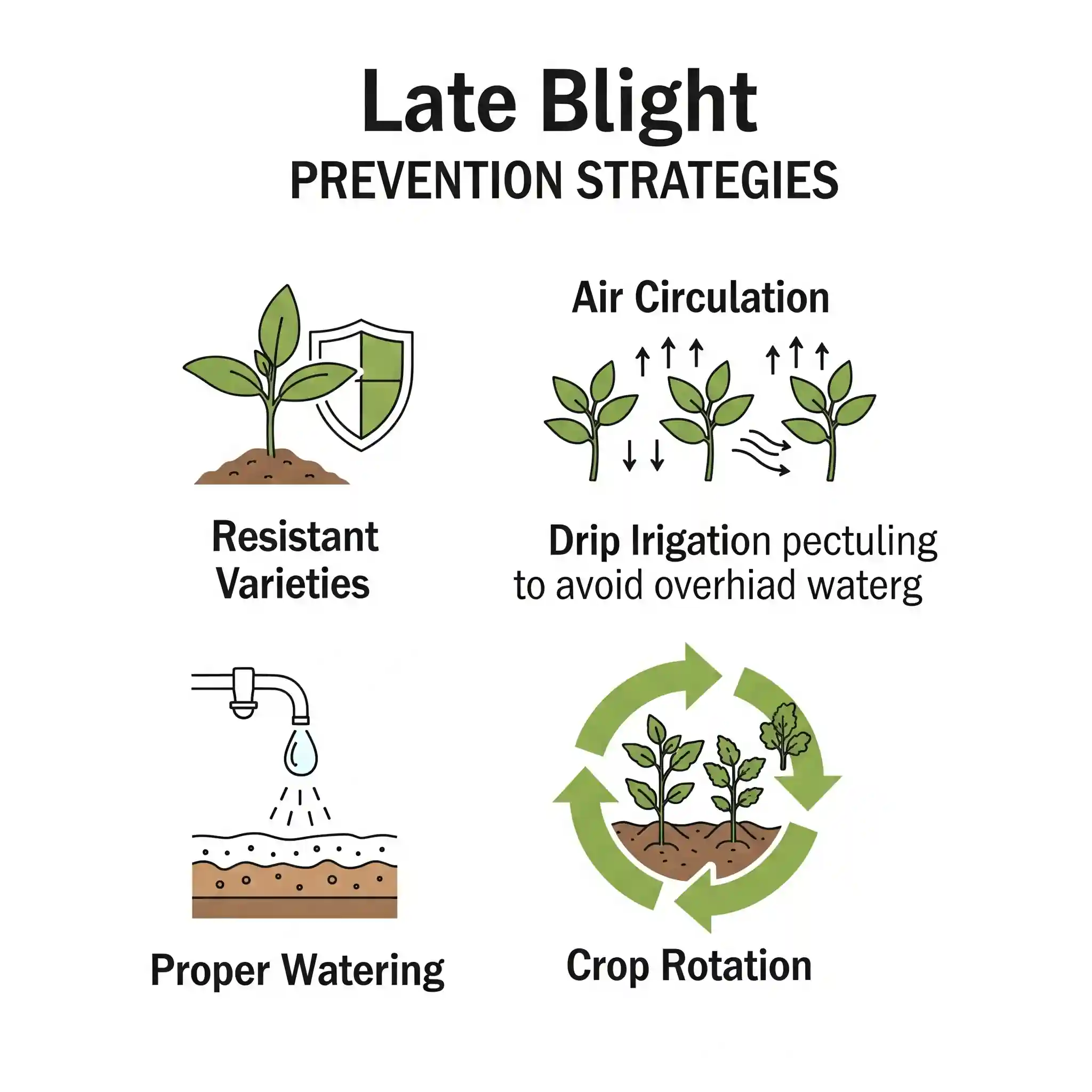
- Top Prevention Strategy: Your best defense is a multi-layered approach:
- Resistant Varieties: Plant cultivars known for late blight resistance, like ‘Mountain Magic’, ‘Defiant PhR’, or ‘Mountain Gem’.
- Air Circulation: Space plants 3-4 feet apart and prune lower branches to keep air moving.
- Proper Watering: Water the soil, not the leaves. Use drip irrigation or soaker hoses. If you must water overhead, do it in the morning so leaves can dry.
- Crop Rotation: Do not plant tomatoes, potatoes, peppers, or eggplants in the same spot for at least three years.
- How to React to an Infection:
- Act Fast: At the very first sign, remove and destroy infected leaves or entire plants. Do not compost them—bag them and put them in the trash.
- Use Fungicides: Copper fungicides are effective as a preventative measure. Apply them before you see the disease, especially when cool, humid weather is forecast. For an active outbreak, you may need stronger, systemic fungicides and should rotate between different types to prevent resistance.
- Key Rule: Early detection and swift action are the difference between losing a few leaves and losing your entire harvest.
After more than 20 years of growing tomatoes, I can tell you that every time I see late blight, my stomach drops. Understanding this illness is your first line of defense, though, and I’ve also learned that information truly is power. In order for you to enjoy those sun-warmed, homegrown tomatoes you’ve been dreaming about all season long, we’ll go over everything you need to know about recognizing, avoiding, and dealing with late blight in this extensive guide.
Meet Your Enemy: What Is Late Blight?
Have you ever wondered why blight is referred to as “late” when it can occur at any point during the growing season? The interesting part is that Phytophthora infestans isn’t a true fungus at all! It’s what we refer to as a water mold, or oomycete, which is why it absolutely flourishes in damp, humid environments. Imagine it as a cunning impostor that functions similarly to a fungus but has some special traits that make it especially harmful.
Additionally, this pathogen has a very infamous past. The 1840s Irish Potato Famine, which killed over a million people and forced another million to escape Ireland, is likely something you’ve heard about. That was the action of Phytophthora infestans. One of the most catastrophic agricultural catastrophes in history was caused by the same organism that can transform your lovely tomato patch into a brown, withered mess.

Three pre-planned garden beds, free
Stop staring at empty beds: printable plans with exact layouts, plant lists and planting calendars — yours free from the Garden Library.
However, why is it referred to as “late” blight? Its propensity to emerge later in the growing season, when conditions are more favorable—those warm, humid nights followed by cooler, dewy mornings that we frequently encounter in mid- to late-summer—is actually the source of the name. In contrast to early blight, which usually begins on the older, lower leaves and progresses upward, late blight can develop anywhere on the plant and spreads incredibly quickly.
This pathogen’s remarkable capacity for reproduction and dissemination makes it especially challenging. In less than five days, Phytophthora infestans can produce thousands of spores per lesion under the right conditions, and believe me, it doesn’t need much. Similar to microscopic biological missiles, these spores—known as sporangia—can travel for miles on wind currents before landing on gullible plants and causing fresh infections.
Nor does the organism only target tomatoes. It is equally content to attack ornamental plants like petunias as well as potatoes, eggplants, and peppers. When conditions were favorable for this pathogen, I have witnessed gardeners lose all of their nightshade family crops in a single week. For this reason, anyone growing these cherished crops needs to understand and avoid late blight.
How to Spot Late Blight Before It’s Too Late
Do you have the feeling that something is off when you’re looking at your plants? When it comes to late blight, early detection is crucial, so trust your gut. Your chances of saving your entire garden, not just the afflicted plant, increase with the speed at which you detect it.
The initial signs and symptoms are water-soaked, irregularly shaped lesions on the leaves, frequently surrounded by a characteristic pale green or grayish border. These aren’t your usual tidy, round patches; rather, they resemble soiled water that was splattered on the leaves and immediately soaked in. When I’m instructing novice gardeners on how to spot late blight, I always tell them to look for that “greasy” look that makes the afflicted areas appear nearly translucent.
What really distinguishes late blight from other tomato diseases is that, unlike early blight, it usually begins on the younger, more succulent leaves in the upper part of the plant canopy. This is an important difference that can aid in a prompt and precise diagnosis. Late blight can occur anywhere and everywhere, usually beginning on the newest growth where the tissue is most vulnerable, whereas early blight rises from the base of the plant like a slow-moving tide.
The undersides of afflicted leaves will develop white, fuzzy growth during times of high humidity, and this is where things start to show. The pathogen that is generating the thousands of spores I previously mentioned is this cottony growth. This white fuzz indicates an active infection that is literally spreading to other plants by pumping out spores. From the standpoint of plant pathology, it’s both exciting and terrifying.
Another dead giveaway is the lesions on the stem and petiole. Late blight produces brown lesions that aren’t precisely defined in shape, in contrast to the distinct spots you might see with other illnesses. They are rough, uneven, and most definitely not natural-looking, as if someone had applied a blowtorch to arbitrary parts of the stem.
Remember to inspect your tomato fruits as well. Fruits at any stage of development can be attacked by late blight; it doesn’t discriminate. Firm, round, dark brown spots that can spread to cover a lot of the fruit are a sign of an infection. These patches may exhibit concentric rings of pathogen growth and are frequently golden to dark brown in color. These lesions, in contrast to soft rot, remain solid at first, but later on, secondary bacteria may infiltrate and turn the fruit mushy.
Are the upper leaves the first to show spots? That is a warning sign for you. Is the damage looking greasy and wet instead of crispy and dry? One more red flag. Learning to differentiate late blight from its mimics is crucial, especially early blight, which produces those distinctive dark brown spots with concentric rings that resemble tiny bullseyes.
When and Why Late Blight Occurs: The Perfect Storm
It’s like having a garden crystal ball to figure out when and why late blight occurs. Because of how particular this pathogen is about its environment, you can often anticipate when problems may be on the horizon.
Phytophthora infestans thrives on what I refer to as the “perfect storm” of weather, which consists of temperatures between 60 and 80°F and humidity levels between 90 and 100%. Imagine those hot summer evenings when the air is so dense that a knife could cut through it, and then the morning’s heavy dew that leaves everything dripping wet. That is when late blight development is most likely to occur.
Understanding the temperature sweet spot is especially crucial. Although the pathogen can withstand a wide range of temperatures, it prefers the moderate range where days warm up to the 80s and nights fall into the 50s and 60s. The perfect conditions for spore production and infection are created by this temperature variation and moisture.
The true game-changer, however, is humidity. Due to the pathogen’s need for 90–100% humidity, late blight frequently develops following rainy or foggy spells or after using overhead sprinklers. I always advise my gardening friends to keep an eye on the weather forecast; if it calls for several days of moderate temperatures and high humidity, it’s time to be especially careful.
Stop guessing if your garden pays.
Log what you grow and harvest — see total yield weight, estimated retail value, and season-on-season progress in one place.
→ Track My HarvestThe way this pathogen spreads is especially cunning. The spores I spoke of? They move around a lot. Your neighbor’s infected plants could quickly become your problem because wind can carry them 5–10 miles or even farther. Another significant offender is rain splash; every droplet that strikes an infected leaf has the capacity to carry thousands of spores and disperse them to neighboring plants.
Pressure from late blight is also greatly influenced by regional differences. Compared to gardeners in hot, dry climates, we see late blight more often here in regions with high humidity and moderate temperatures, such as the Pacific Northwest, the Great Lakes region, and portions of the Northeast. However, if you live in an area that is generally dry, don’t let that fool you into believing you’re safe. It only takes one exceptionally humid and rainy spell to produce ideal conditions.
Over the course of the growing season, I’ve observed that late blight frequently manifests in waves. Early summer may see an outbreak, which may then subside during hot, dry weather before resuming when conditions improve. You can’t simply let your guard down after one outbreak is over, which is why regular monitoring and prevention measures are so crucial.
The Strength of Prevention in Defense Strategy
When it comes to managing late blight, the adage “an ounce of prevention is worth a pound of cure” is never more true. Over the years, I’ve discovered that gardeners who prioritize prevention rarely experience the heartbreak of losing their entire tomato crop to this terrible disease.
Crop Rotation
Your first and most effective line of defense against late blight is crop rotation. We’re talking about a methodical strategy that disrupts the disease cycle, not just moving your tomatoes to a different area of the garden. Understanding plant families and correctly rotating them are crucial. All nightshade crops—tomatoes, potatoes, peppers, and eggplants—are susceptible to late blight, so you should avoid growing any of these crops in the same spot for at least three years.
I’ve found that the following rotation schedule works well:
- Year One: Nightshades in Bed A
- Year Two: Legumes (beans, peas) in Bed A
- Year Three: Brassicas (broccoli, cabbage) in Bed A
- Year Four: Nightshades again in Bed A
USDA research shows that this three-year rotation can reduce bacterial spot cases by as much as 67%. I’m aware that it takes preparation and patience, but believe me, it’s worthwhile.
Site Selection and Spacing
The choice of site is equally important. Above all else, consider air circulation when deciding where to plant your tomatoes. Choose the coolest spot in your garden because Phytophthora infestans prefers humid, stagnant air. In order to quickly dry off dew and have natural air movement throughout the day, I always search for locations that receive good morning sunlight.
I find that a lot of gardeners forget to properly space their plants, even though it’s crucial. When those gorgeous, bushy tomato plants are growing closely together, they may appear impressive, but they are actually fostering the ideal environment for the development of late blight. Plants should be spaced at least 3–4 feet apart, and you should feel free to trim lower branches to increase airflow.
Watering and Sanitation
Many well-meaning gardeners unintentionally cause issues with water management. Although it may seem convenient to water your leaves from above, each time you do so, you are fostering the conditions that late blight thrives in. To maintain water at soil level, use drip irrigation or soaker hoses instead. Use overhead sprinklers early in the morning if you must, to give plants time to dry before dusk.
Despite their apparent simplicity, clean garden practices are frequently disregarded in the rush of the growing season. This entails clearing away plant debris as soon as possible, washing your tools in between plants (particularly if you suspect disease), and exercising caution when working in the garden when the plants are damp. For quick tool cleaning, I always have a spray bottle of rubbing alcohol on hand. It only takes a few seconds and can stop pathogens from spreading from one plant to another.
Transplant Inspection
Your last line of defense before issues arise in your garden is transplant inspection. Give them a thorough inspection when you purchase tomato starts or receive plants from friends. Check for that telltale white fuzzy growth, unusual discoloration, or water-soaked lesions. Rejecting a gift plant is painful, but it’s preferable to losing your whole crop.
Your Toolbox: Copper Fungicides and Other Chemicals
Copper fungicides are your heavy artillery when it comes to chemically controlling late blight, and knowing how to use them properly can make the difference between a harvest that is successful and one that is a catastrophic loss. Over the years, I’ve witnessed copper fungicides save countless gardens—but only when applied properly and at the appropriate time.
Research indicates that when applied correctly, copper oxychloride can produce yields of up to 25.33 tons per hectare, making it especially effective against Phytophthora infestans. Copper works by interfering with the pathogen’s cellular functions and stopping spore germination, which is what makes it so effective. The important thing to remember is that copper is mainly a preventative measure rather than a remedy. Copper can slow the spread of late blight once it has taken hold, but it cannot cure pre-existing infections.
When it comes to copper applications, timing is crucial. Applications must begin before disease symptoms appear, usually when environmental factors encourage the development of late blight. When nighttime temperatures regularly remain above 50°F and humidity levels are high for a few days in a row, I typically start copper treatments. Under ideal circumstances, 0.25% copper oxychloride is typically applied every 7–10 days.
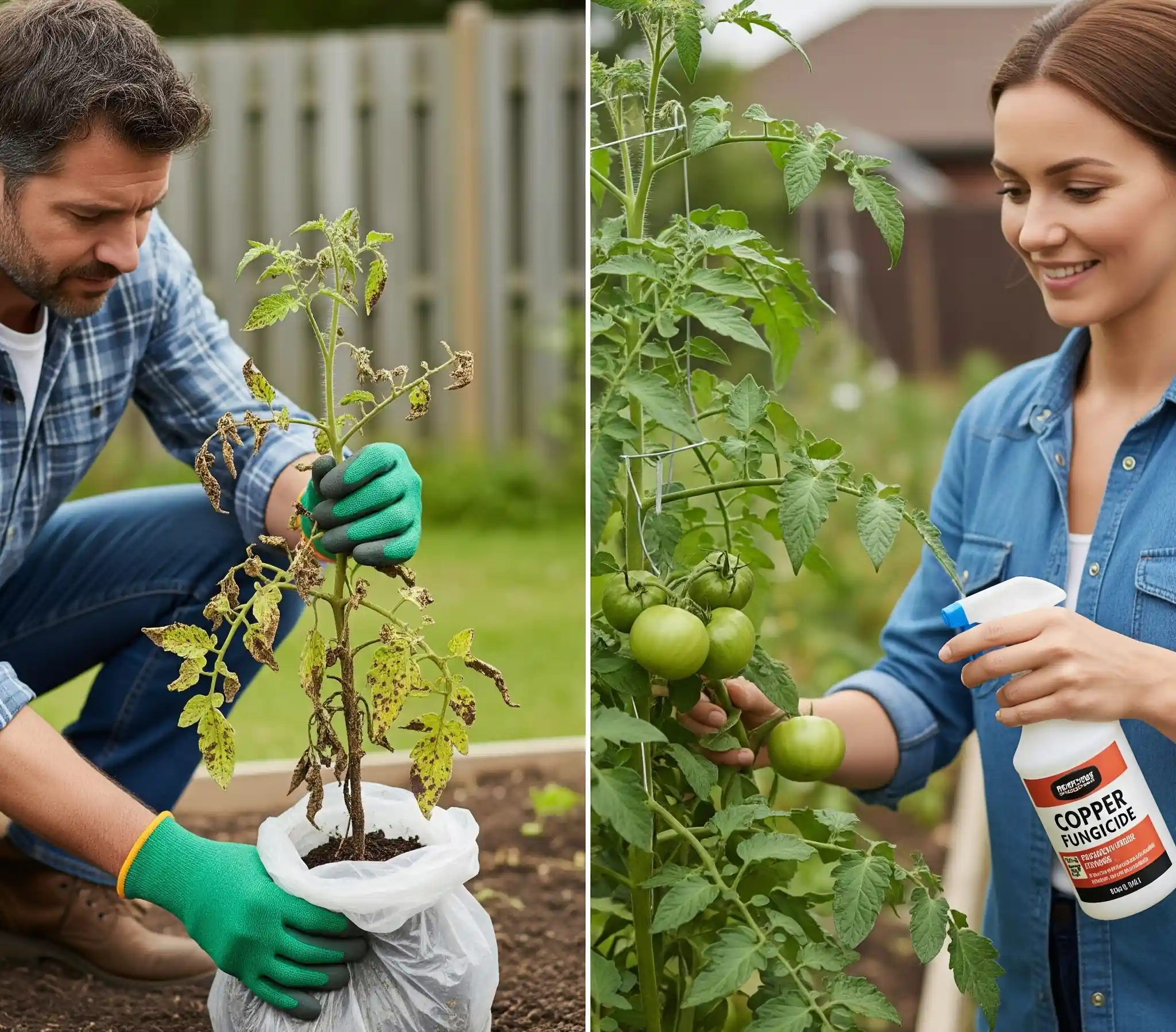
Another great alternative that has demonstrated almost equal efficacy to copper oxychloride in field tests is copper hydroxide. Because it tends to be less likely to cause phytotoxicity (plant damage) under specific conditions, some gardeners prefer it. If you’re having problems finding your preferred product, copper oxychloride is a simple substitute because of its similar application rates and timing.
According to the majority of organic certification programs, copper fungicides are generally acceptable for organic gardeners; however, you should always confirm with your certifying body. Instead of depending only on chemical control, the secret is to use them as part of an integrated approach. In my experience, organic gardeners who use copper treatments in conjunction with good cultural practices tend to have greater long-term success than those who use a lot of synthetic fungicides.
Even if you’re not working with commercial-scale production, every gardener should be aware of resistance management. Rotating between different modes of action is crucial because Phytophthora infestans can eventually become resistant to fungicides. To lessen selection pressure, think about switching up your application of copper throughout the season with other fungicides that have been approved.
Many gardeners are unaware of how important application technique is. All plant surfaces, including the undersides of leaves where spores are produced, should be thoroughly covered. In order to achieve adequate coverage without producing too much runoff, I like to use a pump sprayer with an adjustable nozzle. To prevent drift, apply during calm weather and never spray within 24 hours of an anticipated rainstorm.
When using any fungicide, safety must always come first. Wear the proper protective gear at all times; at the very least, gloves, long sleeves, long pants, and eye protection. Read and abide by all label instructions, being especially mindful of re-entry restrictions and pre-harvest intervals. If you have been using copper fungicides for a number of years, avoid over-application and think about soil testing because copper can build up in soil over time.
Genetic Protectors: Early and Late Blight-Resistant Tomato Varieties
Understanding Resistance
What’s better than battling illness? avoiding the fight altogether! Plant breeders have been working tirelessly to provide us with tomato varieties that can withstand early and late blight like botanical warriors, but there isn’t a tomato that is completely bulletproof—wouldn’t that be nice? At this point, genetics becomes your garden’s best friend, and to be honest, the best defense against both diseases is frequently selecting the right varieties.
Prior to delving into particular types, it is essential to comprehend resistance levels. See “resistant” on a seed packet as your tomato’s armor, not “immune.” You’re much better protected if disease pressure strikes, but it’s still preferable to stay out of the fight completely. Although resistance codes on seed packets can be confusing, you should be aware of the following:
- T stands for tolerance
- IR for intermediate resistance
- HR for high resistance
These represent actual, quantifiable variations in how plants react to disease pressure; they are not merely marketing jargon.
Late Blight Champions
The cultivars that have truly established themselves in the field are the Late Blight Champions. My number one pick for gardeners who are struggling with late blight pressure is probably Mountain Magic. In addition to its remarkable resistance, this large cherry tomato has an exceptional flavor, which is something that disease-resistant varieties frequently compromise on. The plants are vigorous and indeterminate; they mature in 70–80 days and yield 2-3 ounce fruits. I’ve been growing Mountain Magic for a few seasons now, and when late blight pressure is high, it always performs better than other varieties.
Another winner from the same breeding program is Mountain Gem, a slicing tomato with exceptional resistance to late blight. Averaging half a pound, these determinate plants yield glossy red, flattened globe fruits with a superior sugar-to-acid ratio. I adore Mountain Gem because it demonstrates that disease resistance does not have to come at the expense of flavor or size.
With good reason, defiant phr has grown in popularity among commercial growers and home gardeners alike. For gardeners who prefer early harvests or shorter growing seasons, this determinate variety is ideal because it matures in just 67 days and yields 6–8 ounce fruits. You know exactly what you’re getting because the “PhR” in the name refers specifically to its Phytophthora resistance.
Red Pearl provides exceptional late blight resistance in a small package for cherry tomato enthusiasts. Clusters of 15–20 gram fruits, ideal for salads or snacking, are produced by these indeterminate plants. They are excellent for succession planting all season long due to their 58-day maturity.
Early Blight Warriors
Given that many gardeners deal with both diseases at the same time, Early Blight Warriors should receive equal attention. Celebrity has been a garden mainstay for many years and is still one of the best performers for early blight resistance. This determinate variety yields traditional slicing tomatoes that are tasty and have outstanding resistance to a variety of diseases.
For gardeners in hot, humid climates with consistently high early blight pressure, I recommend Phoenix. Specifically bred for Southern conditions, this heat-tolerant variety has shown itself in some of the most difficult growing conditions.
Dual-Resistance Cultivars
The ultimate goal in tomato breeding is to create dual-resistance cultivars that provide defense against both early and late blight. The best illustration of this is most likely Mountain Fresh Plus, which offers outstanding resistance to both diseases while preserving fruit quality. For gardeners in regions where disease pressure is high, these are genuinely revolutionary.
Stupice is ideal for gardeners in the north or those who wish to prolong their growing season because it provides an intriguing blend of early blight resistance and cold tolerance. A favorite among heirloom enthusiasts seeking disease resistance, this indeterminate variety yields medium-sized fruits with exceptional flavor.
Sourcing and Planting
It takes some work to source your plants and seeds, but the effort is worthwhile. Burpee, Harris Seeds, and Johnny’s Selected Seeds all have great selections of disease-resistant seeds. Don’t be afraid to ask to see plant tags when you’re shopping at local nurseries; look for the resistance codes we talked about earlier. When purchasing plants, make sure to thoroughly check them for any indications of illness before bringing them home.
Good cultural practices are still necessary to maximize your resistant varieties. Resistance does not give you an excuse to neglect good sanitation, watering, and spacing. I’ve witnessed gardeners plant disease-resistant cultivars and then question why, despite watering overhead every evening and packing plants closely together, they continue to experience disease issues. Consider resistance to be a tool, not a panacea.
Disease-resistant cultivars are frequently more expensive than regular ones, but think of it as an insurance policy. The math is fairly straightforward when I weigh the costs of losing a whole crop against investing a few more dollars in resistant seeds. Additionally, many of these varieties are now accessible to gardeners on a tight budget thanks to seed-saving exchanges.
Natural Defenders: Botanical and Biological Regulators
In the battle against late blight, nature has given us some amazing allies, and as time has gone on, I’ve grown more and more interested in the possibilities of biological and botanical controls. These methods offer sustainable, eco-friendly alternatives that, when applied properly, can be incredibly effective, even though they call for a little more patience and knowledge than just picking up a bottle of fungicide.
Helpful Fungi and Bacteria
The most promising biological control agent I’ve encountered for managing late blight is most likely Trichoderma harzianum. By colonizing root systems and leaf surfaces, this helpful fungus serves as your plants’ microscopic bodyguard, driving out harmful organisms. Trichoderma is especially intriguing because it improves plant health and can increase nutrient uptake in addition to preventing disease. By using Trichoderma-based products as foliar sprays and soil drenches throughout the growing season, I’ve witnessed gardeners significantly reduce disease.
Establishing Trichoderma early in the season, before disease pressure increases, is crucial. After transplanting, I usually apply it once a month after that. Most garden centers now sell Trichoderma products, or you can buy the organism and follow easy preparation instructions to make your own. Just keep in mind that Trichoderma is a living organism, so proper application and storage conditions are important. Avoid combining it with chlorinated water or leaving it in a hot car.
Another biological control agent that has shown great promise in recent studies is Bacillus velezensis. Iturins, which are produced by this helpful bacterium, have direct antifungal action against Phytophthora infestans. In vitro studies have revealed inhibition rates as high as 95.6%, and greenhouse experiments have shown efficacy on par with chemical fungicides.
Bacillus velezensis is especially intriguing because of its exceptional safety profile and ability to be used as a foliar spray or soil drench. There are now some commercial products that contain Bacillus species, or you can buy the organism straight from biological supply companies.
Botanical Extracts and Teas
In lab tests, garlic extracts have demonstrated exceptional efficacy against Phytophthora infestans. In my own garden, I’ve found that homemade garlic sprays work well, and the sulfur compounds in garlic seem to have direct antifungal effects. When the disease is favorable, make your own by blending four to five fresh garlic cloves with a quart of water, straining out the solids, and applying as a foliar spray every seven to ten days.
The safety profile of garlic sprays is what I adore about them; you can actually eat the plants you’ve sprayed the same day. I always use garlic sprays in the evening or on overcast days, though, because they can be phytotoxic in hot, sunny weather. If you’re planning a large application, let your neighbors know because the smell can be quite strong!
Applications for compost tea have grown in popularity, and with good reason. Beneficial microorganisms that compete with pathogens for nutrients and space on leaf surfaces are introduced by well-made compost tea. Using an aquarium pump for aeration, I steep premium compost in water for 24 to 48 hours to make my compost tea. To get rid of any possible pathogens, it’s important to use compost that has been adequately heated during the composting process.
Applying compost tea at the right time is essential if you want to establish those healthy microorganisms before disease pressure increases. During the growing season, I usually begin weekly applications in the early summer. I’ve discovered that basic compost tea is effective on its own, but some gardeners supplement it with molasses or kelp meal to nourish the beneficial organisms.
Essential Oils and Integrated Strategy
Another area of botanical disease control that is attracting interest from researchers is essential oils. Although the majority of the research has concentrated on potato applications rather than tomato applications specifically, oils from plants such as thyme, oregano, and tea tree have demonstrated antifungal properties against Phytophthora species.
Achieving reliable outcomes while avoiding phytotoxicity is the difficulty with essential oils. When used improperly, these concentrated substances can harm plants. Start with extremely low concentrations (0.1–0.5%) and test on a small area if you want to experiment with essential oils.
The real power of biological and botanical approaches lies in their integration with chemical controls. These natural controls are most effective when used as part of an integrated program rather than as a complete substitute for chemical fungicides. For instance, I might apply Trichoderma early in the growing season, then follow up with garlic sprays when disease pressure is moderate, and save copper fungicides for times when disease risk is high.
This combined strategy has a number of benefits, including:
- Lowering the overall quantity of synthetic fungicides required
- Preventing the emergence of resistance
- Preserving populations of beneficial organisms that can suppress disease over the long term
Patience and consistent application are crucial because biological controls operate more slowly than chemical controls.
Battle-Tested Management: When Prevention Is Insufficient
Despite our best efforts to prevent it, late blight can occasionally infiltrate our gardens. When that occurs, quick thinking and decisive action are crucial. Over the years, I have discovered that gardeners who have a clear plan of action and don’t hesitate to make difficult decisions quickly are the ones who are able to effectively control late blight outbreaks.
The difference between losing a few plants and losing your entire crop can be determined by early detection and quick action. This is where taking daily walks in your garden becomes extremely beneficial; you should be out there observing your plants on a regular basis, not just when you’re harvesting or watering them. I advise gardeners to think like detectives: you’re searching for signs that something is amiss, and the sooner you spot those signs, the better your chances of success.
Put everything else on hold and concentrate on getting confirmation as soon as you suspect late blight. Take pictures, check them against trustworthy identification sources, and don’t be afraid to ask questions at your local extension office. Rapid diagnostic services are available at many extension offices, and some even have online diagnostic tools to help you validate your suspicions.
Once an outbreak is underway, fungicide rotation techniques become crucial. You need the best tools available when late blight is actively spreading, so now is not the time for organic-only methods. When used correctly, fungicides such as propamocarb hydrochloride + fluopicolide can achieve 94.5–99.4% efficacy, according to research; the important thing is to use them as part of a rotation program to avoid the development of resistance.
During active disease periods, switch between different modes of action every five to seven days. This rotation strategy has been shown to be successful in commercial settings. For instance, you could apply a copper-based fungicide initially, then a systemic fungicide such as dimethomorph + mancozeb for the second application, and finally copper for the third. The pathogen is unable to adjust to a single mode of action because of this rotation.
As a gardener, removing diseased plants is likely the most difficult choice you will ever have to make, but it is frequently required to preserve the remainder of your crop. I remove the entire plant, roots and all, as soon as I discover plants with active late blight infections. These plants should not be left lying around the garden or composted. If local laws permit, burn them or bag them up and dispose of them in the trash.
Although it is painful to remove plants that may still have parts that appear healthy, late blight spreads so swiftly that what appears healthy one day could be totally infected the next. Consider it a tactical choice that can avert complete destruction, like giving up a few soldiers to save the army.
During an outbreak, field sanitation procedures become vitally important. This entails changing clothes before working in areas that aren’t infected, cleaning tools after each plant, and moving through the garden with extreme caution. I carry a 70% isopropyl alcohol spray bottle with me when managing outbreaks, and I use it to mist my pruners in between each cut.
During an outbreak, special attention must be paid to water management. Stop using overhead irrigation right away and water at ground level instead. If you must work in the garden in humid conditions, start with the healthiest plants and work your way toward the most infected areas—never the other way around. Avoid working in the garden when the plants are wet.
You can use weather monitoring and prediction tools to predict when disease pressure will be at its highest and modify your management plans accordingly. Disease forecasting based on weather conditions is provided by Wisconsin’s commercial growers’ Blitecast system, and home gardeners can access comparable resources through a number of extension services.
Increase the frequency of your sprays and pay closer attention to the area when late blight is most likely to occur (cool, humid conditions). Since hot, dry weather naturally inhibits the development of disease, you can frequently decrease the frequency of your spraying.
For serious outbreaks, emergency procedures should be prepared beforehand rather than on the spot. This entails keeping the right fungicides on hand, being aware of where to find quick plant diagnostic services, and having a well-defined decision tree for deciding when to treat versus remove plants.
I’ve come up with a straightforward rule for managing outbreaks: remove a plant right away if more than 25% of it exhibits active late blight symptoms. Aggressive fungicide treatment may save it if less than 25% are impacted and the infection seems to be localized. This guideline enables me to make decisions quickly without being constrained by my strong feelings for a particular plant.
The Fortress Garden: Long-Term Techniques for Late Blight Resistance
Garden Design and Airflow
Thinking beyond individual growing seasons is essential to creating a garden that can endure the pressures of late blight year after year. The most successful gardeners, I’ve discovered, see their gardens as integrated systems in which all the components—from plant selection to soil health to garden design—cooperate to produce an environment that naturally inhibits disease.
Understanding your space’s microclimates and air movement patterns is the first step in designing a disease-prevention garden. We always begin by observing how air flows through the garden in various weather conditions and at different times of day when I’m assisting gardeners in redesigning their layouts. It is essential to create pathways for air movement because late blight thrives in humid, stagnant air.
When planning your tomato-growing spaces, I advise taking the prevailing winds into consideration. By arranging your tomato rows to benefit from the west or southwest winds that predominate in most of North America, you can drastically lower the pressure of disease. Steer clear of low-lying locations where cold, humid air tends to settle, and take into account the mature size of nearby trees and buildings that could obstruct airflow when planting tomatoes.
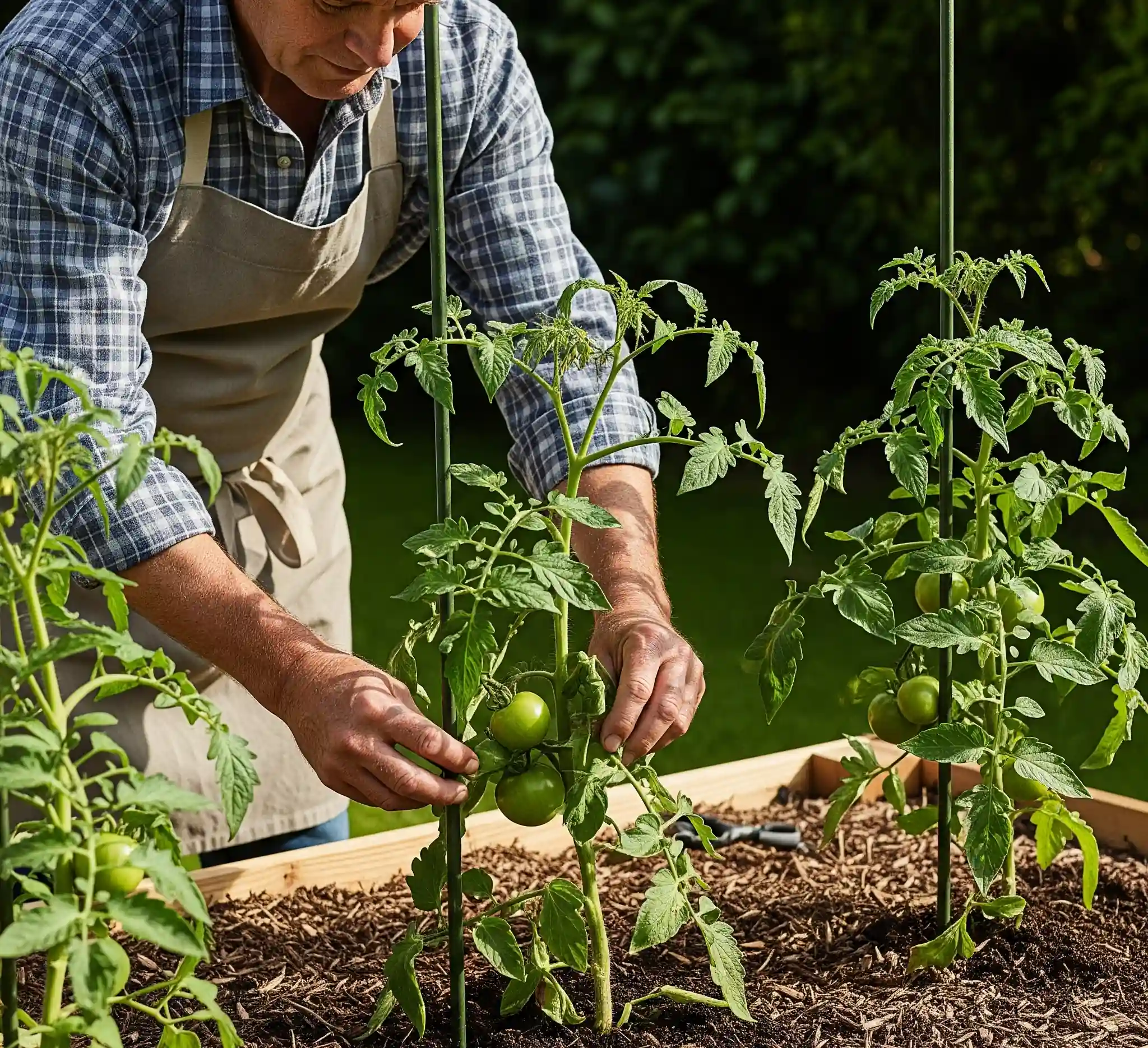
Raised beds facilitate crop rotation techniques and enhance air circulation around plants in addition to improving drainage. Because of the better drainage, which lowers soil moisture levels that can lead to disease development, I’ve discovered that gardeners who use well-designed raised bed systems generally have fewer disease issues.
Soil Health and Plant Immunity
Plant immunity and soil health are closely related, and this is where long-term planning truly pays off. Healthy plants are inherently more resilient to disease pressure, and healthy soil yields healthy plants. Instead of merely applying fertilizer to issues, this entails concentrating on increasing organic matter, preserving the ideal pH of the soil, and guaranteeing balanced nutrition.
Soil testing, in my opinion, should start any long-term disease management plan. Soil conditions can affect late blight pressure; plants under stress from pH issues or nutrient imbalances are more prone to infection. For tomatoes, keeping the pH of the soil between 6.0 and 6.8 guarantees the best possible nutrient availability and plant health.
The immune system of your soil is organic matter. Beneficial microorganisms introduced by well-composted organic matter can actually inhibit the development of disease by competing with pathogens. In order to maintain the organic matter levels in my tomato growing areas, which I aim for at least 3-5%, I add compost every year.
Season Extension and Record Keeping
You can completely avoid periods of peak disease pressure by using season extension techniques. In many areas, specific weather patterns that happen consistently throughout the seasons are when late blight pressure is at its highest. You can occasionally harvest your crop before or after these high-risk times by employing strategies like high tunnels, row covers, or carefully chosen planting dates.
Using low tunnels or row covers for early season protection during the vulnerable transplant period has worked really well for me. In addition to providing protection from late cold snaps, this also establishes a microclimate that can postpone the onset of disease until plants are more resilient to stress and established.
Although maintaining records for pattern recognition may seem time-consuming, it is crucial for sustained success. I maintain basic logs of the types of plants planted, the weather, the occurrence of disease, and the management techniques employed. These records show trends over time that can be used to forecast and stop outbreaks in the future.
A straightforward garden journal that records daily weather, plant observations, and management tasks can yield priceless information. In order to be proactive with prevention strategies, I’ve found that my garden usually experiences late blight pressure during the third week of July when specific weather patterns occur.
Integrated Pest Management (IPM)
By using an integrated pest management approach, you can view your garden as an ecosystem in which resistant cultivars, cultural practices, beneficial organisms, and targeted chemical interventions all cooperate. Using the best tool for each situation while preserving system health is the goal, not picking between conventional and organic methods.
I might, for instance, build my foundation on resistant varieties and helpful microorganisms, employ excellent cultural practices for prevention, track the weather to anticipate times of high risk, and apply targeted fungicides only when required. In general, this integrated approach offers more consistent disease control with fewer chemical inputs.
Patience and consistency are essential for long-term success. Establishing beneficial microorganism populations takes several seasons, building soil health takes time, and learning to read your garden’s particular patterns takes time. However, gardeners who make these long-term investments frequently discover that managing diseases gets considerably simpler over time.
Regional Factors: Tailoring Your Approach to Your Climate
High-Risk Areas
There is no one-size-fits-all approach to managing late blight, as I have discovered after years of assisting gardeners in various locations. Techniques that are vital in the Great Lakes region may be overkill in drier climates, and what grows well in the Pacific Northwest may be wholly unsuitable for gardeners in the Southwest. Success depends on knowing your local disease pressure and modifying your strategy accordingly.
Certain traits of high-risk areas make late blight a recurring problem. Most years, late blight pressure is constant in the Pacific Northwest because of its cool, rainy summers. Periodically, outbreaks occur in the Great Lakes region, frequently in tandem with particular weather patterns. Late blight problems are also common in parts of the Northeast, especially in regions that experience high humidity or fog frequently.
Prevention becomes crucial if you’re gardening in one of these high-risk areas. You must assume that disease will develop and make plans accordingly because you cannot afford to wait and see if it does. This entails establishing preventive fungicide programs, starting with resistant cultivars, and upholding superior cultural practices right away.
Cooler and Hot/Dry Climates
Due to the shorter growing season and the possibility of late blight developing as plants are about to mature, cooler climates pose particular difficulties. I frequently advise concentrating on early-maturing resistant cultivars in these areas, such as Stupice or Defiant PhR, which can yield a crop before the onset of the highest disease pressure.
In colder climates, season extension techniques become especially useful. While offering some protection from disease pressure, high tunnels or hoop houses can produce microclimates that enable earlier planting and later harvests. Preventing the humid conditions that encourage the development of late blight requires striking a balance between protection and sufficient ventilation.
Don’t be fooled by the idea that hot, dry regions are immune to late blight. When using overhead irrigation systems or during exceptionally wet times, late blight can occur even in desert areas. The distinction is that disease pressure is usually more irregular and much lower.
Concentrate on creating microclimates and managing water in hot, arid regions. Drip irrigation becomes crucial for preventing disease as well as conserving water. When conditions do become favorable for the development of late blight, shade cloth during the hottest part of the season can lessen plant stress and make them less susceptible to disease.
Container, Greenhouse, and Local Resources
Regional considerations are unique to container growing. Because pots tend to create humid microclimates around plants, container growing may actually increase the risk of disease in high-humidity areas. Containers, however, also provide greater control over growing conditions and facilitate plant relocation in the event of severe disease pressure.
I advise container gardeners in high-risk areas to use the largest containers available to allow for adequate air circulation, select compact-resistant cultivars, and pay close attention to watering schedules. During high-risk weather conditions, the ability to relocate containers to more advantageous locations can be a big benefit.
Regional differences in greenhouse cultivation are significant. If greenhouses are not adequately ventilated, they can turn into disease incubators in cool, humid climates. Greenhouses may offer the ideal growing conditions for tomatoes in hot, arid climates, completely eliminating the threat of disease.
Understanding how your structure impacts temperature changes, humidity levels, and air flow is essential to managing greenhouse diseases. In order to maintain conditions that promote plant health over the development of disease, automated ventilation systems, circulation fans, and humidity monitoring become crucial tools.
Understanding regional disease trends and management approaches requires the use of local extension resources. In addition to maintaining disease monitoring programs, the majority of state extension services are able to offer region-specific advice on management tactics, preventive treatment timing, and variety selection.
When disease issues emerge, I always advise gardeners to get in touch with their local extension offices for diagnostic assistance as well as information. Numerous extension offices are able to quickly identify diseases and offer tailored management advice based on regional conditions and disease strains.
Community Monitoring
Community monitoring programs are growing in popularity and can serve as early warning systems for disease outbreaks. Gardeners and farmers can report disease occurrences and monitor regional disease pressure in real-time with programs such as USAblight.org.
In addition to helping your own garden, taking part in these monitoring programs contributes to the development of a regional early warning system that can assist other gardeners in getting ready for disease pressure. These systems’ predictions get more accurate the more data they have.
Success Stories: Real Solutions, Real Gardeners
Hearing how other gardeners have dealt with late blight issues in their own particular circumstances can occasionally provide the most insightful lessons. I’ve gathered anecdotes from gardeners all over the nation who have come up with innovative solutions to this enduring issue over the years, and their experiences provide insightful information that goes beyond what is suggested in textbooks.
Maria’s Urban Container Success in Seattle demonstrates how ingenuity can transcend geographical and climatic constraints. Despite living in one of the country’s most high-pressure areas for late blight, Maria was determined to grow her own tomatoes despite her tiny apartment with only a balcony for growing space. The simplicity of her solution was brilliant: she grows Mountain Magic cherry tomatoes in big containers that she can move under her covered porch when it’s raining and humid.
One of Maria’s most important realizations was that her greatest advantage might be her mobility. She just wheels her containers to a more protected spot when the weather forecast calls for cool, humid conditions that encourage late blight. With just one small case of late blight, which she detected early and controlled with focused copper treatments, she has been cultivating tomatoes successfully for the past five years.
Technology can improve conventional growing techniques, as demonstrated by Tom’s Greenhouse Innovation in Michigan. Tom bought a small greenhouse with automated ventilation and humidity monitoring after he lost his entire crop to late blight three years in a row. His real breakthrough, however, came when he began applying weekly applications of compost tea along with Trichoderma inoculations.
Building populations of beneficial microorganisms that naturally inhibit the development of disease is the main goal of Tom’s strategy. He uses copper fungicides only when there is severe disease pressure, inoculates his transplants with Trichoderma at planting, and applies compost tea once a week during the growing season. For the past three seasons, he has not experienced any serious disease issues, and his yields have significantly increased.
In upstate New York, the Johnson Family’s Community Approach demonstrates how neighbors can collaborate to develop regional disease management plans. They decided to coordinate their management efforts after devastating late blight outbreaks affected several families in their rural neighborhood.
This community-based strategy has been extremely effective; instead of yearly late blight catastrophes, the neighborhood now only experiences small, manageable outbreaks. The most important lesson is that gardeners can manage late blight more successfully if they collaborate rather than work alone.
With the correct set of tactics, Sarah’s Organic Market Garden in Vermont demonstrates that organic late blight can be managed on a commercial scale. In order to maintain the production levels required for her business, Sarah had to manage late blight without the use of synthetic fungicides. Sarah grows tomatoes for local farmers markets.
Her approach includes the use of beneficial microorganisms, strategic crop rotation, resistant cultivars, and well-timed copper fungicide treatments. She rotates her tomato fields every four years, grows a variety with varying resistance profiles, and keeps thorough weather records to forecast high-risk times.
Sarah’s success stems from her realization that, although organic disease management calls for more preparation and focus than traditional methods, the outcomes can be just as successful. For seven years, she has consistently produced while establishing populations of beneficial organisms and soil health that offer long-term disease suppression.
Just as important as acknowledging accomplishments is learning from mistakes. Even for seasoned gardeners, overconfidence can cause issues, as demonstrated by Mike’s experience in North Carolina. Mike made the decision to try growing some heirloom varieties without any disease management program after a number of successful seasons with resistant varieties and sparing fungicide applications.
Mike’s lesson was that even in cases where you’ve had success in the past, disease management calls for constant attention to detail and consistency. Since then, he has not experienced any issues and has reverted to his integrated management approach.
These tales highlight a number of recurring themes: community collaboration can support individual efforts, innovative solutions frequently outperform strict adherence to recommendations, and effective late blight management necessitates preparation and consistency. Most significantly, they demonstrate that, with the correct mix of tactics and perseverance, late blight can be effectively controlled in a wide range of circumstances.
Conclusion
I want you to keep that late blight attack in mind as we conclude this thorough exploration of managing late blight! With the correct information and strategy, any tomato grower can actually save their tomatoes from fungal wrath. It’s not just a dramatic headline. Although it has been destroying crops for centuries, Phytophthora infestans is a powerful foe that is not unbeatable. You have all you need to safeguard your priceless tomato harvest with the tactics we’ve discussed, from selecting resistant cultivars and putting copper fungicide programs into place to using appropriate crop rotation and keeping your garden spotless.
I want you to keep in mind that effective management of late blight involves establishing multiple layers of defense instead of depending on a single tactic. Establish preventive cultural practices, start with resistant varieties as your base, keep an eye on the weather to predict high-risk times, and be ready to respond promptly in the event of disease. Over the years, this integrated approach has saved many gardens, and it has the potential to save yours as well.
Above all, don’t let your love of tomatoes be thwarted by your fear of late blight. Although this disease can be disastrous, you can have a plentiful supply of tasty, homegrown tomatoes every year if you prepare and manage it properly. Just like you, every gardener I know who has successfully dealt with late blight began with doubts, worries, and a resolve to produce excellent tomatoes in spite of the difficulties.
Thus, proceed with assurance, consistently apply these techniques, and keep in mind that all experts were once novices. The time you’ve taken to learn how to shield your tomatoes from this fungal wrath will pay off in your garden and future harvests. Cheers to many more seasons of robust plants and abundant harvests!
Commonly Asked Questions
Can I consume tomatoes that have late blight?
Probably the most frequent question I receive is this one, and I can appreciate the worry—no one wants to throw away valuable homegrown tomatoes! Fortunately, late blight does not render the fruit harmful to people. But I advise only picking fruits that are free of infection. It’s best to throw away any fruit that has those distinctive brown, firm lesions. Fruits from infected plants that appear healthy can usually be eaten, but wash them well and use them right away because they might not store as well as they should.
For what length of time does late blight persist in soil?
The difference between late blight and many other plant diseases is that it doesn’t thrive in soil by itself. Crop rotation works so well because Phytophthora infestans requires living plant tissue to survive. The pathogen does not persist in soil like some other pathogens, but it can overwinter in compost piles containing infected plant material or in infected potato tubers that have been left in the ground. For gardeners, this is actually good news because crop rotation and good sanitation can effectively disrupt the disease cycle.
What distinguishes early blight from late blight?
I get this question all the time, and since management strategies can differ, it’s important to know the difference. Usually beginning on older, lower leaves, early blight produces dark brown patches with characteristic bullseye-shaped concentric rings. Anywhere on the plant, but usually beginning on the upper leaves, late blight produces irregular, water-soaked lesions with pale borders. While early blight develops more slowly, late blight spreads far more quickly and can kill plants in a matter of days. Rarely seen with early blight, the white, fuzzy growth on the undersides of leaves is a hallmark of late blight.
Are other vegetable crops susceptible to late blight?
The nightshade family of plants, which includes tomatoes, potatoes, peppers, eggplants, and some ornamental plants like petunias, are the main targets of late blight. Crop rotation with non-nightshade crops works so well because it won’t spread to your beans, lettuce, or squash. However, when implementing management strategies, treat your entire nightshade planting area as a single unit because the disease can easily spread between nightshade crops.
When is the right time to use preventive fungicides?
When applying preventive fungicides, timing is crucial. Applications should begin when the environment is conducive to the development of the disease, usually when nighttime highs remain above 50°F and humidity is high for a few days in a row. Don’t wait for symptoms to appear! Depending on local weather patterns, I typically start preventive treatments in the early to mid-summer. Consider beginning applications when you receive your transplant and continuing every seven to ten days while conditions are favorable if you live in a high-risk area.
How can I safely get rid of infected plants?
In order to stop disease from spreading to subsequent crops, this is essential. The composting process rarely reaches a temperature high enough to kill Phytophthora infestans, so never compost infected plant material. Instead, if local laws permit, burn the contaminated plants or bag them and dispose of them in the trash. Wash your hands and clothing before working with healthy plants, and use rubbing alcohol to clean your tools after handling infected plants. Consider solarizing the soil in impacted areas by covering them with clear plastic during hot summer months if you’ve experienced a severe outbreak.
What are the best-tasting resistant varieties?
Gardeners are always talking about this! Because of its exceptional flavor and disease resistance, Mountain Magic is frequently praised for being sweet, fruitful, and having the ideal cherry tomato flavor. While not quite as flavorful as some heirloom varieties, Mountain Fresh Plus provides good flavor and excellent dual resistance for slicing tomatoes. Celebrity is still well-liked because it strikes a balance between disease resistance and the traditional tomato flavor that most people enjoy. Keep in mind that everyone has different tastes, so I always advise experimenting to determine your own favorites.
Is it possible to preserve seeds from resistant types?
Since the majority of disease-resistant cultivars are hybrids, saved seeds won’t yield plants that are identical to the parent plant. Nonetheless, seed saving is feasible for certain open-pollinated resistant cultivars, such as Matt’s Wild Cherry. Look especially for heirloom or open-pollinated varieties with resistance traits if you wish to preserve seeds. Remember that different saved seeds may have different levels of resistance, so you will still need to use other management techniques.
Sources
- “5 Crop Rotation Tips to Prevent Plant Diseases.” (n.d.). ThriveLot. Retrieved June 21, 2025, from https://www.thrivelot.com/resources/5-crop-rotation-tips-to-prevent-plant-diseases
- “Analysis of Antimalarial Drug Resistance Genes of Plasmodium falciparum 3D7 to Understand Its Expression: A Bioinformatic Approach.” (n.d.). Opastpublishers.com. Retrieved June 21, 2025, from https://www.opastpublishers.com/open-access-articles/analysis-of-antimalarial-drug-resistance-genes-of-plasmodium-falciparum-3d7-to-understand-its-expression-a-bioinformatic.pdf
- “Blight Resistant Tomato Collection.” (n.d.). Veseys. Retrieved June 21, 2025, from https://www.veseys.com/ca/blight-resistant-tomato-collection-375.html
- Gautam, R. K., et al. (n.d.). “Evaluation of Tomato Genotypes against Late Blight Disease (Phytophthora infestans) in Mid Hills of Uttarakhand, India.” MERJBS, 3(1), 19-23. Retrieved June 21, 2025, from https://www.kspublisher.com/media/articles/MERJBS_31_19-23.pdf
- “Late Blight of Potato.” (2021, July). NDSU Extension. Retrieved June 21, 2025, from https://www.ndsu.edu/agriculture/extension/publications/late-blight-potato
- “Late Blight.” (n.d.). IPM University of California Agriculture & Natural Resources. Retrieved June 21, 2025, from https://ipm.ucanr.edu/agriculture/tomato/late-blight/
- “Late Blight.” (n.d.). University of Minnesota Extension. Retrieved June 21, 2025, from https://extension.umn.edu/disease-management/late-blight
- “Late Blight in Tomatoes.” (n.d.). WVU Extension. Retrieved June 21, 2025, from https://extension.wvu.edu/lawn-gardening-pests/plant-disease/fruit-vegetable-diseases/late-blight-tomatoes
- Mehta, J., et al. (2024). “CRISPR-Cas9: A Beacon of Hope for Precision Genome Engineering in Rice Breeding for Enhancing Agronomic Traits and Biotic and Abiotic Stress Tolerance.” Critical Reviews in Plant Sciences, 43(6), 1-19. DOI: 10.1080/19315260.2024.2413479. Retrieved June 21, 2025, from https://www.tandfonline.com/doi/full/10.1080/19315260.2024.2413479
- “Measures to Control Late Blight in Tomato.” (n.d.). Katyayani Krishi Direct. Retrieved June 21, 2025, from https://katyayanikrishidirect.com/blogs/news/measures-to-control-late-blight-in-tomato
- Mitic, P., et al. (2021). “Microbiological Contamination of Fresh Vegetables and Fruits in Retail Markets.” Romanian Biotechnological Letters, 26(2), 2686-2693. DOI: 10.25083/rbl/26.2/2686-2693. Retrieved June 21, 2025, from https://scindeks.ceon.rs/Article.aspx?artid=0354-61602102188M
- Nakamura, S., et al. (n.d.). “Effect of New Tomato Varieties and Fungicides on Late Blight (Phytophthora infestans) Disease Severity, Growth Parameters and Yield in Western Highlands of Cameroon.” International Network for Scientific Publication (INNS Pub). Retrieved June 21, 2025, from https://innspub.net/effect-of-new-tomato-varieties-and-fungicides-on-late-blight-phytophthora-infestans-disease-severity-growth-parameters-and-yield-in-western-highlands-of-cameroon/
- Parvin, N., et al. (n.d.). “Molecular Characterization of Late Blight Resistant Genes in Tomato (Solanum lycopersicum L.) Genotypes.” Journal of Applied Biology & Biotechnology. DOI: 10.56430/japro.1533073. Retrieved June 21, 2025, from http://dergipark.org.tr/en/doi/10.56430/japro.1533073
- Poudel, A., et al. (2023). “Biocontrol Potential of Trichoderma Species against Phytophthora infestans (Mont.) de Bary Causing Late Blight of Potato and Tomato.” Plants, 12(14), 1824. DOI: 10.3390/plants12141824. Retrieved June 21, 2025, from https://www.mdpi.com/2223-7747/11/14/1824
- Poudel, P. N., et al. (2023). “Efficacy of Pseudomonas fluorescens as a Biocontrol Agent against Phytophthora infestans Causing Late Blight of Potato.” Molecules, 28(21), 7302. DOI: 10.3390/molecules28217302. Retrieved June 21, 2025, from https://www.mdpi.com/1420-3049/28/21/7302
- “Tomato Late Blight.” (n.d.). NC State Extension. Retrieved June 21, 2025, from https://content.ces.ncsu.edu/tomato-late-blight
- “Tomato Late Blight.” (n.d.). NC State Extension. Retrieved June 21, 2025, from https://www.ces.ncsu.edu/wp-content/uploads/2013/06/Tomato_late_blight_ki.pdf
- “Tomato Late Blight.” (2023, February). University of Wisconsin-Madison Extension Barron County. Retrieved June 21, 2025, from https://barron.extension.wisc.edu/files/2023/02/Tomato-Late-Blight.pdf
- “Top 10 Blight Resistant Tomatoes And How To Prevent Blight.” (n.d.). Greenupside. Retrieved June 21, 2025, from https://greenupside.com/top-10-blight-resistant-tomatoes-and-how-to-prevent-blight/
- Vysotska, S. I., et al. (n.d.). “Evaluation of the Effectiveness of Biopreparations in Protecting Tomatoes from Late Blight.” Retrieved June 21, 2025, from https://pdfs.semanticscholar.org/77f2/a9df28c868ab9a20fc81c84d61b9995efd53.pdf
- Yadav, A., et al. (2020). “Evaluation of Different Varieties of Tomato (Solanum lycopersicum L.) against Late Blight (Phytophthora infestans) under Field Condition.” Journal of Applied Biology and Biotechnology, 8(3), 1-6. Retrieved June 21, 2025, from https://jabonline.in/abstract.php?article_id=1286&sts=2
- “Zinc Oxide Nanoparticles in Plant Disease Management: A Review.” (n.d.). Semantic Scholar. Retrieved June 21, 2025, from https://www.semanticscholar.org/paper/32ea0dc8bab84af3313a23eefd0ce89827ec0a35


