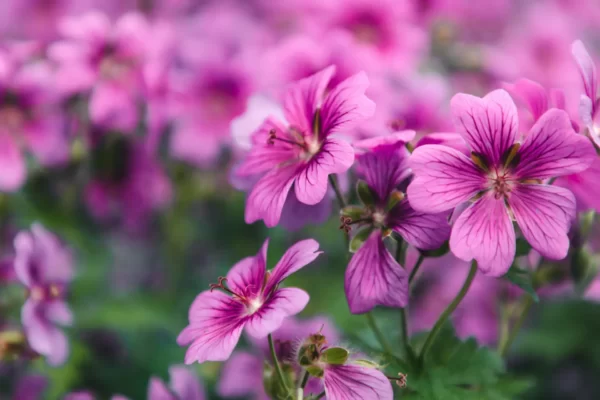
Zone 9 Geraniums: A Two-Season Growing Guide for Spring and Fall Blooms

Zone 9 geraniums shut down in July — but a timed August cutback and the right cultivar give you color in spring AND fall. Here’s the full zone 9a/9b care calendar.
The Zone 9 Paradox — and How to Use It
Zone 9 is simultaneously the best and worst climate for growing geraniums. Mild winters mean you never lose plants to hard freezes. But from June through August, air temperatures that routinely push above 95°F shut down flower production completely — and poorly managed plants sulk through September without recovering.
The opportunity most zone 9 gardeners miss: a single plant can give you two distinct bloom seasons — a spring flush from February through May, a deliberate summer pause, and a second flush from September through November. This guide gives you both planting windows, explains exactly why geraniums stop flowering in summer (so you can work with the mechanism instead of against it), and identifies the cultivars that field-tested best in zone 9 heat.
Geraniums in Zone 9: You’re Growing a Perennial
What gardeners in cooler climates don’t realize: pelargoniums — the common “geraniums” sold in every garden center — are tender perennials, officially hardy in USDA zones 9 through 12. In zone 9, you don’t dig them up before winter, pot them, or store them bare-root in a paper bag. You leave them in the ground or in outdoor containers year-round.
That changes your entire strategy. Rather than treating each plant as a one-season investment, you’re managing a multi-year specimen through two productive seasons and one hot-weather pause. A well-sited zone 9 geranium can produce blooms for three or more consecutive years with minimal intervention.

Three pre-planned garden beds, free
Stop staring at empty beds: printable plans with exact layouts, plant lists and planting calendars — yours free from the Garden Library.
For everything you need on geranium care from soil to overwintering, the full growing guide covers the complete plant profile. This article focuses specifically on zone 9’s unique seasonal rhythm.
Zone 9 Planting Calendar: Two Windows, Two Bloom Seasons
Zone 9 offers a spring and a fall planting window. Knowing which to target — and the exact calendar for your sub-zone — determines whether you get one color season or two.
Spring window (primary season):
- Zone 9b (last frost ~Feb 15): Start seeds indoors November 23; transplant February 15 [4]
- Zone 9a (last frost ~Feb 28): Start seeds indoors December 6; transplant February 28 [4]
- Buying transplants? Target late February through mid-March — nurseries stock them right as planting windows open
Spring-planted geraniums establish quickly in cool, moist soil and bloom heavily through May. Peak color typically runs March through late May in zone 9b and March through early June in zone 9a, before summer heat interrupts flowering.
Fall window (secondary season):
- Plant transplants October through early November
- Established plants push new growth through October and November
- In zone 9b, light winter bloom is possible December through January in sheltered spots [3]
Fall-planted geraniums benefit from soil that’s still warm from summer (speeds root establishment) while air temperatures cool to the 75–85°F range geraniums prefer for flowering. This window is widely overlooked but produces excellent color through the holidays in mild zone 9 winters.

Best Geranium Varieties for Zone 9
Variety selection has a larger impact in zone 9 than in cooler zones because summer heat tolerance varies dramatically across geranium types. Choosing the wrong type means plants that look acceptable in spring and collapse by July.
| Type | Heat Tolerance | Best Use | Zone 9 Notes |
|---|---|---|---|
| Zonal geraniums | Moderate | Beds, containers | Most widely available; standard varieties need afternoon shade in summer |
| Fantasia ‘Strawberry Sizzle’ / ‘Violet’ | High (tested) | Full-sun beds | Only cultivars shown to thrive in full sun during San Antonio’s hottest recorded summers [2] |
| Interspecific hybrids (Calliope, Caliente series) | High | Beds, hanging baskets | Zonal × ivy cross; combines heat tolerance with vigorous trailing growth |
| Ivy geraniums | Moderate | Hanging baskets, slopes | Trailing habit; thin leaves scorch in dry heat — position for afternoon shade and consistent moisture |
| Martha Washington (Regal) | Low | Containers only | Require cool nights to set buds; rarely bloom well past April in zone 9 — treat as a cool-season annual [3] |
The Fantasia data point is worth explaining. Texas A&M AgriLife Extension ran two years of field trials in 2005 and 2006 — the hottest summers on record in San Antonio at the time — testing geranium cultivars in full sun. Fantasia ‘Strawberry Sizzle’ and ‘Violet’ were the only varieties that grew and maintained attractive foliage throughout [2]. For gardeners in the hottest zone 9 microclimates — Houston, San Antonio, Phoenix, inland Southern California — these two cultivars or the Caliente/Calliope series give you the best odds of summer survival without moving plants into shade.
For color variety: ‘Divas Orange Ice’ (bi-colored white and orange), ‘Black Velvet Rose’ (distinctive chocolate-brown foliage with rose flowers), and ‘Appleblossom Rosebud’ (pink and white double blooms) all perform well in zone 9 containers [5].
Spring Care: February to May
Once you transplant after last frost, cool spring temperatures do most of the work. Your job is to set up conditions that carry plants through summer, not just through spring.
Soil preparation: Amend heavy clay soils before planting — work a 50/50 mix of organic matter and perlite into the top 8 to 10 inches [3]. Geraniums tolerate lean soil far better than waterlogged roots. Target a pH of 6.0 to 6.5; add 2.5 pounds of dolomitic lime per 100 square feet if your soil tests below 5.5 [3].
Spacing: 12 to 18 inches between plants in beds allows adequate airflow — important for preventing botrytis, which thrives in the humid spring mornings common in coastal zone 9. For containers, 8 to 12 inch diameter pots are the practical sweet spot [3].
Watering: Water at the base, never overhead. Wet foliage at night creates conditions botrytis exploits immediately. Water early in the morning so leaves dry completely before sunset [3]. The rhythm: deep watering when the top inch of soil dries out. In spring, this typically means every three to four days for in-ground plants, every two to three days for containers.
Fertilizing: Start two weeks after transplanting. Use a balanced 10-10-10 or 8-8-8 formula at 2 pounds per 100 square feet in beds every four to six weeks [3]. For containers, apply half a teaspoon of dry fertilizer per 6-inch pot every three to four weeks, or a liquid formula every three weeks. More nitrogen does not mean more flowers — over-fertilized geraniums produce lush foliage and few blooms [1].
Stop missing your zone's planting windows.
Select your US zone and month — get a complete checklist of what to plant, prune, feed, and protect right now.
→ View My Garden CalendarDeadheading: Remove the entire flower stalk — not just spent petals — to prevent the plant from channeling energy into seed formation. This single habit meaningfully extends the spring bloom window [5].
Summer Management: Understanding the Heat Shutdown
When air temperatures stay above 90°F for extended stretches, geraniums stop producing flowers. The mechanism is a heat stress response: resources that would normally go to bud development are redirected to basic cellular maintenance — maintaining membrane integrity and preventing protein denaturation in high temperatures. The plant isn’t dying. It’s waiting.
The first visible signs of heat stress are wilting despite adequate soil moisture and sudden bud drop. Yellow, bleached, or scorched foliage follows in more severe cases. These are heat signals, not pest or disease symptoms — knowing the difference prevents unnecessary treatment. If you want to diagnose leaf discoloration accurately, the guide to geranium leaves turning yellow walks through each pattern by location on the plant.
June through July management:
Move containers to a position with morning sun (5 to 6 hours) and afternoon shade from around 1:00 PM onward. For in-ground plants, 30 to 40% shade cloth temporarily deployed over the bed prevents leaf scorch without cutting off necessary morning light [1]. Ivy geraniums especially need this — their thin leaves dehydrate quickly in hot, dry wind.
Water more frequently in heat, but only after the top inch of soil has dried. Constantly wet soil in high temperatures accelerates root rot [1]. Deep, infrequent watering in early morning is better than daily shallow watering. Stop fertilizing entirely by late May or early June. Applying nitrogen during extreme heat produces soft, vulnerable growth and does nothing to encourage flowers [1].
The August cutback — the mechanism behind your fall bloom:
In late August, once the worst summer heat has peaked, cut plants back by one-half to three-quarters of their stem length [3]. This feels drastic. It produces spectacular fall results.
After cutting back, remove any visible flower buds for four to five weeks [3]. This forces the plant to rebuild its root system and foliage before directing energy toward flowers. Plants that aren’t cut back often remain in their low-energy summer state even after temperatures cool — you’ll get a weak, straggling fall display or none at all. Plants that are cut back and allowed to rebuild flush strongly in October with compact, well-branched growth.
Fall Revival: September to November
As nighttime temperatures drop below 70°F, geraniums shift out of heat dormancy. September in zone 9 is the pivot point — daytime highs still reach the mid-80s but nights cool significantly, and the plant’s biology responds immediately.
Restore full sun exposure once daytime highs consistently drop into the mid-80s — typically late September in zone 9b and early to mid-October in zone 9a [3]. Restart fertilizing at your regular spring rate in late September or early October. The newly cut-back plants are pushing fresh growth and respond quickly to available nutrients.
Expect flower buds four to six weeks after the August cutback, timed almost exactly to zone 9’s ideal fall weather window. The fall bloom season typically runs October through November, extending into December in zone 9b during mild years.
Fall is also the window for taking cuttings from your best performers to expand your collection without buying new plants. A 3 to 4 inch stem cutting taken in September, with lower leaves removed, roots well at the same temperatures that trigger fall bloom. The step-by-step guide to propagating geraniums from cuttings covers rooting medium, hormone use, and timing. Rooted cuttings started in fall establish over winter and bloom by the following March.
Soil, Watering, and Fertilizing: Quick Reference
Soil pH: 6.0 to 6.5 [3][5]. Test before planting. For sandy soils, increase organic matter to improve water retention (3 parts soil, 2 parts peat moss, 1 part perlite) [3].
Watering rhythm: Insert a finger one inch into the soil. Dry — water deeply. Moist — wait. In containers, this means every two to three days in summer, every four to five days in cooler seasons. Slight drought stress between waterings encourages more prolific blooming in containers [5].
Fertilizing schedule:
- Spring (Feb–May): balanced 10-10-10 every 4–6 weeks in beds; liquid formula every 3 weeks for containers [3]
- Summer (Jun–Aug): none [1]
- Fall (Sep–Nov): resume at spring rate when nights cool
For a low-cost alternative to commercial fertilizers that works well in containers and raised beds, the guide to homemade geranium fertilizer covers kitchen-sourced options and their NPK equivalents.
Common Problems: Diagnostic Table
| Symptom | Likely Cause | Fix |
|---|---|---|
| Buds drop, no flowers from June–August | Heat dormancy (temps above 90°F) | Afternoon shade, adjust watering, wait for fall; do not fertilize |
| Yellow leaves, mushy base | Root rot from overwatering or poor drainage | Improve drainage, reduce watering frequency, check pot drainage holes |
| Gray fuzzy patches on stems or leaves | Botrytis (gray mold) | Remove affected tissue immediately; water at base only; improve airflow [3] |
| White waxy clumps in leaf axils | Mealybugs | Dab with isopropyl alcohol-soaked swab; apply insecticidal soap for heavy infestations [3] |
| Mottled, stippled foliage with fine webbing | Spider mites | Spray with neem oil or miticide 3–4 times at 5–7 day intervals [3] |
| Yellowing from outer leaves inward, stunted growth | Bacterial or fungal wilt disease | Remove and discard infected plant entirely; do not compost [3] |
FAQ
Can geraniums survive zone 9 winters outdoors?
Yes. Zone 9 minimum temperatures — typically 20 to 30°F — stay above the killing threshold for most pelargoniums. In zone 9b especially, plants can remain outdoors year-round without protection unless a brief freeze is forecast. A light frost cloth over plants during a cold snap is sufficient insurance.
Which geranium type handles zone 9 full sun best?
Interspecific hybrids (Calliope, Caliente series) and the Fantasia zonal cultivars ‘Strawberry Sizzle’ and ‘Violet’ are the best-tested options for full-sun beds in zone 9 heat, based on two-year Texas A&M field trials [2]. Standard zonal geraniums perform well with afternoon shade.
Why won’t my zone 9 geraniums bloom in summer?
Temperatures above 90°F trigger a heat stress response that halts flower production — this is normal and the plant is not diseased. The August cutback followed by resumed fertilizing in September reliably triggers fall flowering.
Do I need to bring geraniums indoors in zone 9?
No. Unlike gardeners in zones 3 through 8 who must overwinter plants indoors, zone 9 gardeners can leave established geraniums in the ground or in outdoor containers year-round. The zone 9 challenge is summer heat, not winter cold.
Sources
- “Geraniums — How to Grow & Propagate” — Texas A&M AgriLife Extension, Bexar County
- “The First Truly Heat-Tolerant Geraniums in the World” — Texas A&M AgriLife Extension, Bexar County
- “Geraniums” (Bulletin B790) — University of Georgia Cooperative Extension
- “When to Plant Geraniums — Planting Calendar by USDA Zone” — GardeningByZone
- “Growing Zonal Geraniums” — San Diego Geranium Society