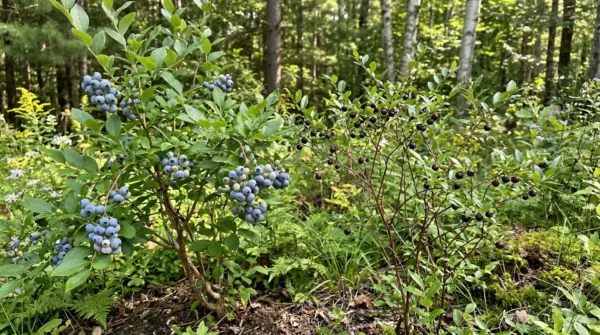
Growing Blueberries in Containers: The All-Inclusive Complete Step-by-Step Guide

Imagine waking up on a summer morning, coffee in hand, walking onto your porch to select a handful of sun-warmed, perfectly ripe blueberries for your yogurt or cereal. The silvery bloom on the deep blue berries indicates they are at their most flavorful and nutritious. You might consider it a dream reserved for individuals with large backyards and ideal soil exclusively. I am here to inform you it is not. There is no backyard? Not a problem. Even if your entire “garden” is a sun-drenched patio or balcony, the delight of gathering your own wonderful, nutritious blueberries is entirely realistic.
Growing blueberries in containers is quite easy and requires only providing these special plants with exactly what they need from the beginning. Three main decisions almost totally determine your success as well as the abundance of your future harvests: choosing the correct compact blueberry variety fit for pot life, choosing the appropriate size pot with great drainage, and making a perfectly acidic, well-draining potting mix that replicates their natural woodland soil.

This guide is your whole, detailed road map. From choosing the perfect plant to making sure it survives the winter and blossoms for years to come, we will travel through this process together. By the conclusion, I hope you will have the knowledge and confidence to cultivate these fulfilling plants anywhere you have a sunny location.
The Container Advantage: Why Pots Are Perfect for Blueberries
While blueberries can certainly be planted in the ground, growing them in containers has some incredible advantages—especially for this very particular plant. For many gardeners, it is actually the easier path to ensure success, as it allows you to control factors that can be challenging to manage in a conventional garden bed.

Three pre-planned garden beds, free
Stop staring at empty beds: printable plans with exact layouts, plant lists and planting calendars — yours free from the Garden Library.
Total Soil Control
This is the number one reason growing blueberries in pots is so successful. As discussed in our guide on Acidic Soil for Blueberries, these plants are acidophiles—that is, they require acidic soil with a pH between 4.5 and 5.5 to absorb nutrients. Trying to lower the pH of heavy, alkaline clay soil or nutrient-starved sandy soil can be a constant struggle. A container allows you to become the boss of your soil, creating the perfect acidic environment from day one with zero guesswork and guaranteeing your plant has the best foundation for a healthy life.
The Small-Space Solution
You don’t need a yard to grow blueberries. Containers allow you to create a thriving mini-orchard on a high-rise balcony, a wooden deck, a concrete patio, or even a sunny front stoop. This accessibility opens up the joy of homegrown berries to practically everyone.
Mobility & Sun Management
Blueberries need at least six to eight hours of direct sun for the best fruit production. A pot allows you to be a “sun chaser.” In cooler climates, you can shift the pot to follow the sun throughout the day to maximize its exposure. In very hot regions, moving the plant into dappled afternoon shade can provide some welcome relief and prevent leaf scorch.
Pest & Disease Management
Any potential problems—from Japanese beetles munching on leaves to the tell-tale signs of a fungal spot—are significantly easier to spot and manage on a single, easily accessible potted plant. You can isolate the plant if necessary and treat it thoroughly without affecting the ecosystem of a larger garden.
The Perfect Plant for the Pot: Selecting Your Blueberry Variety
Your journey begins with choosing the right plant. You can’t just toss any giant field variety in a pot and hope for the best, but thankfully, breeders have developed some truly fantastic compact blueberry varieties specifically for this purpose. Look for cultivars labeled as “Dwarf,” “Compact,” or “Half-High,” as these have been bred to stay a manageable size without sacrificing fruit production.

And here is some absolutely crucial advice: Always plant at least two different varieties. While some are listed as “self-pollinating,” blueberry blossoms that are cross-pollinated by another compatible cultivar will produce significantly more and larger berries. Think of it as giving your plants a friend. This simple extra step pays huge dividends in the size and volume of your crop.
Here are some of the best, most reliable blueberry cultivars for container gardening:
| Cultivar Name (Vaccinium corymbosum hybrid) | Type | Mature Size (H x W) | USDA Zones | Key Features |
| ‘Top Hat’ | Dwarf Highbush | 2ft x 2ft | 3-7 | Extremely compact; perfect for small pots; self-pollinating but does better with a friend. A great “starter” variety with lovely fall color. |
| ‘Sunshine Blue’ | Southern Highbush | 3ft x 3ft | 5-10 | Low chill requirement (needs only 150 hours below 45°F), making it ideal for warmer climates. Tolerates a slightly higher pH better than most; beautiful hot-pink flowers add ornamental value. |
| ‘Northcountry’ | Half-High | 2ft x 2ft | 3-7 | Very cold-hardy with a spreading habit. Produces delicious, sweet berries with a “wild” flavor. Needs a pollinator like ‘Northblue’ or ‘Polaris’ for best results. |
| ‘Patriot’ | Northern Highbush | 4ft x 4ft | 3-7 | A larger plant, but still manageable and highly productive in a bigger pot (20-25 gallons). Produces very large, crack-resistant, early-season berries. |
A Step-by-Step Guide to Potting Your Blueberries
You have selected your plants; now it is time to provide them the ideal habitat. Carefully follow these guidelines to position your blueberries for years of success.
Choose Your Container
You really must choose a pot. Starting your young plant in a 5-gallon container will help you to plan to repot it into a larger container every 2-3 years, eventually ending in a final home roughly 15-20 gallons (or the size of a half-whiskey barrel). This container sequence is crucial since a small plant placed in a large pot can allow the soil to remain moist for too long, therefore fostering root rot. Regarding materials, glazed ceramic pots, plastic, or resin pots are great since they hold moisture effectively. Although terracotta is lovely, in summer heat it dries up somewhat rapidly and needs more careful watering. Excellent drainage holes are obviously non-negotiable whatever your choice. Should a pot lack them, you will have to drill them yourself.
Design the Perfect Acidic Soil Mix
For containers of blueberries, this is the most important stage. Garden soil, which is excessively heavy, compacts readily, and probably has the wrong pH, cannot be used. Standard “all-purpose” potting soil, usually pH-neutral and devoid of the particular structure blueberries require, should also be avoided. You have to design your own mix. Successful gardeners globally follow this no-fail formula:
- 50% Sphagnum Peat Moss: The workhorse of the mix, it supplies the main source of acidity and uniformly holds moisture for the fine roots of the plant.
- 40% Aged Pine Bark Fines (or small pine bark nuggets): This gives vital structure, generating big air spaces for the roots to breathe and stops the peat moss from compacting into a dense, airless mass over time.
- 10% Perlite or Pumice: These lightweight volcanic stones are permanent drainage and aeration agents, allowing excess water to depart readily and so avoiding soggy conditions.
Before potting, fully mix these ingredients in a wheelbarrow or on a tarp to guarantee a consistent environment for the roots.
Plant the Bush
Slide the blueberry plant gently from its nursery pot. If the roots are a thick, circular mass (a condition sometimes referred to as “root-bound”), gently separate them with your fingers or score the sides of the root ball vertically in a few places with a small knife. This is a crucial stage that helps the roots grow outward into their new house rather than keep strangling themselves. In the new container, heap a mound of your chosen soil mix. Arrange the plant on top of the mound such that the crown—where the stems meet the original soil—is around one inch higher than the final soil level in the pot. Then gently firm your mix in all around the sides. This “high planting” is absolutely vital since it keeps the plant from sinking too far and suffocating its sensitive top, a common reason for failure.
Water Carefully
Give your just potted blueberry a slow, long drink of water. Water until you see it freely running from the pot’s bottom drainage holes. This guarantees the whole root zone is equally saturated, settles the mix around the roots, and removes any secret air pockets in the soil.
Sun, Water, and Food: Ongoing Care for Container Blueberries
Potted blueberries require constancy but simple ongoing care since they depend entirely on you for their needs.
Stop guessing your soil pH.
Enter your soil type and test reading — get exact lime or sulfur rates for your plants in seconds.
→ Calculate Soil Needs- Sunlight: Set your pot in the sunniest area you can find. Your blueberry shrub needs a minimum of six to eight hours of direct sunlight every day if you want the best development and most plentiful fruit.
- Watering: This is critical and where many container gardens fall short. Pots can dry up very quickly, especially on a hot deck. Do not water on a set calendar. Rather, learn the “finger test”: stick your finger into the soil up to your second knuckle. If it seems dry, it’s time to water. If it still feels damp, wait another day. When you do water, do it completely until the bottom drains. This not only ensures you are watering the deep roots but also helps to flush out any mineral salts from fertilizer and tap water. If you live where you have very hard, alkaline tap water, try to use distilled or rainwater whenever you can to help maintain the soil’s acidity.
- Fertilizing: As container plants have a limited supply of soil from which to draw nutrients, regular feeding is vital. Use a fertilizer specifically designed for acid-loving plants, like those for azaleas and rhododendrons. A water-soluble liquid fertilizer is usually easiest to control and use. Feed your plant a small dosage when you see the first signs of new growth in early spring, then another light feeding after it has finished fruiting to help it recover and store energy for the next year. Remember not to overdo it; it is always better to under-fertilize than to burn the delicate roots in a pot.
Advanced Care: Pruning & Overwintering Your Investment
With a little advanced care, your potted blueberry will be a long-term, valuable investment.
Pruning for Health
Though I know it’s difficult for the first year, you should pinch off every single flower bud that forms. This forces the young plant to devote all of its energy to establishing a strong root system, which will pay off with much larger harvests in the years to come. In subsequent years, use clean pruners to remove any dead, broken, or crossing branches in the center of the plant—usually in late winter when the plant is dormant. The goal here is to maintain an open structure that allows for good airflow.
Overwintering Strategies: A Must-Read Section
In colder climates, this is the secret to keeping your plant alive for many years. A plant in a pot is far more exposed to cold than one insulated by the ground.
- For USDA Zones 6 and warmer: You can often just move the pots to a sheltered location, such as against the wall of your house, group them together to create a microclimate, and cover the soil surface with a thick layer of mulch, like shredded leaves.
- For USDA Zones 5 and colder: The safest method is to move the dormant plant into an unheated garage, shed, or cold basement once all the leaves have dropped in late fall. The goal is to keep the roots frozen or very cold, but protected from the harshest winter winds and temperature swings. Check the soil once a month; if bone dry, give it just a tiny bit of water to prevent the roots from completely drying out.
- Alternative Techniques: If you don’t have a garage, you can try “heeling in” by digging a hole in a garden bed and sinking the entire pot into the ground for the winter. Another method is to group several pots together and wrap the entire cluster in burlap, stuffing insulating leaves between the pots.

In Conclusion
As you can see, the path to a sweet reward is straightforward. Success with growing blueberries in containers depends on a simple, repeatable formula, not luck. By choosing the right compact variety, providing a large pot with excellent drainage, creating that perfect custom acidic soil mix, and maintaining consistent watering, you can enjoy the unmatched flavor of homegrown blueberries, no matter how large or small your garden is. You now have the complete road map to get started.
Frequently Asked Questions
The leaves on my potted blueberry are turning yellow with green veins. What’s wrong?
This is the classic sign of iron chlorosis, which means the soil pH has become too high for the plant to absorb iron. The immediate fix is to water with a fertilizer containing chelated iron, made specifically for acid-loving plants. For a long-term fix, you may need to top-dress the soil with a soil acidifier or a small amount of granular sulfur.
How often do I have to repot my blueberry bush?
You should typically move your blueberry bush to the next size pot every two to three years. You’ll know it’s time when you can see a dense mass of roots through the drainage holes or when the plant’s growth seems to have stalled. This gives the roots fresh soil and more room to thrive.
Can I just use regular potting soil if I add a soil acidifier?
I would strongly advise against it. The success of container blueberries is just as much about the soil’s texture as its pH. Standard potting mixes are designed to hold moisture in a way that can be too dense for the fine, fibrous roots of blueberries. The “no-fail” mix of peat moss, pine bark, and perlite provides the unique combination of acidity, moisture retention, and excellent aeration that these plants need to thrive.