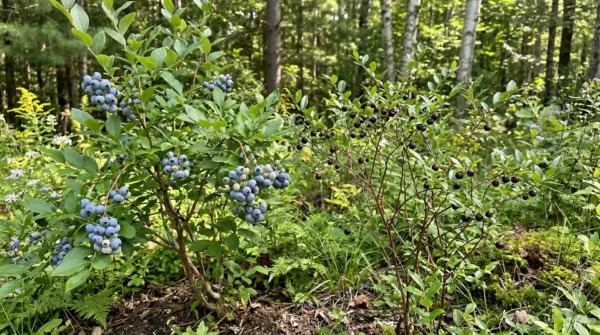
How to Pick Blueberries: The Bloom Test and 4 Freshness Checks That Extend Shelf Life

Blueberries won’t ripen on your counter — here’s how to spot peak-ripe ones in 60 seconds using the bloom test and 4 more checks pros use.
Most blueberry shopping decisions happen in under ten seconds — a glance at the container, a quick check for obvious mold, and into the basket it goes. That approach works sometimes. What it misses is the fact that blueberries are nonclimacteric fruits: unlike bananas or tomatoes, they cannot improve in sweetness or flavor once picked. The pale, reddish-tinged berry you bring home stays exactly that way.
The five checks in this guide take under a minute and give you a reliable read on freshness, flavor, and how long the berries will last once you’re home. The first — and most important — is one most shoppers actively avoid: the bloom. For a full overview of growing your own for the freshest possible harvest, see our complete blueberry growing guide.
Why Blueberries Must Be Chosen Ripe
Blueberries stop developing the moment they’re harvested. Unlike climacteric fruits — apples, bananas, tomatoes — which produce an ethylene surge that drives post-harvest ripening, blueberries produce no such surge. Iowa State University Extension confirms they belong to the nonclimacteric category: they reach peak sweetness on the plant and stop developing once harvested.
What this means at the store: a berry with any red tinge may turn blue within a few days on your counter, but its flavor won’t follow. UGA Cooperative Extension and Penn State Extension both note that reddish berries will not develop adequate organoleptic qualities — the sweetness and complexity stay locked at whatever level they were at harvest. Green or white berries are worse: no amount of counter time fixes them.

Three pre-planned garden beds, free
Stop staring at empty beds: printable plans with exact layouts, plant lists and planting calendars — yours free from the Garden Library.
This is why selection matters more for blueberries than for produce that can recover at home. There is no second chance once you’ve checked out.
Check 1: The Bloom Test — Your Best Freshness Signal

Look for the dusty, silvery-gray mist that coats a fresh blueberry’s skin. This is the bloom — a layer of epicuticular wax crystals the fruit produces as it matures. It also explains why blueberries appear blue at all: the bloom creates color not through pigments but through structural color, scattering light off nanostructures rather than via chemical dyes. The anthocyanins beneath the skin are actually dark red.

The bloom has three distinct jobs. First, it acts as a moisture barrier, slowing water loss from the fruit surface and extending firmness. Second, it provides a microbial shield — the waxy layer resists fungal spore adhesion. Third, it functions as a handling indicator: bloom is fragile and rubs off with contact, so intact bloom signals minimal rough handling since harvest. Research on blueberry cuticular wax confirms that removing the bloom accelerates postharvest water loss and decay, reduces antioxidant enzyme activity, and shortens shelf life.
How to check it: Tilt the container and look at the berries in indirect light. A freshly harvested berry shows an even, dry, matte silvery-gray coating across the surface. If berries look glossy or deeply saturated blue — as though they’ve been washed — bloom has been rubbed off. Not a dealbreaker, but a freshness downgrade worth noting.
Bloom vs. mold: This distinction trips up a lot of shoppers. Bloom is dry and evenly distributed across the berry surface. Mold is fuzzy, patchy, and typically accompanied by soft or wet berries. If you’re unsure, check the surrounding fruit — mold clusters outward from a single point; bloom doesn’t. Organic blueberries often show heavier bloom than conventional varieties, since the wax coating is more likely to be intact when handling is minimal.
| Freshness Signal | Fresh | Past Peak | Discard |
|---|---|---|---|
| Bloom | Silvery-gray, even, dry coating | Mostly absent, glossy surface | No bloom + soft = spoiling |
| Color | Deep blue to bluish-purple | Red-tinged or uneven coloring | White, green, or mold patches |
| Firmness | Firm, bounces back slightly | Slightly soft, doesn’t spring back | Mushy, leaking juice |
| Container | Dry base, berries move freely | Minor moisture, some sticking | Juice at bottom, clumped together |
| Smell | Sweet, fruity, light tartness | Mild, faint | Fermented, sour, alcoholic |
Check 2: Color — Deep Blue or Pass
A ripe blueberry is uniformly deep blue — sometimes edging into bluish-purple in direct light. Any red, pink, or light-purple tinge means the berry was harvested underripe. UGA Cooperative Extension is direct on this point: berries with red coloring may develop blue skin post-harvest but will not have adequate organoleptic qualities. Buy blue, eat sweet.

Here’s the full color spectrum and what each stage means for flavor:
- Green or white — Completely unripe, will not improve in sweetness or flavor
- Red or pink — Underripe; taste is tart and astringent; will not recover at home
- Bluish-purple — Near-ripe; acceptable but not peak
- Deep blue with bloom — Peak ripeness; best flavor and antioxidant content
- Dull, shriveled blue — Overripe; texture declining
Do not use berry size as a quality indicator. Blueberry size reflects the cultivar and growing-season water availability, not sweetness or nutritional value. A small lowbush wild berry is often significantly more intensely flavored than a large supermarket highbush berry — the smaller the berry, the higher the skin-to-flesh ratio and typically the more concentrated the anthocyanins.
Check 3: Firmness — The Gentle Press
Fresh blueberries are firm — they give slightly under gentle pressure and spring back. A berry past its peak feels soft or collapses without resistance. This matters because texture and flavor decline in tandem.
The science behind this: blueberries lose marketable quality when water loss exceeds 5 to 7 percent of their fresh weight, causing shriveling and softening. At room temperature (67°F), blueberries respire and lose moisture at a rate more than 11 times faster than at refrigerator temperature (32°F) — 68 mg CO₂ per kilogram per hour versus just 6 mg/kg·h. Every hour a berry sits in a warm display case is an hour of accelerated moisture loss. This is also why it matters where in the store blueberries are displayed: a refrigerated case near the back is preferable to an ambient-temperature produce display near the front entrance.
You can test firmness through a clamshell container by pressing gently on the top layer of berries through the plastic. Firm resistance means fresh. If several berries in the visible top layer feel soft, the berries compressed beneath them are likely worse. Choose a different container.
Check 4: Container Inspection — The Shake and Scan
Pick up the container before putting it in your basket. There are three things to look for.

The base: Juice or moisture pooled at the bottom means crushed or broken berries are leaking below the visible top layer. Even one ruptured berry accelerates mold spread to its neighbors — Botrytis cinerea and Alternaria, the two primary decay fungi in blueberries, require moisture to establish and spread rapidly from a single wet point of contact. A dry container base is a meaningful positive signal.
Ventilation: Choose containers with air holes over sealed packaging where available. Air circulation prevents moisture buildup and slows fungal establishment. The NC Blueberry Council specifically recommends ventilated containers for freshness at both the farm and consumer stage.
Stop guessing if your garden pays.
Log what you grow and harvest — see total yield weight, estimated retail value, and season-on-season progress in one place.
→ Track My HarvestThe shake test: Give the container a short, sharp shake and listen. Fresh, dry blueberries roll freely and you’ll hear them moving loosely against the plastic. If the berries sound stuck or don’t move — surface moisture has built up, either from condensation or washing and repackaging. Also scan for any visible red berries or white fuzzy mold patches. One moldy berry in contact with healthy neighbors can infect them within 24 to 48 hours at room temperature.
Check 5: Smell — The Aroma Test
Fresh blueberries have a distinctly sweet, fruity scent with a light undertone of tartness. It’s mild at refrigerator temperature but noticeably stronger when the package has warmed up a few minutes at room temperature.
What you don’t want: anything fermented, sour, or faintly alcoholic. These odors mean yeasts are actively converting berry sugars — the berries are past their window. A sour-smelling container can look perfectly fine from the outside, particularly if the compromised berries are buried beneath a fresh-looking top layer.
Pop the lid briefly if it’s unsealed, or take a quick sniff at the ventilation holes. It takes two seconds and it’s the check most shoppers skip entirely.
Source Matters: Grocery Store vs. Farmers Market vs. U-Pick
Where you buy blueberries changes the selection strategy.

Grocery store: The five checks above apply directly. Also check for a packing date if one is printed on the label — the longer since pack, the shorter your window at home. During peak domestic season (June through August for most of the US), locally grown berries have a shorter time in transit and cold storage than off-season imports from Chile or Peru. That doesn’t make imported berries bad, but an import that spent two to three weeks in cold storage before reaching the shelf has less remaining shelf life once home than a domestic berry at the same apparent quality level.
Farmers market: You can ask directly when the berries were picked. A harvest from the same morning represents peak freshness — bloom should be highly visible and color should be uniform across the entire container. Farmers market vendors typically pick within one to three days of selling. You may see more size variation than grocery store berries; that’s normal for single-variety or mixed-variety farm harvests and not a quality indicator.
U-pick farms: Pick in the morning before heat has degraded the exposed fruit and before the best fruit on the canes is gone. A ripe blueberry detaches easily — it should come off with almost no resistance when you gently roll it off the stem. If you have to tug, leave it another day or two. Avoid any berry with red coloring; learn what fully blue looks like on the specific variety at that farm, since some highbush cultivars are naturally more purple-toned at peak ripeness. Keep your picked berries shaded — berries sitting in direct sun are roughly 10°F warmer than shaded fruit, which meaningfully accelerates quality loss. For tips on companion planting to improve blueberry plant health before harvest, see our blueberry companion plants guide.
How to Store Blueberries Once You’re Home
Good selection is wasted by bad storage. Blueberries continue to respire after harvest — they’re still metabolically active, consuming oxygen and releasing CO₂ and heat. Cooling slows this process significantly but does not stop it. A berry kept at 67°F respires at more than 11 times the rate of one held at 32°F, which is why room-temperature storage collapses the window so quickly.

| Storage Method | Conditions | Shelf Life | Best For |
|---|---|---|---|
| Counter (room temp) | 65–70°F, any humidity | 1–2 days | Eating same day or next day only |
| Refrigerator | 32–40°F, 90–95% RH | 10–14 days | Standard home storage |
| Freezer | 0°F or below | 6–12 months | Batch buying, baking, smoothies |
Three storage rules that matter most:
Don’t wash until you’re ready to eat. Extra surface moisture creates a microclimate where mold spores establish rapidly. Rinse in a colander under cold running water just before eating — never soak. Penn State Extension is explicit: soaking removes the bloom and introduces moisture that shortens shelf life.
Store in the original container or a shallow bowl lined with a dry paper towel. The paper towel absorbs ambient condensation that would otherwise settle on berries. If you transfer them, don’t stack more than two or three layers deep — compression bruises lower berries, creating the same juice-at-the-bottom problem you were trying to avoid at the store.
Freeze individually before bagging. Spread berries in a single layer on a sheet pan and freeze solid (about two hours), then transfer to freezer bags or airtight containers. This prevents the clumped frozen mass that makes portioning difficult. Don’t wash before freezing — the moisture causes ice crystals on the surface that degrade texture. Wash after thawing instead.
If you grow your own and notice unusual yellowing, poor fruiting, or other plant health issues before harvest, see our guide to common blueberry problems including yellow leaves, pests, and poor fruiting.
Frequently Asked Questions
Can I ripen blueberries on the counter?
No. Blueberries are nonclimacteric — they do not continue to ripen after harvest. A red or pink berry will develop blue coloring over a few days but won’t improve in sweetness or flavor. Always buy fully blue berries.
Is the white coating on blueberries safe?
Yes — that’s the bloom, a natural epicuticular wax the fruit produces as a protective coating. It’s completely safe, edible, and actually indicates the berry is fresh and minimally handled. The bloom creates the blue color you see through structural light scattering, not through pigments. Rinse before eating.
How long do blueberries last in the fridge?
Properly stored — dry, unwashed, in a breathable container at 32–40°F — fresh blueberries last 10 to 14 days. At room temperature, plan to eat them within one to two days. Remove any moldy berries immediately to prevent spread.
Are bigger blueberries sweeter?
Not necessarily. Size reflects the cultivar and growing-season water availability, not sugar content. Small wild (lowbush) blueberries are often more intensely flavored than large highbush grocery store varieties due to their higher skin-to-flesh ratio and concentrated anthocyanins.
Fresh or frozen — which is better nutritionally?
It depends on how fresh the fresh berries actually are. Blueberries flash-frozen at peak ripeness retain comparable antioxidant levels to freshly picked fruit. Imported fresh blueberries that have spent two to three weeks in transit and cold storage may have lower antioxidant activity than a quality domestic frozen alternative.
Key Takeaways
Blueberry selection comes down to five checks, each taking seconds: look for the silvery-gray bloom (intact coating = fresh, minimal handling), choose deep blue with no red tinge, confirm firmness through the clamshell, check for a dry container base and good ventilation, and take a quick sniff for fermented odors. Once home, refrigerate unwashed in a breathable container for up to 14 days, or freeze individually for up to 12 months. The bloom test alone — easy to do and almost universally skipped — separates peak-fresh berries from everything else on the shelf.
Sources
- University of Maine Cooperative Extension. Post Harvest Handling of Wild Blueberry. extension.umaine.edu/blueberries/post-harvest-handling/
- UGA Cooperative Extension. Blueberry Harvesting and Postharvest Handling (C1269). fieldreport.caes.uga.edu/publications/C1269/
- Penn State Extension. Let’s Preserve: Blueberries. extension.psu.edu/lets-preserve-blueberries
- Penn State Extension. Post Harvest Berry Handling. extension.psu.edu/post-harvest-berry-handling
- Perkins-Veazie, P. et al. Shelf Life Determination of Fresh Blueberries. PMC4745484. pmc.ncbi.nlm.nih.gov/articles/PMC4745484/
- Jacobs, M. et al. Self-assembled, disordered structural color from fruit wax bloom. PMC10849586. pmc.ncbi.nlm.nih.gov/articles/PMC10849586/
- NC Blueberry Council. Tips for Picking Blueberries. northcarolinablueberries.com
- Iowa State University Extension. Which Fruit Will Ripen After Picking? blogs.extension.iastate.edu/answerline/