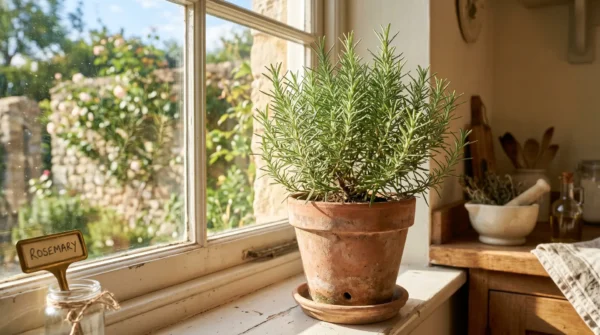
7 Companion Plants for Rosemary That Repel Pests — and 3 to Keep Far Away

7 companion plants that thrive with rosemary’s drought tolerance and help deter pests — plus 3 moisture-lovers to avoid (mint, basil, fennel). With the pest-repellent science explained.
Rosemary earns its place in any herb garden — but its real value isn’t just culinary. Every rosemary plant continuously volatilizes a cocktail of terpene compounds from its needle-like foliage: 1,8-cineole, α-pinene, and camphor. Research published in Pest Management Science documented these compounds disrupting the nervous systems of soft-bodied pests and repelling egg-laying insects from nearby crops. That’s not folk wisdom. It’s documented in peer-reviewed pest management research.
The catch is that rosemary’s companion potential only works when you pair it with plants that can tolerate the same lean, dry, well-drained conditions it demands. Plant it next to a moisture-loving crop and you’ll either rot your rosemary or starve the neighbor of the water it needs. Water compatibility is the first filter, and it rules out more candidates than most guides admit.

This guide covers seven plants that thrive alongside rosemary — with the biological reason each pairing works, not just “they look nice together.” It also addresses rosemary’s own allelopathic properties, a documented but widely ignored aspect that affects where you can direct-sow seeds nearby. And it names three companions to avoid entirely.
How Rosemary Actually Protects Its Neighbors
Rosemary’s protective effect comes from volatile organic compounds (VOCs) released continuously from its foliage. The oil profile of Salvia rosmarinus is dominated by three compounds: 1,8-cineole at 40.80%, α-pinene at 26.18%, and camphor at 19.53%.
These aren’t just aromatic — they’re biologically active. Borneol, a minor constituent, is the strongest acetylcholinesterase inhibitor in rosemary’s oil profile, effectively disrupting the nervous system of insects that encounter it. The 1,8-cineole and camphor pairing shows a documented synergistic ratio of 1.72, meaning together they’re 72% more effective against cabbage looper larvae than either compound working alone.
For companion planting, the practical implication is distance. Rosemary needs to sit within 12–18 inches of the crop it’s supposed to protect. At 3 feet or more, VOC concentration in open garden beds drops to levels that offer negligible benefit — the same distance limitation documented across multiple aromatic species in companion planting research.
The water compatibility rule
Before worrying about pest chemistry, apply this filter: rosemary thrives in dry, well-drained conditions with a soil pH of 6.5–7.0 and handles drought well but fails badly in soggy soil. According to Penn State Extension, any companion that needs consistent moisture, heavy feeding, or frequent watering creates a conflict that no pest-repellent benefit can overcome. The seven companions below all pass this test.
Regional note: In zones 8–10, rosemary is a woody perennial that anchors a permanent herb bed for years. In zones 6–7, the cultivar ‘Arp’ tolerates zone 6b with winter protection and a south-facing, sheltered position. In zone 5 and colder, grow rosemary in containers and bring it indoors before frost.
7 Best Companion Plants for Rosemary
1. Sage
Sage (Salvia officinalis) and rosemary share almost identical growing requirements: full sun, pH 6.0–7.0, light well-drained soil, drought tolerance. They’re both woody Mediterranean perennials that grow stronger in lean conditions — give them rich soil and they get leggy and less aromatic. In practice, you can manage them as a single zone in your garden, with the same irrigation timing, soil amendments, and annual pruning schedule.
The aromatic oils of both plants overlap significantly, with sage also releasing cineole and camphor. An herb bed of rosemary and sage consistently sees fewer soft-bodied pests than either plant grown alone. Plant them 18 inches apart to allow airflow — both are susceptible to powdery mildew in crowded, humid conditions.
I keep rosemary and sage as the anchor plants at the back of my kitchen herb bed, where their woody structure frames the planting through winter. In zones 8–10, both are genuinely evergreen companions through the coldest months.
2. Thyme
Thyme is the third Mediterranean herb that completes the classic drought-tolerant trio. Like rosemary and sage, it wants full sun and soil that drains fast. Creeping thyme varieties (Thymus serpyllum) work particularly well as a living mulch between and around rosemary plants — covering bare soil that would otherwise heat up and crust in summer.
Greenhouse studies documented thyme reducing diamondback moth populations on brassica crops. When planted near rosemary in beds that also include kale or cabbage, the two aromatic herbs reinforce each other’s deterrent effect. Keep thyme 6–9 inches from the base of established rosemary; creeping varieties will spread to fill gaps naturally without competing aggressively for the dry soil zone around rosemary’s crown.
3. Lavender
Lavender completes the Mediterranean trio. All three — rosemary, sage, lavender — demand identical conditions and reward them with similar aromatic oil profiles. In terms of design, they offer staggered heights: lavender at 18–24 inches, rosemary at 24–48 inches depending on variety, sage at 18–36 inches. Plant them in groups of three in well-drained, slightly raised beds and they’ll form a resilient perennial border that needs almost no summer water once established.


Lavender, like rosemary, is a significant pollinator plant. Honeybees and bumblebees work lavender flowers heavily from early summer, and since both plants bloom at overlapping times, a rosemary–lavender planting creates a sustained nectar source that keeps beneficial insects active across the surrounding garden. In zones 5–6, Lavandula angustifolia varieties are hardier than most rosemary — another reason to pair them where rosemary must be treated as an annual or container plant.

4. Marigolds (French)
French marigolds (Tagetes patula) are the easiest addition to any rosemary bed. Their compact growth (6–12 inches tall) means they won’t shade the rosemary, and their blooms attract ladybugs, lacewings, and parasitoid wasps — the beneficial insects that predate aphids, thrips, and whitefly that occasionally build up on stressed plants nearby.
One important caveat: the often-cited claim that intercropping marigolds suppresses root-knot nematodes in the current season isn’t well supported by research. That effect requires planting marigolds as a cover crop for at least 8 weeks before a susceptible crop, not simply mixing them in at the same time. For rosemary, the main value of French marigolds is above-ground beneficial insect attraction. Plant them 12–18 inches from the rosemary base, where they can bloom freely without competing for the dry soil zone around the crown.
5. Sweet Alyssum
Sweet alyssum (Lobularia maritima) is the most efficient beneficial insect plant available for a rosemary companion bed. Its tiny, flat-topped white flowers are structured to let short-tongued parasitoid wasps access nectar — the University of Maryland Extension calls parasitoid wasps “the single most important biological control method gardeners have.” These wasps lay their eggs inside pest insects including aphids, caterpillars, beetles, and thrips.
The combination works like this: rosemary’s VOC emissions deter or disorient pest insects from locating host plants in the area; sweet alyssum sustains the parasitoid wasp population that hunts down any pests that find their way through anyway. Plant alyssum every 3–4 feet along the edge of your rosemary bed. It blooms for 90+ days and self-seeds readily, often returning without replanting in zones 7+.
6. Carrots
Penn State Extension lists carrot fly (Psila rosae) among the pests deterred by rosemary. Carrot fly lays eggs at the soil surface near carrot seedlings; the larvae that hatch burrow into and destroy roots. Interplanting rosemary among or adjacent to carrots creates a VOC barrier that interferes with the fly’s host-finding — the same disruption mechanism documented in pest management research on rosemary’s essential oil constituents.
Root architecture also works in their favor. Carrot taproots grow 12–18 inches deep, while rosemary’s fibrous roots concentrate in the top 8–12 inches. They don’t significantly compete for the same soil zone. For practical planting, alternate rows of carrots (6-inch spacing within rows) with rosemary plants at 18–24 inch intervals. Spring-sown carrots growing alongside established rosemary is the best setup — the rosemary is already active and volatilizing before the carrot seedlings emerge.
7. Brassicas (Kale, Cabbage, Broccoli)
Rosemary’s 1,8-cineole and camphor combination shows a synergy ratio of 1.72 against cabbage looper (Trichoplusia ni) larvae, one of the most destructive pests of kale, broccoli, and cabbage. Placing rosemary within 12–18 inches of a brassica bed directly targets their primary threat.
The management challenge is water. Brassicas need consistent moisture; rosemary needs drought-like conditions. The practical solution is separate irrigation zones: water the brassica bed as needed without soaking the rosemary. If you’re using drip irrigation, run separate emitter lines. Rosemary’s VOC output isn’t diminished by keeping it dry — moderate drought stress actually concentrates the aromatic oils further.
Rosemary’s Allelopathy: the Warning No One Covers
Here’s what most companion planting guides skip entirely: rosemary itself has documented allelopathic effects on neighboring plants.
No more companion planting guesswork.
Search two plants — instantly see if they're compatible, which pests they repel together, and the ideal spacing between them.
→ Check Plant CompatibilityA peer-reviewed study found that rosemary hydrosol completely inhibited lettuce seed germination at the highest tested concentration. The mechanism is 1,8-cineole, which makes up 47.1% of rosemary hydrosol and is a documented root growth inhibitor. A separate study confirmed 39 terpene compounds in rosemary’s chemical profile, with fallen rosemary leaves showing the strongest inhibitory effect on seed germination in surrounding soil.
In practice, this means:
- Don’t direct-sow small seeds (lettuce, herbs, fine-seeded flowers) within 12 inches of the rosemary drip line
- Transplants establish better than direct seeds near rosemary — they already have developed root systems that tolerate the terpene environment
- Species vary in sensitivity: larger-seeded plants (beans, brassica transplants) tolerate rosemary’s terpene environment better than fine-seeded crops
- Regular removal of fallen rosemary leaves reduces terpene accumulation in surrounding soil
3 Plants to Keep Away from Rosemary
Mint
Mint is the most common mistake in herb companion planting, and it’s particularly damaging to rosemary. The problem is two-fold. First, mint needs consistent moisture — soil that never fully dries — while rosemary needs the opposite. In any shared bed, watering for mint will saturate the soil zone around rosemary’s crown and invite the root rot that kills rosemary faster than any pest.
Second, mint’s rhizome system spreads several feet per year. Even if you start at a seemingly safe distance, mint rhizomes will reach rosemary’s root zone within a season or two. The only reliable separation is a physical barrier (a buried container, rim 2–3 inches above soil level) or keeping both plants in entirely separate containers.
Fennel
Fennel (Foeniculum vulgare) is widely poor company in herb gardens, and rosemary is no exception. Fennel releases trans-anethole and fenchone from its roots into surrounding soil, reducing root elongation and inhibiting germination of nearby plants. Combined with rosemary’s own allelopathic terpene output, the two plants create a mutually antagonistic soil chemistry zone. Keep fennel at least 5 feet from rosemary, ideally in a separate bed.
Basil
Basil needs consistent moisture — soil should never fully dry between waterings. Rosemary’s watering schedule (deep, infrequent, only when the soil is completely dry) will cause basil to wilt and stall. Watering to keep basil happy will cause root rot in rosemary. They can occupy adjacent but separately managed beds, but a shared irrigation zone makes one of them always compromised. If you want both near your kitchen, grow basil in a container that you water independently from the in-ground rosemary.
Planting by Zone
| Zone | Rosemary Status | Best Companion Strategy |
|---|---|---|
| 5 and colder | Container only, overwinter indoors | Sage and thyme in adjacent pots; bring all three indoors before first frost |
| 6–7 | Semi-hardy with ‘Arp’ cultivar; protect with mulch | Mediterranean trio in raised bed; mulch heavily before first frost |
| 8–10 | Evergreen perennial | Permanent herb border: rosemary, sage, lavender, thyme as anchors; rotate brassicas and carrots seasonally |
For protecting rosemary’s root zone before cold arrives, the mulching guide covers material selection and depth for Mediterranean herbs. For timing cool-season companion crops like carrots and kale, the year-round planting guide gives month-by-month windows by zone.

Frequently Asked Questions
Can rosemary grow with tomatoes?
Rosemary and tomatoes aren’t ideal companions in the same bed. Tomatoes need consistent moisture and regular feeding — both of which harm rosemary. While rosemary’s VOCs may deter some aphids from nearby tomatoes, the water incompatibility makes sharing a bed problematic. Grow them in adjacent areas rather than the same planting zone, or use rosemary in a container placed near tomato cages.
Does rosemary repel aphids?
Rosemary’s terpene compounds, including 1,8-cineole, mask the chemical signals host plants emit to attract aphids — a mechanism confirmed in peer-reviewed companion planting research. That said, companion planting is a preventive strategy, not a reliable cure for active infestations. Use rosemary as part of a system alongside sweet alyssum (to attract parasitoid wasps) rather than as a standalone solution.
Can I plant rosemary next to lavender?
Rosemary and lavender are one of the strongest companion pairings in the herb garden. They share identical soil requirements (well-drained, pH 6.0–7.0), identical water needs (drought-tolerant), identical sun requirements (6+ hours daily), and overlapping bloom times that attract the same pollinators. If you could plant only two herbs together, this pair would be it.
Key Takeaways
- Start with the Mediterranean trio: rosemary, sage, and lavender share identical care requirements and reinforce each other’s aromatic deterrent effect
- Add sweet alyssum and French marigolds to sustain parasitoid wasps and beneficial insects within 3–4 feet of the rosemary bed
- Carrots and brassicas benefit most directly from rosemary’s documented pest-deterrent VOCs — plant within 12–18 inches for effect
- Avoid mint (moisture conflict plus aggressive spread), fennel (mutual allelopathy), and basil (moisture conflict)
- Don’t direct-seed small seeds within 12 inches of established rosemary — rosemary’s allelopathic effect on germination is documented in peer-reviewed literature
- For full care and cultivation details, see the Rosemary Growing Guide
Sources
- Penn State Extension. “Herb Garden Plants: Rosemary.” https://extension.psu.edu/herb-garden-plants-rosemary
- Djenane D et al. “Antifungal, Insecticidal, and Repellent Activities of Rosmarinus officinalis Essential Oil.” PMC11319058. https://pmc.ncbi.nlm.nih.gov/articles/PMC11319058/
- Moussaoui N et al. “Hydrosols from Rosmarinus officinalis, Salvia officinalis, and Cupressus sempervirens.” PMC8840401. https://pmc.ncbi.nlm.nih.gov/articles/PMC8840401/
- Navarro-Cano JA et al. “Trade-Off between Facilitation and Interference of Allelopathic Compounds.” PMC8839294. https://pmc.ncbi.nlm.nih.gov/articles/PMC8839294/
- Tak JH, Jovel E, Isman MB. “Comparative and synergistic activity of Rosmarinus officinalis L. essential oil constituents against the cabbage looper.” Pest Management Science, 2016. https://pubmed.ncbi.nlm.nih.gov/25809531/
- University of Maryland Extension. “Parasitoid Wasps.” https://extension.umd.edu/resource/parasitoid-wasps
- Ben-Issa R, Gomez L, Gautier H. “Companion Plants for Aphid Pest Management.” Insects 2017;8(4):112. https://pmc.ncbi.nlm.nih.gov/articles/PMC5746795/