

Best Ornamental Grasses by USDA Zone: The Same Grass Can Be a Top Pick in One State and Illegal in Another

Some popular ornamental grasses are legally banned in certain states — see which ones are safe (and sterile) to plant in your USDA hardiness zone.
Type “best ornamental grasses” into a search bar and you’ll get a list sorted by hardiness zone, as if surviving winter were the only thing that matters. It isn’t. A grass rated hardy for your zone can still be the wrong plant for your address — not because it’ll die, but because it’s illegal to plant there. Pampas grass is rated hardy from USDA Zone 6, and giant reed from Zone 5 — comfortably hardy across most of the country — yet California still classifies both as noxious weeds you can’t legally sell or propagate. Zone tells you whether a grass survives. It says nothing about whether you’re allowed to grow it, or whether it’ll actually bloom before your first frost.
This guide sorts real, widely available ornamental grasses by the zone bands most US gardeners fall into, and flags the two things zone tags never mention: which popular picks turn invasive or legally restricted depending on where you live, and which cultivars within the same species are bred sterile specifically so you can grow the look without the risk.
How USDA Hardiness Zones Work (And the One Thing They Don’t Tell You)
Your USDA zone number is based on one measurement: the average annual extreme minimum winter temperature recorded at your location, nothing else. The current map, released in 2023, splits the country into 13 zones using 1991–2020 data from 13,412 weather stations — nearly double the 7,983 stations behind the 2012 map. The USDA Plant Hardiness Zone Map lets you look up your exact zone by zip code. Each zone covers a 10°F band, split into “a” and “b” half-zones 5°F apart, so a plant rated to Zone 7a needs to tolerate lows between 0°F and 5°F, not just “cold winters” in general. If you haven’t checked your zone recently, it’s worth a look — our guide to reading the USDA hardiness zone map walks through the half-zone system and the 2023 boundary shifts in more depth.
What that number can’t tell you is whether a grass will actually perform in your growing season, or whether it’s welcome in your state at all. Both matter as much as winter survival, and both come up constantly with ornamental grasses specifically — more than with most perennials — because grasses spread two ways woody shrubs don’t: by seed, carried on wind, and by rhizome, spreading underground. A grass hardy enough to survive your winter can still be too aggressive for your yard, or for your neighbor’s.

Three pre-planned garden beds, free
Stop staring at empty beds: printable plans with exact layouts, plant lists and planting calendars — yours free from the Garden Library.
Ornamental Grasses by Zone: Quick-Pick Table
The biggest takeaway across every zone band: cool-season grasses (they green up early, may go dormant in summer heat) skew hardier into colder zones, while warm-season grasses (dormant until late spring, showiest in late summer) dominate the hot end of the range — and the popular “showy plume” grasses cluster hardest around the invasive-risk warnings below.
| Grass | USDA Zones | Season Type | Height | Best For |
|---|---|---|---|---|
| Blue grama (Bouteloua gracilis) | 3–10 | Warm-season | 1–1.5 ft | Unirrigated, low-water beds |
| Little bluestem (Schizachyrium scoparium) | 3–9 | Warm-season | 2–3 ft | Clay soil, fall color |
| Prairie dropseed (Sporobolus heterolepis) | 3–9 | Warm-season | 2–3 ft | Fine texture, borders |
| Feather reed grass ‘Karl Foerster’ (Calamagrostis x acutiflora) | 4–11 | Cool-season | 2–3 ft | Heavy/clay soil, vertical accent |
| Switchgrass (Panicum virgatum) | 5–9 | Warm-season | 4–5 ft | Soil extremes, native plantings |
| Maiden grass (Miscanthus sinensis, select cultivars) | 5–9 | Warm-season | 5–6 ft | Screening, arching form |
| Fountain grass (Cenchrus/Pennisetum alopecuroides) | 6–9 | Warm-season | 2–6 ft | Fluffy fall bloom (sterile cultivars only in warm zones) |
| Pink muhly grass (Muhlenbergia capillaris) | 5–9 | Warm-season | 3–4 ft | Fall color, heat and humidity |
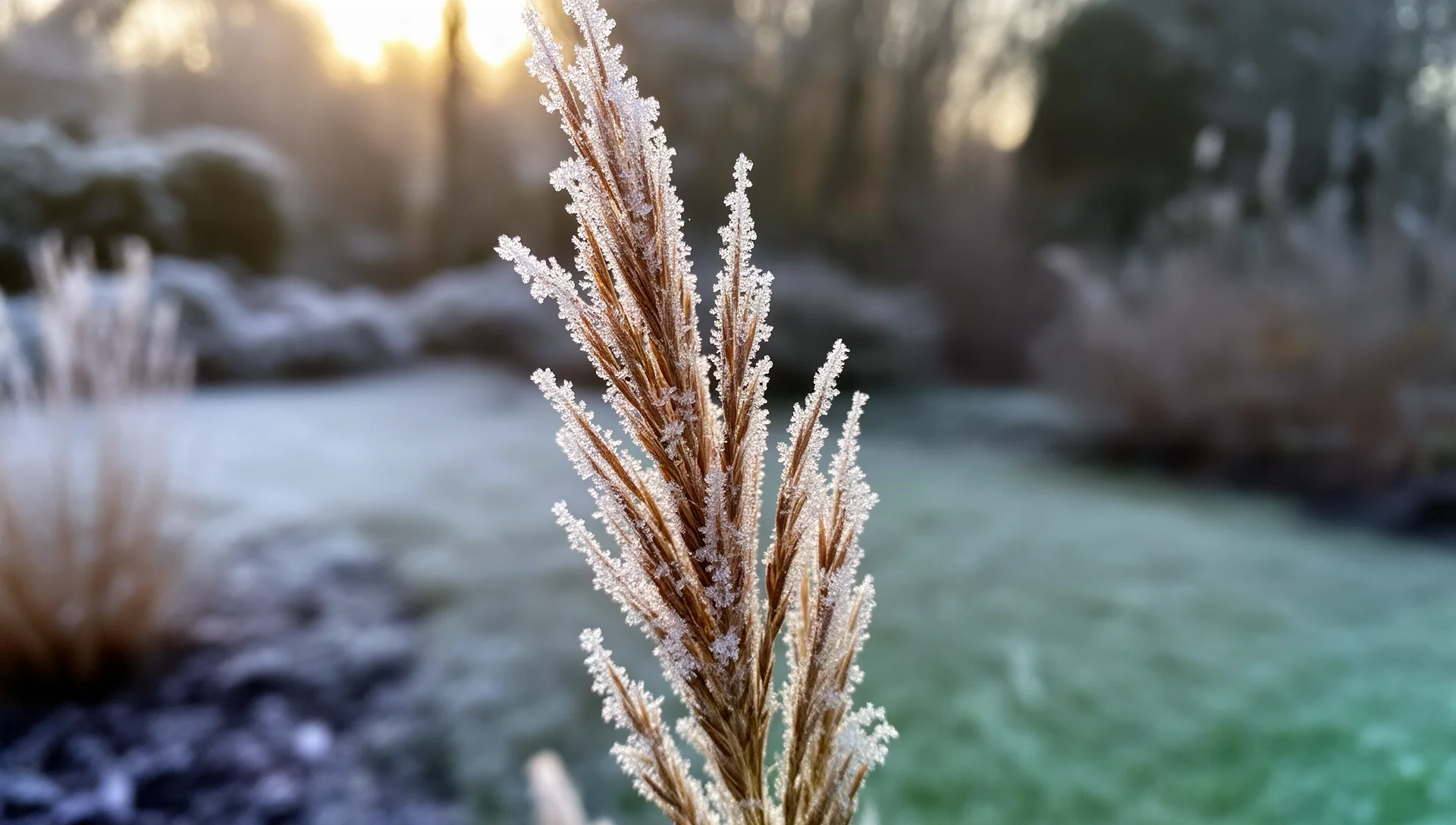
Zone 3–5: The Coldest Zones That Still Get Real Grasses
Native prairie grasses do the heaviest lifting here, and they’re underused. Little bluestem, blue grama, and prairie dropseed are all rated hardy to Zone 3 by Colorado State University Extension, tolerate unirrigated beds, and need no winter protection. Feather reed grass ‘Karl Foerster’ (Zone 4) is the standard vertical accent for this range — it tolerates heavy, poorly-drained soil that kills most other ornamental grasses outright.
Maiden grass (Miscanthus sinensis) is where zone tags get misleading for cold-climate gardeners. Colorado State University Extension rates it hardy down to Zone 4b in cold-climate trial conditions, meaning it’ll survive the winter there. Whether it blooms is a separate question: most Miscanthus cultivars need a long, warm growing season to mature seed heads, and in a short Zone 4 or 5 season they may not flower reliably, or will bloom weeks later than the same plant in Zone 7. If a “hardy to Zone 4” grass is central to your design, ask your nursery specifically about bloom timing for your cultivar, not just its hardiness rating — the two are graded separately, and plant tags rarely say so.
The most useful cold-climate benchmark comes from a long-running trial at the University of Minnesota Landscape Arboretum: roughly 250 grass and sedge taxa have been evaluated there for winter hardiness and landscape performance since 1987, in Zone 4b, one of the coldest zones where ornamental grasses are grown at all. Sporobolus heterolepis ‘Tara’ and Schizachyrium scoparium ‘Blue Heaven’ are two of the trial’s standout long-term performers — a useful cross-check against any grass a catalog claims is “hardy to Zone 4” without decades of field data behind it.
Zone 6–8: Where Most US Gardeners Are Planting
This is the range where the widest variety of ornamental grasses genuinely overlaps — cool-season and warm-season types, native prairie grasses, and most Miscanthus and Pennisetum cultivars all perform reliably. It’s also where the legal picture gets complicated, because “hardy here” and “welcome here” stop meaning the same thing.
Miscanthus sinensis (maiden grass) and Chinese fountain grass are both comfortably hardy through Zone 6–8. Both are also officially prohibited for sale under Maryland state law, alongside Japanese bloodgrass and running bamboo — not because they can’t survive there, but because they reseed and spread aggressively in exactly the conditions Zone 6–8 provides. The same species is a landscaper’s staple two zones colder, where the season is too short for it to set viable seed. Before buying either one, check your own state’s noxious-weed or invasive-plant list — a five-minute search that most “best grasses” articles skip entirely.
Native alternatives carry none of that risk here: switchgrass, little bluestem, and prairie dropseed all remain excellent through Zone 8, with no invasive-species flags attached to any of the three.
Zone 9–11: Heat, Humidity, and the Reseeding Problem
Warm-season grasses hit their stride here, but this is also where the seed-dispersal risk that’s minor in Zone 5 becomes the main consideration. A longer, hotter growing season means more time to flower, more seed set per plant, and more generations per year for anything that self-sows — the exact mechanism that turns a well-behaved Zone 5 clump into a Zone 9 problem plant.
Pink muhly grass (Muhlenbergia capillaris) is the standout pick for this range: hardy Zone 5–9, genuinely heat-, humidity-, drought-, and salt-tolerant, and not flagged as invasive anywhere it’s commonly sold. Fountain grass is where you need to read the cultivar name, not just the species. NC State Extension’s plant database lists ‘Hameln’, ‘Little Bunny’, ‘Moudry’, and ‘Red Head’ as cultivars that self-seed aggressively — a real problem at this end of the zone range — while naming ‘Cayenne’, ‘Etouffee’, ‘Hush Puppy’, and ‘Praline’ as sterile cultivars bred specifically to be safe for landscape use. Same genus, same look, opposite outcome, and the difference is the cultivar name on the tag, not the species name.
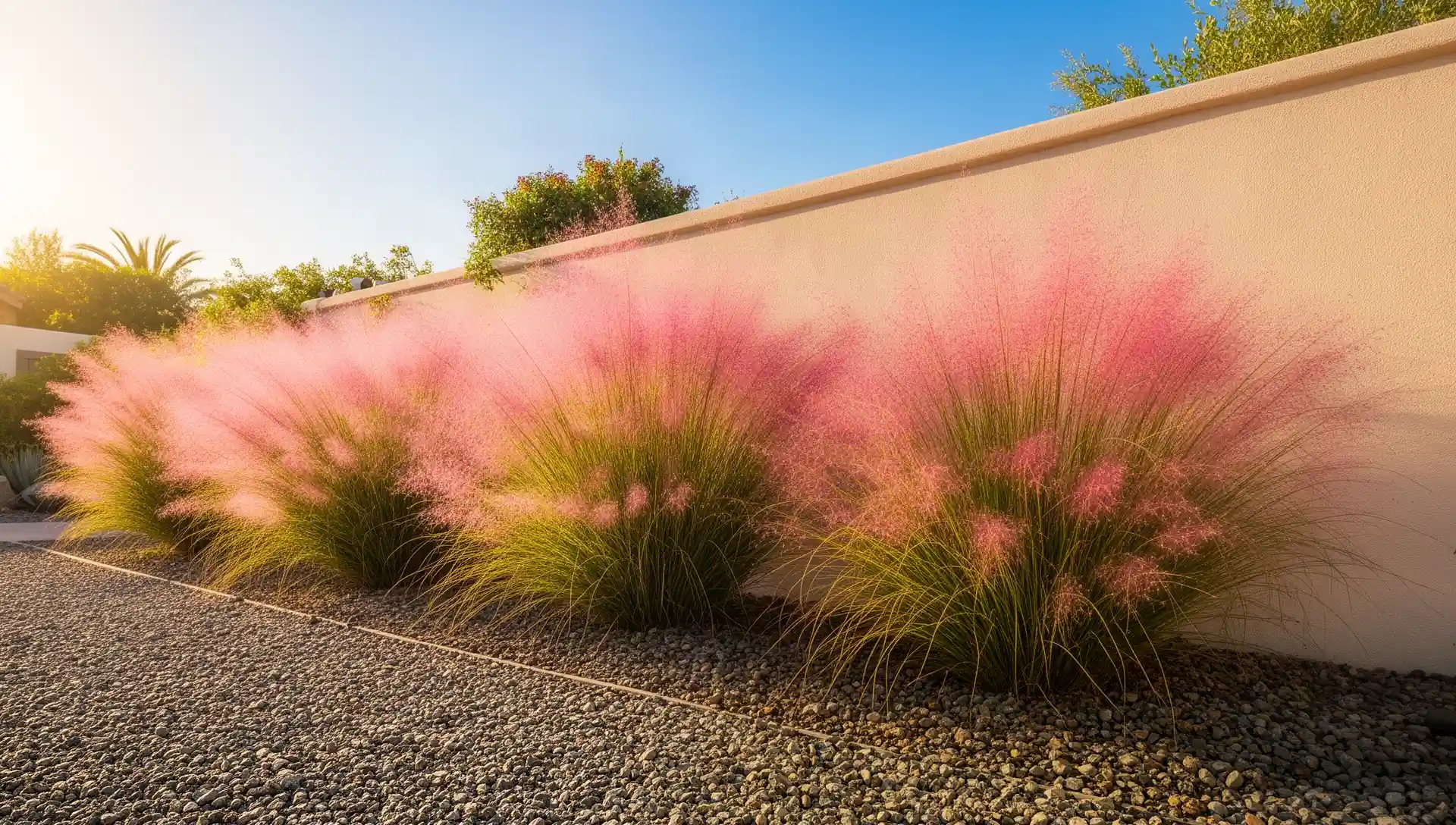
Pampas grass and giant reed (Arundo donax) belong on the avoid list for most of this zone band in the western US specifically. California’s Department of Food and Agriculture rates both as noxious weeds, illegal to sell, transplant, or propagate in the state. Pampas grass alone produces up to 100,000 wind-dispersed seeds per plume that don’t even need fertilization to be viable, which is why it’s colonized California habitat from coastal dunes to the Mojave Desert, not just one climate niche within the state. If you want that plume silhouette in Zone 9–11 without the legal or ecological risk, pink muhly grass or a sterile Pennisetum cultivar gives you a similar effect without the seed load.
The Same Grass Can Be a Top Pick in One State and Illegal in Another
This is the gap every zone-based grass list leaves open: hardiness zones are a climate measurement, and invasive-species law is a political one, and they don’t follow the same boundaries. A grass can be a University Extension’s top recommendation in one state and a state-prohibited species one border over, at the identical hardiness zone. Maryland prohibits Chinese fountain grass and maiden grass outright; nurseries in equally warm parts of Virginia and the Carolinas still sell both — I’ve bought maiden grass at a Virginia garden center myself, with no restriction notice anywhere on the tag, because there’s no reason a Virginia retailer would flag a Maryland-specific rule. University of Florida Extension puts it plainly: a grass can be invasive in one climate and perfectly acceptable in another, and Florida has its own separate ban list — pampas grass, ribbon grass, and Japanese blood grass — that doesn’t match Maryland’s or California’s.
Before you buy any grass on this list, especially Miscanthus, Pennisetum, Cortaderia (pampas grass), or Arundo (giant reed), spend five minutes checking your own state’s noxious-weed list or invasive-plant council rating — the California Invasive Plant Council publishes ratings for California, and most states run an equivalent list through their department of agriculture or state extension office. Your local Extension office can confirm which cultivars, if any, are cleared for sale in your specific region. It takes less time than picking a color for the plume.
Ornamental Grass FAQ
Do ornamental grasses come back every year?
Most ornamental grasses grown in the US, including everything on this list, are herbaceous perennials — they die back to the crown (warm-season types go fully dormant and tan; cool-season types may stay semi-evergreen) and regrow from the same root system every spring, as long as they’re hardy for your zone.
What zone is too cold for ornamental grasses?
Very few ornamental grasses are rated for Zone 2 or colder. Native prairie species like blue grama and little bluestem are the most cold-tolerant widely sold options, both rated to Zone 3; below that, reliable options narrow sharply and a local extension office is a better source than a national plant tag.
No more guessing your frost dates.
Enter your US zip code — get your exact last spring frost and first fall frost dates to plan your season.
→ Find My Frost DatesCan I grow a warm-season grass in a cold zone if it’s rated hardy?
It can survive winter without necessarily performing well. A warm-season grass rated hardy to your zone will usually live, but a short growing season can mean late, sparse, or absent flowering compared to the same cultivar grown two zones warmer — check for an early- or mid-season-blooming cultivar if bloom is the point.
Is fountain grass always invasive?
No — it depends on the cultivar, not just the species. Pennisetum setaceum (the straight species) self-seeds aggressively and is banned or discouraged in several warm states; several Pennisetum alopecuroides cultivars, including ‘Cayenne’, ‘Etouffee’, ‘Hush Puppy’, and ‘Praline’, are bred sterile specifically to avoid that risk, per NC State Extension’s cultivar notes.
Sources
- USDA Agricultural Research Service. 2023 USDA Plant Hardiness Zone Map.
- UNH Extension. New 2023 USDA Hardiness Zones Explained. University of New Hampshire.
- Colorado State University Extension. Ornamental Grasses. Colorado State University.
- University of Maryland Extension. Ornamental and Native Grasses for the Landscape. University of Maryland.
- UF/IFAS Extension. EP233: Considerations for Selection and Use of Ornamental Grasses. University of Florida.
- NC State Extension Plant Toolbox. Cenchrus alopecuroides (Fountain Grass). NC State University.
- NC State Extension Plant Toolbox. Cortaderia selloana (Pampas Grass). NC State University.
- NC State Extension Plant Toolbox. Species zone-hardiness pages for little bluestem, blue grama, prairie dropseed, switchgrass, feather reed grass, maiden grass, and pink muhly grass. NC State University.
- NC State Extension Plant Toolbox. Arundo donax (Giant Reed). NC State University.
- California Invasive Plant Council. Cortaderia selloana Profile.
- Horticulture Magazine. Ornamental Grasses: Advice from a Minnesota Collection (University of Minnesota Landscape Arboretum trial). Horticulture Magazine.