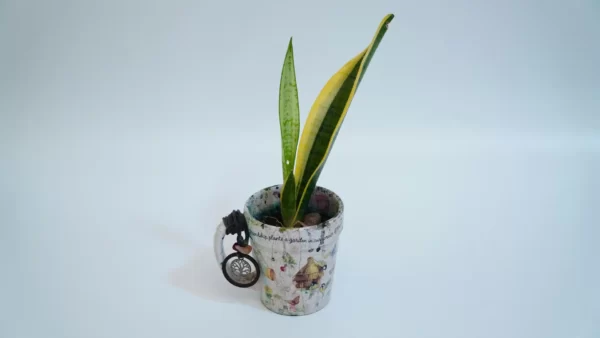
Why Is My Snake Plant Not Growing? 5 Causes (And Exactly How to Fix Each)

Your snake plant stopped growing — here’s exactly why. Diagnose the cause in minutes with our symptom table and get it growing again.
Your snake plant has been sitting in the same corner for months, and the leaves haven’t moved. No new shoots, no fresh leaf tips emerging from the center — just the same cluster, unchanged. For a plant with a reputation for near-indestructibility, a halt in growth is unsettling.
The good news: snake plants stop growing for specific, fixable reasons. The less obvious news: the most common culprit isn’t neglect — it’s the opposite. This guide walks through the five most common causes of stunted growth, explains the biological mechanism behind each, and gives you a precise fix.

If your plant is losing leaves, wilting, or declining beyond slow growth, start with our plant dying diagnostic guide before working through the causes below.
Before You Diagnose: Rule Out Normal Dormancy
Snake plants grow only in spring and summer. In winter — even in a warm home — they slow to a near-complete stop because light levels drop and temperatures cool. This is normal biology, not a problem.
If your plant last pushed a new leaf in October and it’s now January, don’t adjust the care routine. Wait until March and reassess. Genuine stunted growth means the plant hasn’t produced a new leaf in three or more months during the active growing season (March through September in most of the US).
Diagnostic Table: Symptom → Cause → Fix
| Symptom | Most Likely Cause | Immediate Fix |
|---|---|---|
| No new leaf in 3+ months (spring/summer) | Insufficient light | Move within 3 ft of east/south window or add grow light |
| Yellow leaves + soggy or consistently wet soil | Overwatering / root rot | Let dry fully; inspect roots; repot in cactus mix if rotted |
| Growth stops entirely in winter | Normal seasonal dormancy | No action needed — wait until March |
| Roots escaping drainage holes; soil dries in 2 days | Root-bound | Repot into pot 1–2 in. wider in spring |
| White or gray crust on soil surface; no growth | Fertilizer salt buildup | Flush soil thoroughly; resume feeding at half dose |
| Pale, washed-out leaves; drooping tips | Cold stress or very low light | Move away from cold window; raise ambient temperature |
| Thin, weak new leaves emerging in summer | Soil depletion | Feed with diluted balanced fertilizer monthly |

Cause 1: Not Enough Light (Even for a “Low-Light” Plant)
The phrase “tolerates low light” is accurate but misleading. Snake plants tolerate low light the way a car tolerates an empty tank — they’ll coast for a while, but they won’t accelerate. That’s because snake plants use CAM (Crassulacean Acid Metabolism) photosynthesis, absorbing carbon dioxide at night and processing it during the day. This adaptation reduces water loss and allows them to function with less light — but it doesn’t eliminate the light requirement for active growth.
In genuinely dim conditions, the plant draws down stored energy reserves faster than it replenishes them. UConn Extension notes that plants in the darkest corners “will run out of stored resources and eventually die” — even though they show no symptoms for months [2]. NC State University Extension recommends at least 2 to 6 hours of direct sunlight daily for healthy development [4].
The practical test: if you can comfortably read without turning on a lamp, there’s usually enough light for survival — but not for vigorous growth.
How to fix it: Move the plant within 3 feet of an east- or south-facing window. If natural light is limited, a full-spectrum LED grow light on a 10-hour timer is a reliable alternative. Ease the transition over two weeks if the plant has been in a very dark spot — sudden direct sun scorches leaves that have adapted to low light.
From planting to harvest, sansevieria yellow leaves walks you through each step.
Cause 2: Overwatering Starves the Roots
Overwatering is the most common cause of active-season growth problems in snake plants — Penn State Extension calls it the “most common affliction” for this species indoors [1]. The mechanism isn’t simply that roots sit in water; it’s that saturated soil pushes out the oxygen root cells need to function. Anaerobic conditions then favor fungal pathogens (Fusarium and Pythium species), which attack the fine absorptive roots. Once those roots are gone, the plant can’t take up water or nutrients even when plenty are available.
Counterintuitively, the plant then shows symptoms that look like drought — yellowing leaves, halted growth, a limp appearance — while sitting in wet soil. Adding more water makes things worse.
During the growing season, water only when the top 2 to 3 inches of soil are completely dry, typically every 2 to 4 weeks depending on pot size, humidity, and light. In winter, cut back to once a month or less [3, 4]. The RHS recommends using a free-draining, peat-free cactus compost to prevent moisture retention [3].
How to fix it: Let the soil dry completely before watering again. If root rot has set in — soft, dark, foul-smelling roots — unpot the plant, trim the damaged sections with sterile scissors, let the roots air-dry for an hour, and repot in fresh cactus mix. Don’t water for a week after repotting so the cut ends can callous.
Stop missing your zone's planting windows.
Select your US zone and month — get a complete checklist of what to plant, prune, feed, and protect right now.
→ View My Garden Calendar


Cause 3: Cold Temperatures Stall Growth Below 55°F
Snake plants don’t gradually slow as temperatures drop — they have a threshold. Below 55°F (13°C), the enzymatic processes that drive cell division and leaf expansion stall [2]. Unlike brief cold tolerance, sustained temperatures below that point stop growth entirely and can cause leaf scarring at the margins.
The RHS recommends keeping plants between 60 and 75°F (15–24°C) and specifically advises positioning them away from cold drafts and direct heat sources like radiators [3]. Common cold exposure points include single-glazed windows in winter (the glass surface itself can drop to 35–45°F overnight), HVAC return air vents drawing in outdoor air, and rooms that appear warm during the day but dip significantly overnight.
Tell the difference from seasonal dormancy: if growth was active in summer and stopped when temperatures dropped in autumn, cold is likely the cause. If it was slow all spring and summer, check light and watering first.
How to fix it: Keep the plant in a room that stays above 60°F throughout the night. If you’re in USDA zones 9–11 and moved the plant outdoors for summer, bring it inside before overnight temperatures approach 55°F. Avoid windowsills without insulation in northern climates during winter.
Cause 4: Root-Bound — The Crowding Paradox
Most houseplants suffer when root-bound. Snake plants are the exception: they actually prefer being slightly crowded. A dense root mass helps stabilize the plant and prevents excess soil from staying wet. Repot too soon into a large container and you create more soil volume than the plant can use — which cycles directly back to overwatering risk.
Want the complete care routine? snake plant brown tips: fluoride has everything you need.
But there’s a threshold. When roots are visibly escaping drainage holes, circling the pot in a solid mass, or the soil dries out within two days of watering, the plant has crossed from “pleasantly crowded” to growth-limited [2]. At that point, almost no nutrient-rich soil remains, water channels through too quickly for roots to absorb it, and new leaf production stalls.
Penn State Extension recommends repotting every five years using plastic containers — ceramic and terracotta can crack as snake plant rhizomes expand aggressively [1]. Move up only 1 to 2 inches in pot diameter. A pot that’s too large holds excess moisture and increases root rot risk.
How to fix it: Unpot the plant in spring and examine the roots. Tightly coiled, pale-to-brown (not black or soft) roots filling the container indicate it’s time to move up. Repot into a container 1 to 2 inches wider using a well-draining mix: 60% standard potting soil, 40% perlite or coarse sand. New growth typically resumes within 4 to 6 weeks.
Cause 5: Depleted or Salt-Saturated Soil
Snake plants grow at roughly 1 inch per month under optimal conditions — slowly enough that soil depletion takes years to become apparent. But when it does, growth stops. The flip side is equally common: over-fertilizing a slow-growing plant leads to salt accumulation faster than in fast-growing species, eventually burning the fine roots and blocking water absorption.
Look for a white or gray crust on the soil surface or along the inside of the pot — that’s crystallized mineral salts. Leaf tips may brown even when watering and light seem adequate.
Penn State Extension recommends feeding once a month during the growing season with a balanced fertilizer at the label dose, and stopping entirely in winter [1]. Never apply fertilizer to dry soil — water first, then feed.
How to fix it: If you see a salt crust, flush the soil by slowly running water through the pot until it flows freely from drainage holes, waiting 30 minutes, then flushing again. Let the soil dry before resuming a monthly feeding schedule at half the recommended dose. If the plant hasn’t been repotted in five or more years, replace the potting mix entirely rather than flushing — fresh soil is more effective than any flush.
When Stunted Growth Points to a Bigger Problem
If you’ve corrected the five causes above and growth still hasn’t resumed by mid-summer, the issue may be more systemic — a pest infestation at the root zone (mealybugs or spider mites), a deep fungal infection, or physical damage to the rhizome. Dust accumulation on wide, flat leaves also reduces photosynthetic capacity over time; wipe leaves with a damp cloth once a month [2].
For a full triage of a plant in serious decline, use our plant dying diagnostic guide. For an overview of all common snake plant health issues including pests and disease, see our snake plant problems guide.

Frequently Asked Questions
How fast should a snake plant grow?
Under good conditions — bright indirect light, watering every 2 to 4 weeks, temperatures between 65 and 80°F — snake plants grow about 1 inch per month during the growing season. Fewer than 2 to 3 new leaves per year during spring and summer warrants a closer look at care conditions.
Can fertilizer fix a stunted snake plant?
Only if soil depletion is the specific cause. If the plant is stunted due to poor light, overwatering, or cold temperatures, fertilizer won’t help — and may worsen root damage by increasing salt concentration. Fix the underlying cause first, then feed during the growing season.
Should I repot a stunted snake plant?
Only if roots are visibly escaping drainage holes or the soil dries out within 2 to 3 days of watering. Snake plants prefer being slightly root-bound. Repotting too soon or into an oversized pot can cause more harm than the root restriction itself.
Will a stunted snake plant recover?
Yes, in most cases. Once the underlying cause is corrected, new growth typically resumes within 4 to 8 weeks during the growing season. Recovery is slower if root rot has set in, but even significantly damaged plants often recover after root pruning and fresh soil.
Key Takeaways
- Check for dormancy first — no growth in winter is normal, not a problem
- Overwatering is the most common active-season cause; fix watering before anything else
- Snake plants need 2 to 6 hours of bright indirect light to grow, despite their “low-light” reputation
- Repot carefully — 1 to 2 inches wider, and only when roots are visibly constrained
- Feed monthly at half dose in spring and summer; stop completely in winter
- For the full care picture, see our snake plant care guide
Sources
- Snake Plant: A Forgiving, Low-Maintenance Houseplant — Penn State Extension
- Sensational Sansevieria — UConn Home & Garden Education Center
- Growing Guide: Snake Plant (Sansevieria) — Royal Horticultural Society
- Snake Plant (Dracaena trifasciata) — NC State University Extension