

Zone 5 Azaleas: 5 Hardy Varieties, Exact Planting Dates, and Winter Care That Works

Zone 5 azaleas survive -20°F winters when you choose the right variety and plant in the Sept 10–Oct 15 window. Here are 5 proven picks and exact care steps.
Most azaleas sold at garden centers are hardy to zone 7 or warmer — plant one in zone 5 and you will find out the hard way by March. Zone 5 winters in Ohio, Iowa, and northern Illinois push down to -20°F, which destroys the flower buds on the vast majority of azalea varieties long before spring arrives. The good news is that the wrong plant is almost always the culprit, not the gardener.
Get the variety right, plant within the correct September-to-October window, and the same zone 5 winter that kills the wrong azalea will not trouble the right one at all. This guide covers five varieties that reliably survive, the planting timing that sets up strong roots before the ground locks up, and the winter care steps that stop the brown, shriveled foliage that ends so many northern azalea plantings.
Deciduous vs. Evergreen: The Choice That Matters Most in Zone 5
Before selecting a variety, you need to answer one question: deciduous or evergreen?
Most azaleas sold in garden centers are evergreen. They hold their leaves year-round and look attractive in winter — but in zone 5, that is exactly the problem. Leaves lose moisture continuously through a process called transpiration, even in January. When soil freezes solid and roots cannot replace that lost moisture, the foliage browns and dies. Penn State Extension identifies this process — winter desiccation — as the primary cause of broadleaf evergreen failure in northern zones [4].

Three pre-planned garden beds, free
Stop staring at empty beds: printable plans with exact layouts, plant lists and planting calendars — yours free from the Garden Library.
Deciduous azaleas drop their leaves in fall. No leaves means no desiccation to worry about. The Northern Lights series, developed over two decades at the University of Minnesota Landscape Arboretum specifically for cold climates, dominates this category. Their flower buds survive temperatures as low as -30°F to -45°F depending on the variety [3] — genuinely cold-hardy in a way that most evergreen azaleas are not. They bloom in May before the leaves emerge, producing a burst of color that requires almost no winter intervention.
Evergreen azaleas are not impossible in zone 5, but they demand a south-facing, wind-protected spot — ideally against a brick wall that absorbs heat during the day — and consistent winter preparation. For most zone 5 gardeners, deciduous is the dependable choice. One evergreen exception worth knowing is included in the variety table below.
If you are unsure whether your plant is deciduous or evergreen, see our azalea vs. rhododendron comparison guide for identifying characteristics.
5 Hardy Varieties That Perform Reliably in Zone 5
The Northern Lights series gives zone 5 gardeners a range of colors, sizes, and bloom times, all backed by decades of performance testing in Minnesota, Wisconsin, and Iowa [1][3]. Most garden centers and mail-order nurseries in zone 5 states stock at least three or four of these varieties.
| Variety | Type | Bud Hardiness | Height | Bloom Color | Bloom Time | Fragrant |
|---|---|---|---|---|---|---|
| Rosy Lights | Deciduous | -45°F | 6–8 ft | Pink-rose | Mid-spring | Yes |
| Golden Lights | Deciduous | -30°F | 4–5 ft | Yellow | Late spring | Yes |
| Northern Hi-Lights | Deciduous | -30°F | 3–5 ft | White with yellow center | Mid-spring | Yes |
| Orchid Lights | Deciduous | -30°F | 3–4 ft | Lavender-purple | Early spring | Mild |
| Girard’s Crimson | Evergreen | Zone 5–8 | 3–4 ft | Deep crimson | Mid-spring | No |
Rosy Lights is the one I reach for first when a client in zone 5 wants a statement plant. The flower bud hardiness to -45°F makes it more reliably cold-tolerant than most plants on this list, and the fragrance carries across a garden bed from 10 feet away. It grows large — 6 to 8 feet at maturity — so give it room at the back of a border.
Golden Lights fills a gap that most flowering shrubs cannot: a reliably cold-hardy plant with true yellow flowers. The honey-sweet fragrance is a bonus. At 4–5 feet, it fits more easily into mixed borders than Rosy Lights.
Northern Hi-Lights offers the most compact form of the deciduous options at 3–5 feet, with white flowers that carry a soft yellow blotch at the center. It works well near paths or entryways where you want fragrance without a large shrub.
Orchid Lights is the earliest-blooming variety in the series, opening its lavender-purple flowers before most other azaleas have begun to break dormancy. Planting it alongside Golden Lights or Rosy Lights extends the bloom display by three to four weeks.
Girard’s Crimson is the evergreen exception worth growing — specifically in a sheltered spot against a south-facing wall. Rated hardy in zones 5 through 8, it maintains its foliage better than most evergreen azaleas in cold winters. Do not plant it in an exposed position.
When to Plant: The September 10–October 15 Window
Container-grown azaleas do best in zone 5 when planted between September 10 and October 15. This six-week window gives roots enough time to establish before soil temperatures drop below 40°F — the threshold where root growth essentially stops.
The biology behind fall planting explains why the timing matters so much. In cool, moist fall soil (typically 50–60°F in September and early October), azalea roots grow actively while the top of the plant slows down and begins preparing for dormancy. Less top growth means less demand on the root system. The feeder roots that develop during those six weeks improve the shrub’s ability to take up water through the early winter months — which is a direct defense against winter desiccation.
Plant after mid-October and the roots do not establish properly before the ground freezes. The shrub goes into winter without the water-uptake capacity it needs, increasing the risk of desiccation damage even on deciduous types.
Spring planting (late April through May in zone 5) works too, but carries a different risk: summer heat stress before roots have established. If you plant in spring, apply mulch immediately and water consistently through July — at least one inch per week.
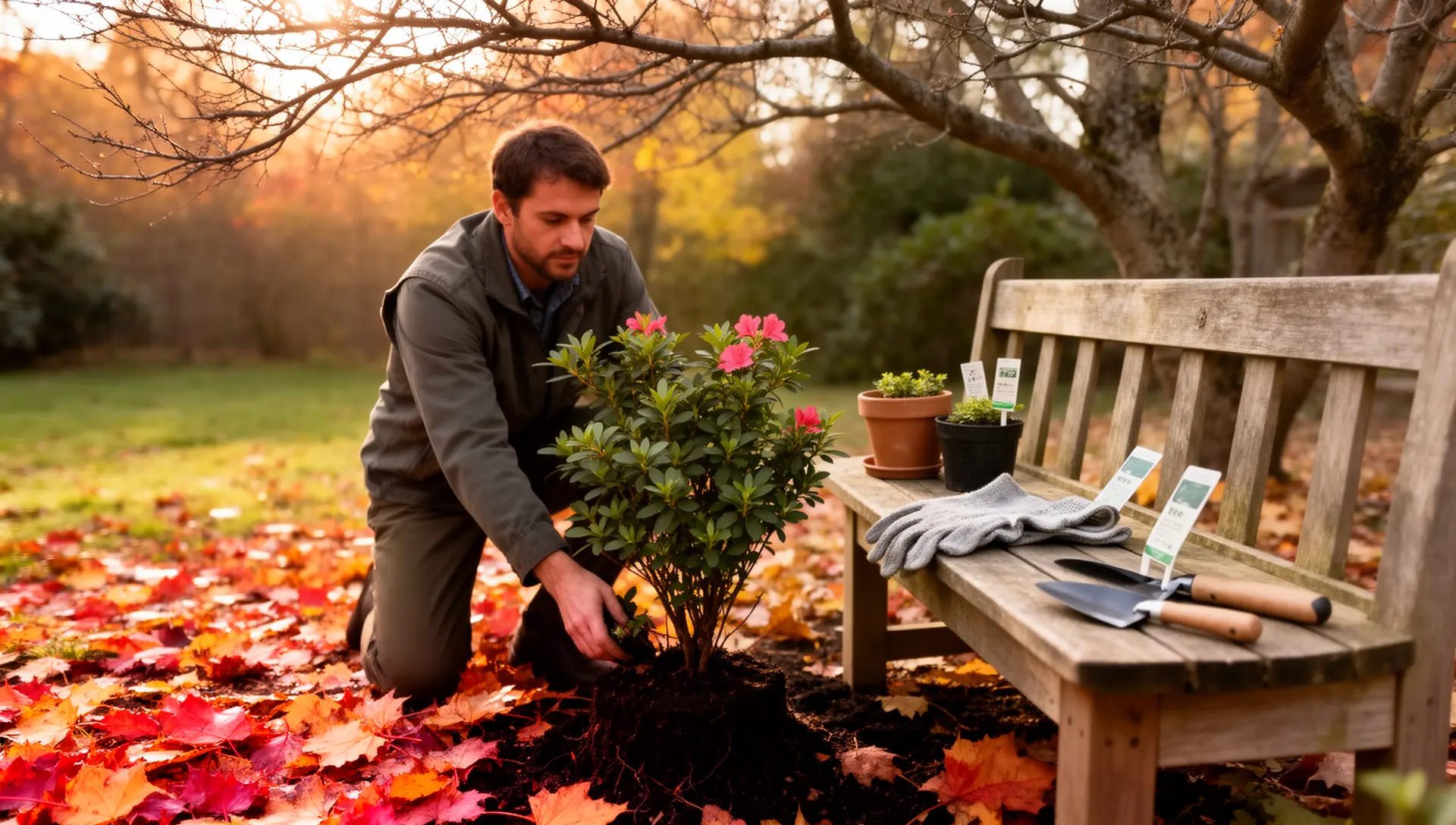
One timing mistake specific to zone 5 gardeners: buying azaleas on sale in late October when nurseries are clearing inventory. At that point in zone 5, you are outside the planting window. Pot the plant in a sheltered garage or unheated shed, water occasionally, and plant the following September.
Stop missing your zone's planting windows.
Select your US zone and month — get a complete checklist of what to plant, prune, feed, and protect right now.
→ View My Garden CalendarSoil Prep: pH 5.0–5.5 and the Mix That Prevents Failure
Azaleas need soil with a pH between 5.0 and 5.5. The reason is nutrient chemistry: iron and manganese — both essential for azalea health — only remain in a soluble, root-accessible form below pH 6.0. Above that threshold, these minerals bind into insoluble compounds that roots cannot absorb, causing interveinal chlorosis (yellowing between the leaf veins) even in otherwise fertile soil [2].
Test your soil before planting. Most zone 5 state extension services offer soil testing for $15–$20 and return results with amendment recommendations. A basic test tells you your current pH and what to add to reach the 5.0–5.5 target.
If your soil is clay-heavy — common in northern Ohio, central Iowa, and northern Illinois — do not plant directly into it. University of Missouri Extension recommends building amended beds with a mix of 50% ground pine bark, 25% coarse sand, and 25% native topsoil [2]. Fill the bed 18 inches deep. This drainage-focused mix prevents the waterlogged conditions that cause root rot, which kills azaleas faster than zone 5 winters do. Test drainage before planting: dig a hole 6 inches deep, fill it with water, and check in 4 hours. If water is still standing, the bed needs improvement or the site needs to be raised.
Plant the root ball with the crown sitting about half an inch above finished grade — never flush with or below it. Planting too deep invites collar rot. After planting, apply 4–6 inches of shredded oak leaves or 2–3 inches of wood chip mulch over the root zone, keeping mulch a couple of inches clear of the trunk. For help testing and adjusting your soil acidity, see our guide on how to test and adjust soil pH for acid-loving plants.
One advantage specific to the Northern Lights series: Iowa State Extension notes that these hybrids do not require the very low soil pH that most rhododendrons demand, and they perform well at the slightly higher pH levels typical across the Upper Midwest [1]. This makes them practical for zone 5 gardens that struggle to maintain highly acidic conditions.
Seasonal Care Calendar for Zone 5 Azaleas
| Month(s) | Task | Notes |
|---|---|---|
| March–April | Remove winter protection | Remove burlap when temperatures consistently stay above 28°F. Check for winter damage. |
| May | Fertilize once; enjoy bloom | Apply 6-10-4 fertilizer at 2 lbs per 100 sq ft. Do not fertilize after July 1 [2]. |
| May–late June | Prune immediately after bloom | 3–6 week window after flowers fade. For choosing the best tools, see our azalea fertilizer guide. |
| July 31 | Hard pruning deadline | Azaleas begin setting next year’s flower buds in July. Any pruning after July 31 removes those buds [2]. |
| August | Water consistently | Aim for 1 inch per week. Avoid fertilizing — new growth triggered now will not harden before frost. |
| September | Reduce watering | Keeping the plant slightly dry in September encourages natural hardening off [2]. |
| Sept 10–Oct 15 | Optimal planting window | Plant new azaleas now for best root establishment before freeze. |
| October–November | Mulch; deep watering | Apply 4–6 inches of mulch. Water thoroughly before Thanksgiving if fall has been dry [2]. |
| November–February | Burlap shields (evergreens only) | Deciduous types need no winter protection. Install shields on south and west sides for evergreens. |
The July 31 pruning deadline catches more zone 5 gardeners off guard than almost anything else in azalea care. It is not arbitrary: azaleas begin setting the flower buds for the following spring in July and August. Pruning after that date removes those buds. The plant grows perfectly well — it just does not bloom the next spring, and the gardener spends a year wondering what went wrong.
Winter Care: How to Prevent the #1 Killer
Winter burn is the leading cause of azalea failure in zone 5 — but cold is not what kills the plant. The mechanism is thirst.
Penn State Extension describes the process clearly: when soil freezes solid, roots cannot take up water. Meanwhile, winter sun and wind continue drawing moisture from plant tissues through transpiration. The result is exactly the same as severe drought: foliage browns and dies, typically on the south- and west-facing sides of the plant first [4]. Evergreen azaleas are most vulnerable because they carry leaves through winter. Deciduous types — the Northern Lights series and similar varieties — drop their leaves in fall and are essentially immune to this specific problem.
Five prevention steps that work:
1. Water deeply in October and before Thanksgiving. Saturated soil holds enough moisture to resupply evergreen foliage through the early months of winter. If the fall has been dry, a deep watering in late November can make the difference between healthy plants and crispy ones by February [2].
2. Mulch the root zone. A 4–6 inch layer of shredded oak leaves or wood chips slows the soil freeze and extends the period during which roots can actively absorb water [2]. It also moderates the freeze-thaw cycles that heave shallow-rooted plants out of the ground.
3. Use a burlap shield, not a wrap. Drive 4–5 foot stakes around the plant about 2 feet from the drip line. Attach burlap to the south and west sides — the sides exposed to winter sun and prevailing winds [4]. Leave the top open for air circulation. Do not fill the enclosure with leaves, which attracts rodents and encourages fungal disease.
4. Keep September dry. Reducing irrigation in September allows the plant to harden off naturally — the same internal process that causes deciduous azaleas to drop leaves and prepare for dormancy [2]. Plants that stay too moist in early fall enter winter less prepared.
5. Remove protection gradually in spring. Do not pull off burlap at the first warm day. Wait until temperatures consistently stay above 28°F before uncovering evergreen azaleas [4]. Late frosts hitting freshly uncovered new growth can cause as much damage as a hard winter.
For companion plants that work alongside azaleas without competing for soil moisture, see our guide to companion planting with azaleas.
Frequently Asked Questions
Can azaleas grow in zone 5?
Yes — deciduous varieties from the Northern Lights series reliably survive zone 5 winters with flower bud hardiness to -30°F or lower. Evergreen types can grow in zone 5 but need protected locations and active winter care.
Why are my zone 5 azaleas not blooming?
The most common cause is pruning too late. Azaleas set their flower buds in July and August. Any pruning after July 31 removes next year’s buds. The plant grows and looks healthy — it just will not bloom the following May.
When do azaleas bloom in zone 5?
Northern Lights varieties bloom in May, typically before the leaves have fully emerged. This is earlier than most other flowering shrubs in zone 5, making them valuable for early-season color when little else is in bloom.
Do zone 5 azaleas need winter protection?
Deciduous varieties need almost none beyond adequate fall watering and mulch. Evergreen varieties — including Girard’s Crimson — benefit from a burlap shield on the south and west sides in exposed positions.
For a complete guide to azalea soil preparation, sun requirements, pruning timing, and variety selection across all zones, see the Azalea Growing Guide.
Sources
- Iowa State University Extension — Azaleas for Iowa: Winter Hardy ‘Lights’ Series
- University of Missouri Extension — Growing Azaleas and Rhododendrons (G6825)
- Morton Arboretum — Azalea ‘Northern Lights’ Series
- Penn State Extension — Preventing Winter Burn on Evergreen Landscape Plants


