

Hoya Kerrii Care: Why That Heart-Shaped Leaf Will Never Vine (and What Actually Does)

Hoya kerrii care explained honestly: why your single leaf never grows, the node biology behind it, and how to keep the full vining plant thriving indoors.
The Valentine’s Day Plant That Breaks Promises
Every February, garden centers stack their counters with tiny pots holding a single heart-shaped leaf. The label says Hoya kerrii. The price is low, the shape is adorable, and the implication is clear: here is a little tropical plant you can grow into something wonderful.
Millions of people bring one home. Then months pass. The leaf stays exactly the same. No new growth, no vines, no second leaf. The plant is alive—watered, fertilized, placed in a bright window—and doing absolutely nothing.
The full-form plant is genuinely rewarding. Native to the wet tropical forests of Thailand, Vietnam, Cambodia, Laos, and the island of Java [3], hoya kerrii was first described by botanist William Grant Craib in 1911 from a specimen collected in the mountains of northern Thailand, named for the Irish physician Arthur Kerr who first gathered it [4]. In the wild it climbs trees as an epiphyte, reaching up to 4 meters. Indoors, it stays manageable while producing waxy, fragrant flowers in summer that are worth waiting for. Our full hoya growing guide covers the entire genus.
But before you can care for it, you need to know what you actually have. The answer changes everything else.

Free printable garden plans for when you’re ready to grow outside too
Three pre-planned beds — pollinator, kitchen and cut-flower — from the free Blooming Expert Garden Library.
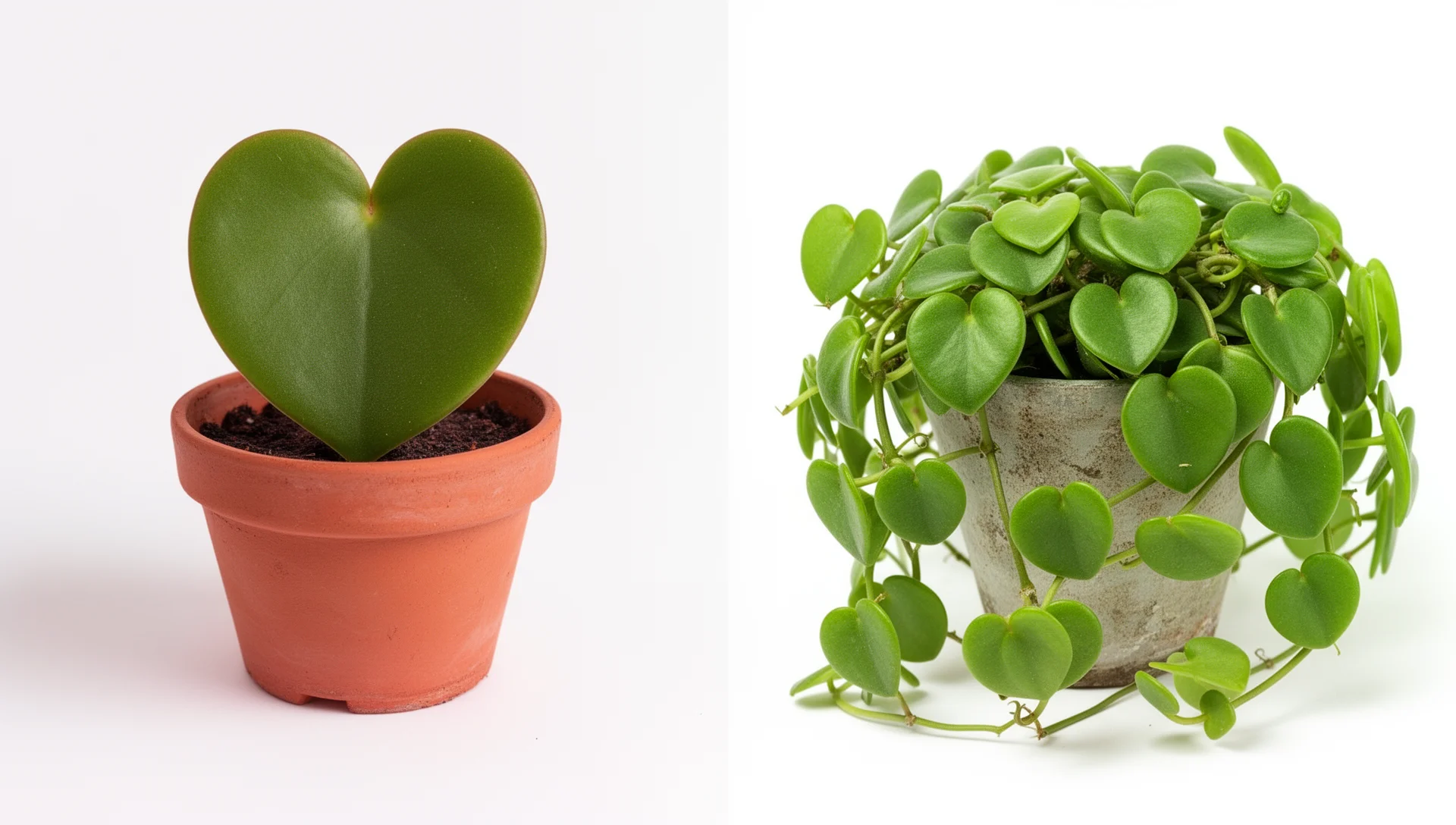
Why Your Single Leaf Will Never Grow Into a Vine
The short answer: that leaf was sold to you without a node, and without a node, no new plant organ can ever form. But understanding why requires a quick look at how plants actually work.
In any vining plant, the node is the raised, slightly swollen section of stem where a leaf attaches. It looks like a subtle bump or joint. Inside that bump sits a structure called the axillary bud—a dense cluster of meristematic tissue, which is the only plant tissue capable of dividing to produce new cells, new leaves, new roots, and new stems.
When a cutting includes a node, that axillary bud can activate and grow a new shoot. When a cutting is just a leaf—with the petiole (leaf stalk) cleanly separated from the stem—there is no meristematic tissue present at all. The leaf is metabolically alive. It will stay turgid, stay green, and even develop small roots into the soil. But it has no biological capacity to produce a stem, a new leaf, or a vine. It is, in the most literal sense, a leaf that will remain a leaf until it eventually dies—which may take several years of apparently normal life.
This is not a care problem. Brighter light will not fix it. Better soil will not fix it. More humidity will not fix it. There is no intervention that adds meristematic tissue to a cutting that was propagated without it.
The commercial reality: Hoya kerrii leaf cuttings are cheap to produce at scale—one mature plant can yield dozens of individual leaves. Sold as Valentine’s gifts, they are priced as novelties rather than living plants. Most retailers do not disclose that the cutting is nodeless, and most buyers do not know to ask. One result: an estimated majority of single-leaf hoya kerrii sold in garden centers will never grow beyond the leaf you purchased.
There is one exception worth knowing. If a single-leaf cutting happened to include a tiny section of stem at its base—enough to contain part of a node—it may occasionally produce new growth after a very long dormant period. This is rare and unpredictable. If your leaf has been static for more than 12 months in good conditions, it almost certainly lacks a node.
What to Buy If You Want a Vining Plant
Look for a pot containing a stem with at least two or three leaves attached. The stem is the key indicator: you can see the nodes as slight swellings where each leaf joins the stem. More nodes mean more growth points, and more growth points mean a faster-developing vine.
When shopping online or at specialty nurseries, you will see listings for hoya kerrii with node or stem cutting. These are significantly more expensive than the single-leaf novelties—typically $10–$30 versus $3–$8 for a nodeless leaf—but they are actual plants capable of growing.
If you already own a single-leaf hoya kerrii and you love it, that is entirely fine. It will remain healthy and attractive for years. Just don’t expect it to grow, and don’t blame yourself when it doesn’t.
The varieties most commonly available as stem cuttings:
- Hoya kerrii (straight species) — solid green heart-shaped leaves, the most vigorous
- Hoya kerrii ‘Albomarginata’ — deep green centres with pale yellow or white margins; requires more light than the plain species and grows more slowly
- Hoya kerrii ‘Splash’ — deep green leaves covered in irregular silver-grey speckles; the splash pattern intensifies with brighter light
- Hoya kerrii ‘Reverse Variegata’ — light-centred with darker green margins; the rarest of the three variegated forms
All variegated forms have less chlorophyll than the straight species, which means slower growth and higher light requirements. If your room gets limited natural light, the plain green species is the more forgiving choice.
Light: More Than Most Guides Suggest
Hoya kerrii is almost universally described as a bright indirect light plant, which is accurate but undersells how much light it actually wants. In its native habitat—the climbing epiphyte layer of tropical rainforests across Thailand, Vietnam, Cambodia, and the Indonesian island of Java [3]—it receives dappled but intense light through the forest canopy.
Indoors, the RHS recommends bright, indirect light with shade from hot sun [2]. In practice, an east- or west-facing windowsill is the sweet spot: strong morning or afternoon light without the burning intensity of midday summer sun. South-facing windows work well in winter or if filtered through a sheer curtain.
Signs of insufficient light: slow growth (even slower than usual), pale or yellow-green leaves, and the plant never attempting to bloom. Signs of too much direct sun: bleached patches or a washed-out leaf color, particularly on variegated forms.
Stop missing your zone's planting windows.
Select your US zone and month — get a complete checklist of what to plant, prune, feed, and protect right now.
→ View My Garden CalendarFor the variegated varieties, brighter light also deepens the contrast between the colored margins and green centres—and prevents the variegation from slowly reverting toward plain green.
Watering: The Wet-Dry Cycle
Hoya kerrii is a semi-succulent. Its thick, fleshy leaves store water as a buffer against drought—exactly what you’d expect from a plant that climbs trees in a seasonally dry tropical climate. Overwatering is a far more common problem than underwatering.
The correct approach is a wet-dry cycle, as Iowa State University Extension describes for hoyas generally [7]: water thoroughly until the entire root zone is saturated and water runs from the drainage holes, then wait until the top 2–3 inches of soil are dry before watering again. In warm months, that typically means watering every 10–14 days. In winter, when growth slows, the interval can stretch to four to six weeks.
A quick check: press your finger 2 inches into the soil. If it comes out with soil sticking to it, wait. If it comes out clean and the soil feels dry, water.
Yellowing leaves are the most common symptom of overwatering. Wrinkled or slightly soft leaves that aren’t recovering after watering indicate the plant has been too dry for too long. Hoya kerrii tolerates occasional drought well, but extended dry spells during active growth can stress the plant enough to prevent blooming.
One watering note from the European perspective: Plantura’s UK guide [9] recommends using rainwater or soft water for hoya kerrii, as the plant can show sensitivity to the lime content in hard tap water over time. If you’re in a hard-water area and notice slow brown tips developing without a clear cause, switching to filtered or collected rainwater is worth trying.
Soil, Pot Size, and Repotting
The single most important thing about soil for hoya kerrii is drainage. These are epiphytes in nature—their roots grow wrapped around tree bark, exposed to air, never sitting in compacted wet ground. Standard houseplant potting mix holds too much moisture for them.
A reliable DIY mix: 40% cactus or succulent soil, 30% orchid bark (medium grade), 20% perlite, 10% compost [5]. The orchid bark creates air pockets that prevent compaction, the perlite boosts drainage, and the cactus base is already lower in moisture-retaining peat than general-purpose mixes. If you prefer a simpler approach, two parts standard potting mix to one part perlite or pumice works well [1].
On pot size: hoya kerrii blooms better when slightly root-bound [2]. Resist the urge to move it into a larger pot when you first bring it home. Only repot when roots start emerging from drainage holes or circling visibly at the soil surface—roughly every two to three years [6]. When you do repot, move up only one pot size (e.g., from a 4-inch to a 6-inch pot).
Terra cotta pots are preferable to plastic or glazed ceramic because they allow moisture to evaporate through the walls, which further reduces overwatering risk [1]. Always use a pot with drainage holes. No exceptions.
Temperature, Humidity, and Feeding
Hoya kerrii thrives between 65–85°F (18–29°C) [6]. The RHS classifies it as H1C, meaning it requires frost-free conditions and cannot tolerate temperatures below about 41°F (5°C) [2]. Keep it away from cold windowsills in winter and away from air conditioning vents in summer.
The plant tolerates typical indoor humidity (40–60%) well, according to Iowa State Extension [7]. A pebble tray with water below the pot or a nearby humidifier helps in very dry heated spaces, but this is not critical unless your home drops below 30% relative humidity in winter.
For feeding, hoya kerrii is a light feeder. A balanced liquid fertilizer (10-10-10 or similar) diluted to half-strength, applied monthly from March through September, is sufficient [6]. Stop feeding entirely in October and don’t resume until you see active new growth in spring. Over-fertilizing encourages lush foliage at the expense of flowering.
Getting a Hoya Kerrii to Bloom
A mature hoya kerrii in good conditions produces domed clusters of fragrant white flowers with deep purple centres—waxy, star-shaped, and striking. Each inflorescence holds up to 25 individual flowers [4], and in the wild the plant emits its fragrance most strongly at night.
Three things reliably prevent blooming:
- Insufficient light. This is the most common cause of a hoya that grows but never flowers. Move it to a brighter position before trying anything else.
- The plant is too young. Hoya kerrii typically needs at least two to three years of growth before it will attempt to flower [6]. If you have a young plant, patience is the only answer.
- You cut the peduncles. This is the most damaging mistake in hoya care. Flowers emerge from specialized structures called peduncles (sometimes called spurs)—thick, persistent, woody stalks that grow from the leaf axils. After the flowers drop, the peduncle stays. The following season, new flowers emerge from the same peduncle. If you remove a spent peduncle, you eliminate that bloom site permanently. Iowa State University Extension is explicit on this: never remove peduncles unless they turn black and brittle [7].
Once peduncles begin developing, avoid moving the plant or changing its light exposure. Instability during bud development causes bud drop. When a peduncle exceeds about ¼ inch (6mm) in length, treat the plant’s position as fixed until flowering is complete.
Propagating Hoya Kerrii the Right Way
As established above, leaf cuttings without nodes do not produce new plants. For successful propagation, you need stem cuttings. Our hoya propagation guide covers all methods in detail—water rooting, sphagnum moss, soil—with a step-by-step approach that works across the genus.
The RHS recommends layering in spring or summer, or semi-ripe stem cuttings taken in late summer with bottom heat [2]. For home propagators, water propagation is the simplest method:
- Take a stem cutting with at least two nodes and two to three leaf pairs.
- Remove the lowest leaves to expose the node that will sit in water.
- Place the cutting in a clean jar of water, keeping leaves above the waterline.
- Position in bright indirect light and change the water weekly.
- Roots typically emerge within four to eight weeks. Once roots are 1–2 inches long, pot up into your prepared chunky mix.
Rooting hormone dusted on the cut node speeds up the process but is not essential. Keep newly potted cuttings in high humidity for the first two weeks to reduce transplant stress.
Pests and Problems: Diagnostic Table
| Symptom | Likely Cause | Fix |
|---|---|---|
| Yellow leaves, soft stems | Overwatering or poor drainage | Let soil dry fully; check drainage holes; repot into chunkier mix if roots are brown |
| Wrinkled, slightly deflated leaves | Underwatering or root-bound | Water deeply; check if roots are circling pot and repot if necessary |
| No growth for 12+ months | Nodeless cutting OR insufficient light | Is there a stem visible at the base? If not, it is nodeless and will not grow. If yes, increase light. |
| Pale, washed-out leaf color | Too much direct sun | Move 2–3 feet from window or add a sheer curtain |
| White cottony spots on leaves or stems | Mealybugs | Dab with 70% isopropyl alcohol on a cotton swab; spray with insecticidal soap; repeat weekly for 4–6 weeks |
| Buds dropping before opening | Moved plant or changed light during bud development | Keep plant in fixed position once peduncles exceed ¼ inch; maintain consistent watering |
| Never blooms despite good care | Plant too young, or peduncles were removed | Wait 3+ years from purchase; never cut old flower stalks; maximize light |
| Variegation fading toward green | Insufficient light | Move to brighter indirect light; variegation requires more light to maintain than plain green |
Are Hoya Kerrii Safe for Pets and Children?
Yes. The ASPCA lists hoya kerrii as non-toxic to dogs, cats, and horses [8]. The plant is safe to keep in homes with pets without concern about toxicity. That said, a large quantity of leaves is indigestible for dogs and cats and could cause mild stomach upset—not because of toxins, but because of the physical matter. Discouraging chewing is still sensible.
The plant produces a milky white sap when cut or damaged, which is also non-toxic. Standard caution applies: wash hands after handling sap, and keep it from eyes.
Frequently Asked Questions
How long do single-leaf hoya kerrii cuttings live?
Indefinitely, if cared for. A nodeless leaf cutting can remain alive for several years—healthy, green, and entirely static. It will not grow, but it will not suddenly die either.
Can I return a nodeless hoya kerrii to the shop?
Most garden centers won’t accept returns on plants, and a nodeless cutting hasn’t been misrepresented in any legal sense—the plant is alive. Your best option is to keep it as a decorative single-leaf specimen and buy a stem cutting separately if you want a growing plant.
Why does my hoya kerrii have very long bare stems with few leaves?
Long internodes (the stretches between leaf pairs) are normal—especially on younger or lower-light plants. The plant will eventually fill in leaves along the stem as it matures. This is not a sign of poor health.
Should I mist my hoya kerrii?
It’s unnecessary and potentially harmful if water sits on leaves in poor airflow. The plant tolerates normal indoor humidity well [7]. A pebble tray or humidifier is safer than misting.
How fast does hoya kerrii grow?
Slowly. Even a healthy, node-bearing plant with good light may produce only a few new leaves per month during the growing season. The RHS notes it reaches 0.5–1 metre over five to ten years [2], which sets appropriate expectations. Variegated forms grow even more slowly due to reduced chlorophyll.
Can hoya kerrii go outside in summer?
In USDA zones 10–12, it can be grown outdoors year-round. In zones 9 and below, it can go outside for summer (May–September) in partial shade, then must come back inside before temperatures drop below 55°F (13°C). Avoid direct outdoor sun—the transition from filtered indoor light to outdoor sun intensity causes leaf scorch.
Sources
[1] Ohio Tropics — Hoya Kerrii Care: Expert Grow Tips
[2] Royal Horticultural Society — Hoya kerrii
[3] Kew Science — Hoya kerrii Craib, Plants of the World Online
[4] Wikipedia — Hoya kerrii
[5] Houseplants Nook — Ultimate Hoya Kerrii Care Guide
[6] Epic Gardening — How to Plant, Grow, and Care for Hoya Kerrii
[7] Iowa State University Extension — All About Hoyas
[8] ASPCA — Sweetheart Hoya, Toxic and Non-Toxic Plants
[9] Plantura — Hoya kerrii care guide (UK)


