

Which Plants Use the Most Nitrogen — Heavy Feeders, Light Feeders, and Signs of Deficiency

Which plants use the most nitrogen? Extension-backed rates by category, a deficiency diagnostic table, and the timing rule that boosts vegetable yields.
Most plants that struggle with thin, pale growth or disappointing yields are not sick — they’re hungry. Nitrogen is the nutrient plants demand in the largest quantities, and it underpins everything from the green color of every leaf to the protein content of every seed. But not all plants need the same amount, and feeding the wrong category the wrong rate produces worse results than not feeding at all.
This article breaks down which plants use nitrogen most, organized by plant type with extension-backed application rates in pounds per 1,000 square feet. You’ll also find a diagnostic table for identifying nitrogen deficiency, excess, and the common deficiencies that look nearly identical to nitrogen problems.

The short answer: sweet corn, tomatoes, brassicas, and lawn grasses sit at the heavy end. Trees and shrubs need less than most people apply. Legumes — beans, peas, clover, alfalfa — manufacture their own nitrogen through root bacteria and can be damaged by extra fertilization.
What Nitrogen Actually Does Inside a Plant
Nitrogen does not just feed a plant — it becomes the plant. Every protein your tomato builds to form a new cell, every enzyme that drives photosynthesis, every molecule of green chlorophyll in every leaf: all of them are built from nitrogen atoms bonded into organic structures.
The absorption pathway works like this. Roots take up nitrogen from soil primarily as nitrate (NO3⁻) or ammonium (NH4+) ions through specialized transporters in root hair cells. Inside the root, two enzymes do the conversion work: glutamine synthetase (GS) combines ammonium with glutamate to form glutamine, and glutamate synthase (GOGAT) transfers that nitrogen into a second glutamate molecule. These two enzymes are the essential gateway through which all absorbed soil nitrogen enters plant biology as usable amino acids — which then chain together into every protein the plant synthesizes. PMC research on nitrogen metabolism identifies GS and GOGAT as the enzymes “orchestrating optimal N utilization” across plant species.
Nitrogen is also a structural component of the chlorophyll molecule itself. When a plant runs low on nitrogen, it dismantles existing chlorophyll to reclaim those nitrogen atoms for higher-priority functions — which is exactly why nitrogen deficiency produces yellowing, not the purple tints or bleached patches you see with other nutrient problems.
One fact makes nitrogen uniquely diagnosable: it is a mobile nutrient. When supply runs short, the plant scavenges nitrogen out of its oldest tissue and redirects it toward new growth. This means nitrogen deficiency symptoms always appear on the lower, older leaves first — not at the shoot tips. Any yellowing that begins on young growth points to something other than nitrogen.
The Three Feeder Categories
Horticulturists classify plants into three nitrogen demand tiers based on how much they consume per growing season:
- Heavy feeders — more than 25 grams of nitrogen per square meter (roughly 0.8 oz/sqft) over a season. Fast-growing plants producing abundant leaves, large fruits, or dense turf.
- Medium feeders — 10 to 25 grams per square meter. Moderate growers that respond well to fertilization but do not depend on it for basic productivity.
- Light feeders — fewer than 10 grams per square meter, or plants that fix atmospheric nitrogen through root bacteria and need little to none from soil.
These are planning tools, not hard rules. Soil type, rainfall, and variety all shift where a specific plant lands in practice. But they map directly onto extension-recommended application rates — the unit where they save you real time and money.
Heavy-Feeding Vegetables: The Plants That Eat the Most
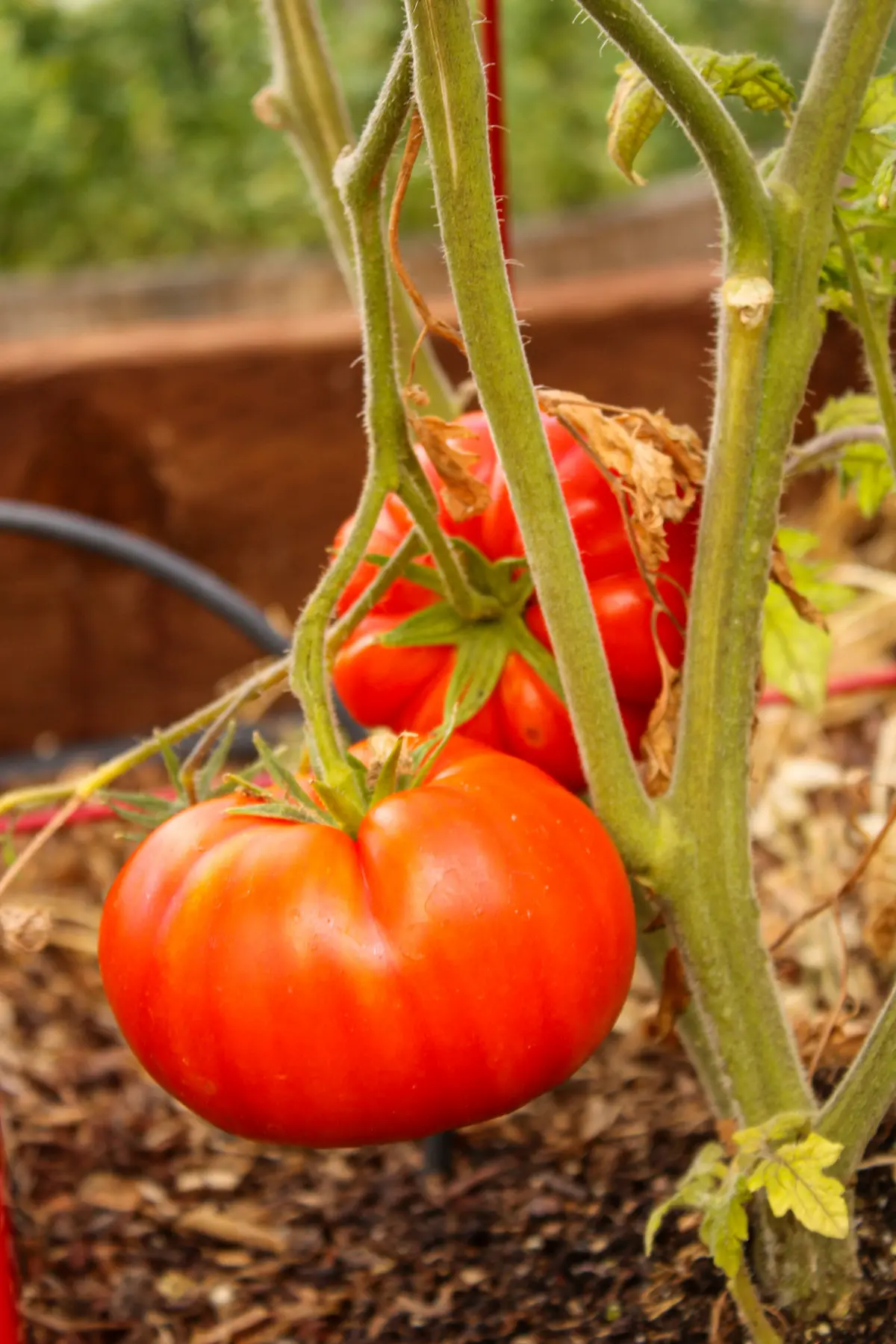
University of Maryland Extension classifies the following vegetables as heavy nitrogen feeders requiring 3 pounds of actual nitrogen per 1,000 square feet per growing season:
- Tomato family — tomato, pepper, eggplant, potato
- Brassicas — broccoli, Brussels sprouts, cauliflower
- Sweet corn — one of the heaviest users per acre; typically needs a mid-season sidedress application in addition to pre-plant nitrogen
- Beet family — beets, Swiss chard, spinach
- Okra
- Alliums — onion, garlic
- Perennial crops — asparagus, rhubarb
Why do these plants need so much more? Leafy brassicas produce enormous leaf biomass — each cell wall built from structural proteins assembled from amino acids. Fruiting crops like tomatoes and corn simultaneously push vegetative growth and pack proteins and sugars into developing fruit, a double nitrogen draw that lighter-cropping plants never experience. Spinach and Swiss chard are leaf machines: nearly every calorie the plant makes goes into leaf tissue, which is almost entirely protein and chlorophyll — both nitrogen-intensive structures.
Timing matters as much as the total amount applied. University of Vermont Extension is specific: wait until tomatoes, peppers, and squash are actively flowering before sidedressing with nitrogen. Applying nitrogen earlier pushes the plant into leafy vegetative growth, which delays fruit set and can reduce total yield. When you sidedress, place fertilizer 4 to 6 inches from the plant’s base, not directly against the stem. Sweet corn is the exception — sidedress when plants reach knee height, which precedes the flowering stage and is the point when corn’s nitrogen demand accelerates fastest.
In my own tomato beds, I’ve seen nitrogen applied two weeks before flowering produce plants so leafy they were nearly impossible to stake — gorgeous canopy, almost no fruit until mid-August when the nitrogen finally cleared. The timing rule from UVM Extension is not just theoretical.
If heavy feeders show slow growth, stunted leaves, or pale coloring mid-season despite pre-plant fertilization, that is the right time to sidedress — not a fixed calendar date. The plant’s actual growth rate is a more reliable trigger than the date alone.


Lawn Grasses: The Biggest Nitrogen User Per Square Foot
A well-maintained lawn typically consumes more nitrogen per square foot than any vegetable bed. Turf grass is a permanent heavy feeder — it produces new growth continuously through the entire growing season rather than completing a single fruiting cycle and stopping. That continuous demand adds up quickly.
Annual nitrogen needs differ significantly by grass species:
| Grass Type | Annual N Rate (lbs/1,000 sqft) | Primary Feeding Window |
|---|---|---|
| Kentucky bluegrass, tall fescue, perennial ryegrass | 2–4 (medium to high maintenance) | Fall-heavy; modest spring application |
| Bermudagrass, St. Augustine grass | Up to 3.6 | Growing season only (May–August) |
| Centipedegrass | 1–2 | Growing season; especially sensitive to excess |
| Zoysiagrass (mature) | 1–2 | Growing season; stop well before fall frost |
Virginia Tech Extension identifies centipedegrass as particularly sensitive to excess nitrogen — it performs best at the lower end of the 1 to 2 pound range and can develop thatch problems and disease susceptibility if pushed higher. Bermudagrass and St. Augustine tolerate and benefit from the higher rates, but centipede does not. Never apply more than 1 pound of nitrogen per 1,000 square feet in a single quick-release application for any grass type, per Rutgers NJAES guidance — split applications spaced 4 to 6 weeks apart prevent surge growth and reduce leaching.
For cool-season grasses, fall is the most productive feeding window. Roots are actively growing after summer dormancy, and the nitrogen drives root recovery and carbohydrate storage rather than the lush but vulnerable flush of spring top-growth.
Flowering Plants and Ornamentals

Flowering plants have a rule that vegetables do not: for peak bloom production, the nitrogen content of your fertilizer should not exceed its phosphorus content. University of Connecticut Extension’s soil testing lab specifies balanced or phosphorus-forward fertilizers like 5-10-5 or 10-10-10 for flowering plants — not formulas like 10-5-5 — because phosphorus drives reproductive growth (flower and seed production) while high-nitrogen blends push vegetative growth at the expense of blooms.
This is the mechanism behind the common frustration of a rose that makes abundant leaves but few flowers: both structures need nitrogen to build cell tissue, but the ratio between nitrogen and phosphorus determines whether the plant’s energy goes into leaves or into flowers.
For specific plant types, UConn Extension recommends:
- Roses — three separate applications per season in May, June, and July. Stop after July to avoid pushing tender new growth before fall temperatures drop.
- Annual flowers — apply at planting, then again 6 to 8 weeks later. A third application in late August is optional for long-season annuals.
- Perennials and ornamental grasses — one application in spring when active growth resumes, with an optional second feeding 6 to 8 weeks later if growth rate or leaf color suggests deficiency.
The goal with ornamentals is steady, moderate nitrogen to support healthy foliage without overwhelming the plant’s flower-production impulse. Feed during the growing season, honor the phosphorus rule, and stop by late summer.
Trees and Shrubs: Moderate Users, Often Overfed
Mature trees and shrubs are among the most commonly overfertilized plants in home landscapes. They need nitrogen — but because they are not annually replanted and their root systems extend well beyond the visible drip line, a little nitrogen covers a large area.
The American National Standards Institute (ANSI A300) guidelines, as cited by Clemson Cooperative Extension, specify:
Stop missing your zone's planting windows.
Select your US zone and month — get a complete checklist of what to plant, prune, feed, and protect right now.
→ View My Garden Calendar- Slow-release nitrogen — 2 to 4 pounds per 1,000 square feet of root zone per year; never exceed 6 pounds per year
- Fast-release nitrogen — 1 to 2 pounds per 1,000 square feet; never exceed 4 pounds per year
Deficiency signs in trees and shrubs are subtler than in vegetables. Clemson Extension identifies three key signals: leaves lighter green than the normal baseline for that species, reduced annual twig and shoot growth compared to previous years, and decreased flowering or fruiting. When all three appear together, nitrogen deficiency is the likely cause. If only the leaves are lighter green, check soil pH first — low or high pH can lock out iron or manganese and produce similar pale foliage.
Young trees in their first two to three years of establishment benefit from moderate nitrogen to encourage canopy development. Mature trees in healthy soil with adequate organic matter often need no routine annual nitrogen application at all. A soil test every two to three years is the most reliable guide to whether supplemental nitrogen is actually needed.
Light Feeders: The Plants That Make Their Own Nitrogen
Legumes — beans, peas, clover, alfalfa, soybeans, peanuts, cowpeas — are not just light feeders. Under the right soil conditions, they manufacture their own nitrogen supply directly from the air.
The mechanism is a partnership between the plant and Rhizobium bacteria naturally present in soil. When a legume root hair contacts compatible Rhizobium bacteria, the bacteria invade the root and trigger the formation of nodules — small rounded growths visible to the naked eye within 2 to 3 weeks of planting. Inside these nodules, the bacteria convert atmospheric nitrogen gas (N2) into ammonia (NH3), which the plant absorbs as usable ammonium. The plant supplies the bacteria with photosynthesis-derived sugars in exchange.
You can verify whether nodules are actively fixing nitrogen by cutting one open. New Mexico State University Extension describes the indicator: white or gray interior means the nodule has formed but is not yet fixing. Pink or red interior confirms active nitrogen fixation is under way.
Fixation rates vary considerably by legume species:
- Alfalfa and clover — 250 to 500 pounds of nitrogen per acre per year
- Soybeans, peanuts, cowpeas — up to 250 pounds per acre per season
- Common beans (snap beans, kidney beans) — poor fixers; they form nodules but capture minimal nitrogen and still benefit from some soil nitrogen at establishment
Do not apply heavy nitrogen fertilizer to legumes. University of Maryland Extension notes that excess nitrogen delays flowering and fruiting in beans and peas. More importantly, it suppresses nodule formation — the plant stops investing in nitrogen fixation infrastructure when nitrogen is already abundant in the surrounding soil. At most, apply 0.5 pounds of nitrogen per 1,000 square feet at planting to support early establishment, then stop.
After harvest, decomposing legume roots release captured nitrogen back into the soil — typically 30 to 50 pounds of nitrogen per acre, per NMSU Extension data. This is the basis of the classic crop rotation approach: follow a legume season with a heavy-feeding crop like corn or brassicas to put the residual nitrogen to work.
For practical guidance on sequencing heavy and light feeders in your garden, see our guide to crop rotation for vegetables.
Diagnosing Nitrogen Problems: Deficiency, Excess, and Six Lookalikes
The first time I saw nitrogen deficiency, I treated for iron — the pale color looked identical. Pattern is what separates the two: nitrogen deficiency yellows the entire old leaf starting at the tip and spreading along the ribs, while iron deficiency shows interveinal striping on the youngest leaves. Once you see both patterns side by side, they’re unmistakable.
Yellowing leaves do not mean nitrogen deficiency. Michigan State University Extension identifies at least six conditions that produce similar yellowing — potassium deficiency, sulfur deficiency, iron deficiency, manganese deficiency, magnesium deficiency, and herbicide injury. Pattern and location separate them.
| Symptom | Which Leaves Affected First | Leaf Pattern | Most Likely Cause |
|---|---|---|---|
| Uniform pale yellow-green, whole leaf | Oldest, lowest leaves; moves upward over time | Yellowing begins at leaf tip, spreads inward along leaf ribs | Nitrogen deficiency |
| Yellowing at leaf margins and tip | Older leaves first | Tip and edge necrosis; yellow fades to brown at margin; spreads along outer leaf edge | Potassium deficiency |
| Yellow tissue between veins; veins stay green | Youngest, newest leaves first | Interveinal striping; veins visibly darker than surrounding tissue | Iron or manganese deficiency |
| Unusually dark green, thick leaves | Any; plant-wide | Deep, abnormal green; leaves may cup or curl downward; tip scorch in severe cases | Nitrogen excess |
| Brown-yellow margins with narrow yellow halo | Any | Scorched margin clearly separated from healthy tissue by a slender yellow band | Fertilizer salt burn |
| One or two lowest leaves yellow; rest of plant healthy | Oldest leaves only; isolated and slow | Gradual progression; no stunting; no spread to young growth | Normal senescence — no action needed |
The clearest distinction between nitrogen and potassium deficiency: UConn Extension notes that nitrogen deficiency yellowing starts at the leaf tip and spreads inward along the leaf’s ribs. Potassium deficiency also starts at the tip but spreads along the outer leaf edge rather than the ribs. Both begin at the tip — the direction of travel from there is what separates them.
Nitrogen excess produces the opposite problem from deficiency. Plants become abnormally dark green, push rapid vegetative growth, and invest in leaves at the expense of flowers and fruit. In high concentrations, soluble nitrogen also acts as a salt — drawing water out of root cells, scorching fine root hairs responsible for water uptake, and making the plant more vulnerable to drought stress and certain sap-sucking insects even in otherwise adequate soil moisture.
Nitrogen Application Rates by Plant Category
| Plant Type | Annual N Rate (lbs/1,000 sqft) | Key Timing Rule |
|---|---|---|
| Vegetables — heavy feeders (tomatoes, brassicas, corn) | 3 | Pre-plant + sidedress only after first flowers appear |
| Vegetables — medium feeders (lettuce, cucumbers, squash, carrots) | 2 | Pre-plant; sidedress if growth rate slows or leaves pale |
| Legumes (beans, peas) | 0–0.5 at establishment only | Stop after establishment; excess nitrogen suppresses nodules and delays harvest |
| Cool-season lawn (fescue, bluegrass, ryegrass) | 2–4 | Fall-heavy schedule; never more than 1 lb/1,000 sqft per quick-release application |
| Warm-season lawn (bermudagrass, St. Augustine) | 2–3.6 | Growing season only; stop 6–8 weeks before first fall frost |
| Centipede or Zoysia lawn | 1–2 | Growing season; lower end preferred, especially for centipede |
| Roses and flowering shrubs | Soil-test guided | May, June, July; use fertilizer with nitrogen ≤ phosphorus content |
| Annual flowers | Moderate, balanced | At planting + 6–8 weeks + optional late August |
| Trees and shrubs (slow-release) | 2–4; never exceed 6 | Spring; mature trees in healthy soil may not need annual application |
These rates are starting points. A soil test from your local cooperative extension gives accurate, site-specific numbers that account for existing soil nitrogen, organic matter content, and pH. For guidance on which fertilizer form delivers these rates most predictably to different plant types, see our comparison of granular vs. liquid fertilizer.

Frequently Asked Questions
Do all plants need added nitrogen fertilizer?
No. Legumes fix atmospheric nitrogen through Rhizobium root bacteria and need little to none added. Established native plants and many perennials growing in healthy soil with adequate organic matter often thrive without supplemental nitrogen. A soil test before applying nitrogen tells you whether your specific soil actually needs it — and prevents the yield losses and pest-pressure increases that come from over-fertilization.
What is the first visible sign of nitrogen deficiency?
The oldest, lowest leaves begin turning a uniform pale yellow-green. Because nitrogen is a mobile nutrient, the plant pulls it from mature tissue first and redirects it toward new growth — so young leaves at the shoot tips often remain green while the bottom of the plant fades. This bottom-up progression is the most reliable indicator of nitrogen as the cause, rather than iron, magnesium, or other deficiencies that follow different patterns.
What happens if you apply too much nitrogen?
Plants produce excessive leafy green growth at the expense of flowers and fruit. In vegetables like tomatoes and peppers, high nitrogen early in the season delays fruit set and reduces total yield. In high concentrations, soluble nitrogen acts as a salt, drawing water out of root cells, scorching fine root hairs, and increasing susceptibility to certain sap-sucking insects. For flowering plants, excess nitrogen suppresses bloom production entirely by directing the plant’s energy into vegetative tissue.
What are the best organic nitrogen sources for heavy feeders?
Blood meal (approximately 12 to 13% nitrogen) is the fastest-acting organic option, breaking down in soil within weeks of application. Fish emulsion (5 to 7% nitrogen) releases more slowly but also supplies trace minerals. Both deliver significantly more nitrogen per pound than compost, which averages around 1.5% nitrogen — valuable for soil structure and biological activity but unable to meet the nitrogen demands of heavy feeders on its own. For a full comparison of concentrated organic options, see our guide to top organic fertilizers for garden and container plants.
Sources
- Nitrogen Journey in Plants: From Uptake to Metabolism, Stress Response, and Microbe Interaction — PMC/NCBI
- Fertilizing Vegetables — University of Maryland Extension
- Give Your Vegetables a Mid-Season Boost — University of Vermont Extension
- Nitrogen Fixation by Legumes — New Mexico State University Extension
- Suggested Fertilizer Practices for Flowers — University of Connecticut Extension
- Soil Test Note 18: Lawn Fertilization for Warm Season Grasses — Virginia Tech Extension
- Watch Out for These Nutrient Deficiency Symptoms — UConn Home and Garden Education Center
- Are You Sure That Yellowing Means Nitrogen Deficiency? — Michigan State University Extension
- Fertilizing Trees and Shrubs — Clemson Cooperative Extension
- How to Calculate the Amount of Fertilizer Needed for Your Lawn — Rutgers New Jersey Agricultural Experiment Station


